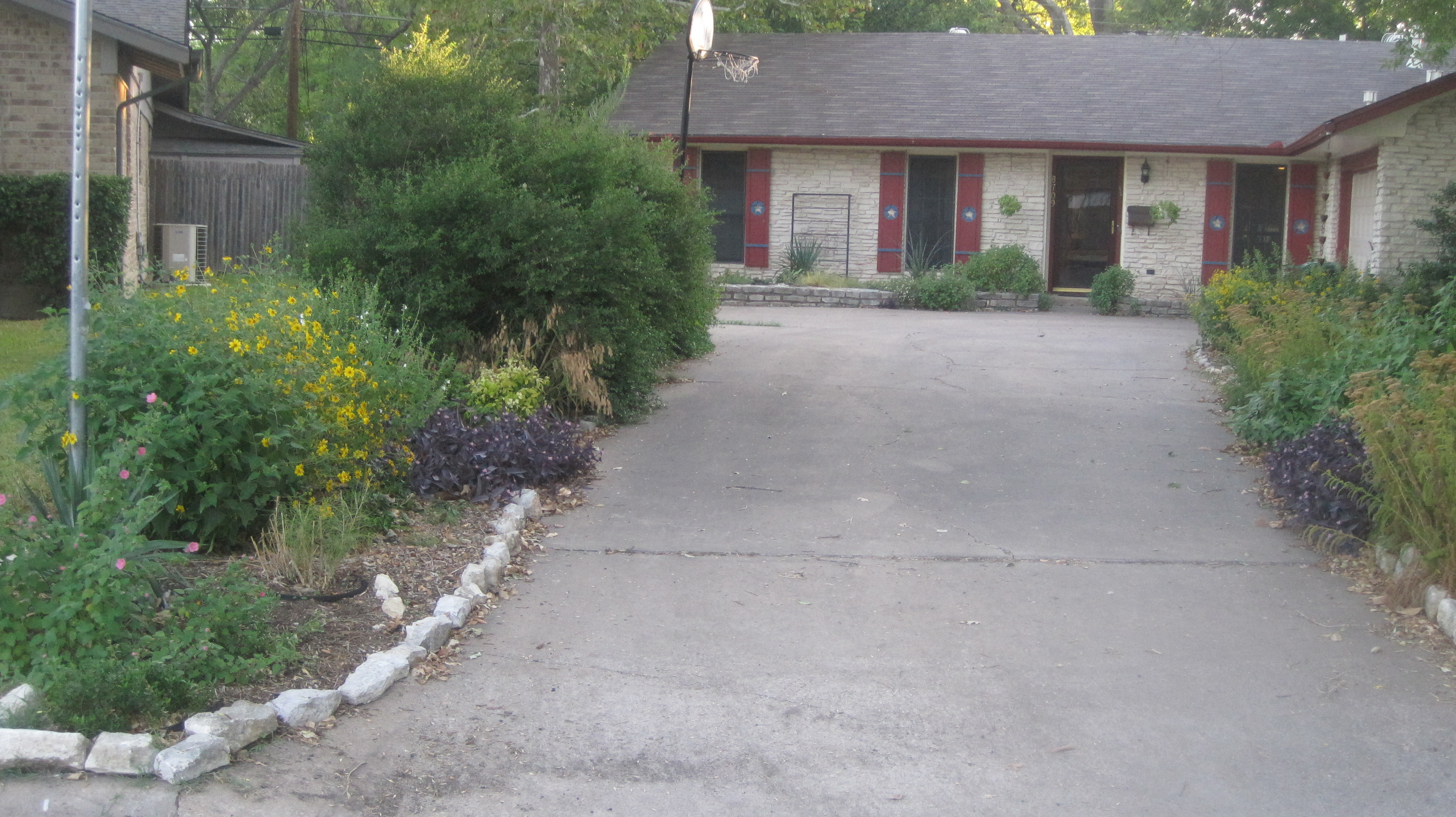
I call it the Driveway Garden.
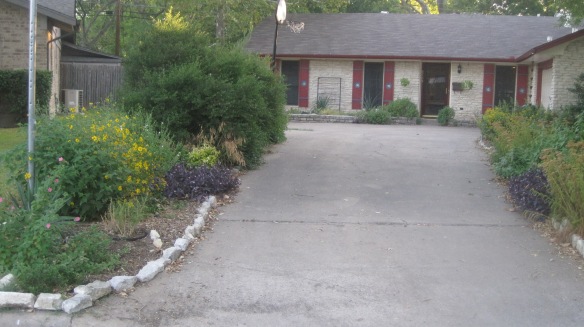
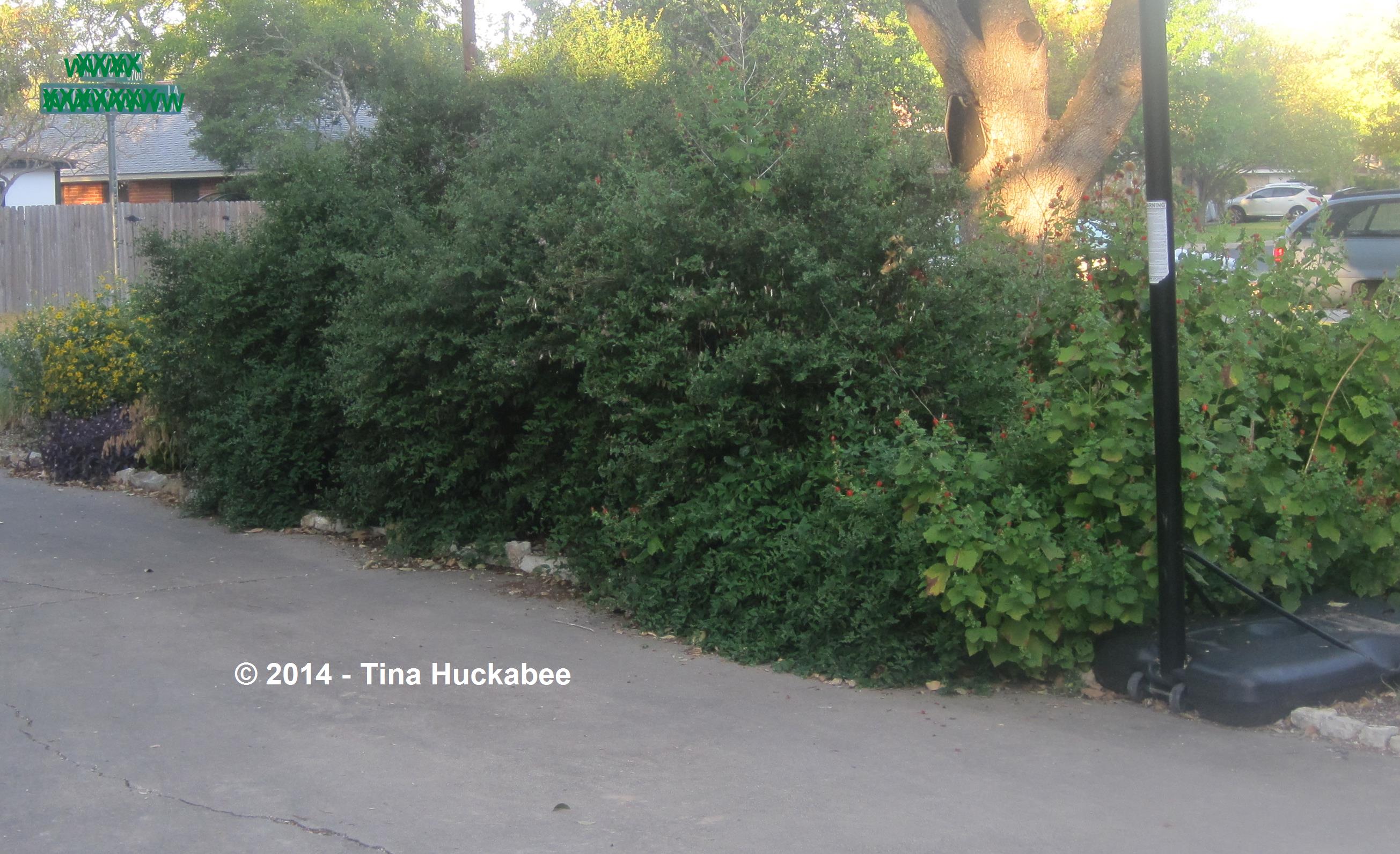
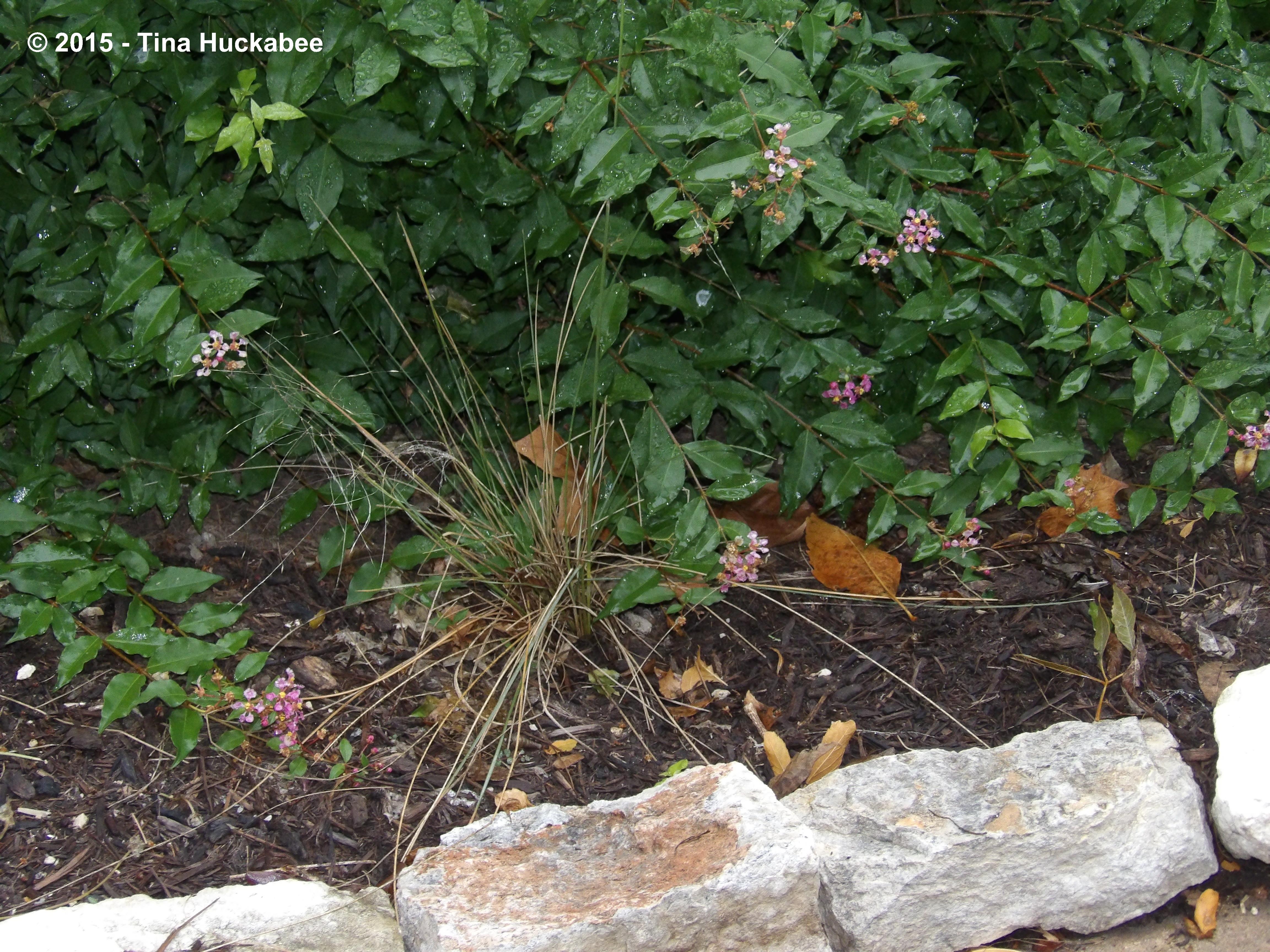
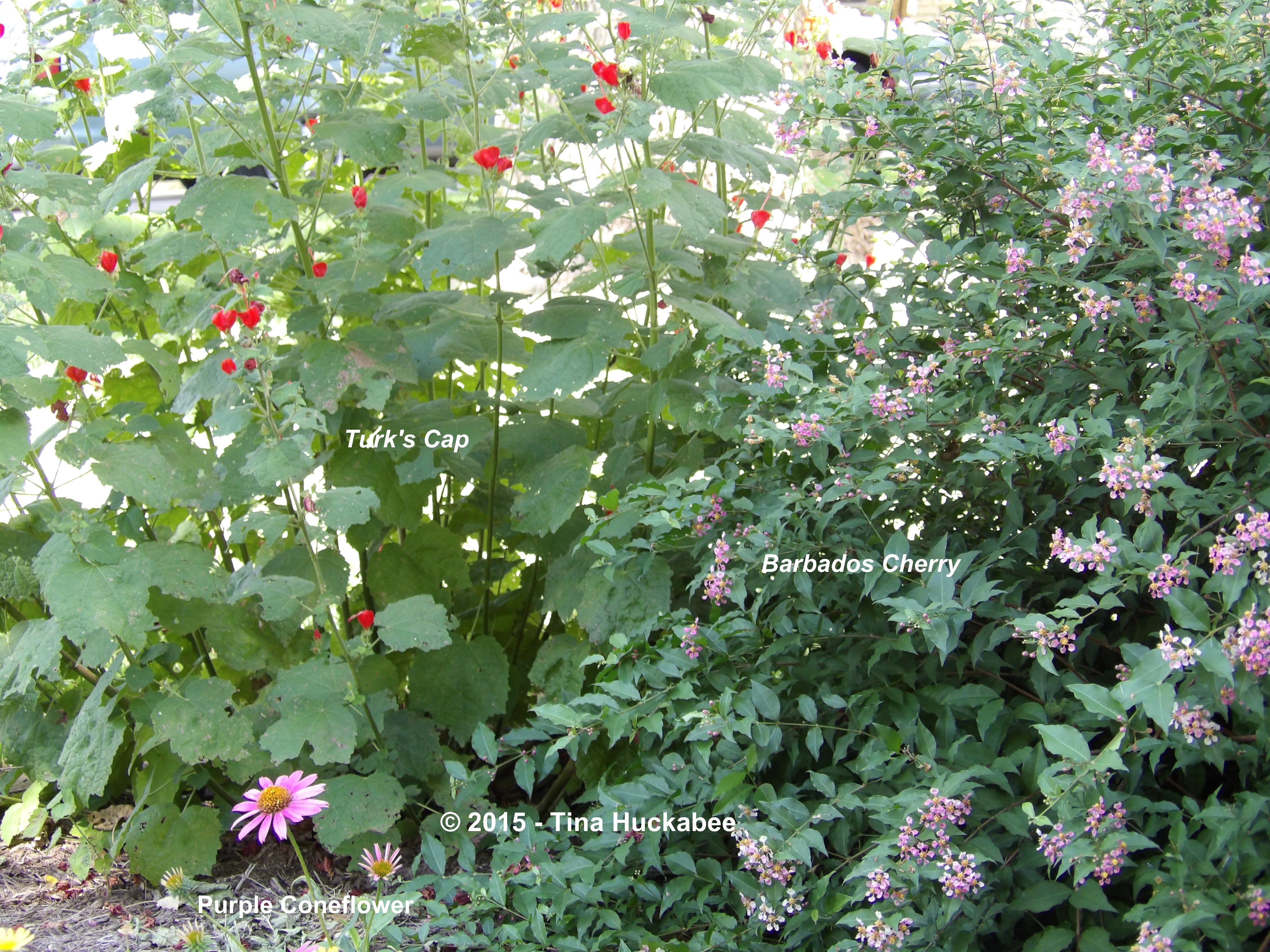
Not a bucolic name, nor was it, for many years, a particularly interesting garden. For most of the past twenty years, this garden was dominated by a hedge of Barbados Cherry, Malpighia glabra.
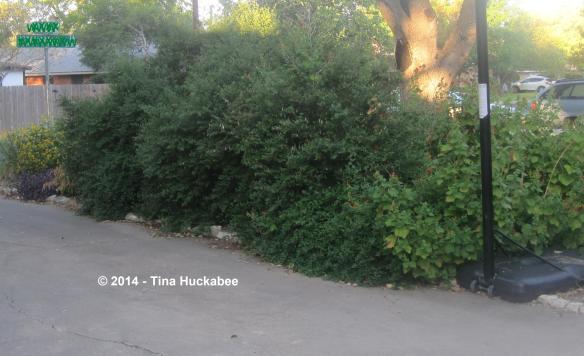
I let the Barbados Cherry grow and expand, tall and wide, because it’s a low maintenance shrub, blooms pretty pink flowers, develops luscious red fruits, provides cover for wildlife, and performs well in shade–a requirement for that spot. Additionally, it served as a privacy hedge and also as a stalwart plant bolstering against balls and bicycles when my children were young and there was roughhousing activity on and around the long driveway.
Aesthetically, it wasn’t ideal, but worked and was easy.
In recent years, the tree which shaded the garden began failing, so there is now more direct sun on the garden. I allowed myself the luxury of fantasizing about what plants I might add to the space to increase color, diversity, and wildlife interest to this otherwise utilitarian spot.
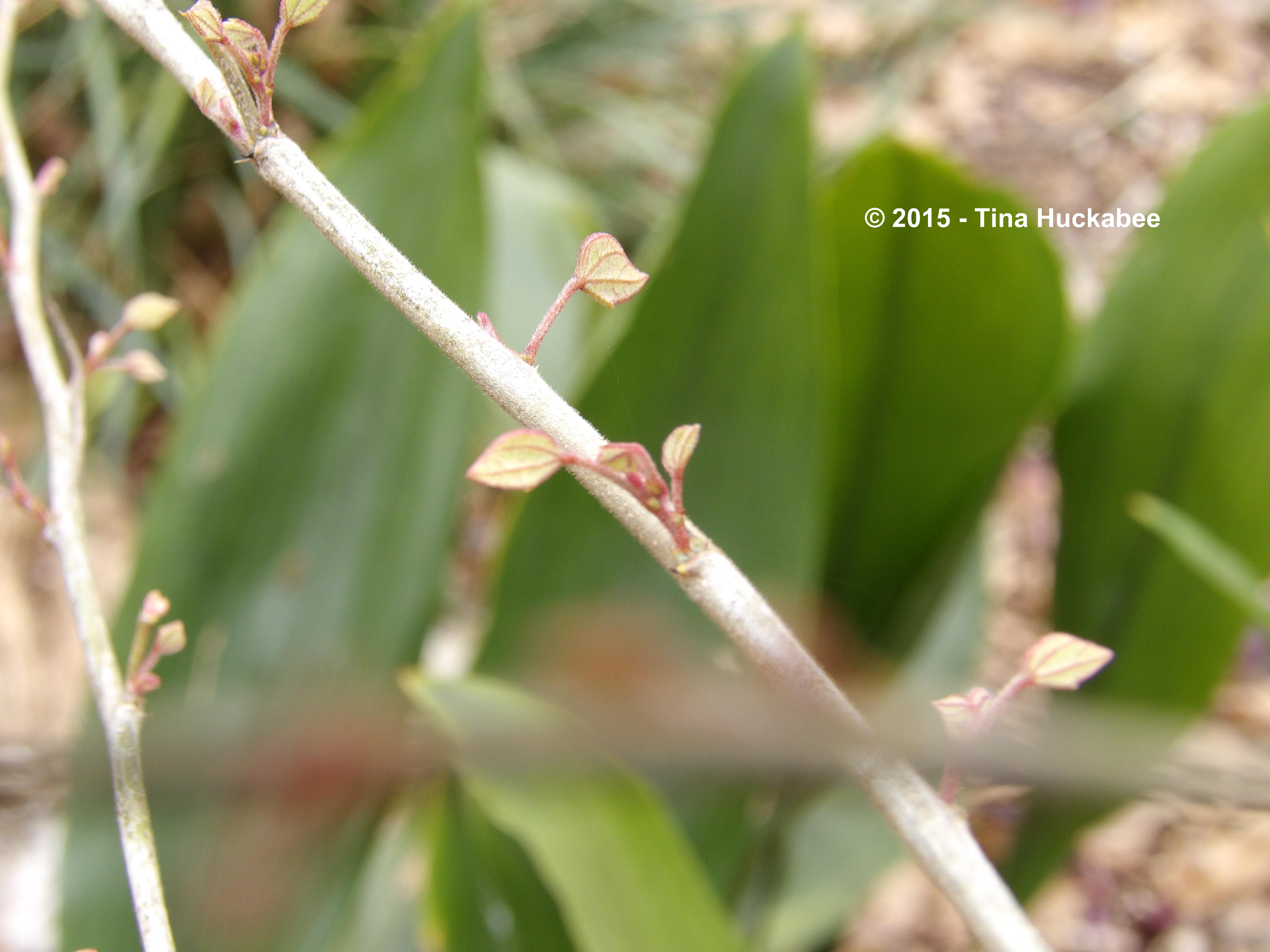
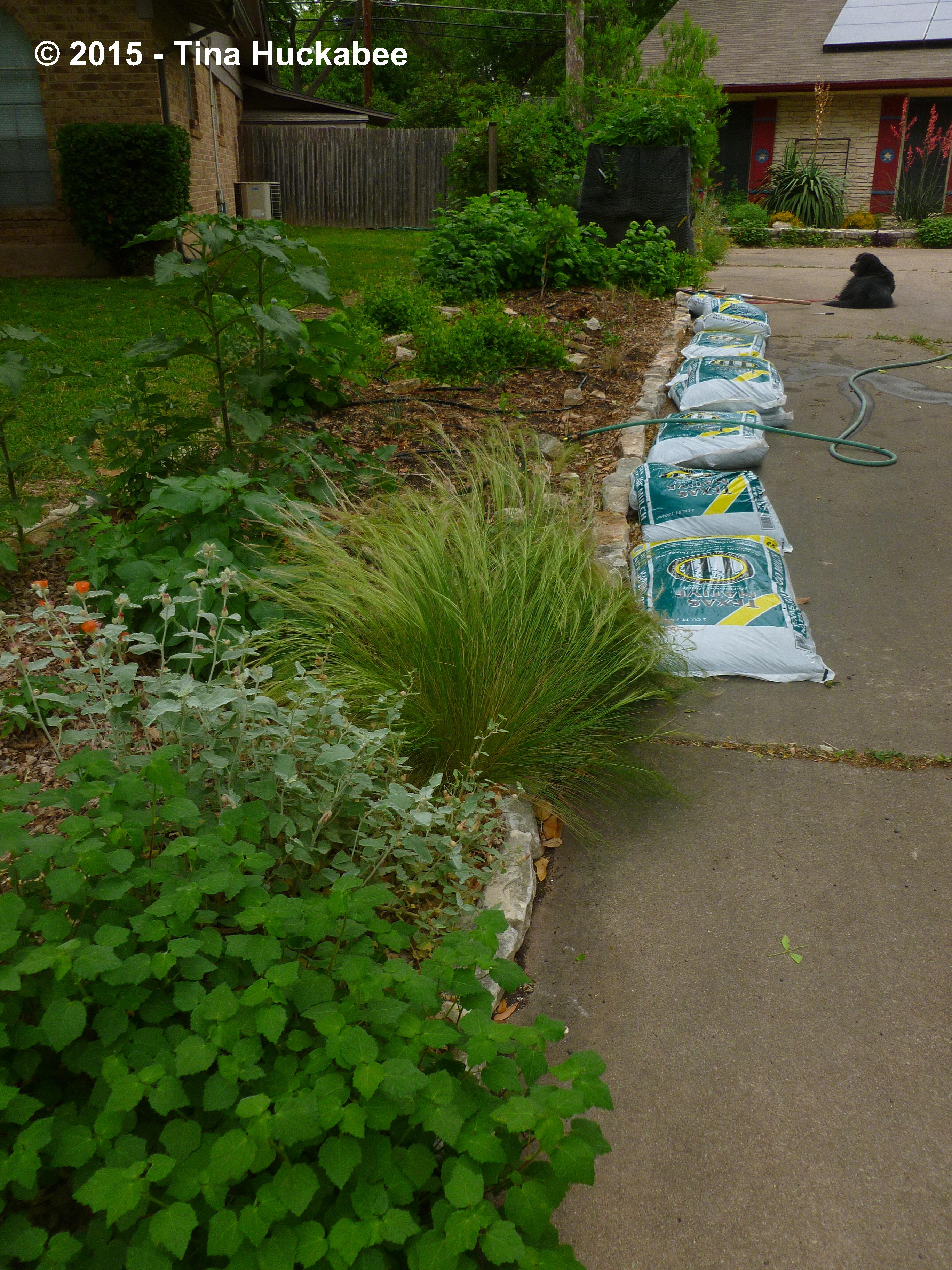
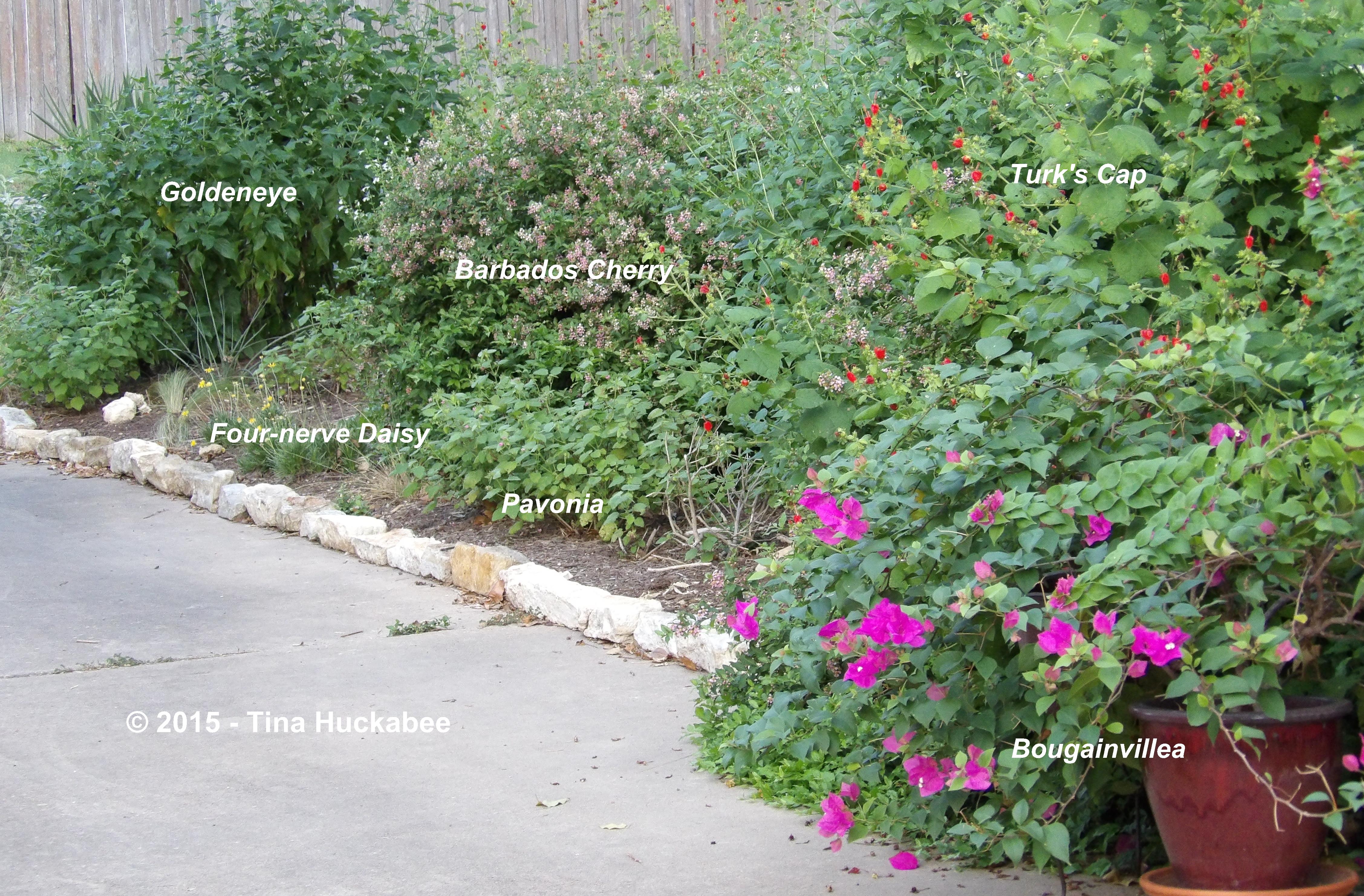
After the 2014-15 winter which was colder than any of the last twenty years, the Barbados Cherry froze to the ground and late last winter and early spring, I seized the opportunity to make changes to this narrow strip of garden. After its first year of remodeling, I’m generally pleased with the results. For reference, the driveway garden spans most of the length of the front drive, beginning at the street level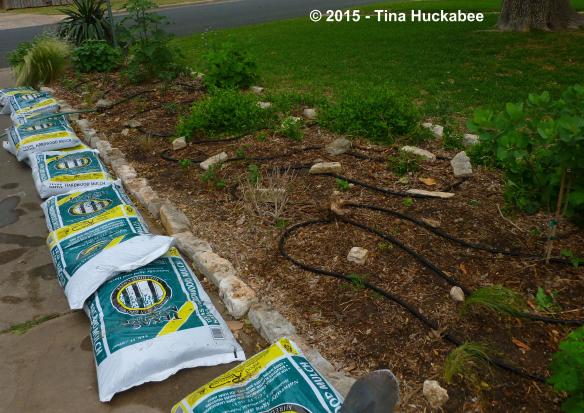
…and ending at the Green Tower (GT), a vertical structure which I’m experimenting with for vegetable and herb gardening.
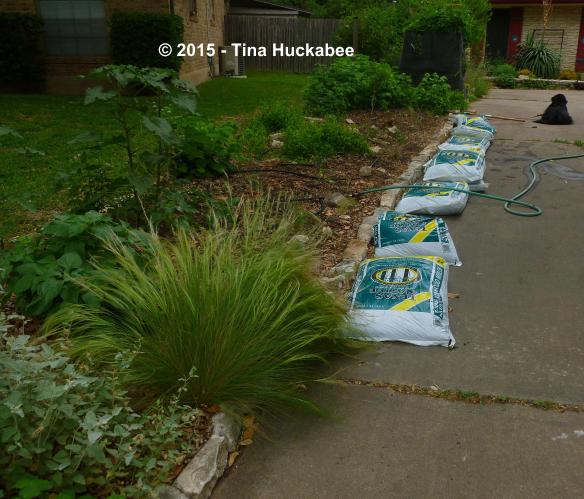
I dug out the bits of Barbados Cherry root, big and small, shallow and deep, which filled in so much of the GT end of the garden. I left some of the shrubs,
…returning from winter freezes, which align alongside my property and the neighbor’s lawn. Vowing to keep those hardy and somewhat insidious limbs and roots in check, the goal is for the Barbados Cherry to act as individual, tidy, sometimes blooming, shrubs. I must ensure they don’t become the wall-of-plant they were and can certainly become again, if I’m not vigilant.
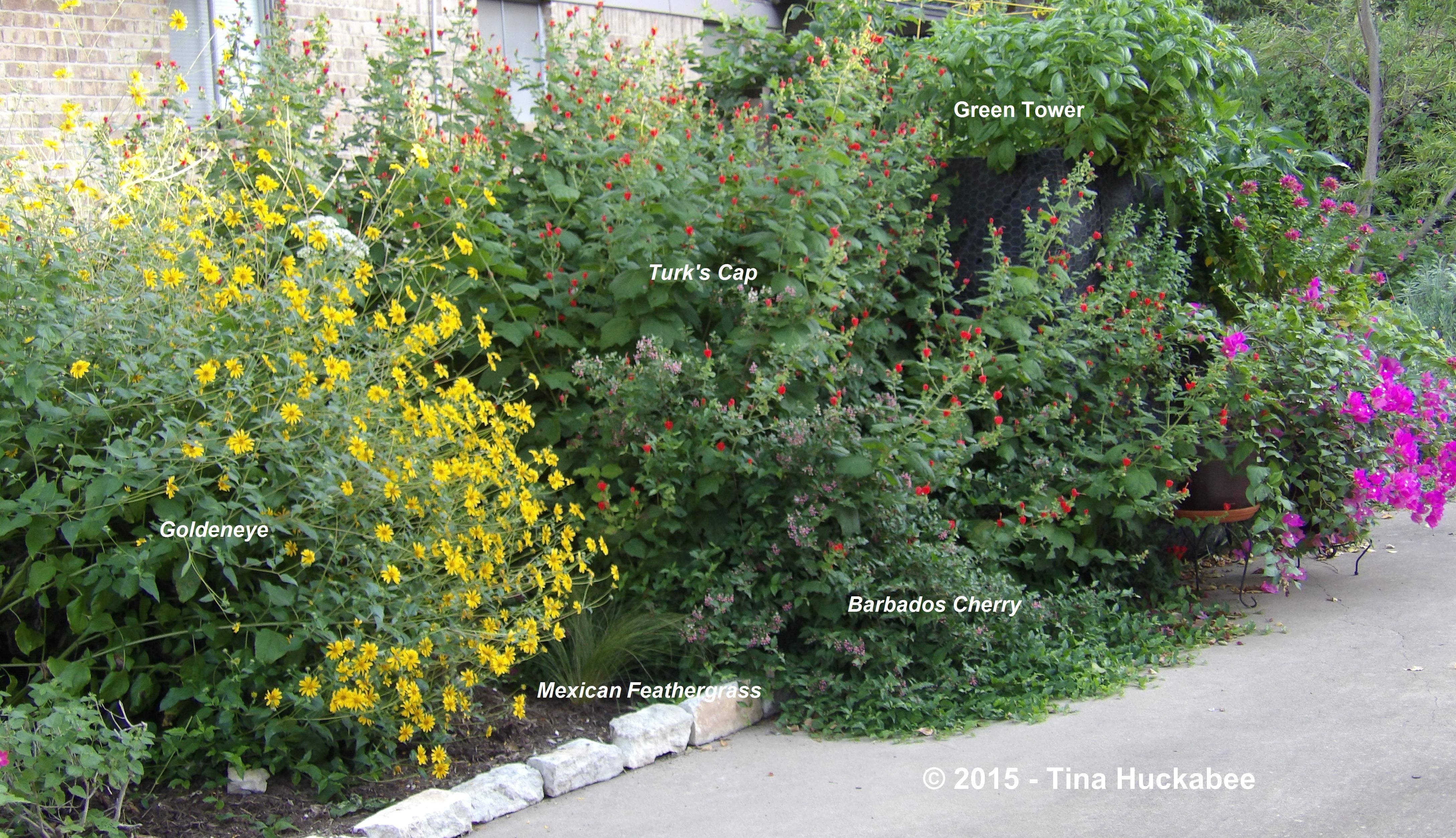
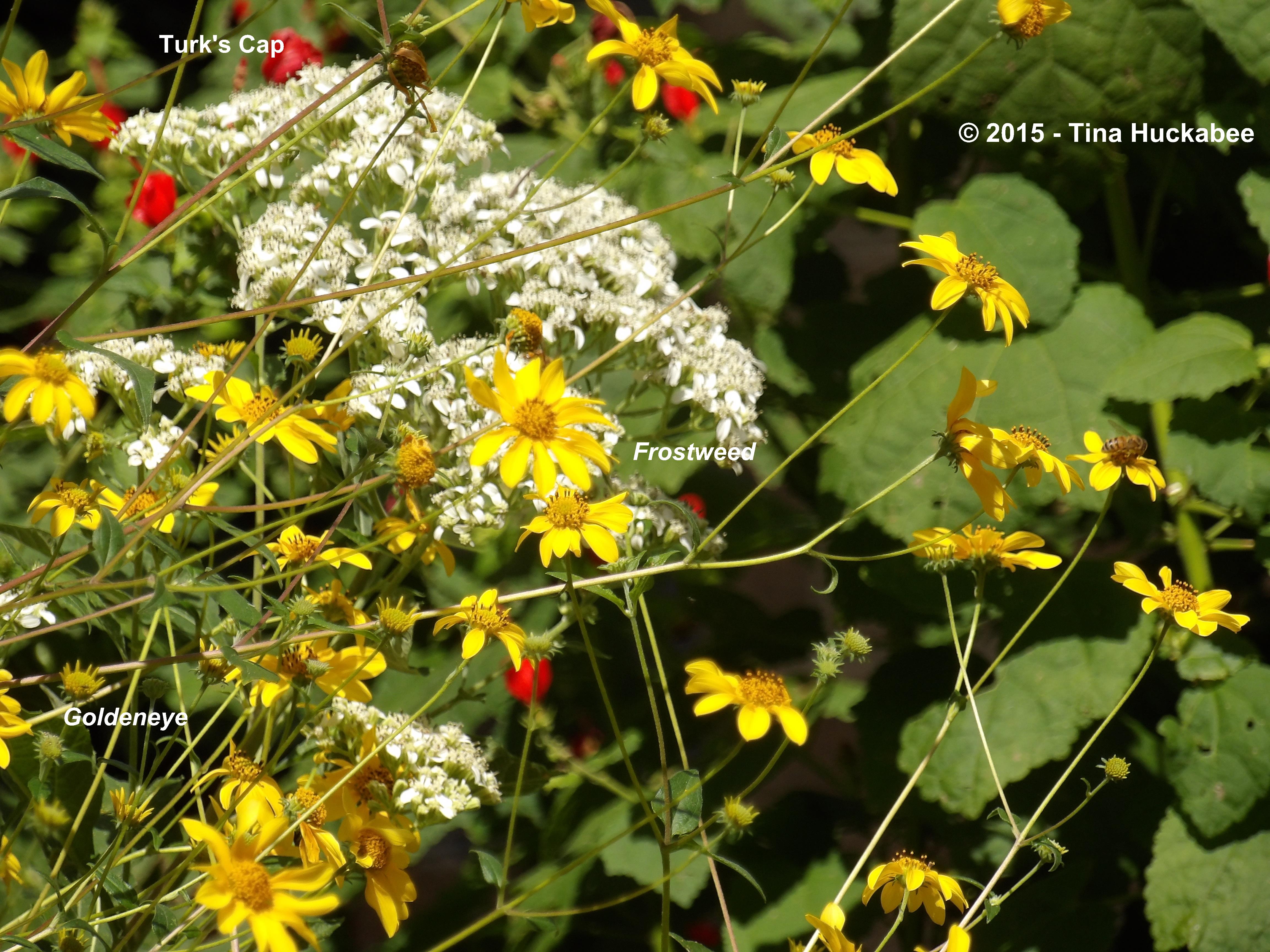
I also left the Turk’s Cap, Malvaviscus arboreus, which planted itself at the far end of the garden, just beside and around, the Green Tower.
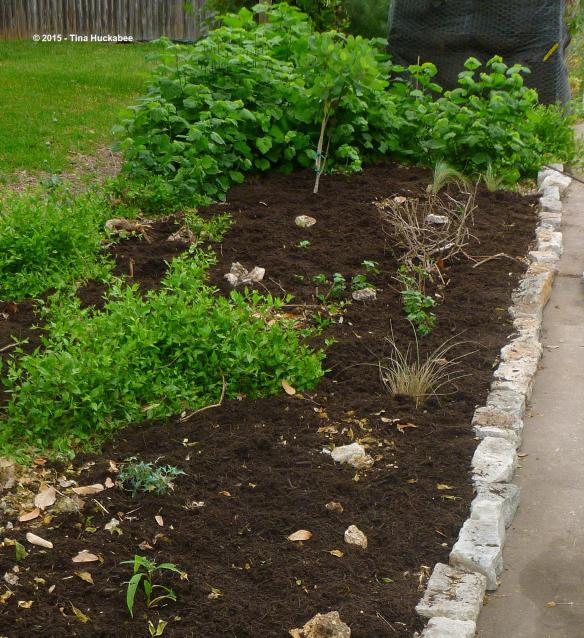
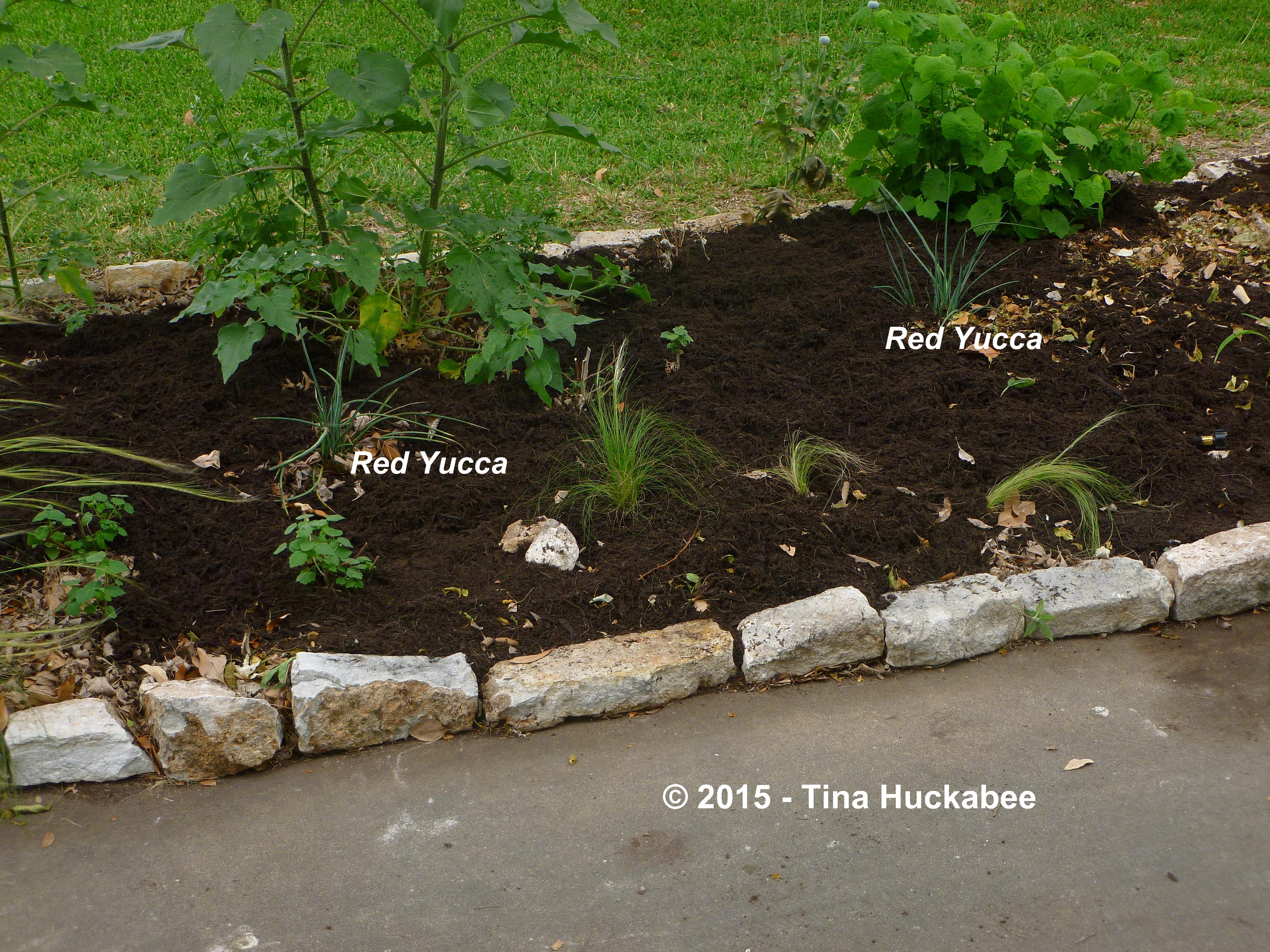
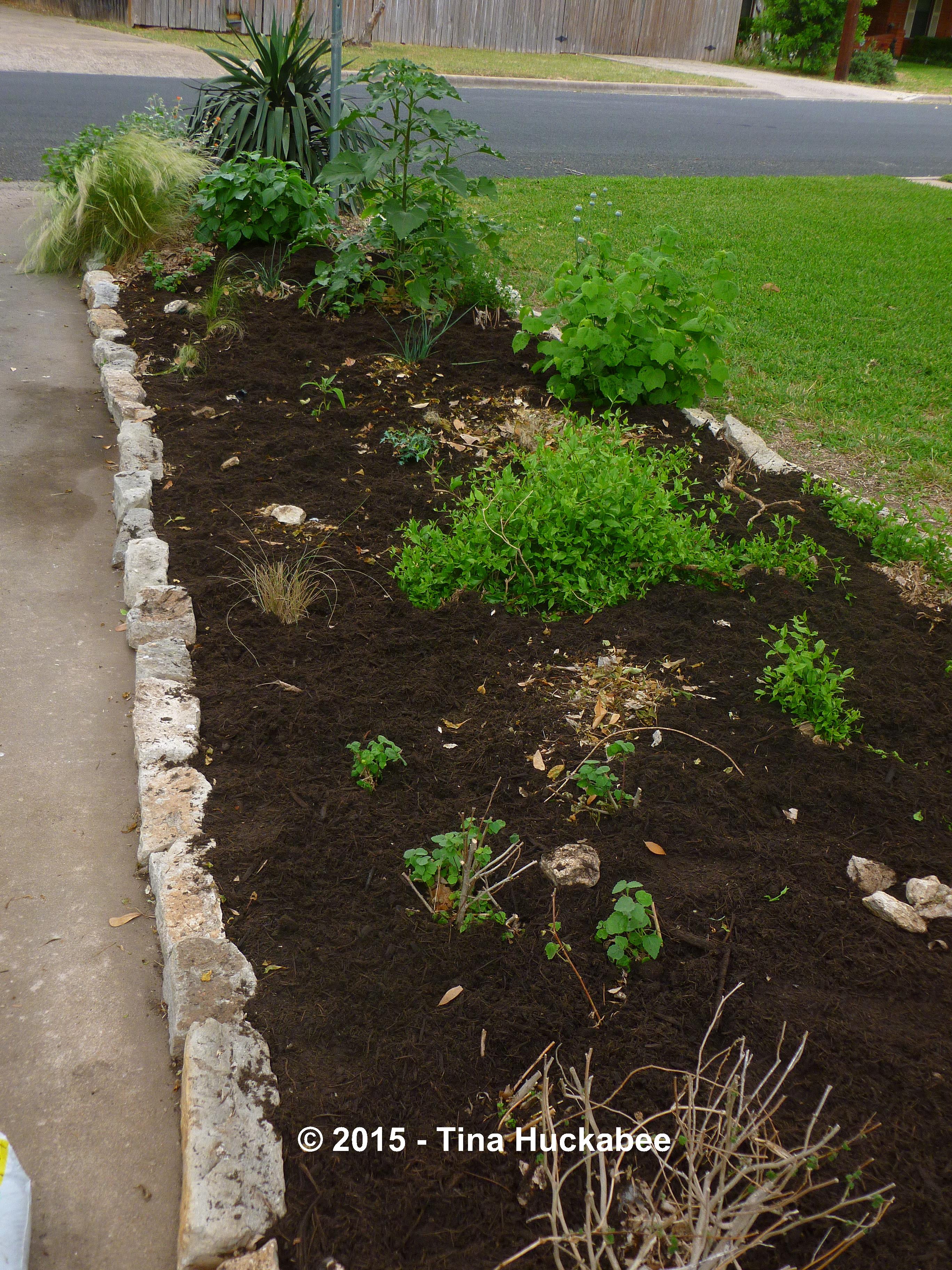
Most of this garden re-do was accomplished with on-hand plants. When you grow natives, a vast supply of seedlings is at the ready for relocation to yours, or other gardens. I did buy a few plants though. In the vertical and horizontal center part of the garden, I added two purchased Red Yucca, Hesperaloe parviflora,
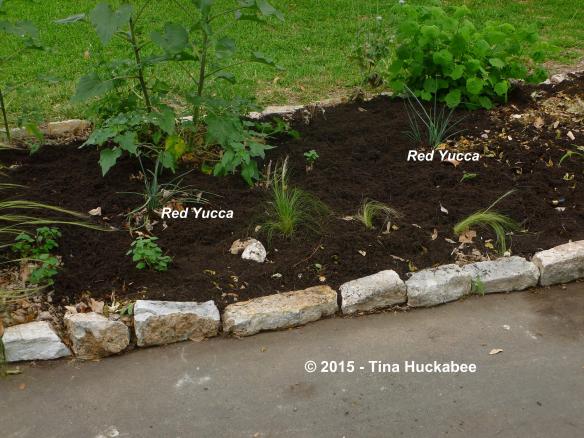
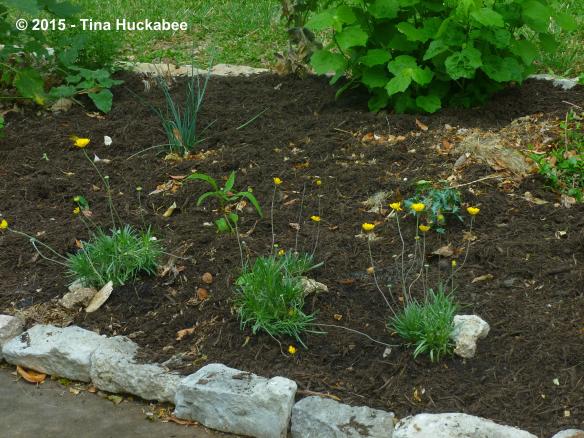
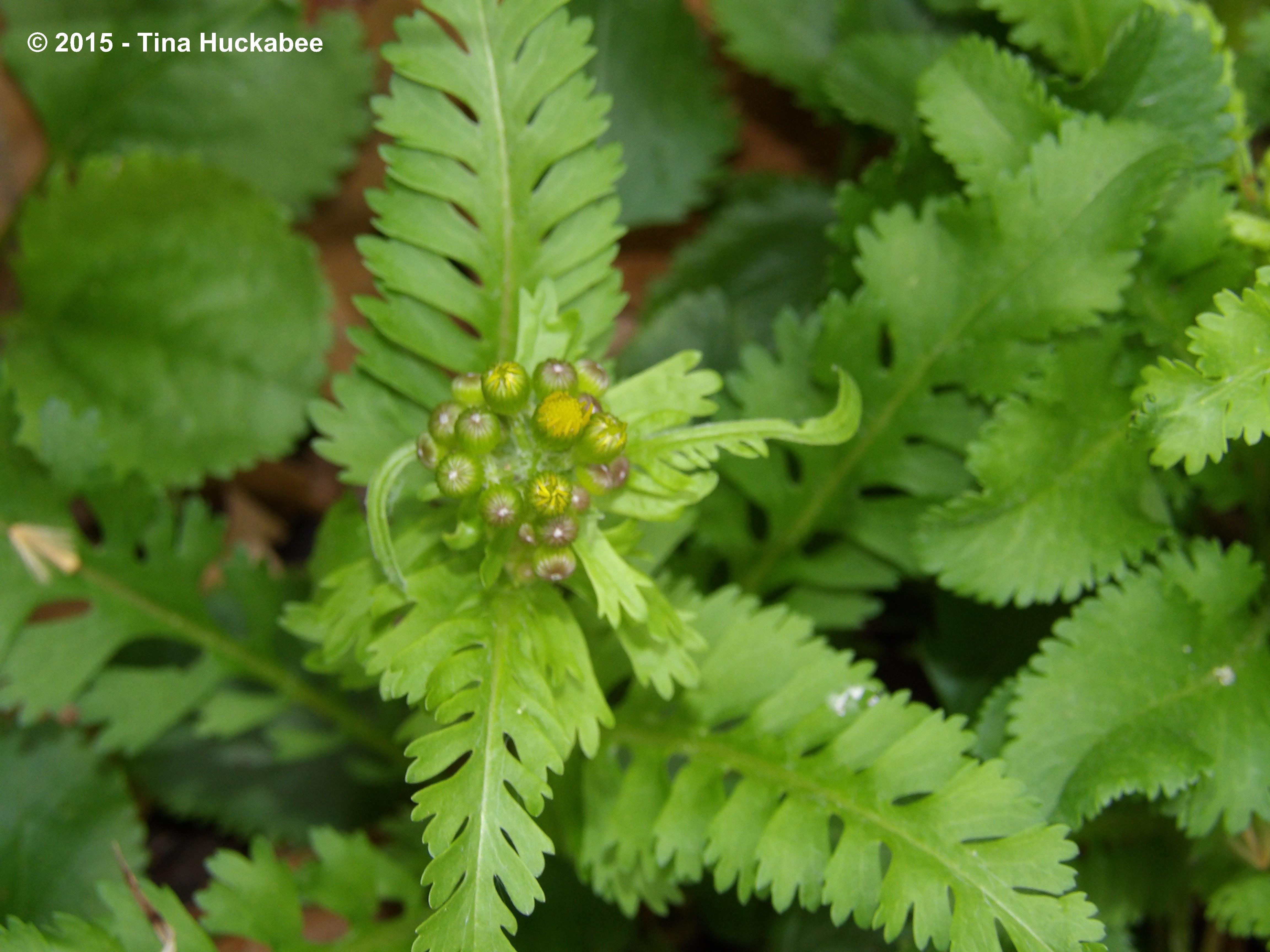
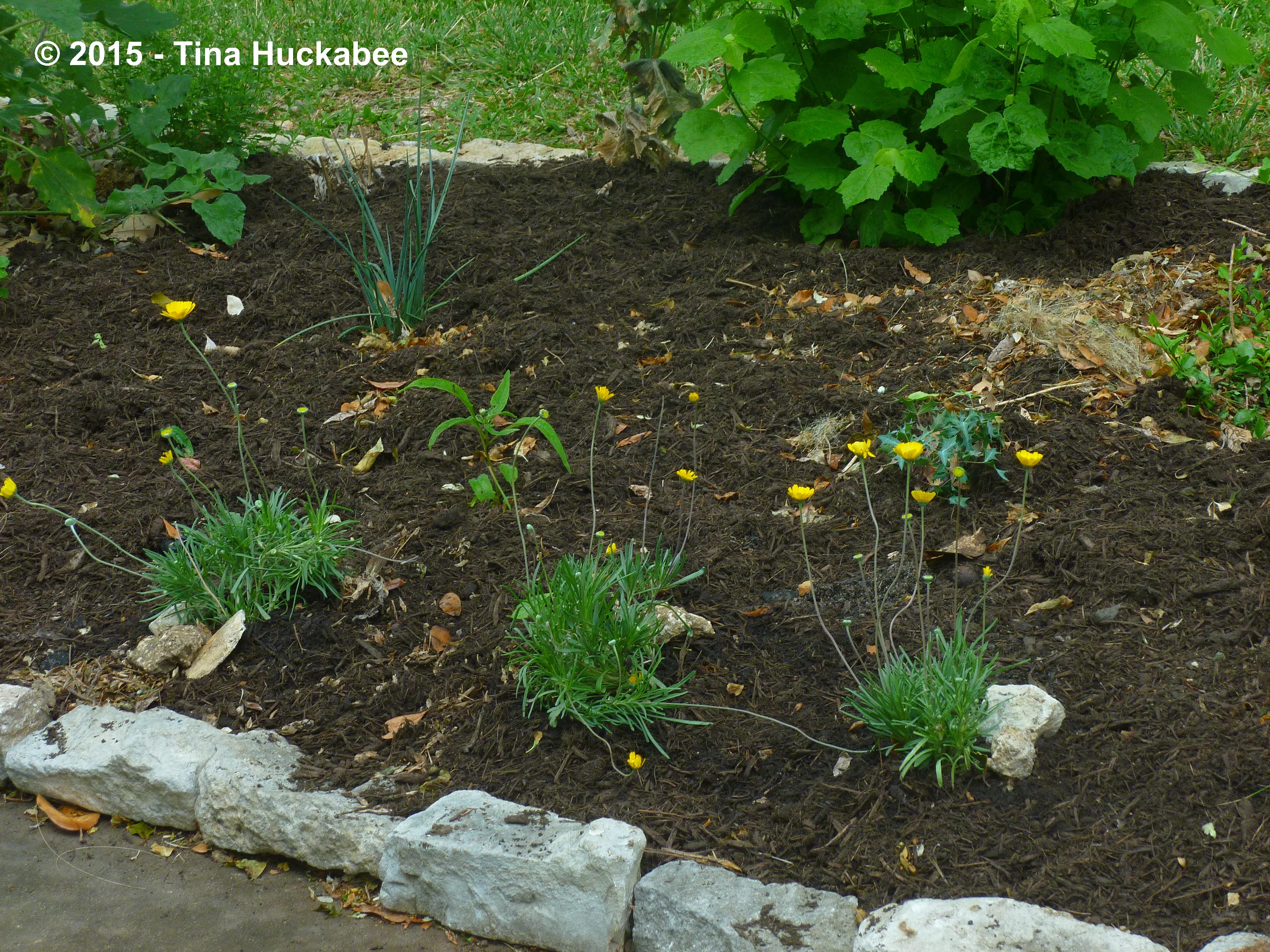
…and along the drive, purchased and planted three small pots of Four-nerve Daisy, Tetraneuris scaposa.
Close to the GT, I planted a Texas Smoke Tree, Cotinus obovatus, a tree I’ve long wanted to add to my garden.
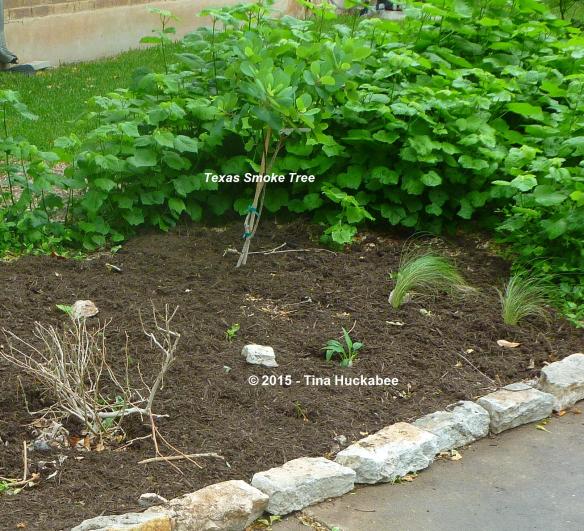
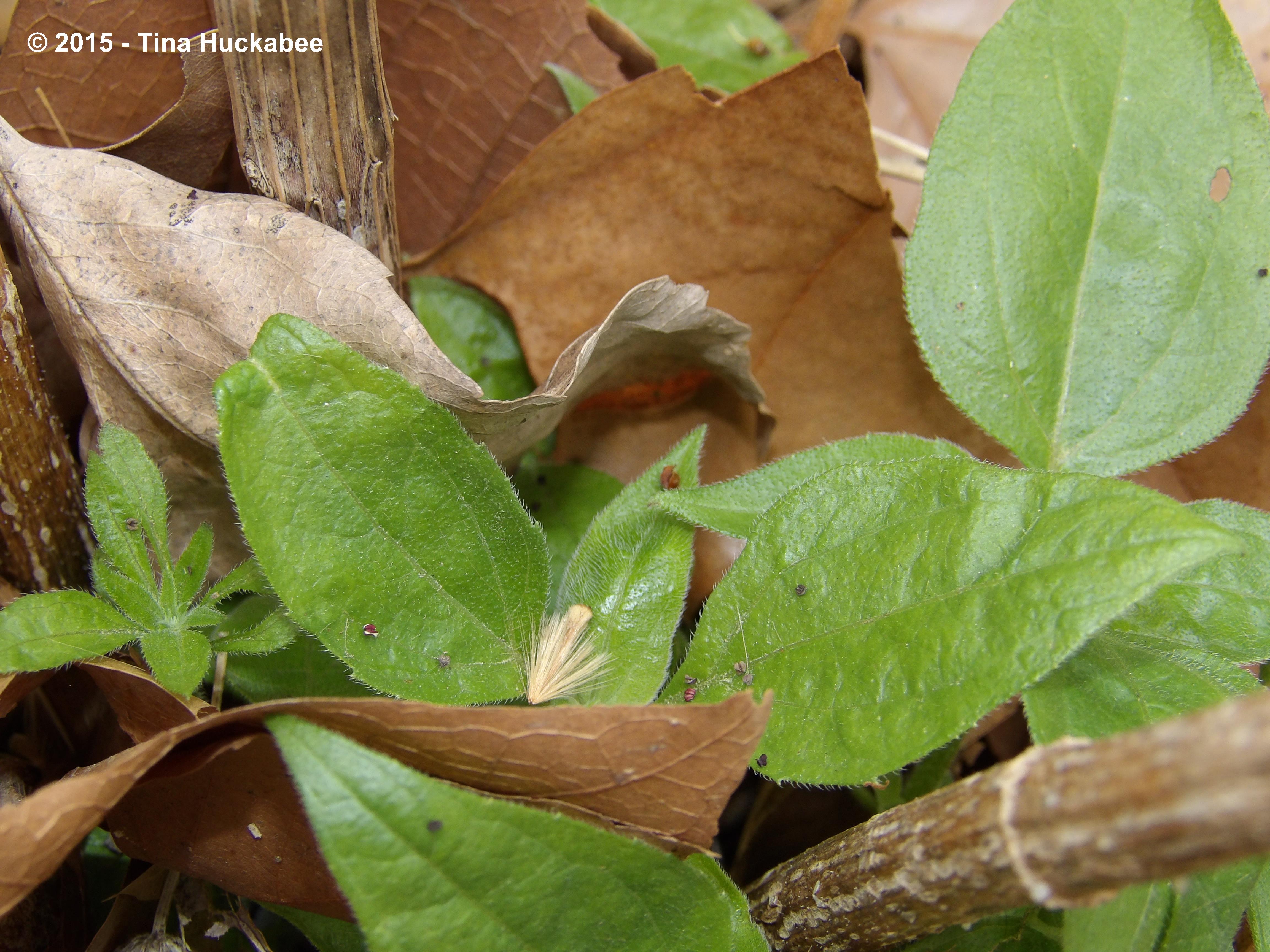
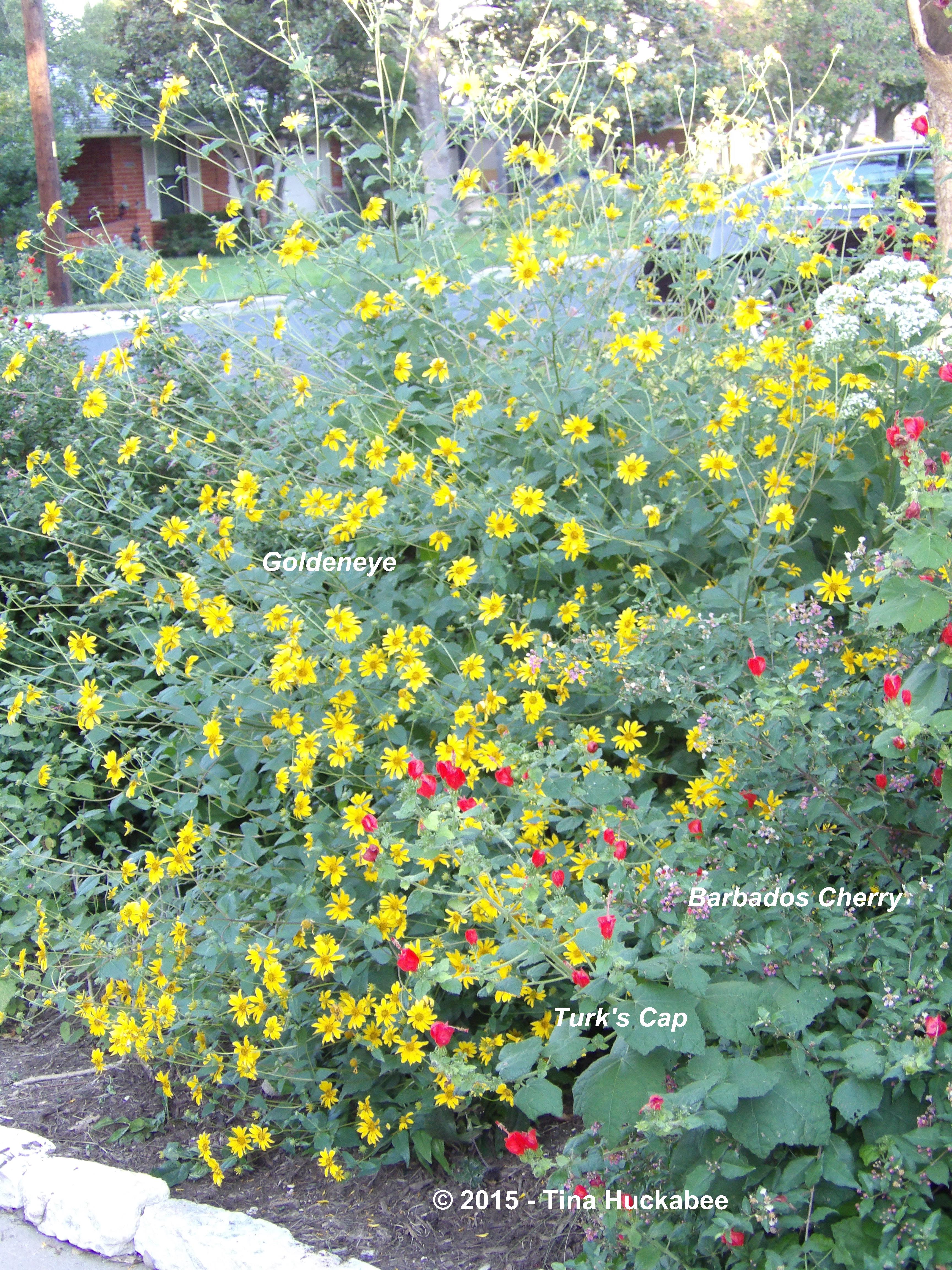
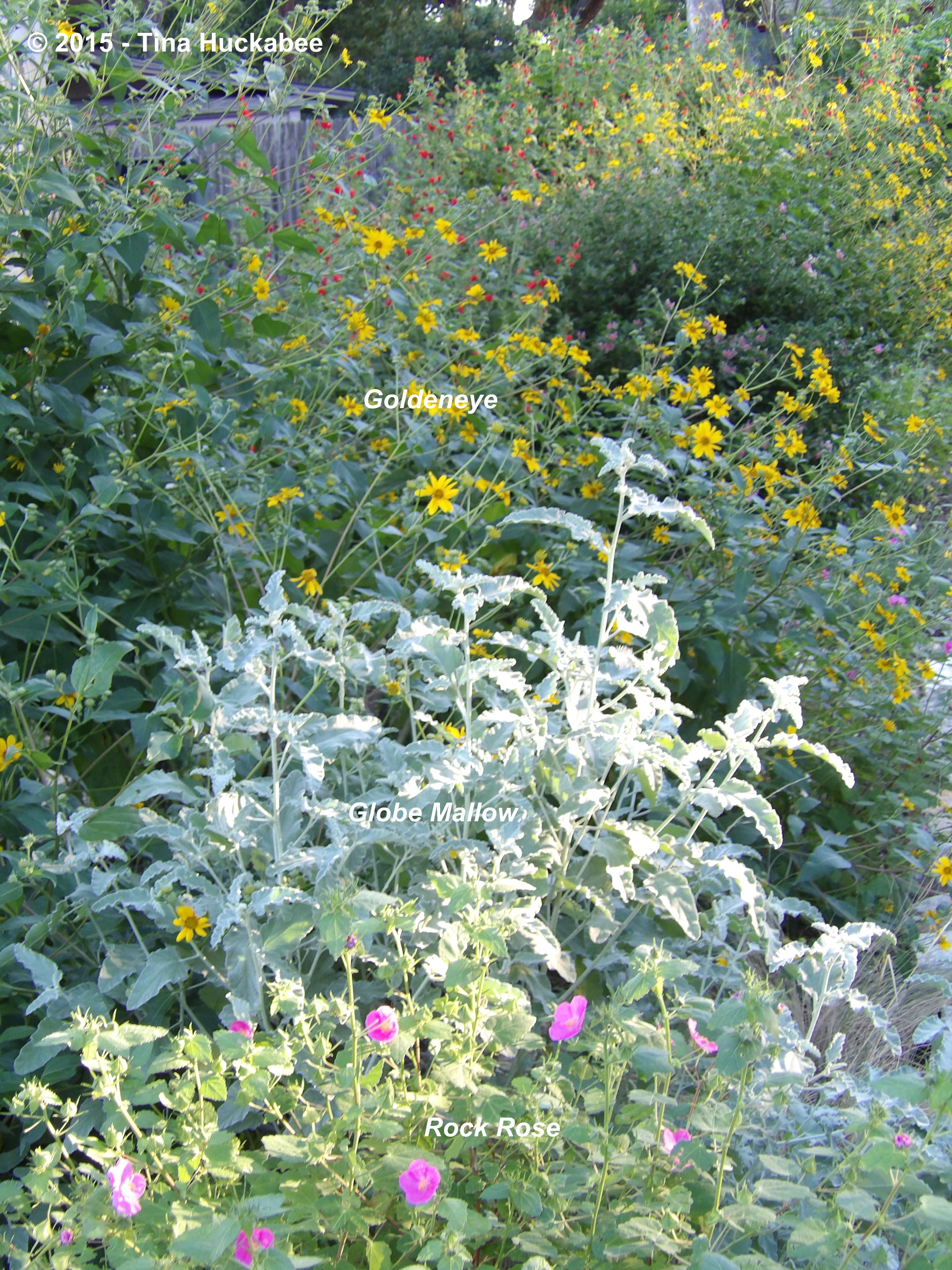
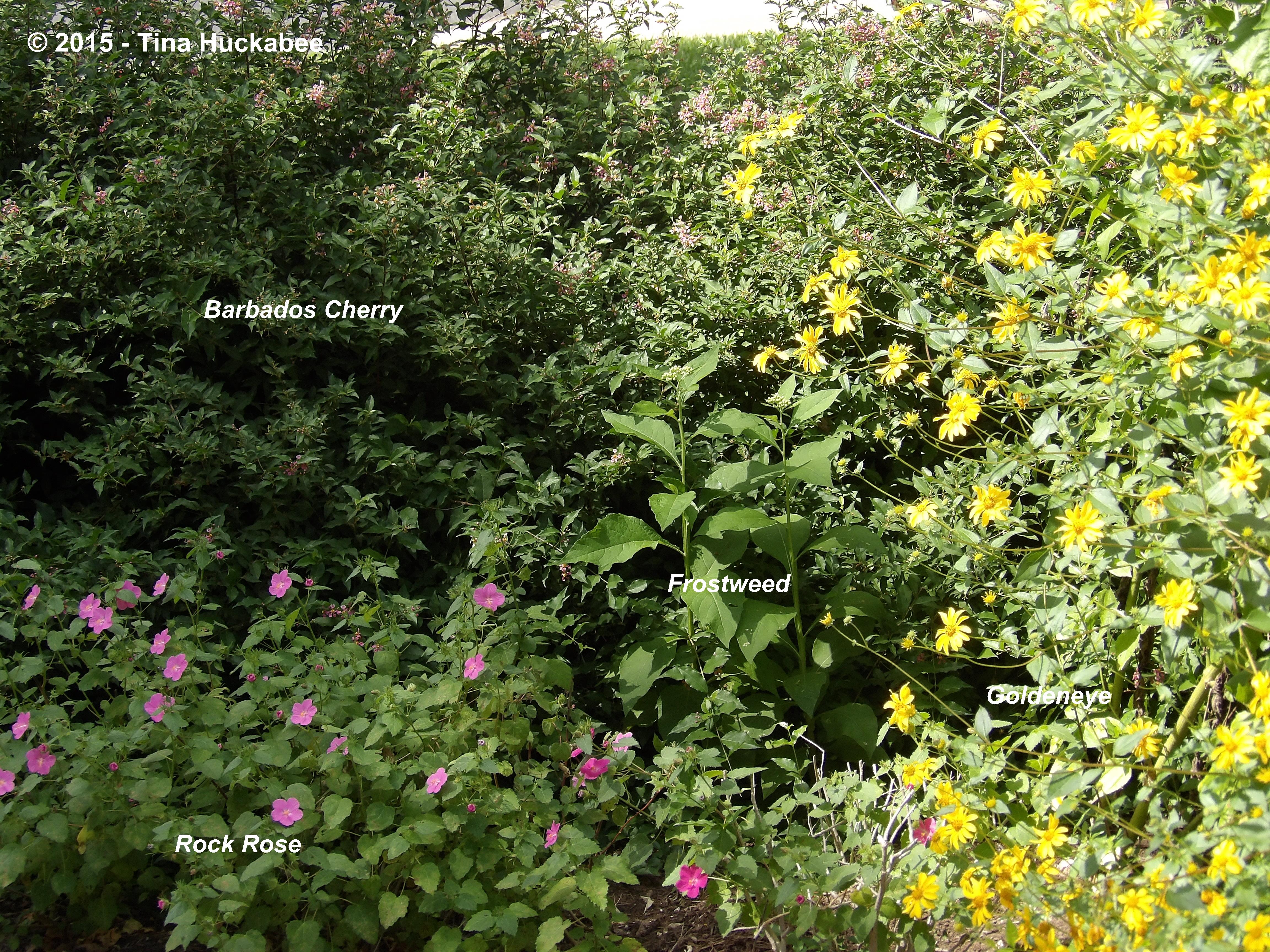
Other plants that came from various parts of my gardens include Rock Rose, Pavonia lasiopetala, Purple Coneflower, Echinacea purpurea, Mexican Feathergrass, Nassella tenuissima, Globe Mallow, Sphaeralcea ambigua, Frostweed, Verbesina virginica, Goldeneye, Viguiera dentata, and a couple of white Tropical Sage, Salvia coccinea, which pop themselves all over my gardens with no assistance from me. Every spring I also allow some non-native, annual sunflowers (from birdseed, I think) to grow, bloom and seed-out and a few of those tall beauties always find their way into this garden. I transplanted (again!) a Gulf Muhly, Muhlenbergia capillaris,
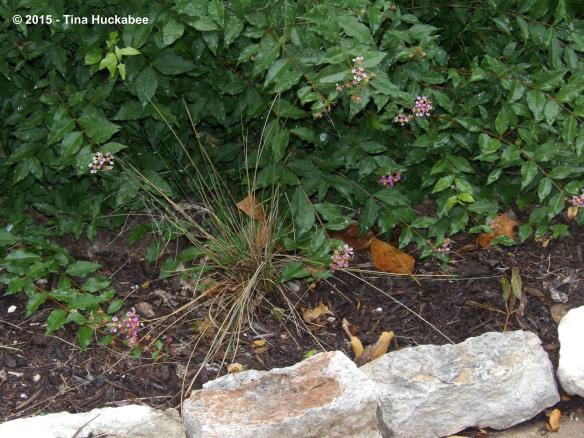
…in hopes of autumn glory.
In October, a garden buddy gave me some Fall Obedient Plant, Physostegia virginiana, and it fills in a blank spot along the edge of the garden, by the neighbor’s turf.
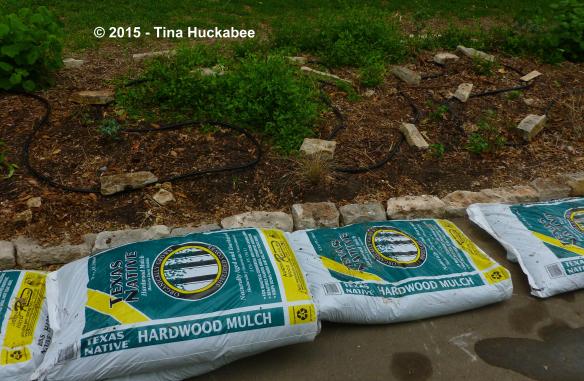
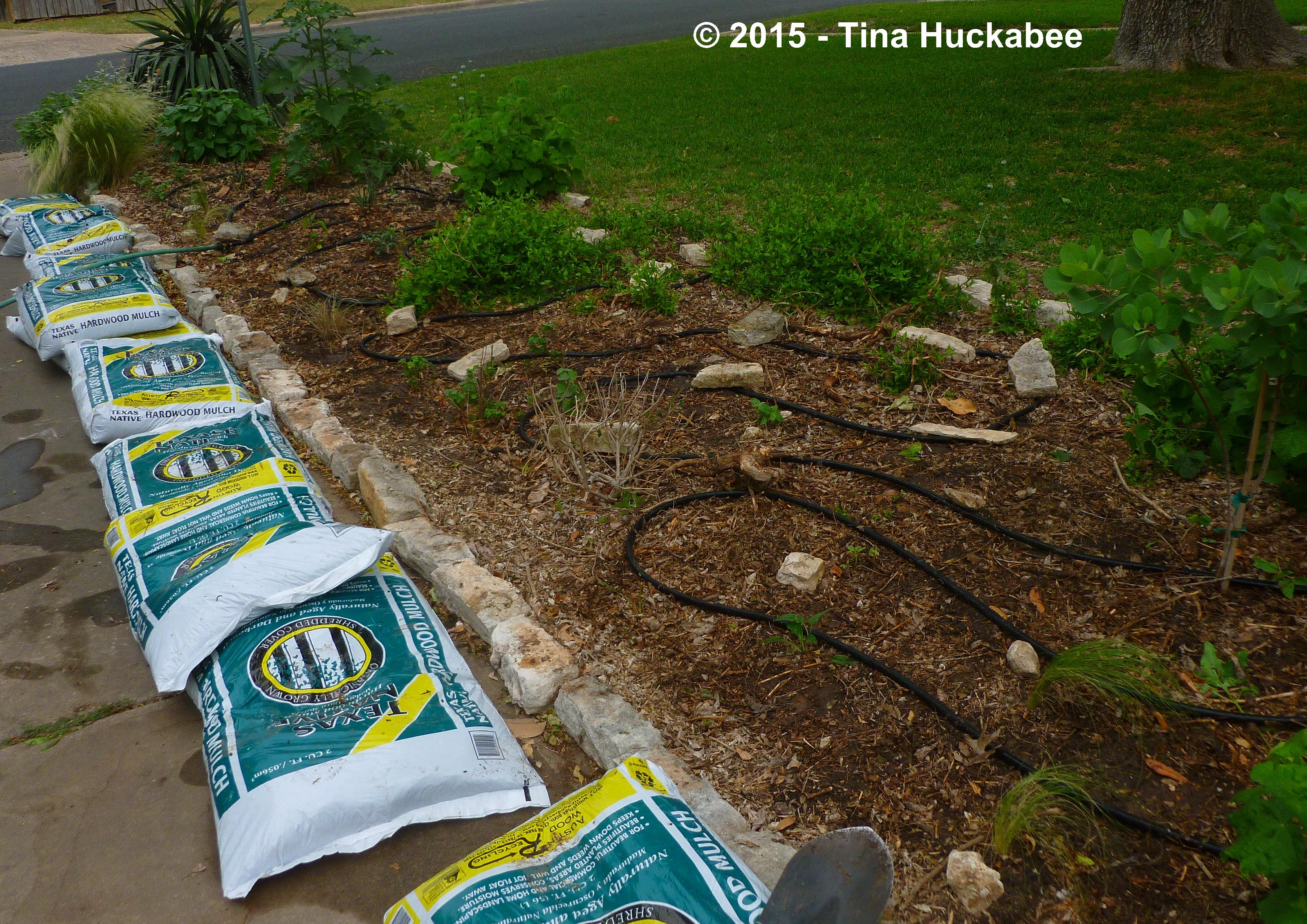
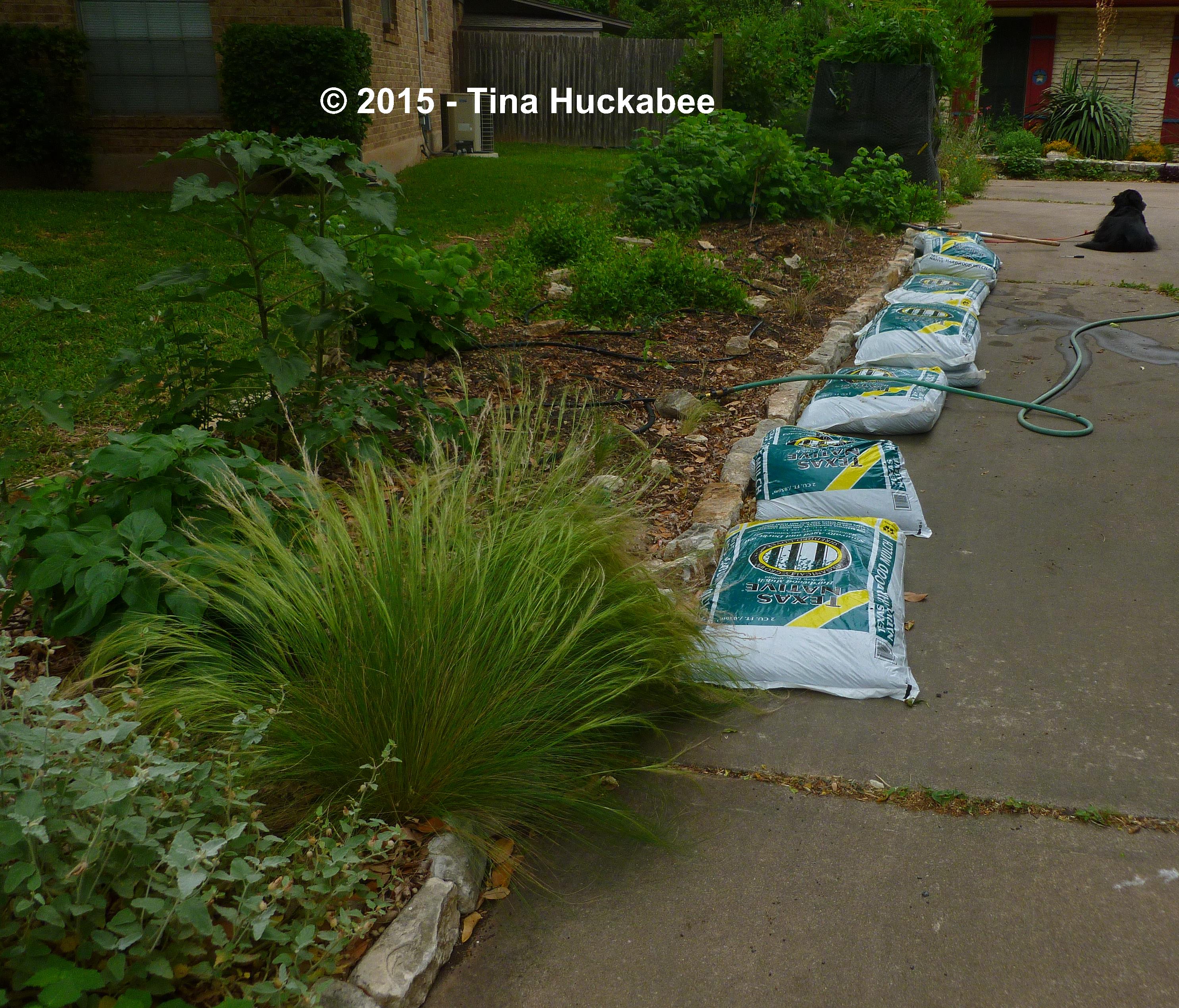
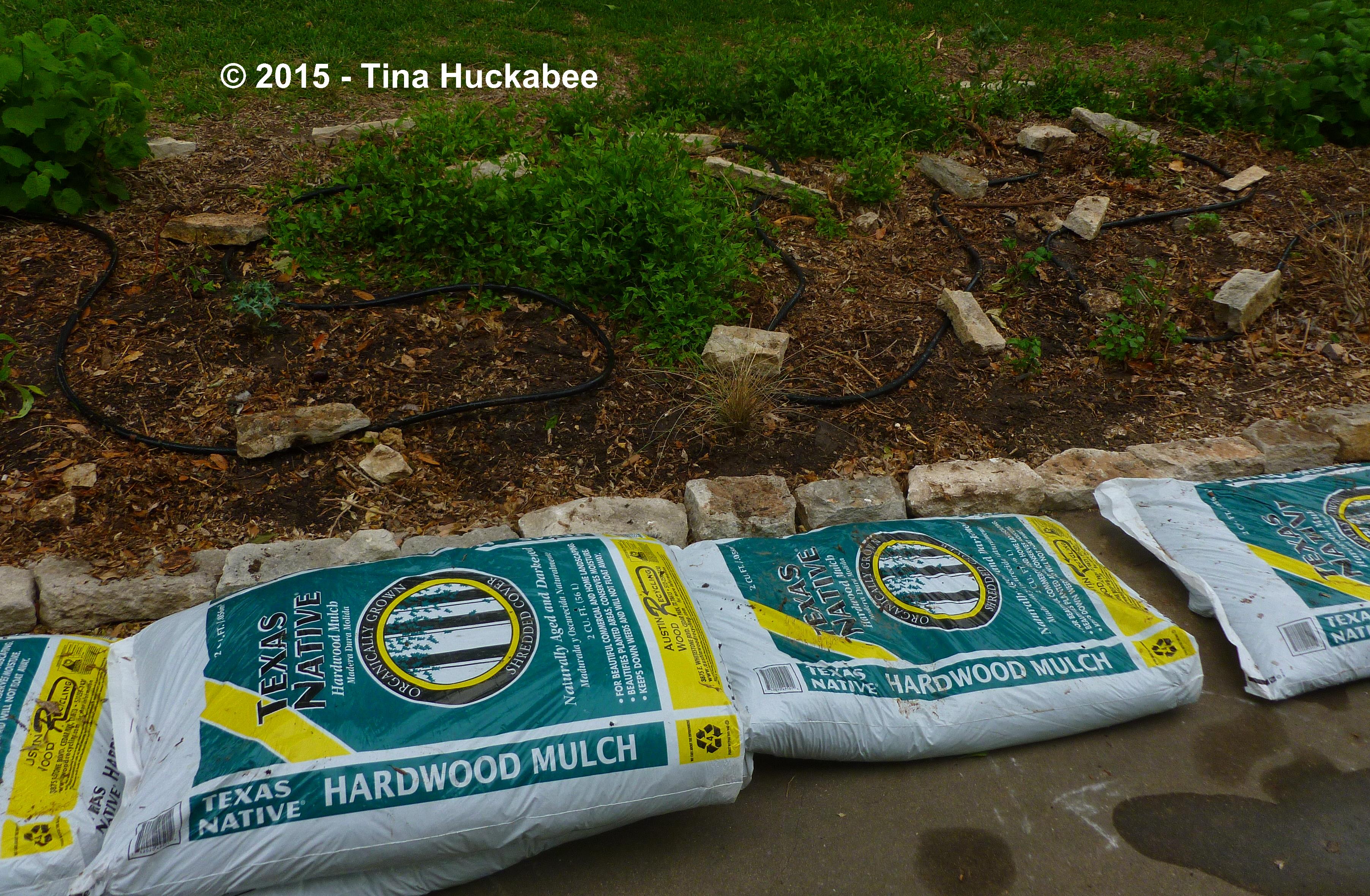
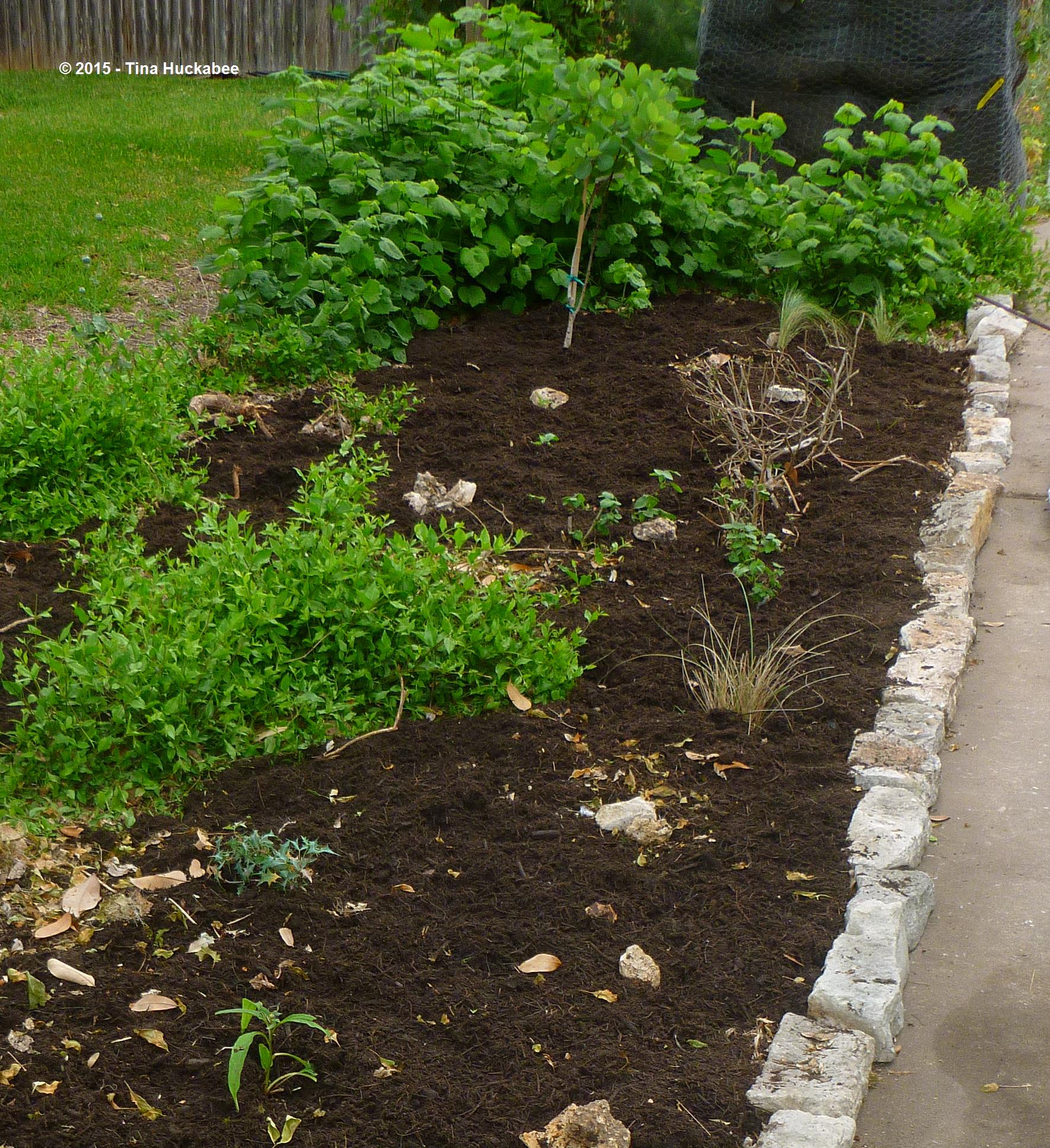
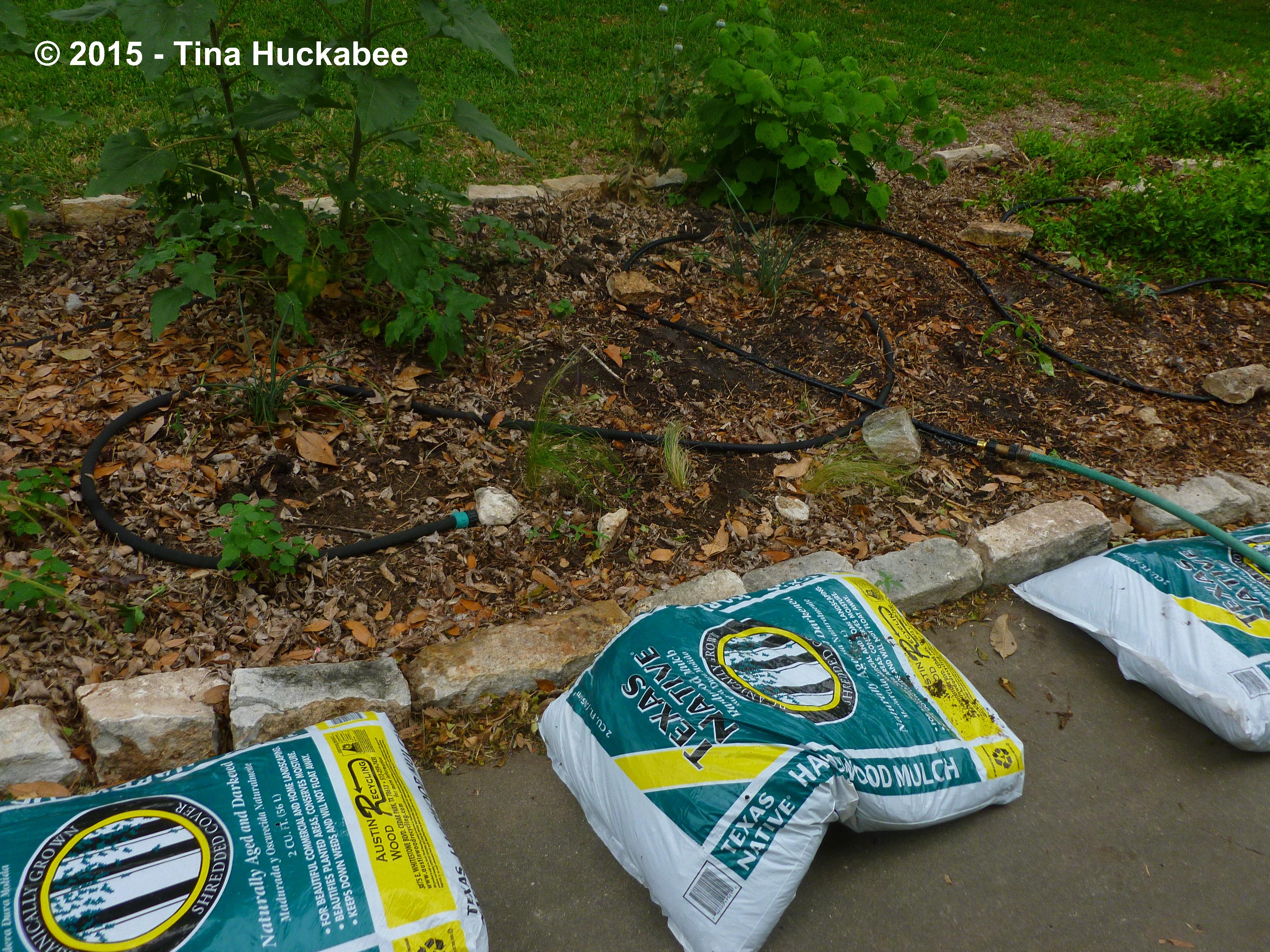
After planting last spring, I added fresh mulch,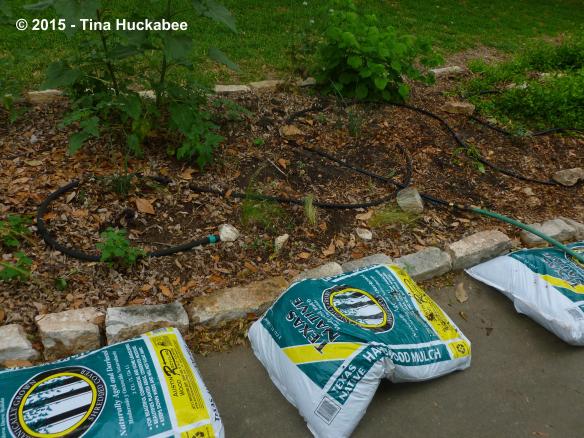
…and soaker hoses to the garden, with supervision from Asher the Garden Dog.
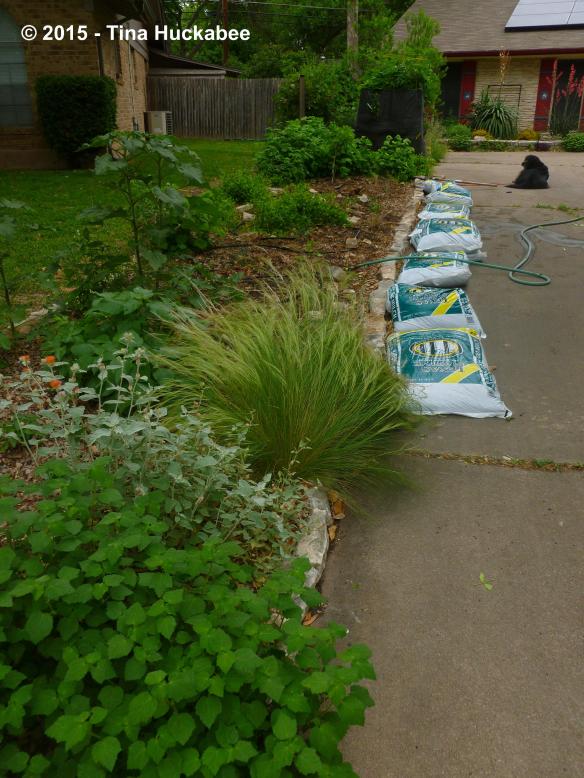
The Soft-leaf Yucca that I wrote about last post, anchored the street end of this garden. It’s snout-nosed weevil rotted and gone now, but the replacement Goldeneye will work beautifully in its stead.
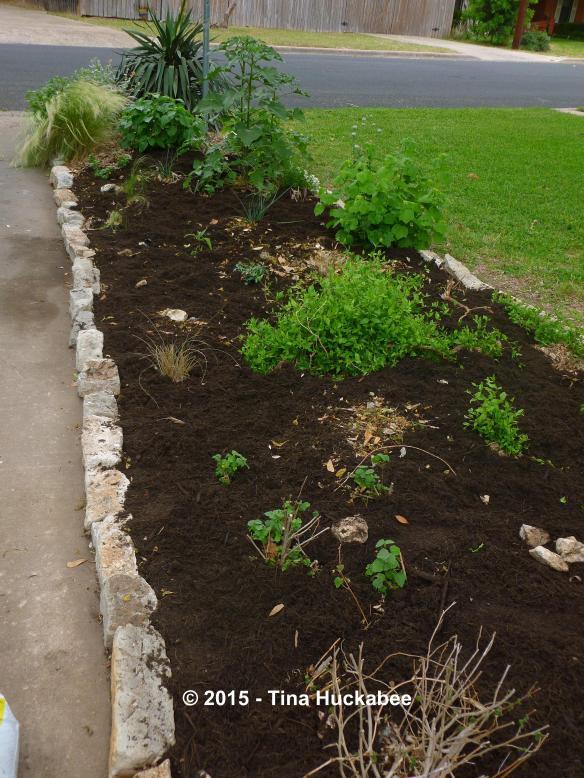
I chose these particular plants because I’m a sucker for blooming things. Also, I wanted a variety of pollinator/seed-bearing plants for wildlife, for blooms, but also, for year-round interest with seeds and berries. The height of bloom time for the garden is summer through late fall.
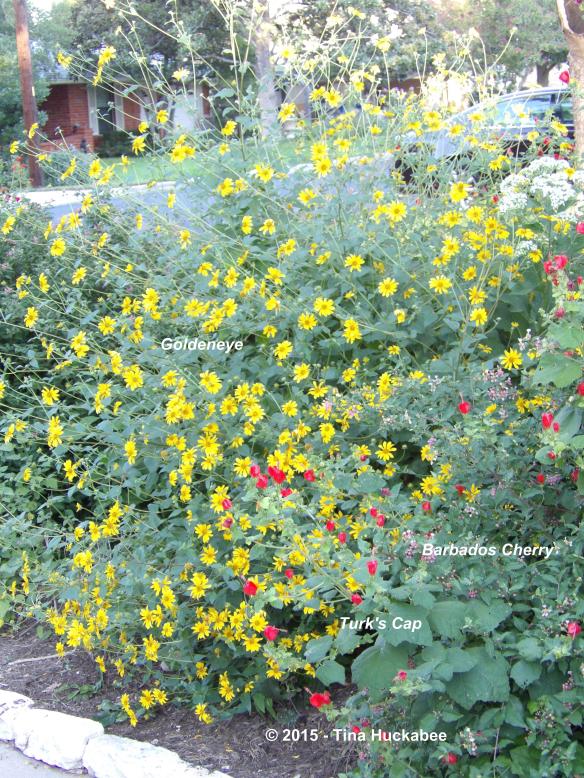
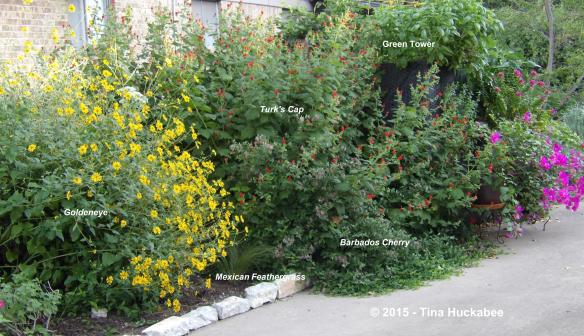
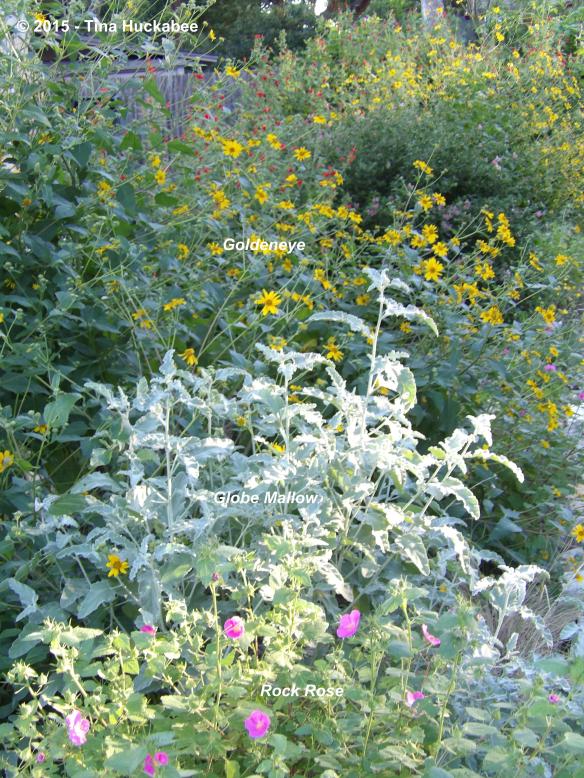
The structural part of the garden resides in shrub form with the Barbados Cherry, Globe Mallow, and Rock Rose, and in a “grass” form by the Red Yucca, Mexican Feathergrass, and the foliage of the Four-nerve Daisy. The other plants are either dormant in winter or form small winter rosettes.
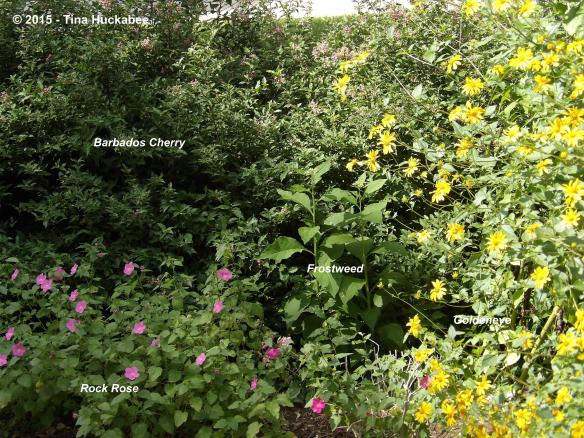
And though I don’t have many photos to verify, there was always insect and bird action around most of these plants.
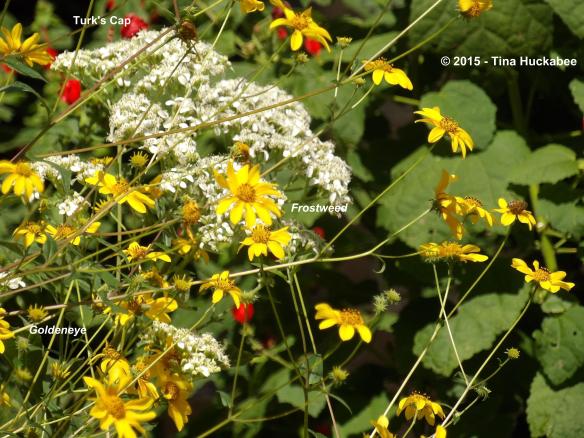
The Green Tower was a limited success as a vertical vegetable garden. The top was lush with tomatoes, basil, cucumbers, and beans, but the sides were a bust–there wasn’t much vegetable growing success there, unfortunately. I moved three older Bougainvillea container plants from my back patio, where less sun smiles on them than in previous years and placed them on the driveway in front of the GT, which camouflaged the unplanned for bare wall of that structure.
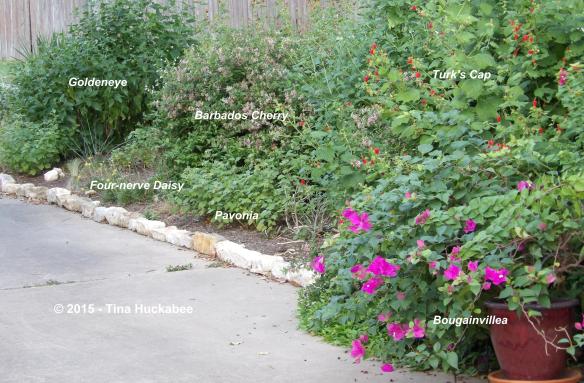
The three Bougainvilleas were very happy in the new spot–they put on quite the show of blooms from midsummer until I moved them to the garage in November. I’m trying a different set of plants in the front and sides of the GT this year and that will require some integration with the potted Bougainvilleas.
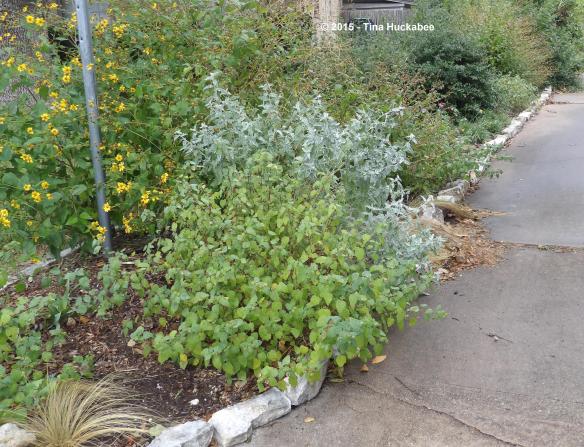
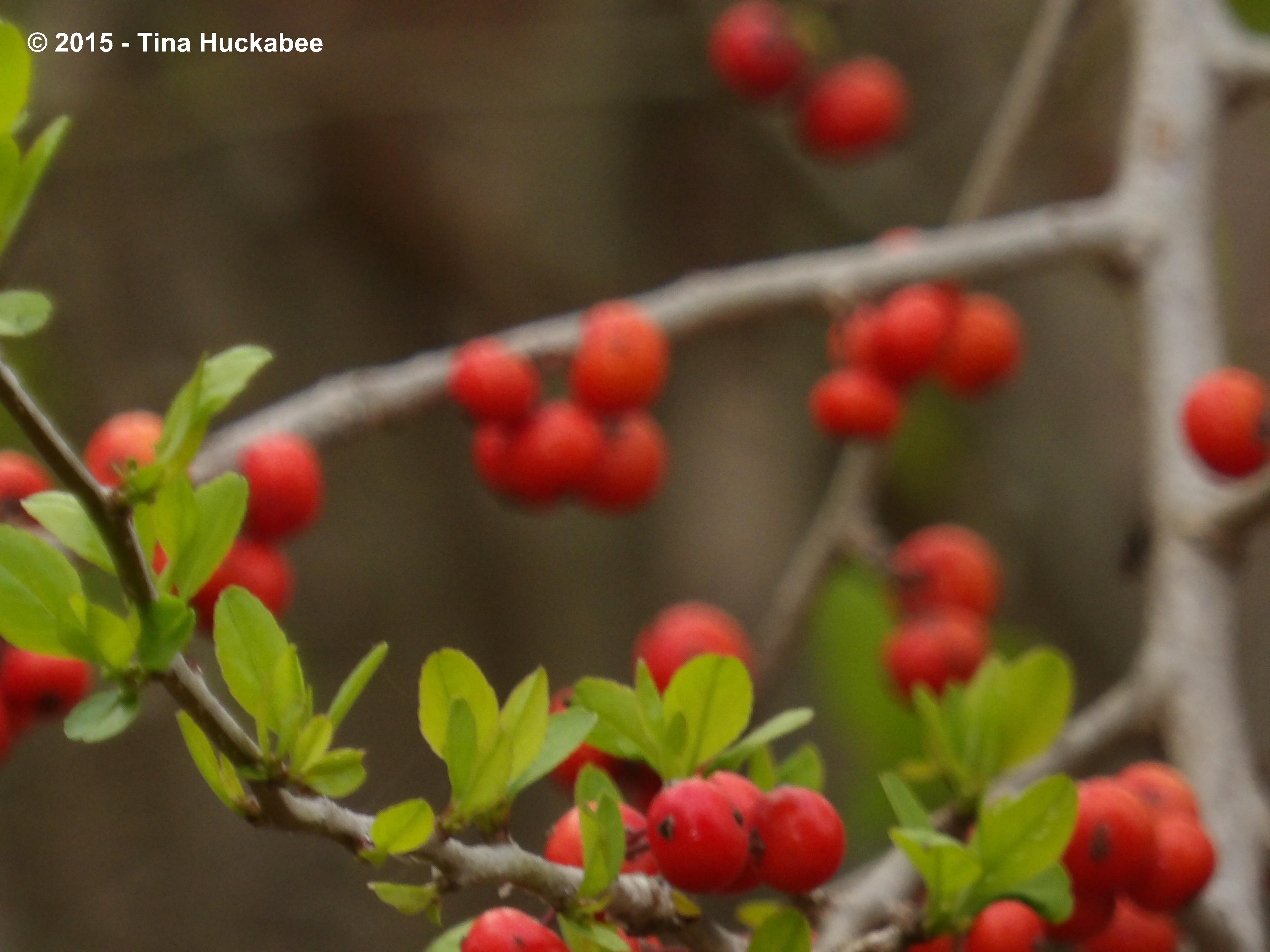
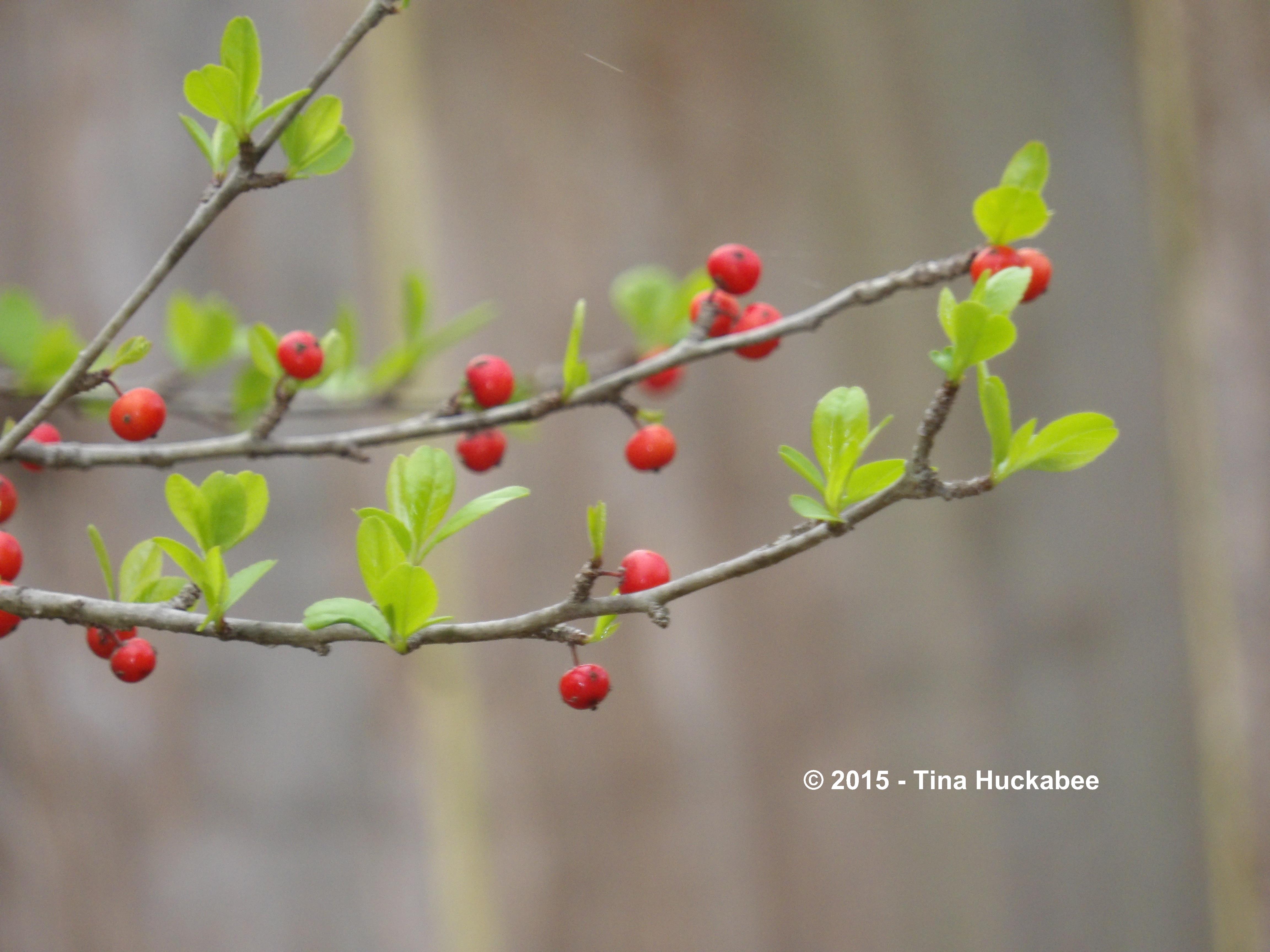
Once the height of the growing season was past, the garden retained interest with seeds from the Frostweed, Goldeneye, and Coneflower and berries from the Barbados Cherry.
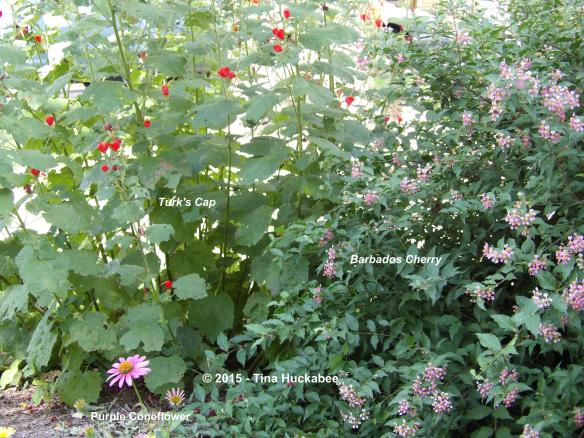
I’ll continue tweaking this garden–I’ve moved one Frostweed to another garden, lost the Yucca, but added Goldeneye. The Four-nerve Daisy seeded out, so there will be more happy yellow, low-growing daisies to fill in along one side. I’ve cleared out more of the Barbados Cherry, which will be an ongoing task, and I’m trying different plants (not vegetables) in the sides of the GT this year.
A year in the life of a garden. Mistakes, re-evaluations, and revelations mark the passage of time in gardening
What garden(s) are you looking at differently? Or changing in some fundamental way?
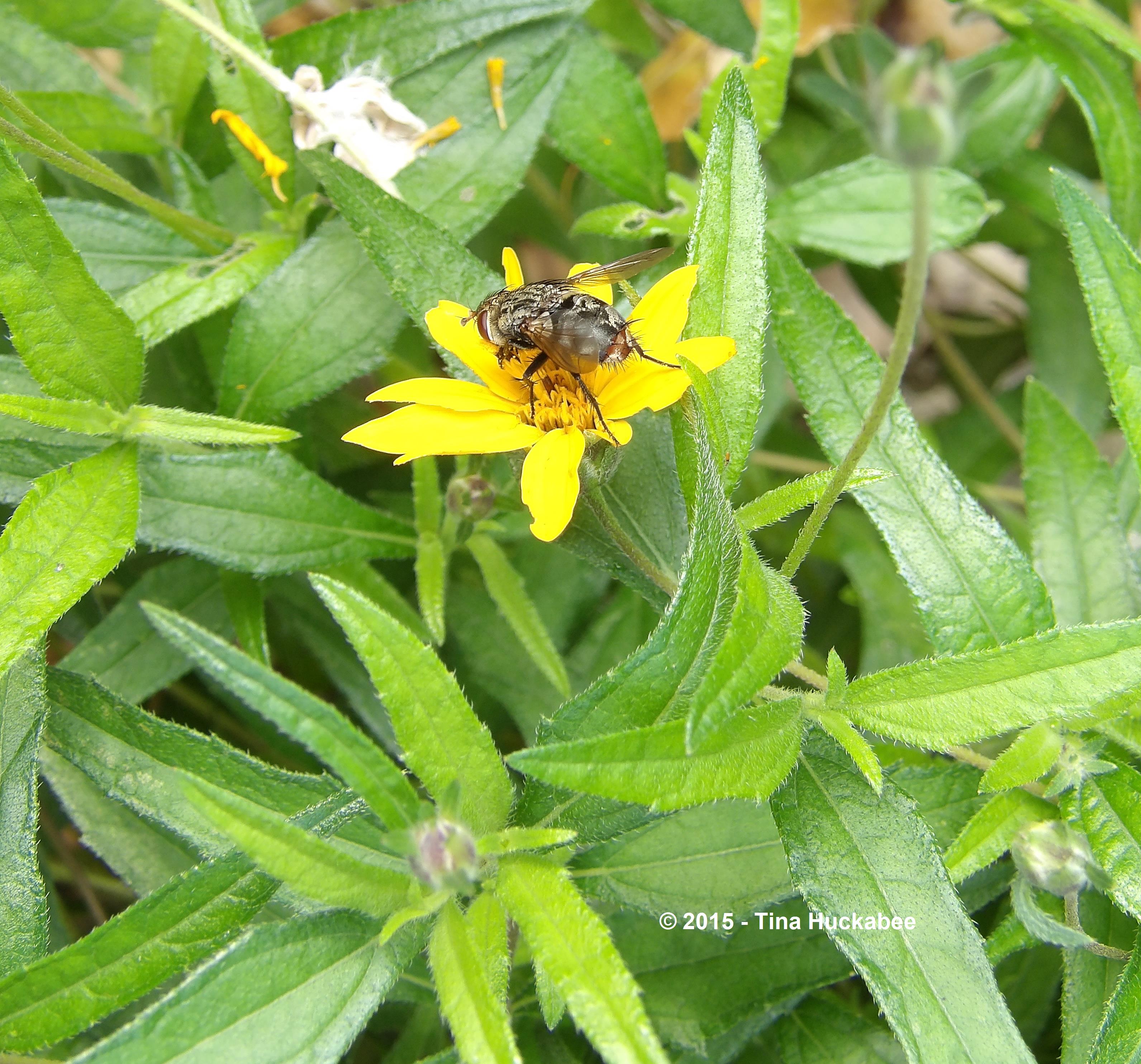
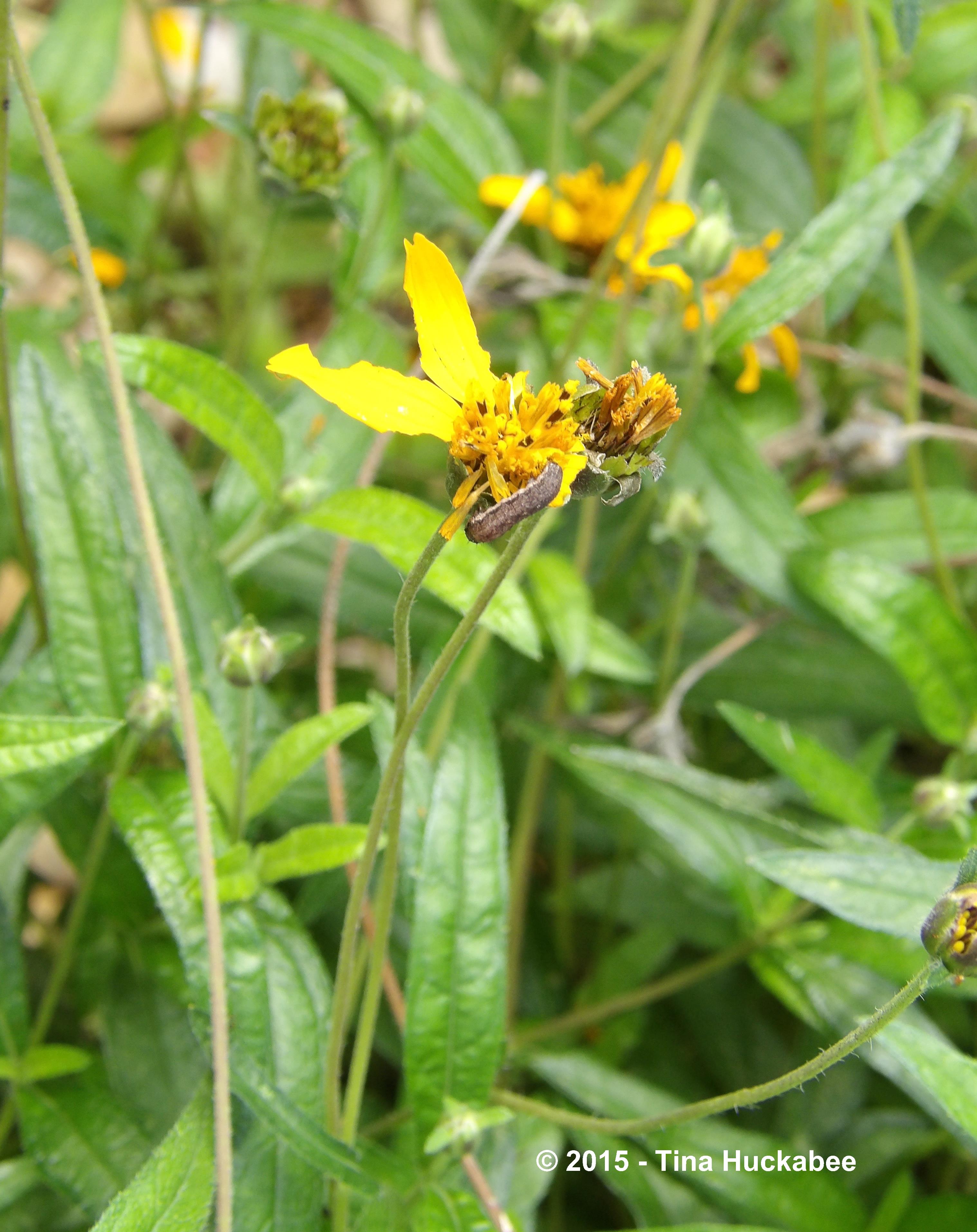
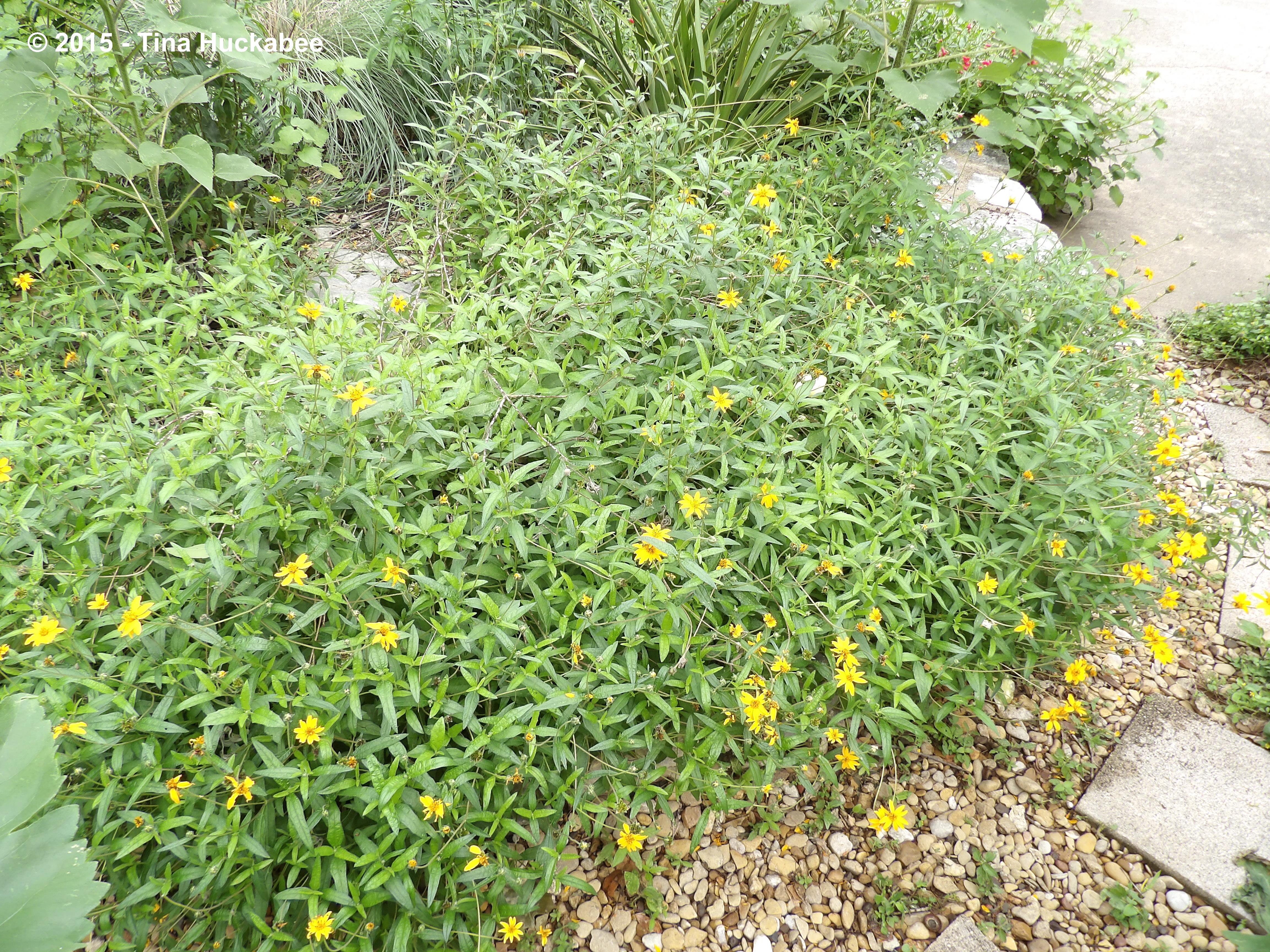 Zexmenia or Wedelia, Wedelia acapulcensis var. hispida, is the restaurant of choice for wildlife in my gardens. Trendsetter insects like Ms. Honeybee,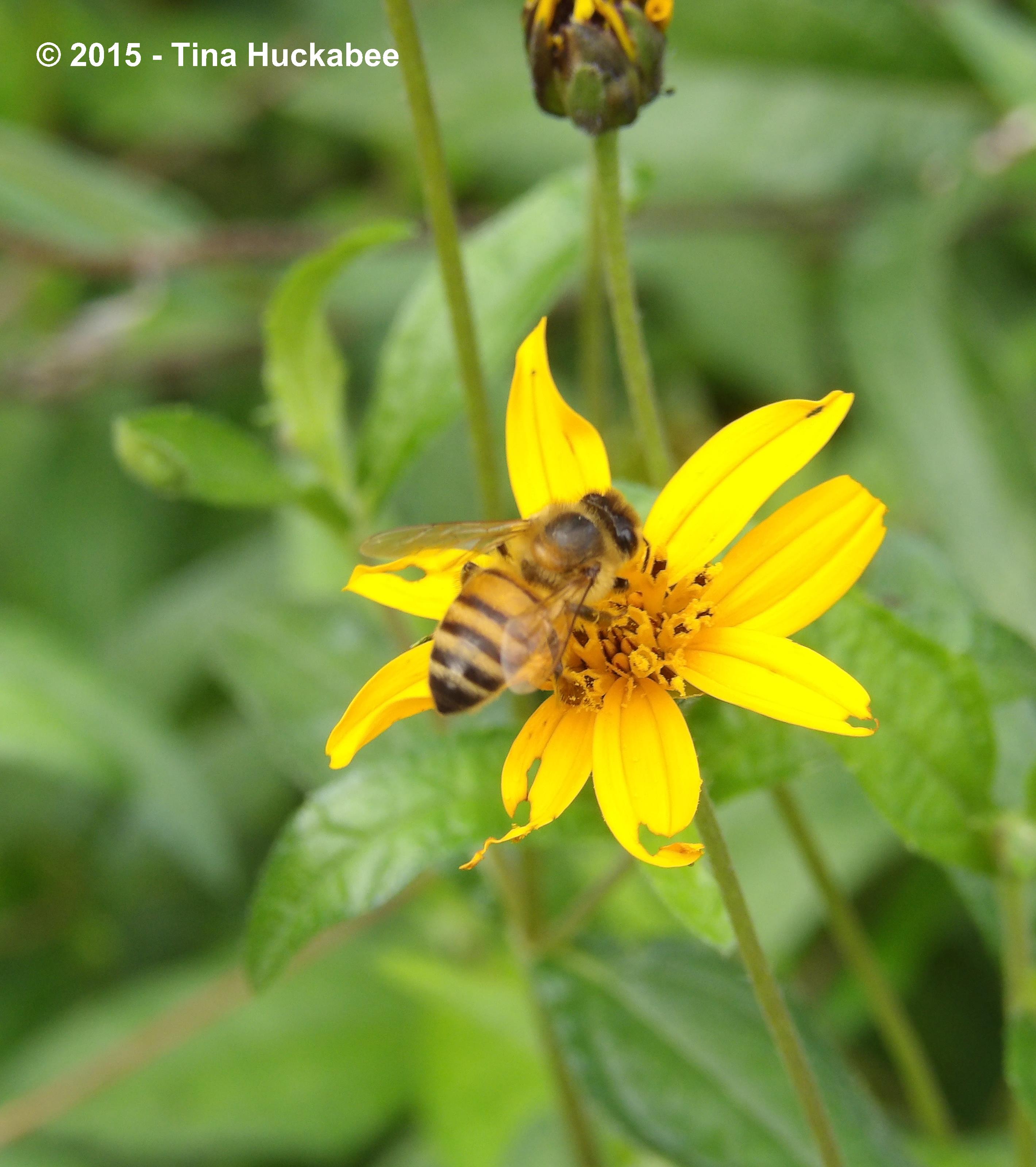





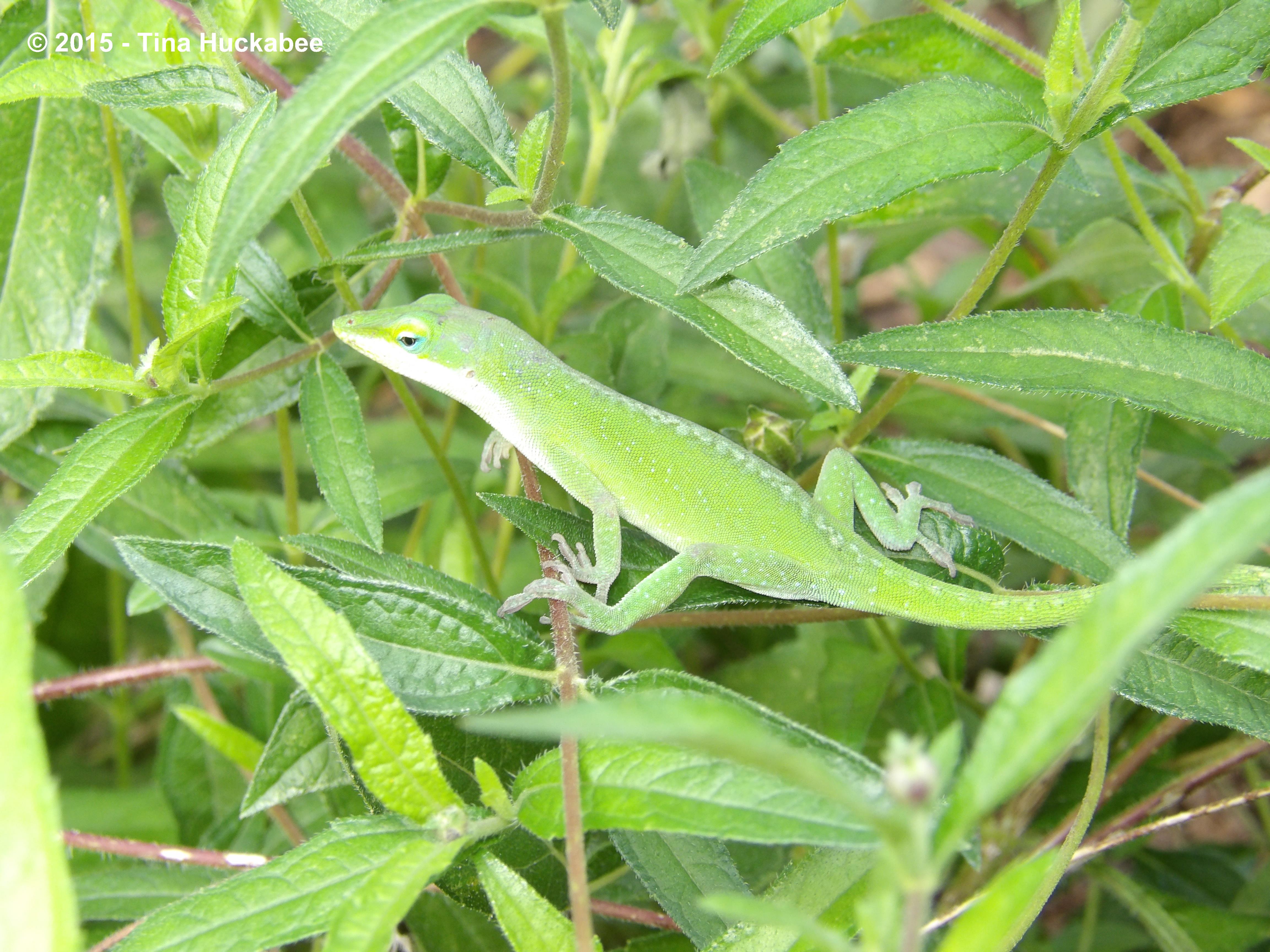 And, maybe eat them.







 My Gardener Says...