Having traveled for half of October and with a general lack of time for critter photo-ops when I was home, there isn’t a portfolio of day-to-day proof of the masses of buzzers and flutterers who’ve been in my gardens this past month. You’ll just have to take my word for it–this past month was epic on the pollinator front in the garden! Not only in sheer numbers, but the variety of butterflies and native bees has been a delight. Today is Wildlife Wednesday and I hope you’re set to celebrate the wild things in our gardens. Whether winged, scaled, feathered, or furred, wildlife is what makes a garden a truly living space–wildlife is what makes a garden.
It’s been quite a few years since my garden has enjoyed and benefited from the numbers of butterflies who visited in these past couple of months. The wet year, coupled with relatively mild summer temperatures, allowed for the right breeding conditions to occur and for blooming plants to thrive. Plenty of host and nectar plants are available for feeding this year and pollinators are taking advantage of the bounty. There are always more butterflies in late summer and fall, but this year I notice some that I’d never seen before.
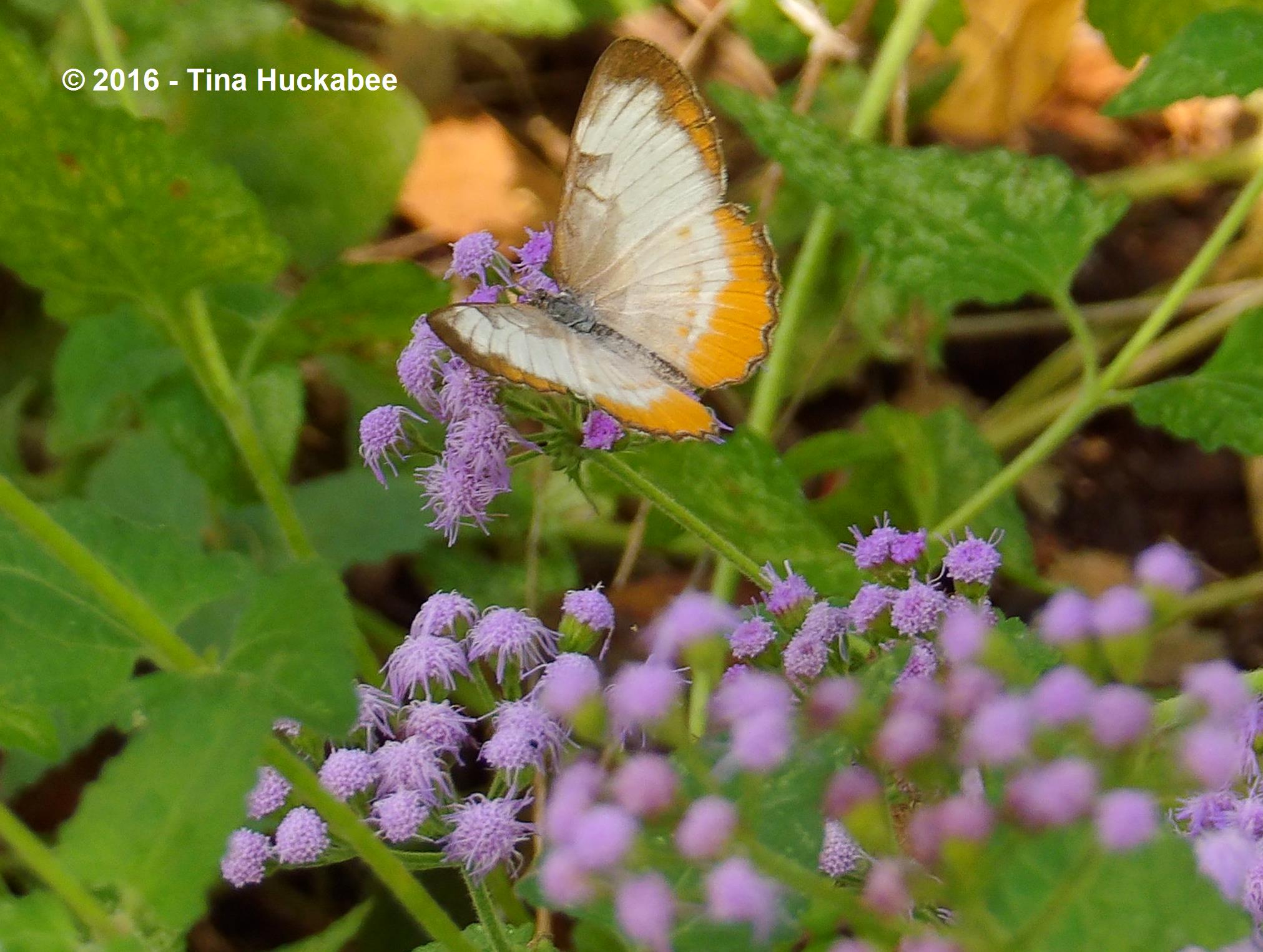
I saw many of these pretties,

…mostly hanging out around the Blue mistflower, Conoclinium coelestinum. I knew that I’d seen a photo of this kind of butterfly–somewhere–but couldn’t recall where. After some sleuthing, I identified this species as a Common mestra, Mestra amymone. Eventually, I remembered that I’d seen photos of the mestra on the FB page of The National Butterfly Center, which is located in Mission, Texas. Primarily a butterfly of South Texas, Mexico and South America, they will stray northward–and so they did, right into my little garden! They favored the Blue mistflower, but I also saw them nectaring at the Plateau goldeneye and Turk’s cap, too.
White-Striped Longtail butterflies, Chioides albofasciatus, are a new butterfly in my garden.
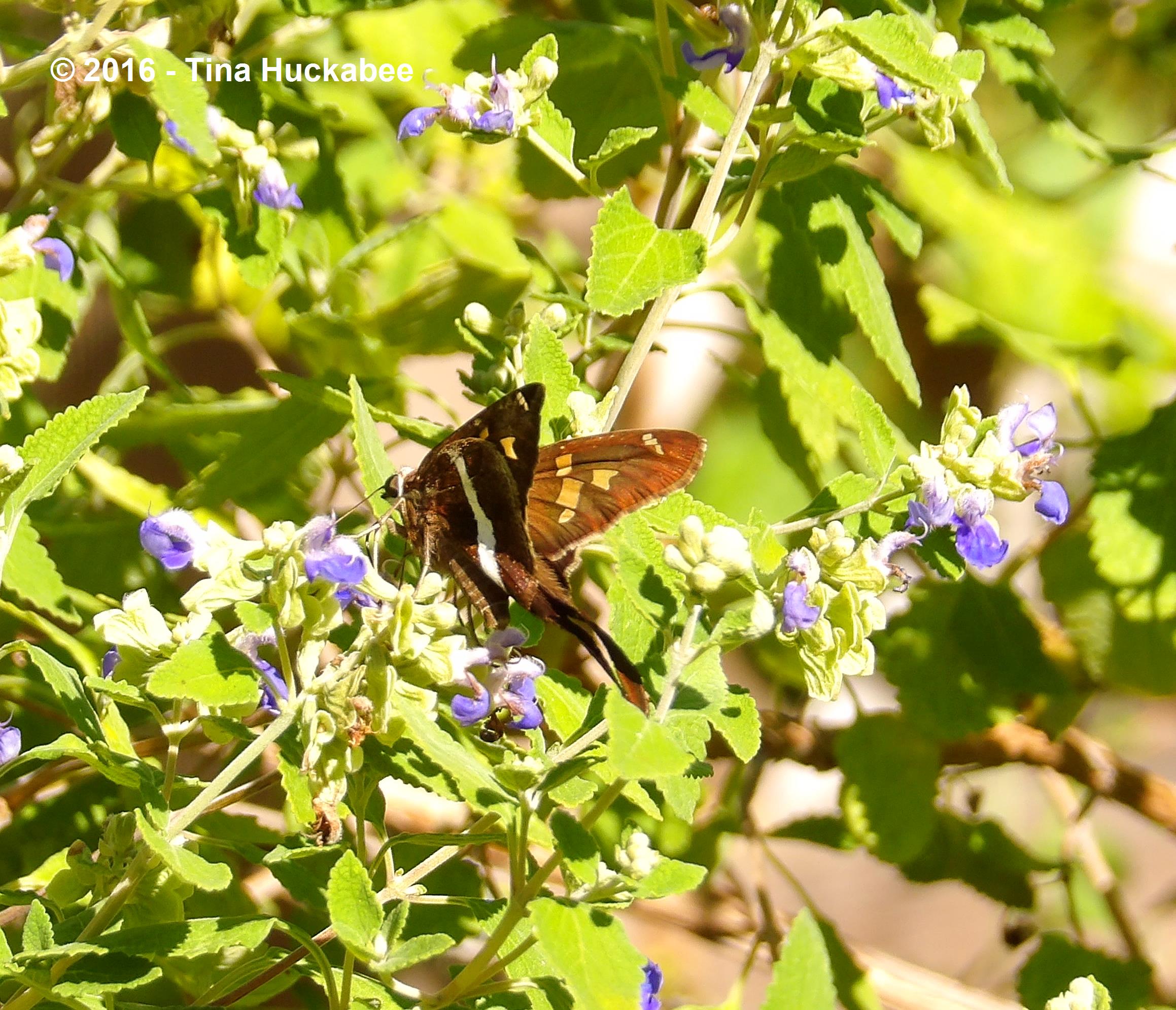
They proved difficult to get clear photos of because they nectared at Yellow bell blooms which are located high on the tall shrubs and subject to every puff or blast of breeze–not conducive to great photography, Also, this critter doesn’t sit still for long.
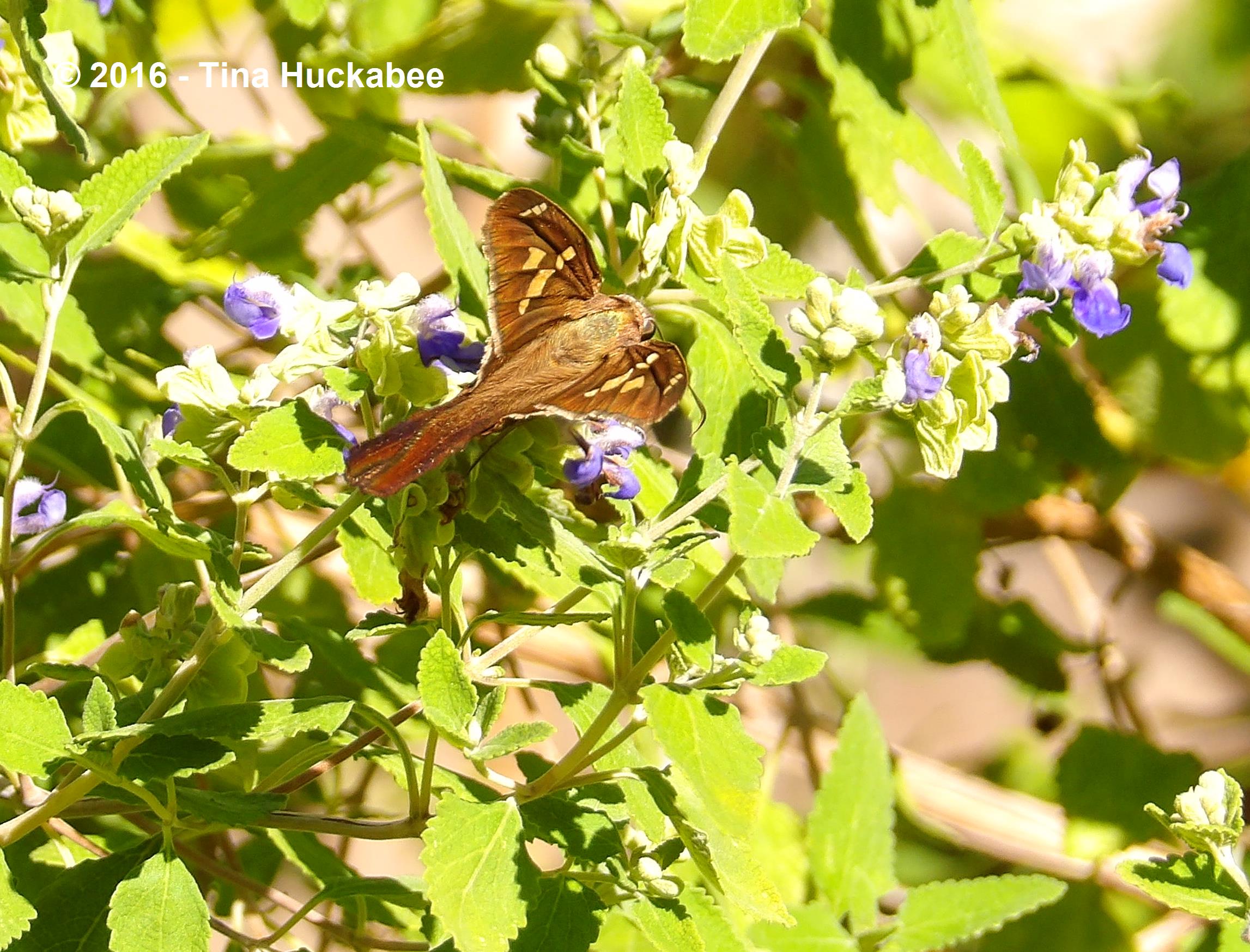
Lucky for this gardener though, one spent casual time at a lower-to-the ground West Texas native, the Shrubby blue sage, Salvia ballotiflora and I opportunistically snagged some shots.

Yet another butterfly more common in South Texas and regions further a-field, it’s interesting that there were “tropical” butterflies in my Central Texas garden this past month.
Along with the southern visitors, the usual garden suspects were active. For example, Fiery Skippers, Hylephila phyleus, decked out in autumn colors, have been all over the Gregg’s mistflower, Conoclinium greggii, sharing nicely that pollinator favorite with many other winged things. .

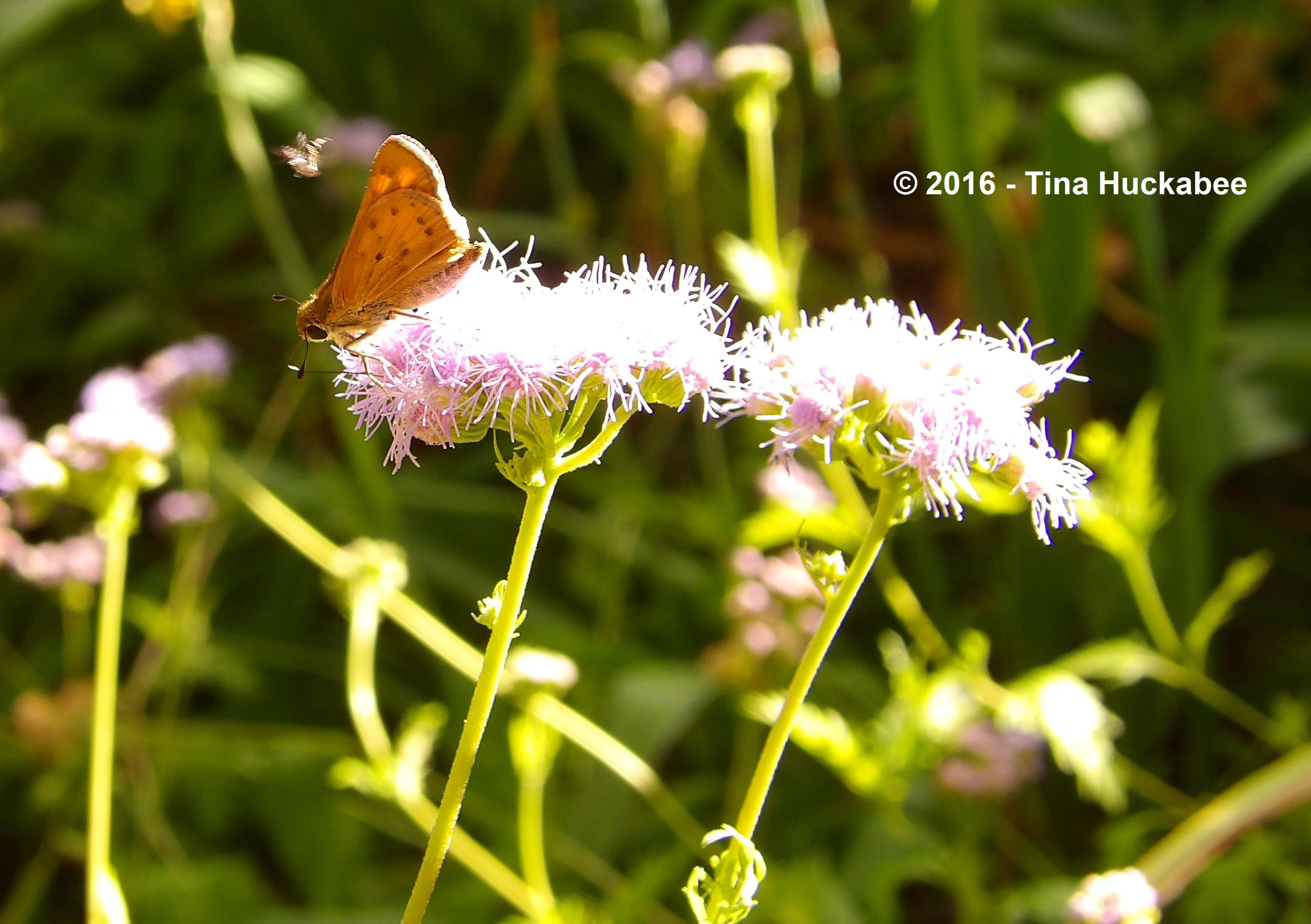
A tiny native minor bee is blurry just above the Fiery Skipper.
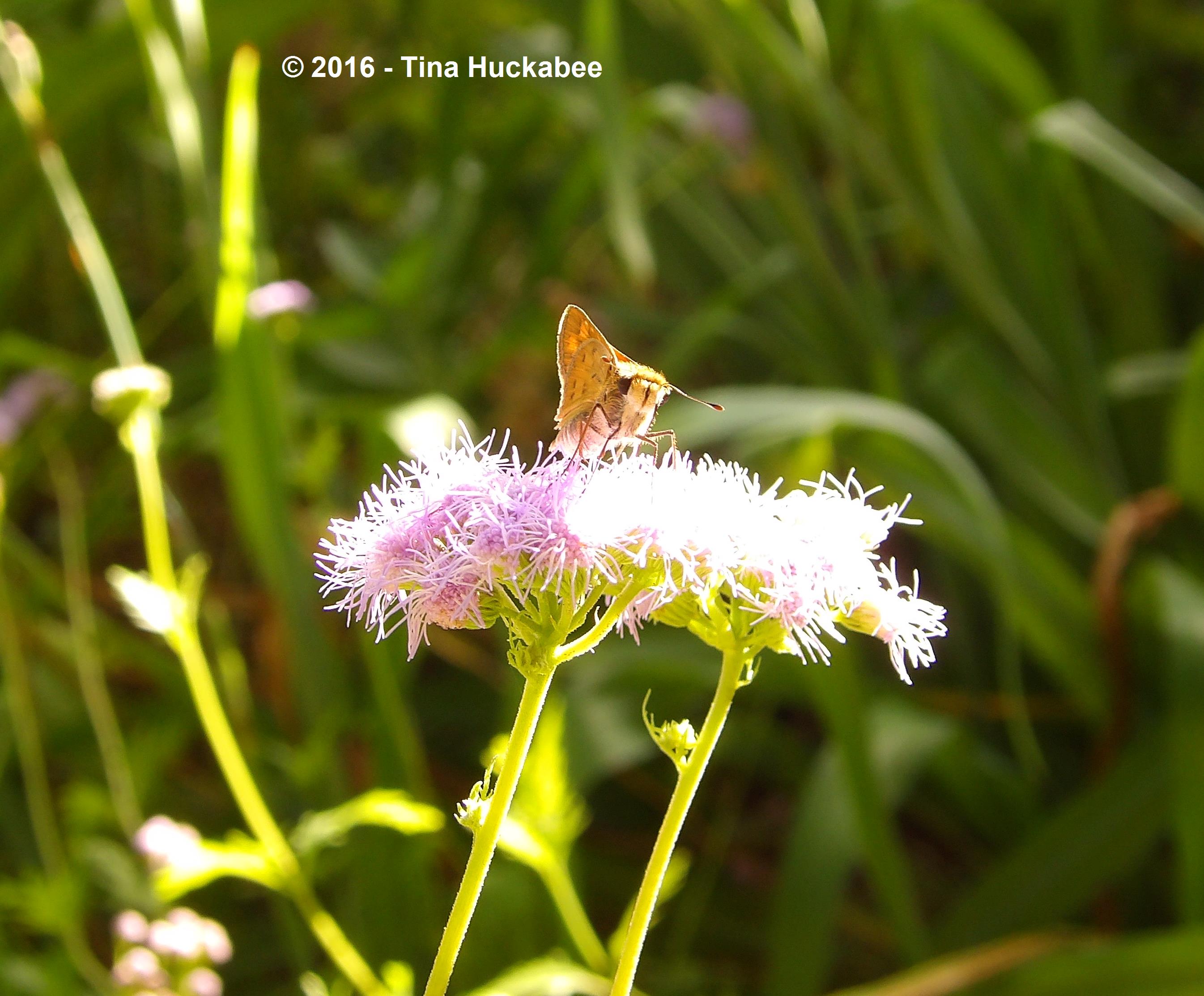
Other fans of the Gregg’s mistflower are the many Clouded Skipper, Lerema accius butterflies which regularly tour the garden. These skippers have been active throughout the warm season this year.

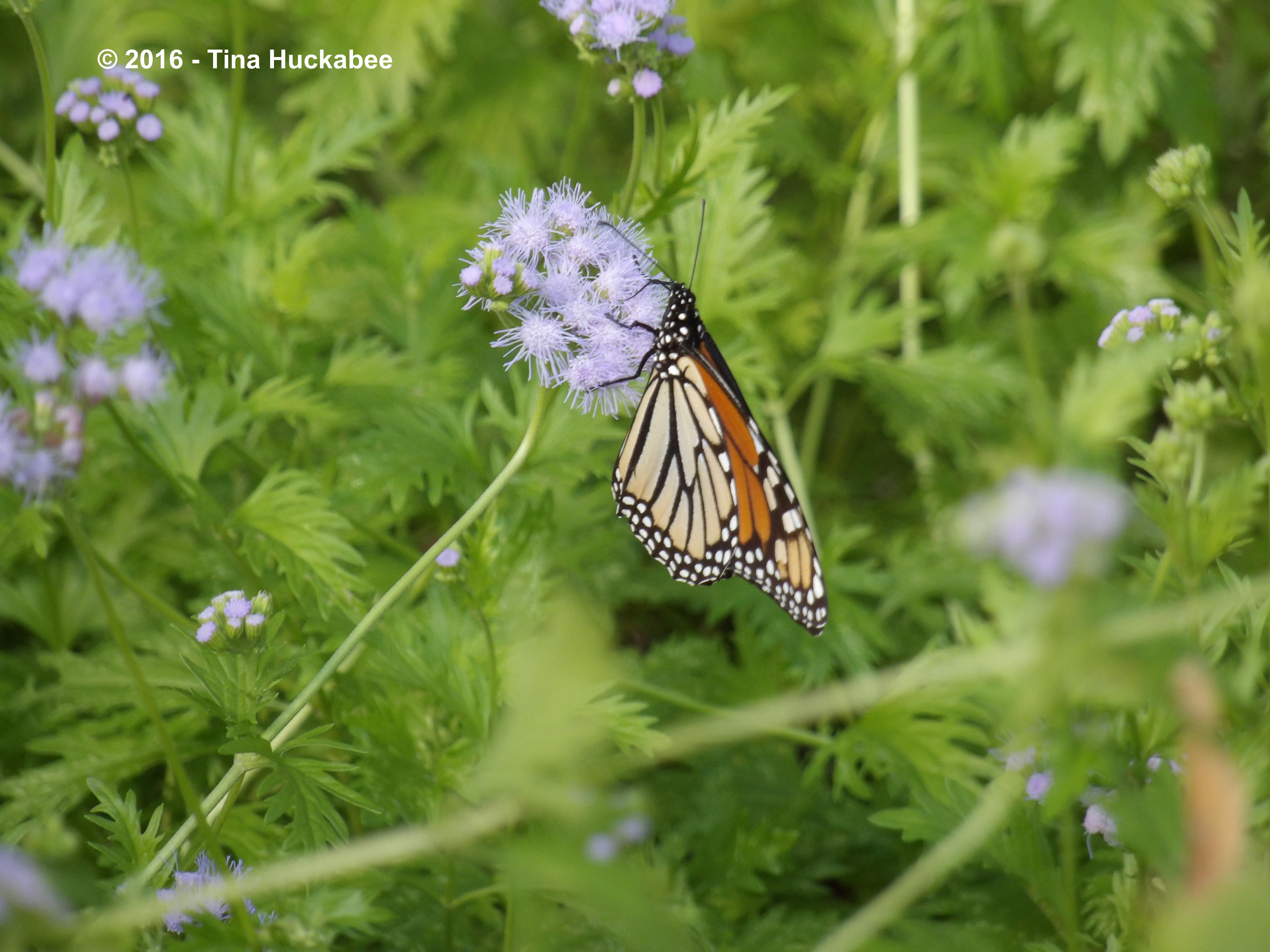
Monarch butterflies, Danaus plexippus, continued their march through Texas.


Male Monarch demonstrates his scent glands (the two black dots on the hind wings).
It was a pleasure hosting them this autumn–I hope they safely arrive in Mexico and winter well there.
Black Swallowtail, Papilio polyxenes, butterflies visited daily.

Black Swallowtail on Turk’s cap.
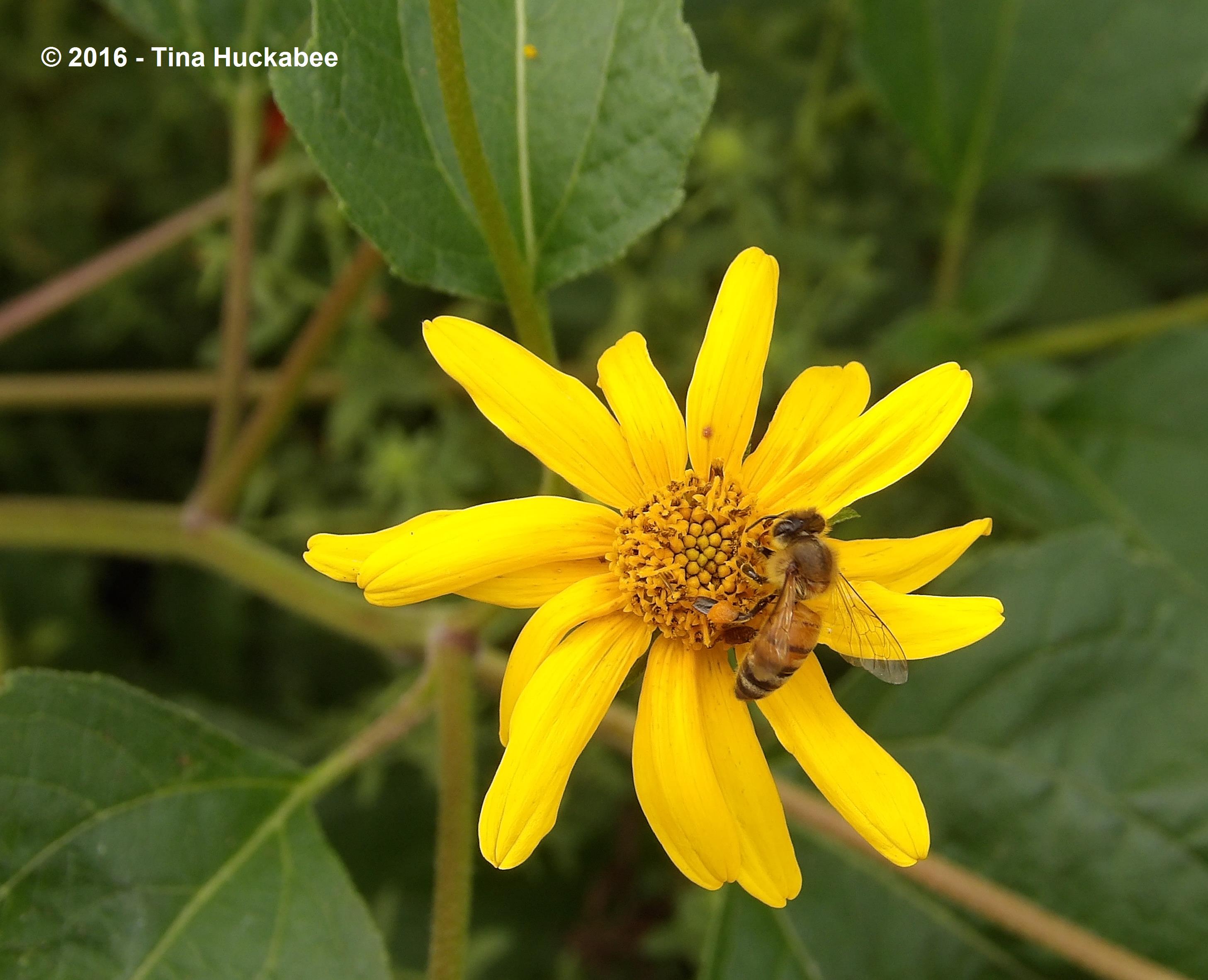
Honeybees (from my three hives) busily worked at the bloom-heavy Plateau goldeneye, Viguiera dentata, as well as everything else, preparing their honey stores for winter.
There are still scads of the charming Southern Pink Moths, Pyrausta inornatalis, like this one resting on a White tropical sage. The Pinks are another species in abundance this year.

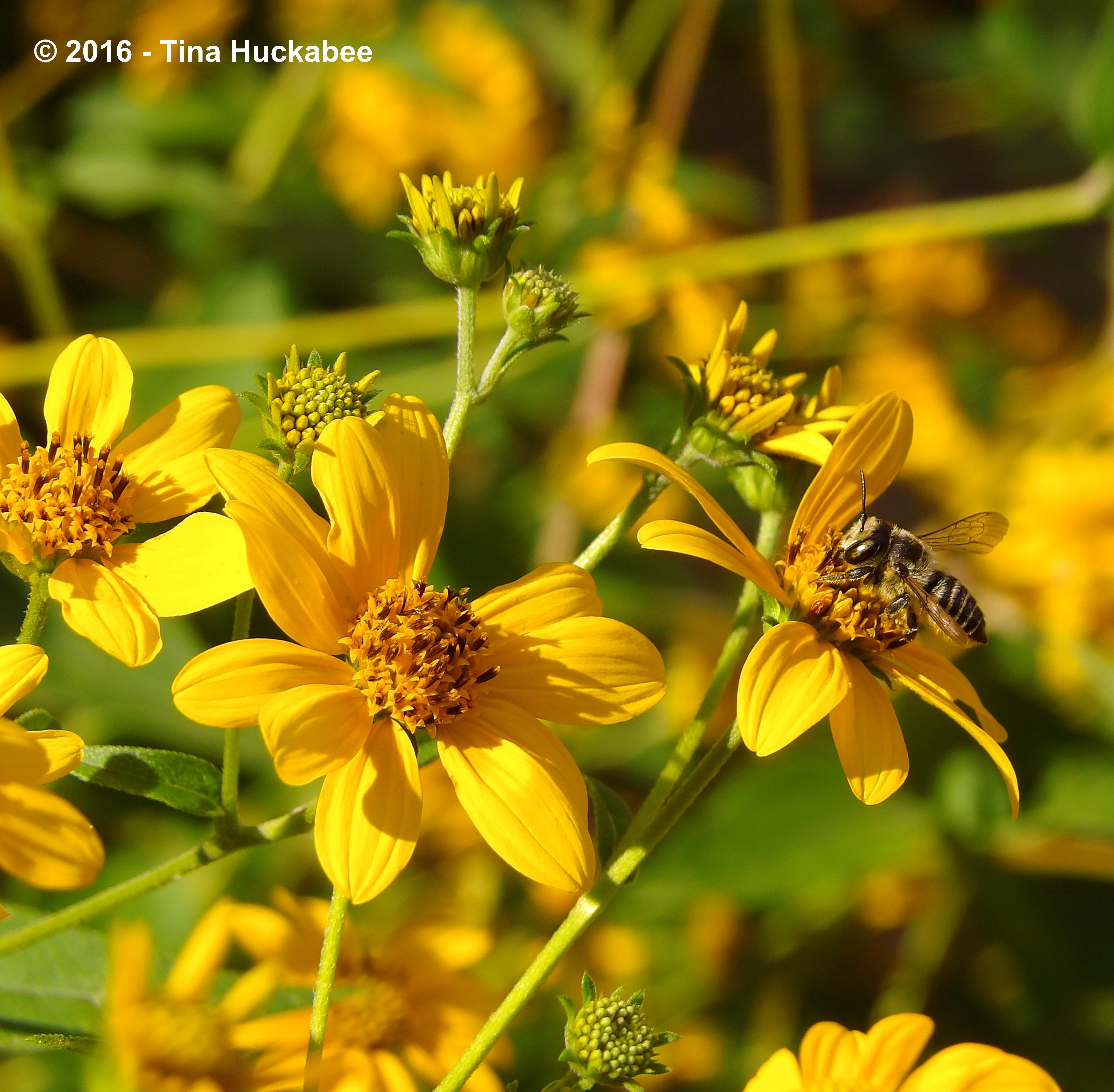
Native bees of all kinds are still working in the garden. This leaf-cutter, Megachile, was not the only native bee around, but fun to watch as she worked Plateau goldeneye blooms.
Additionally, this past month saw a boon in the Gulf Fritillary, Agraulis vanillae, population.

The foliage decimation wrought on my Passion vine by caterpillars eating and eating and eating,


…and then pupating into their adult form wherever they could,
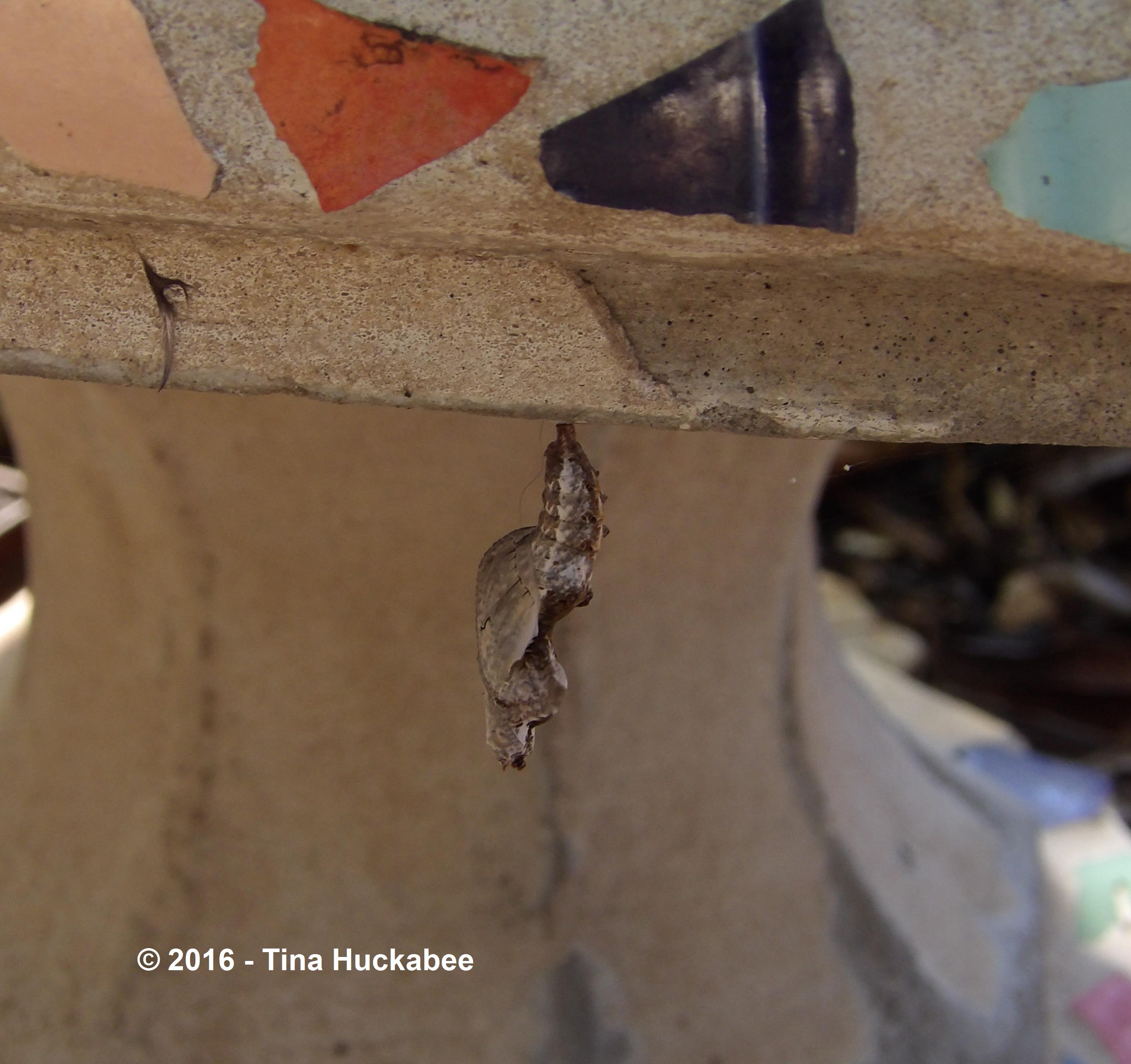
…is all the proof I need to suggest that they’re quite at home in the garden.

I don’t fret about butterfly and moth caterpillars munching on host plants because they generally don’t kill the host, munching away only to some level of plant un-attractiveness. Usually, the plants–like the Passion vine–spring back to full-leafed health quickly and in preparation for the next generation of caterpillars. Biology dictates that for the most part, the symbiotic relationship between a host plant and its insect is a healthy one, and a plant is rarely, if ever, eaten to death. From an evolutionary standpoint, it wouldn’t make sense for a host plant to die every time its insect requires reproduction.
Ain’t nature grand?!
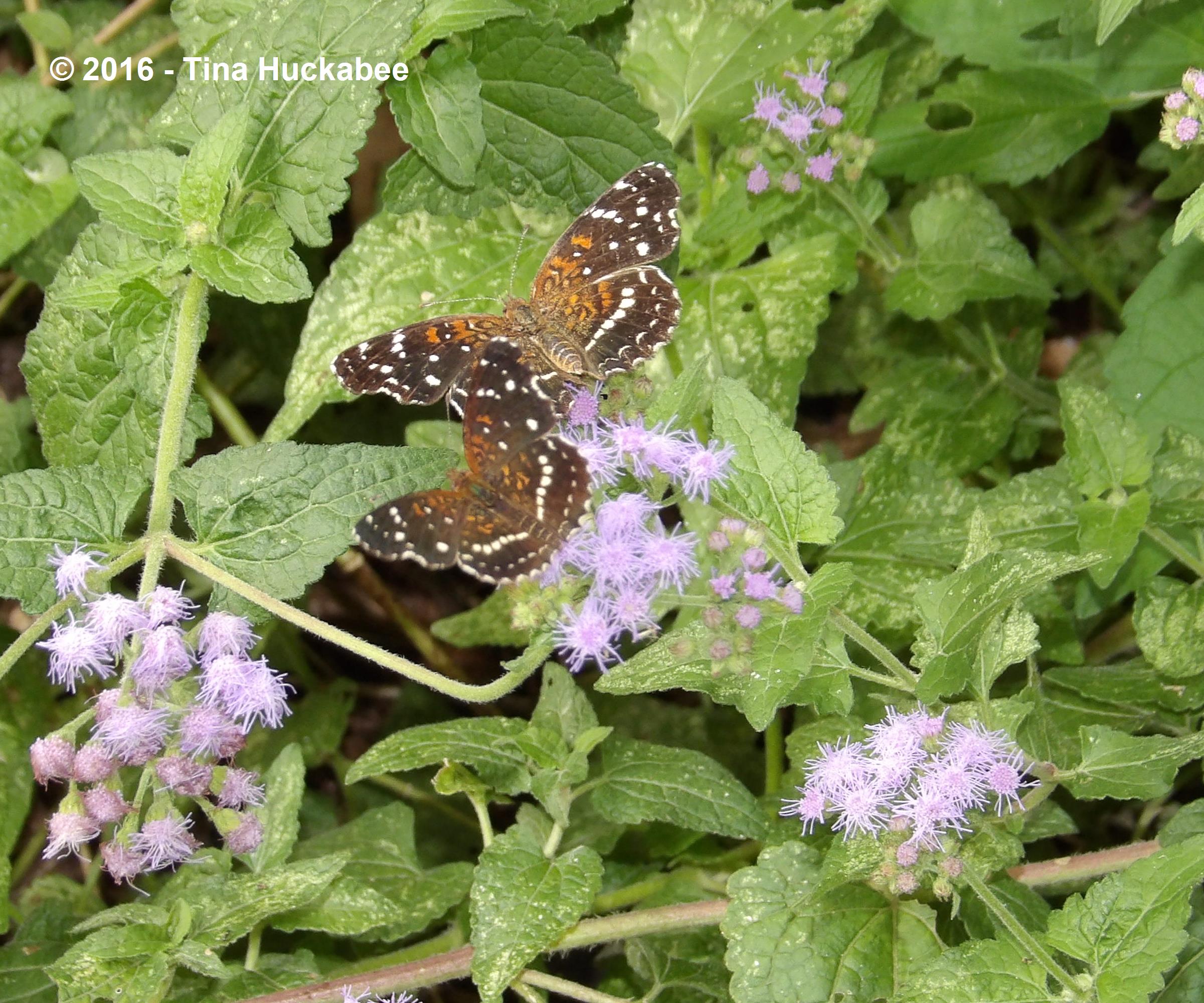
Texan Crescents, Anthanassa texana,
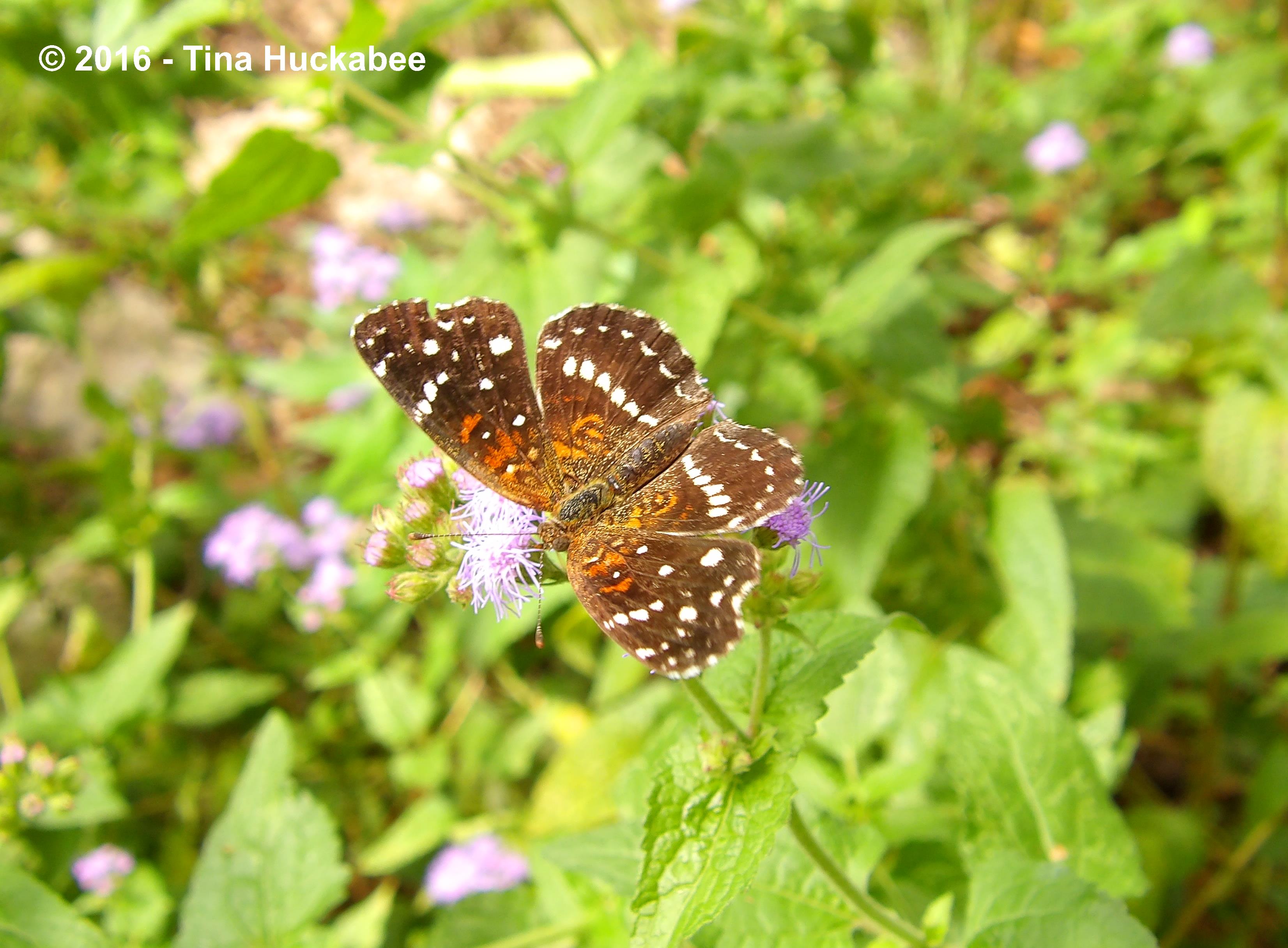
….are eating their native host plants–the Branched foldwing, Dicliptera brachiata,
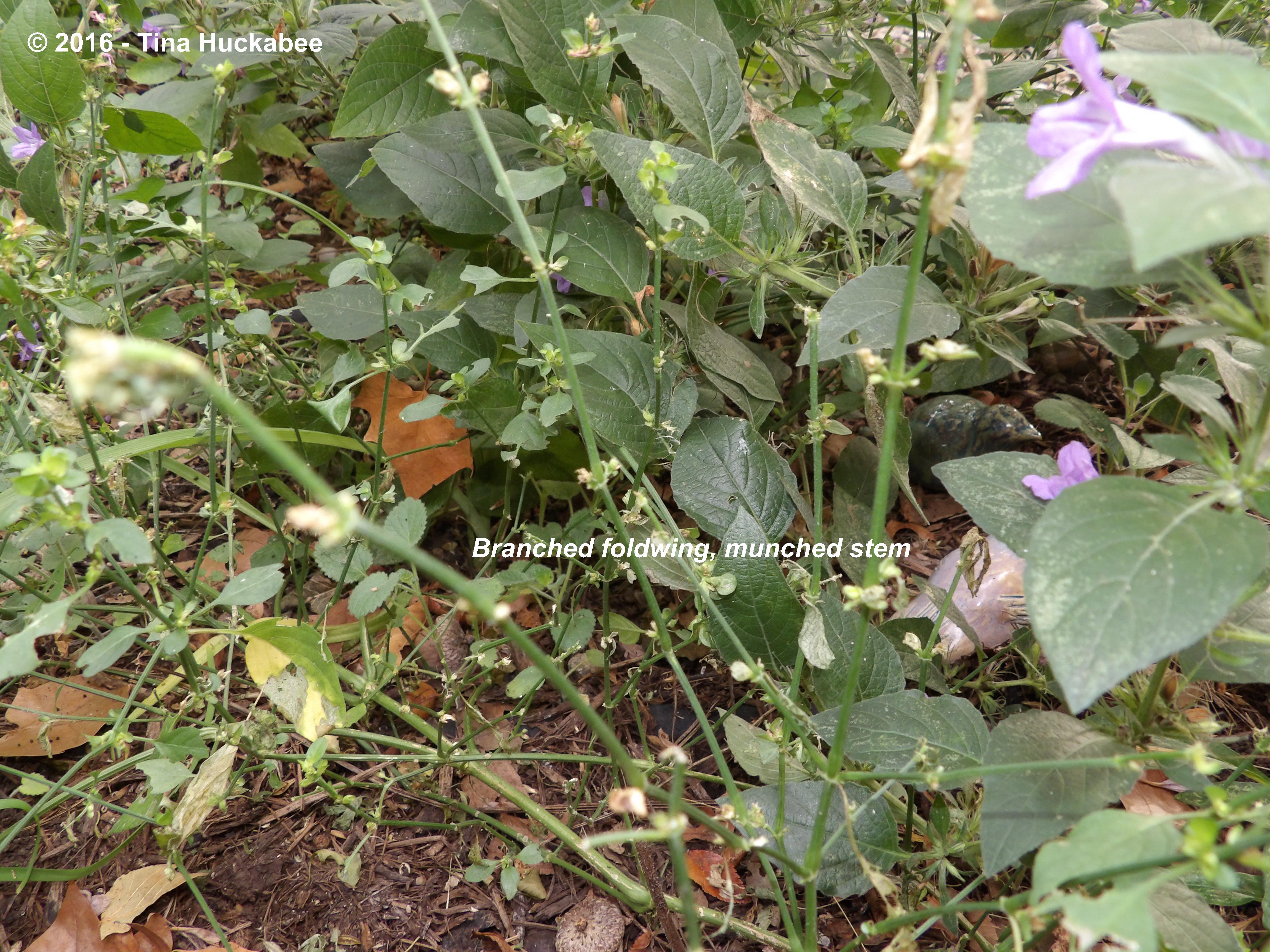
…as can be seen by the green sticks left from the last crop of caterpillars. No worries about the recover of the plant though, the munched Branched foldwing is already leafing out. For the remainder of autumn, more of the butterflies will nectar in the garden in clouds of fluttering brown and gold. I missed the opportunity to catch a photo of the nondescript caterpillars, though I’m always happy to get photos of a pretty face–and lovely set of wings.
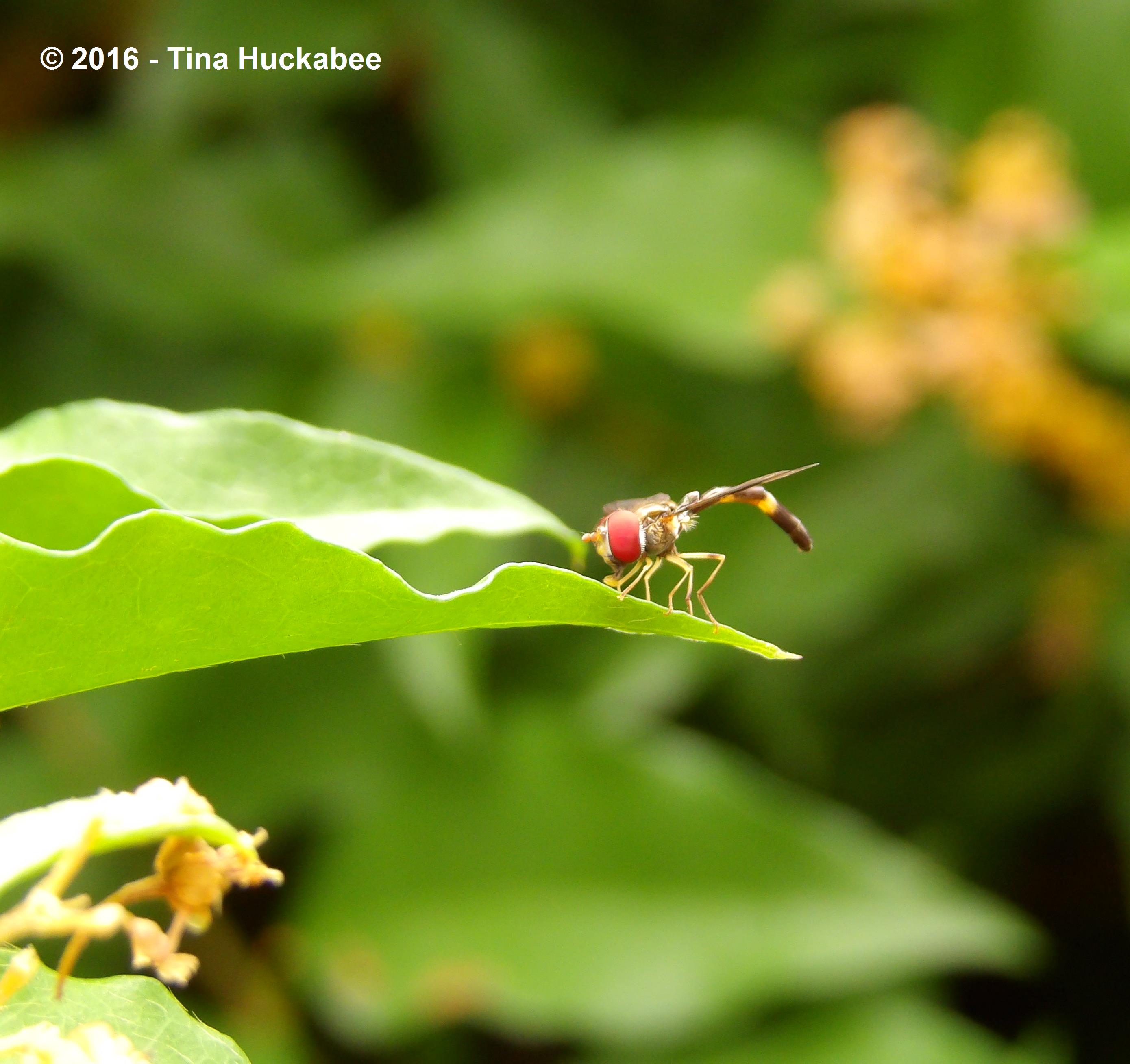
Not only did butterflies and moths grace my garden, but plenty of Syrphid, or Flower flies, appeared too. For the most part, Syrphid flies haven’t been as numerous in the garden this year. But recently I’ve seen many of this particular kind, the Distinctive Syrphid, Ocyptamus fascipennis.

Syrphid on the bloom clusters of the Barbados Cherry (Malpighia glabra)
As for what attracts all of these garden gifts, If there was an award for Pollinator Plant of the Month, it would have to go to Frostweed, Verbesina virginica.
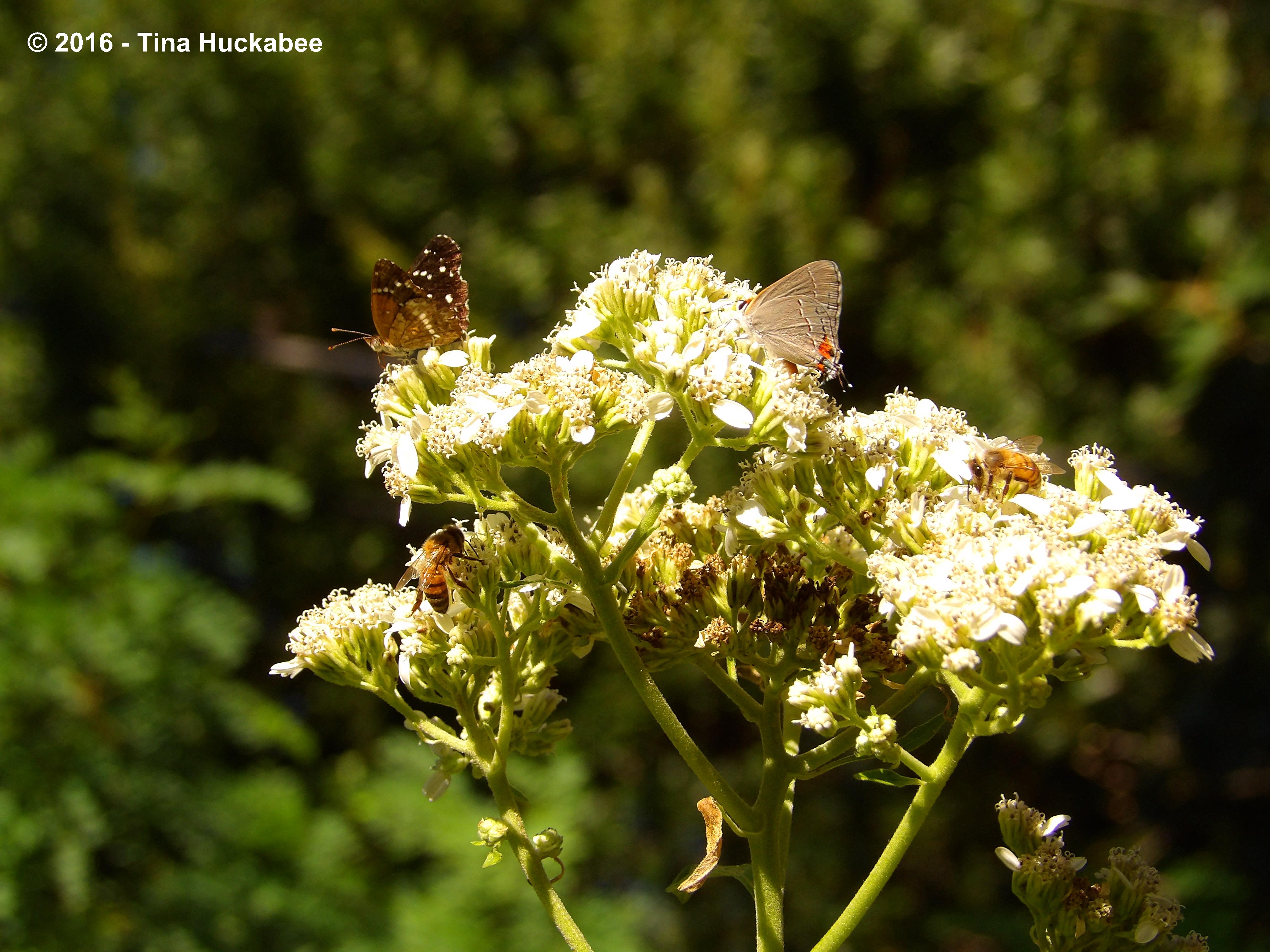
There are four individual pollinators on this particular flower cluster–and it’s not unusual to see that many pollinators simultaneously feeding on Frostweed bloom clusters. Where Frostweed grow, insect–especially pollinator–activity is abundant. Both small and large butterflies, honey and native bees, and eventually, after the blooms are spent, little finches and warblers choose this plant as a favorite food source. It, along with the Plateau goldeneye, are amazing plants for attracting and feeding wildlife. Both plants are easy to grow (Texas natives!) and attractive; both fit especially well in a woodland garden or at the back of a perennial bed.
These beetles enjoyed one particular group of Frostweed. I never quite figured out what kind of beetle they are, but I’m leaning toward an identification as some kind of blister beetle.

The adults were definitely nectaring on the flowers,
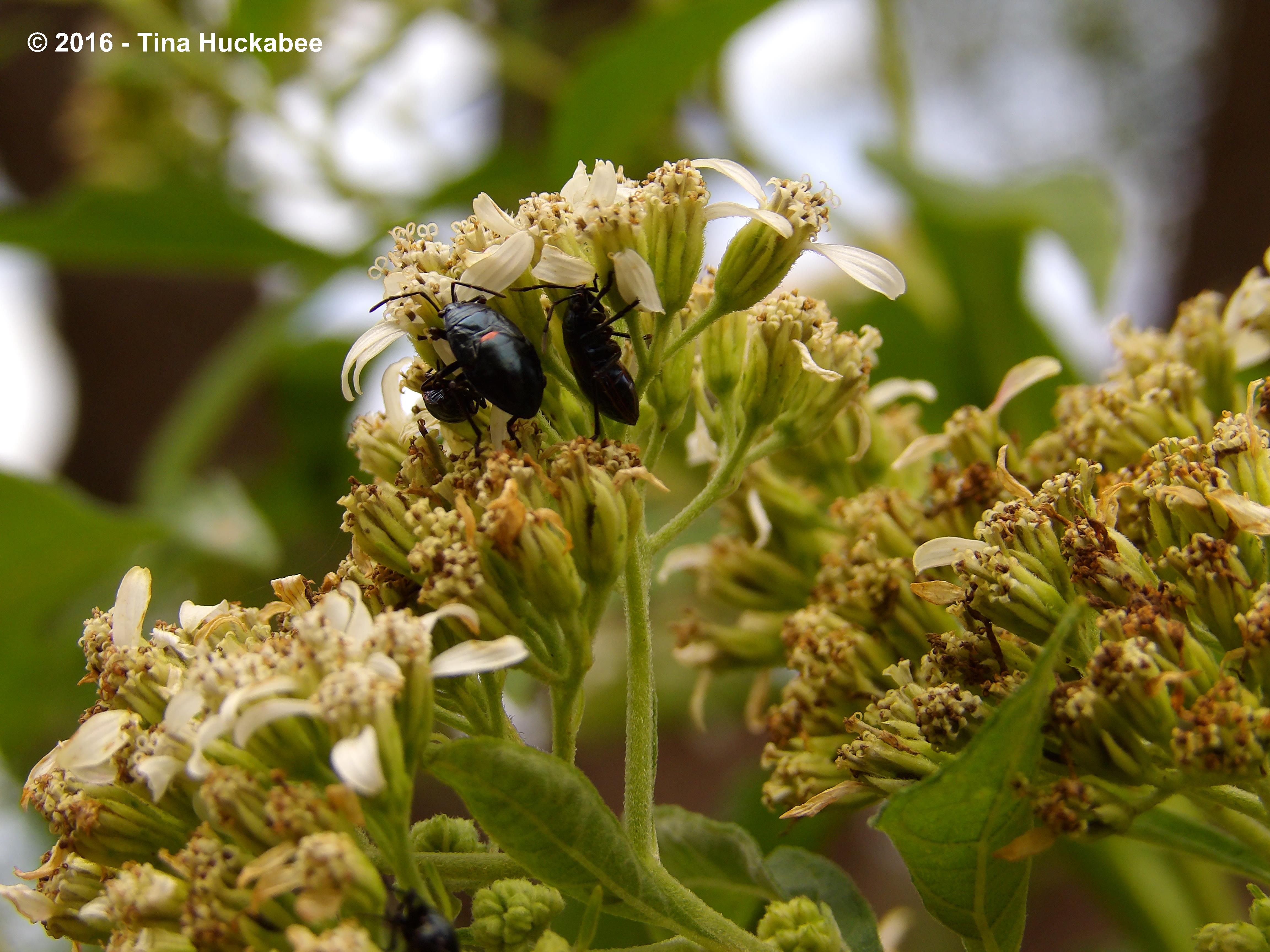
…though the nymphs congregated along fruit or foliage, just hanging out it seemed. Typical teenagers, I guess.

At any rate, the beetles didn’t appear to damage the plants, so I left them alone.
A few beetles visited the Mexican honeysuckle, Justicia spicigera.
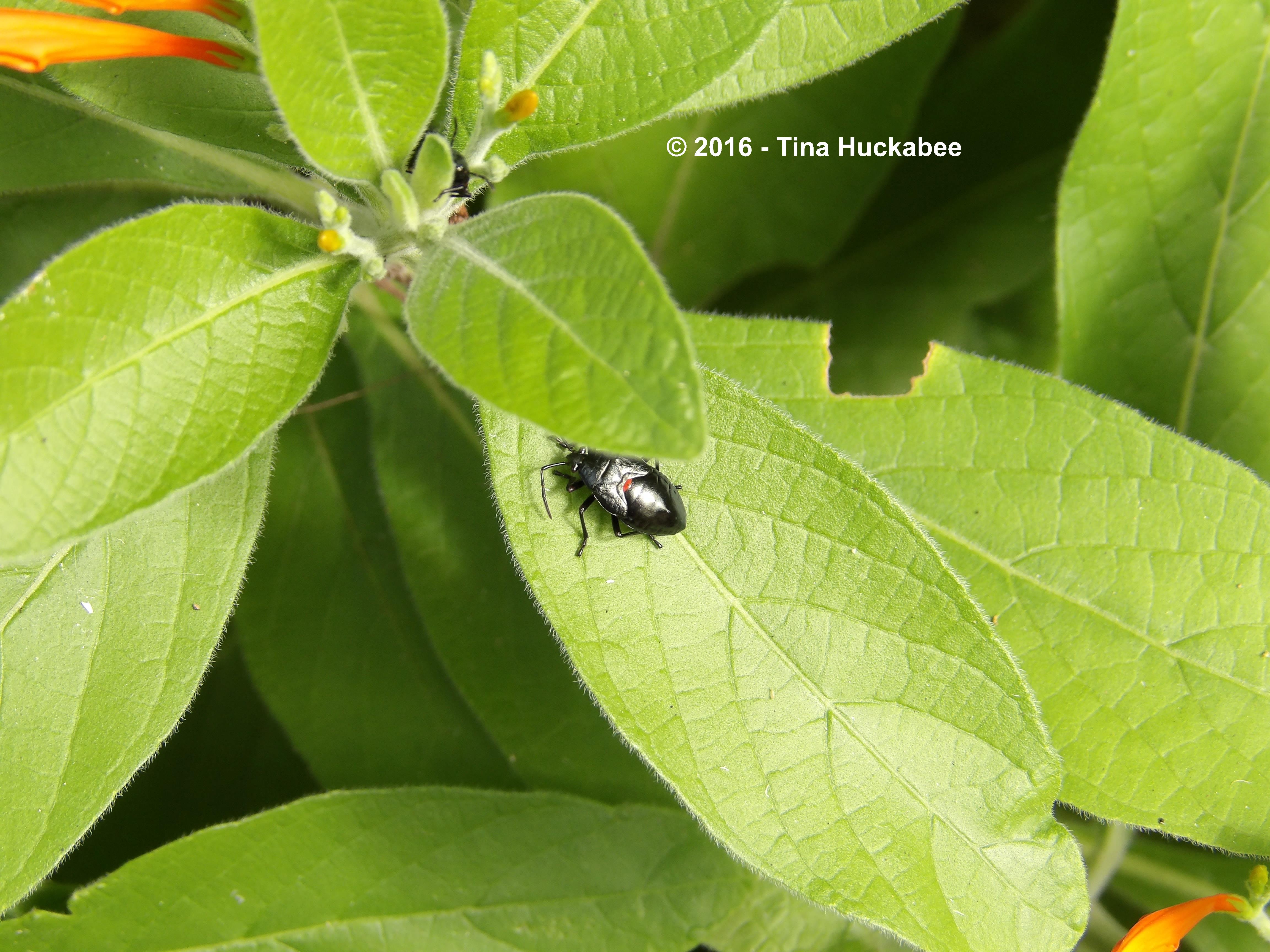
Like the beetles on the Frostweed, these didn’t appear to harm the honeysuckle foliage or flowers.
This month wasn’t all about pollinators though–this predator Crab spider was clearly waiting to snatch something smaller than herself for a meal.

And this Hydrophilidae, a Water scavenger beetle, was loitering on a spent Garlic chives bloom.
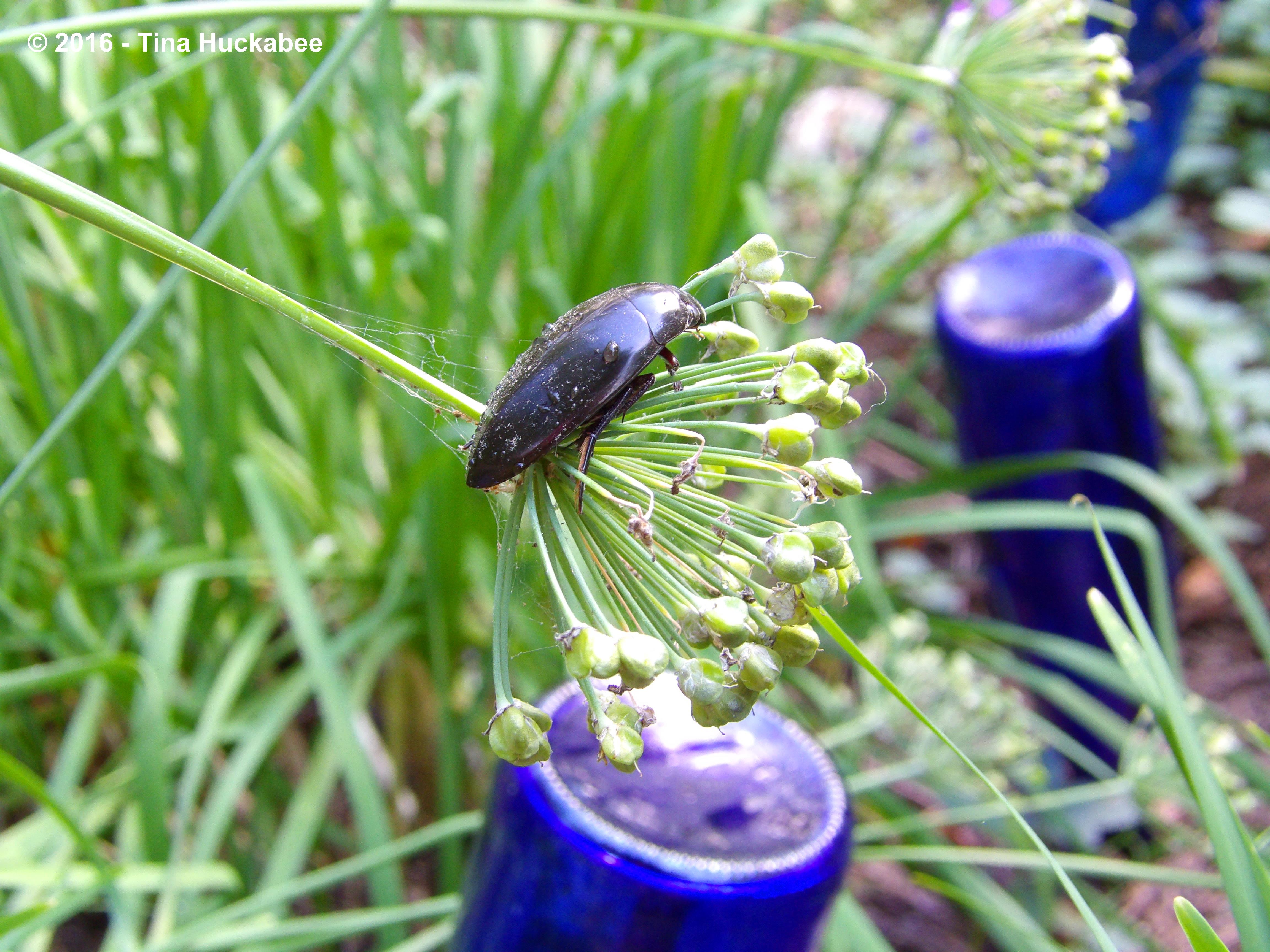
Not quite sure what this one was up to, but I think he’s a little menacing looking. He neither spit nor lunged at me, so I suppose he’s okay and we can be friends, or at the very least, co-workers in the garden.
Did wildlife visit your garden this past month? Please post for November Wildlife Wednesday. Share the rare or mundane, funny or fascinating, beneficial or harmful critters you encounter. When you comment on my post, please remember to leave a link to your Wildlife Wednesday post so readers can enjoy a variety of garden wildlife observations.











 My Gardener Says...