Wildflower Wednesday, March 2014

I don’t quite know how I’ve missed this wildflower party before now, given my appreciation for wildflowers and native plants in general, but while reading Shirley’s most recent post at Rock-Oak- Deer, I realized her excellent profile of wildflowers was part of a bigger picture.  Duh.

Thanks to Gail at clay and limestone for hosting the monthly celebration of wildflowers of all sorts.  Though it’s my first post and a day late for this month, I’m in.

My Golden Groundsel (Packera obovata), is blooming and so cheery on this gloomy, wet day.  It’s an early blooming, tough little shade-loving perennial which  brightens up a woodland setting.

P1030054.new

For more information about Golden Groundsel, check out the Lady Bird Johnson Wildflower Center’s Native Plant Database page.

I have Spiderwort (Tradescantia occidentalis) popping up all over my gardens.

P1030056_cropped_2479x1898..new

P1030058.new.new

The original couple of transplants were pass along plants gifted to me, so I’m not entirely positive that what I have is the S. occidentalis, though I think it is.  Check out the pages on Spiderworts or Tradescantia in the Native Plant Database and see for yourself how many are native  and available throughout North America.

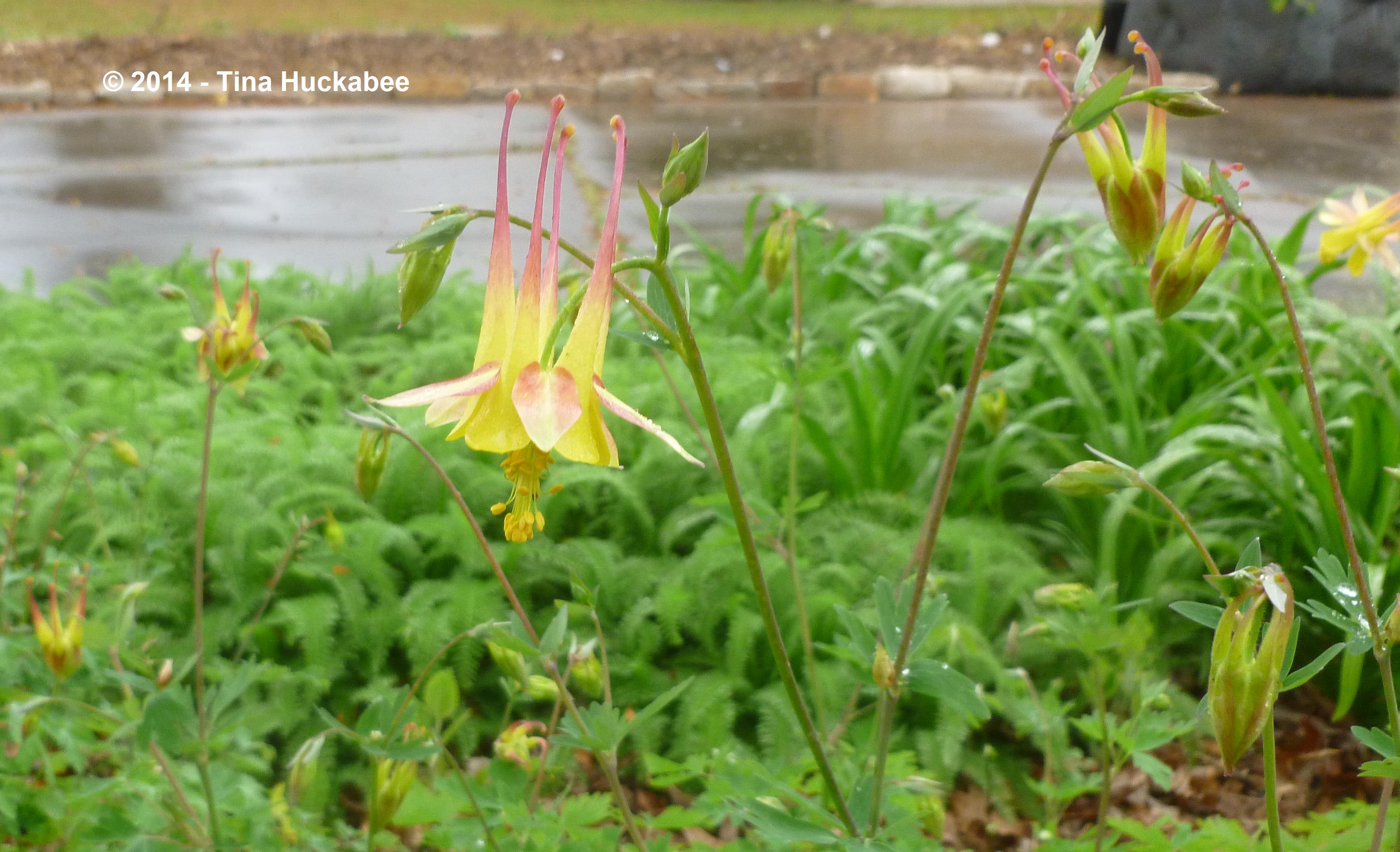
The Columbines are finally starting their spring show–later this year than in the last few years.  I  have both the Yellow Columbine (Aquilegia chrysantha var. hinkleyana),
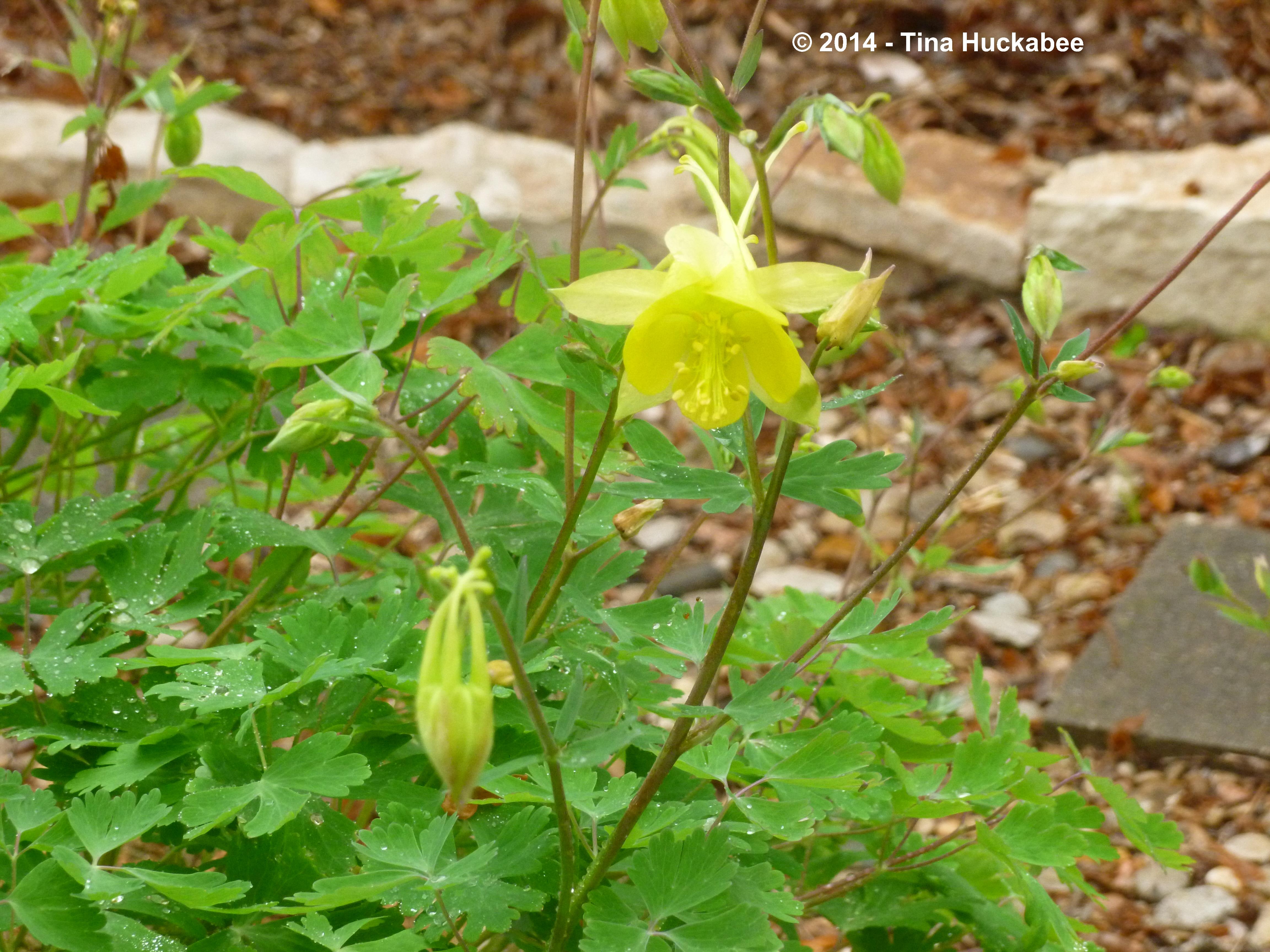
P1030061.new

and the native Wild Red Columbine (Aquilegia canadensis),

P1030065_cropped_2990x1867..new

plus hybrids of the two.

P1030063_cropped_3475x2115..new

Finally, the Coral Honeysuckle (Lonicera sempervirens) is in total bloom mode.
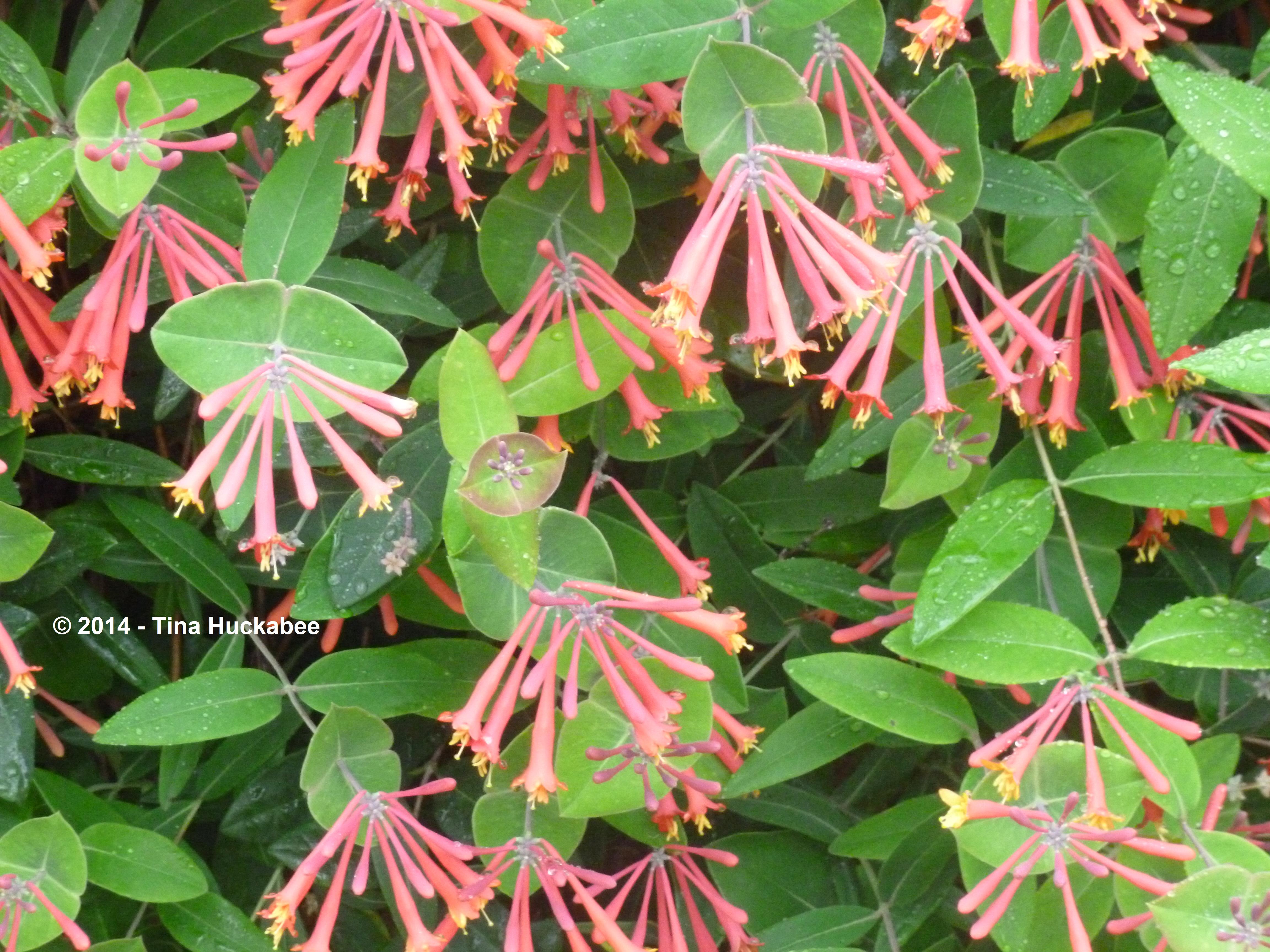
P1030066.new

P1030067.new

So far, we don’t have many butterflies or hummingbirds, but no doubt they’ll find this plant soon and feast, feast, feast.  This is a must-have vine for any gardener wishing to provide a food source for a variety of critters, insects and birds alike.

Thanks again  to Gail at clay and limestone for this chance to focus on and appreciate the  plants we have, native to where we live.


Foliage Follow-up, March 2014

As my gardens awake for spring and with a long growing season ahead, everyday unfolds more color and texture.  All winter I’ve enjoyed the arresting combination of the soft, graceful Mexican Feathergrass (Nasella tenuissima) paired with the upright, sharp foliage of Iris (unknown variety).


P1020863.new

The foliage of the Engelmann’s Daisy (Engelmannia peristenia), sports the deeply lobed habit which gives this plant another common name, Cutleaf Daisy.

P1020865.new

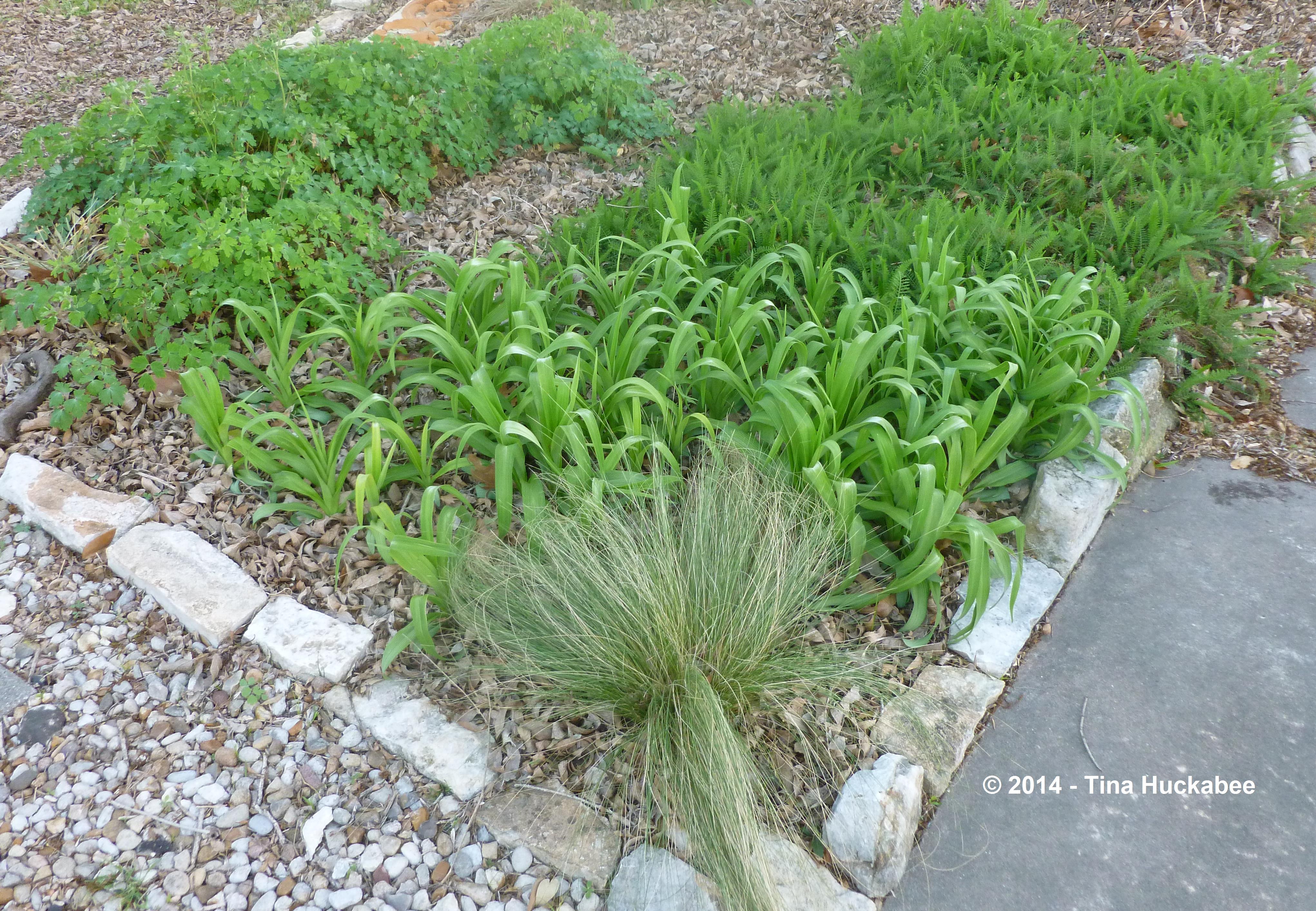
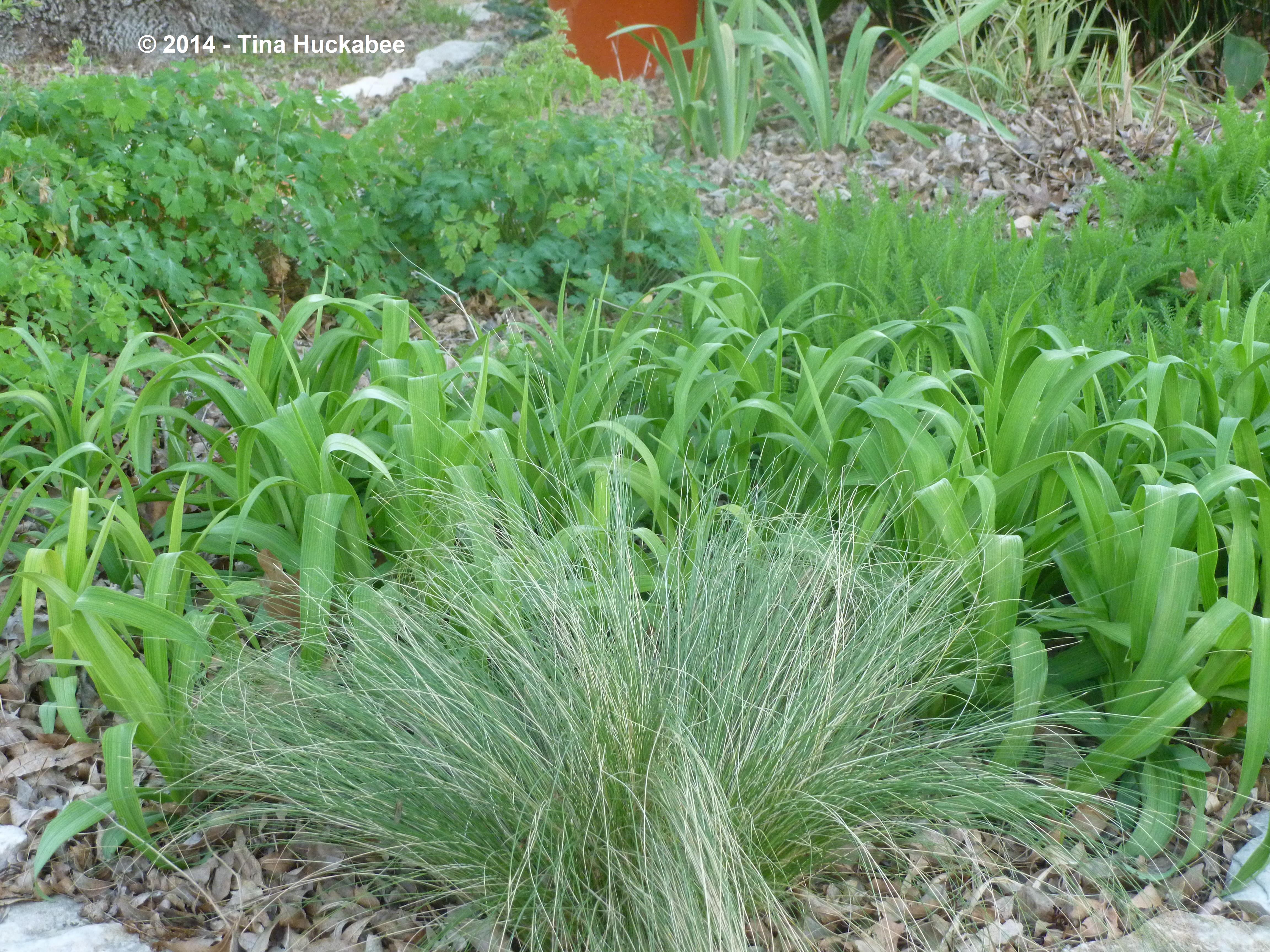
I just love this combination of Mexican Feathergrass (front), Daylilies (just behind), Yarrow (Achillea, sp.)( top right), and Columbine (Aquilegia chrysantha) (back left).

P1020902_cropped_4083x2825..new

P1020903.new

The hue of the foliage isn’t  greatly varied, but I like the mix of Yarrow’s  lacy foliage paired with the delicate, curling foliage of Daylilies, as they emerge from winter’s sleep, in advance of summer blooms. The slight blue tint and undulating form of the Columbine’s foliage contrasts with the fine, silvery foliage of the Mexican feathergrass.

The scalloped leaves of native-to-Texas Cedar Sage (Salvia roemariana)  reminds me of the Geranium foliage.

P1020869.new

Cedar Sage also blooms red, later in the spring.

Coral Honeysuckle vine (Lonicera sempervirens) foliage are mauve to burgundy when they first emerge,

P1020870.new

and the colorful, ovate leaves hold the developing buds aloft.

P1020875.new

I grow Bronze Fennel and Dill primarily host plants for the Black Swallowtail butterfly (it lays its eggs on the plant and the caterpillars eat, eat, eat the plants down).

P1020898.new

I’m not above pinching some for my own salad interests, but since there are no butterflies yet, the Fennel and Dill have been beautiful and growing all winter.

Thanks to Pam at Digging for hosting Foliage Follow-up for March.


Native Texas Plant Week and Garden Bloggers’ Bloom Day–October 2012

For Garden Bloggers’ Bloom Day and in celebration of Texas Native Plants week, I’m posting some pics of a few currently flowering beautiful native plants in my garden.  Thanks to Carol at May Dreams Gardens for hosting–check out her site to enjoy photos of blooms from many places.

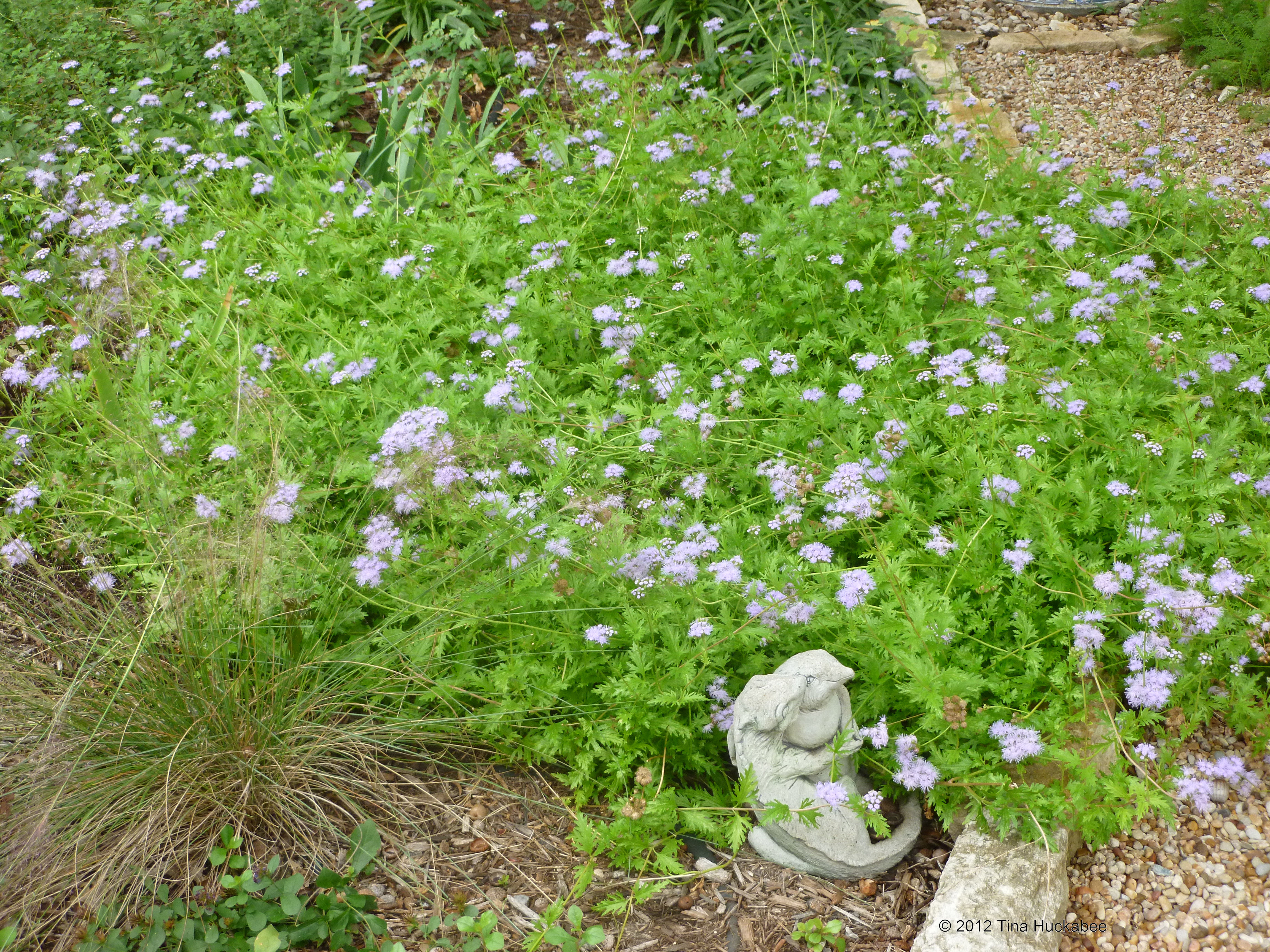
One overview look at a group of Gregg’s Mistflower (Conoclinium greggii),

and a close up of this great native perennial ground cover.  The Gregg’s Mistflower is native to Texas, New Mexico and Arizona.

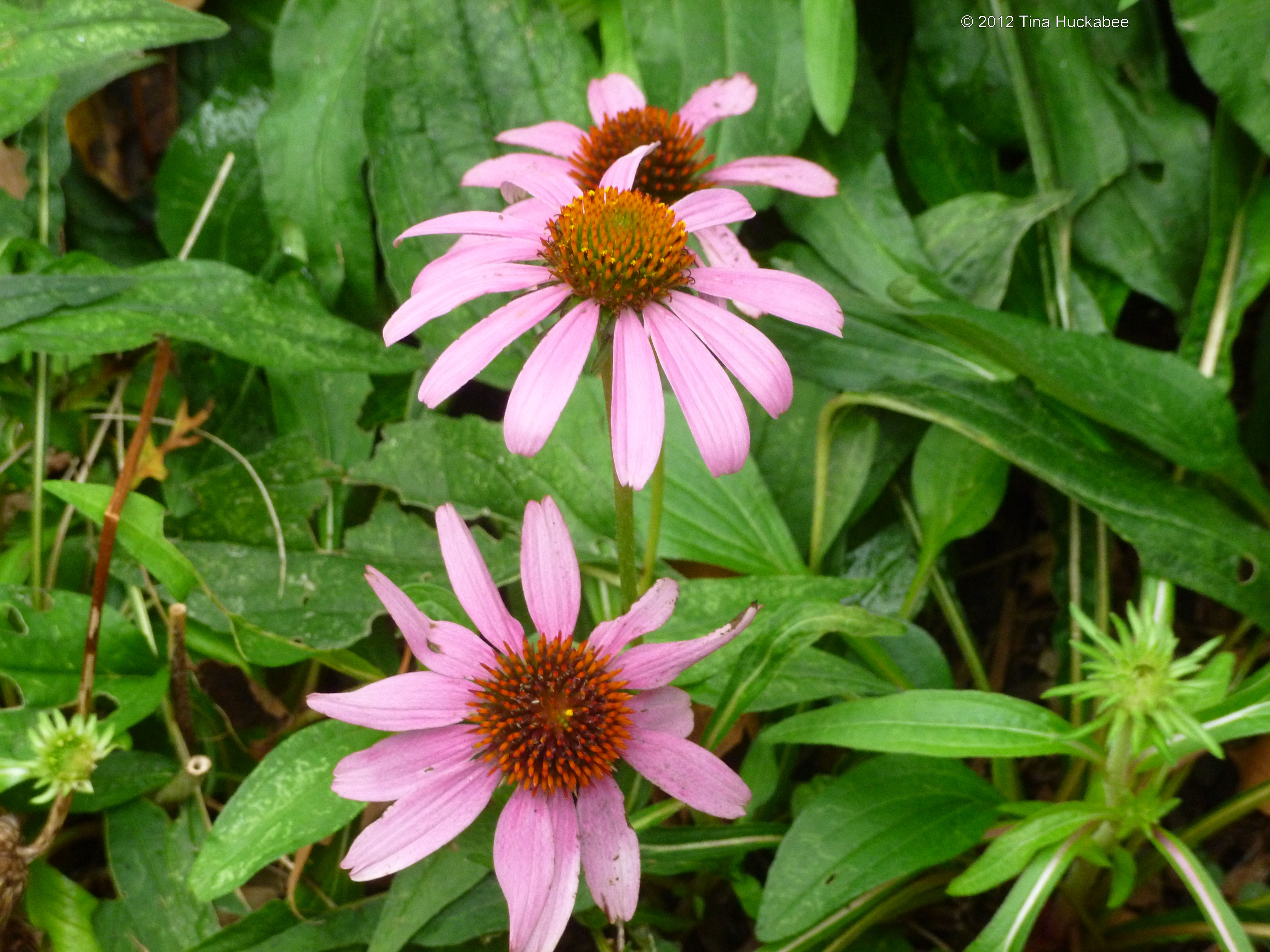
The Purple Coneflower (Echinacea purpurea), is always a winner in my gardens.  Its main bloom period is spring through mid-summer, but I always have some blooms in the fall until a hard freeze ends the glory.

A larger view of another perennial, Blue Mistflower (Conoclinium coelestinum),

and its closeup.

The two mistflower species are related, but they are a little different. It’s difficult to tell from my limited photographic abilities, but the Gregg’s Mistflower is a lighter blue, while the Blue Mistflower is much darker.  Also, the leaf characteristics are different in the two plants.  Both are perennial ground covers with the main blooming period occurring from September through November.  Both are also favorites of the butterflies and bees.

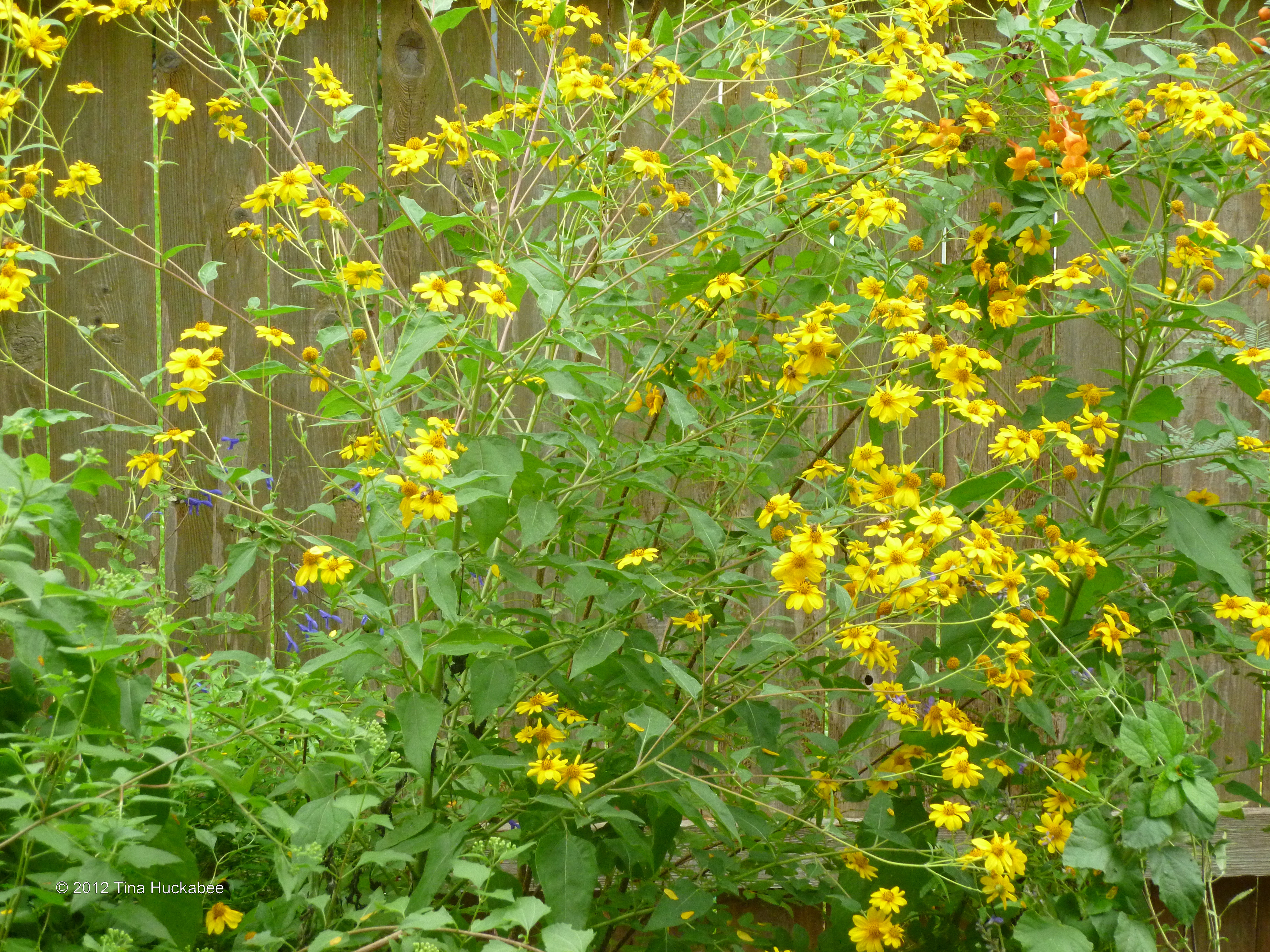
The Goldeneye (Viguiera dentata) brightens the roadsides and my gardens in October.

At its peak of beauty now, Goldeneye blooms in the spring and sporadically in the summer months and is an excellent wildlife plant.  It provides for pollinators and birds, alike and it’s pretty for people to enjoy too!

Fall Aster (Symphyotrichum oblongifolium) is a relatively new addition for me.

I’m glad I have a place for this hardy and sweet little aster.

A nice combination of plants:

From left to right in the photo above are Mealy Blue Sage (Salvia farinacea), some overhanging blooms from a Red Yucca (Herperaloe parviflora), at the back, some Turk’s Cap (Malvaviscus arboreus var. drummondii), a Pale Leaf Yucca (Yucca pallida), the yellow daisy, Zexmenia (Wedelia texana) and Red Autumn Sage (Salvia greggii).

Another nice mingling of native perennials:

more Coneflower, more Turk’s Cap, more Goldeneye.

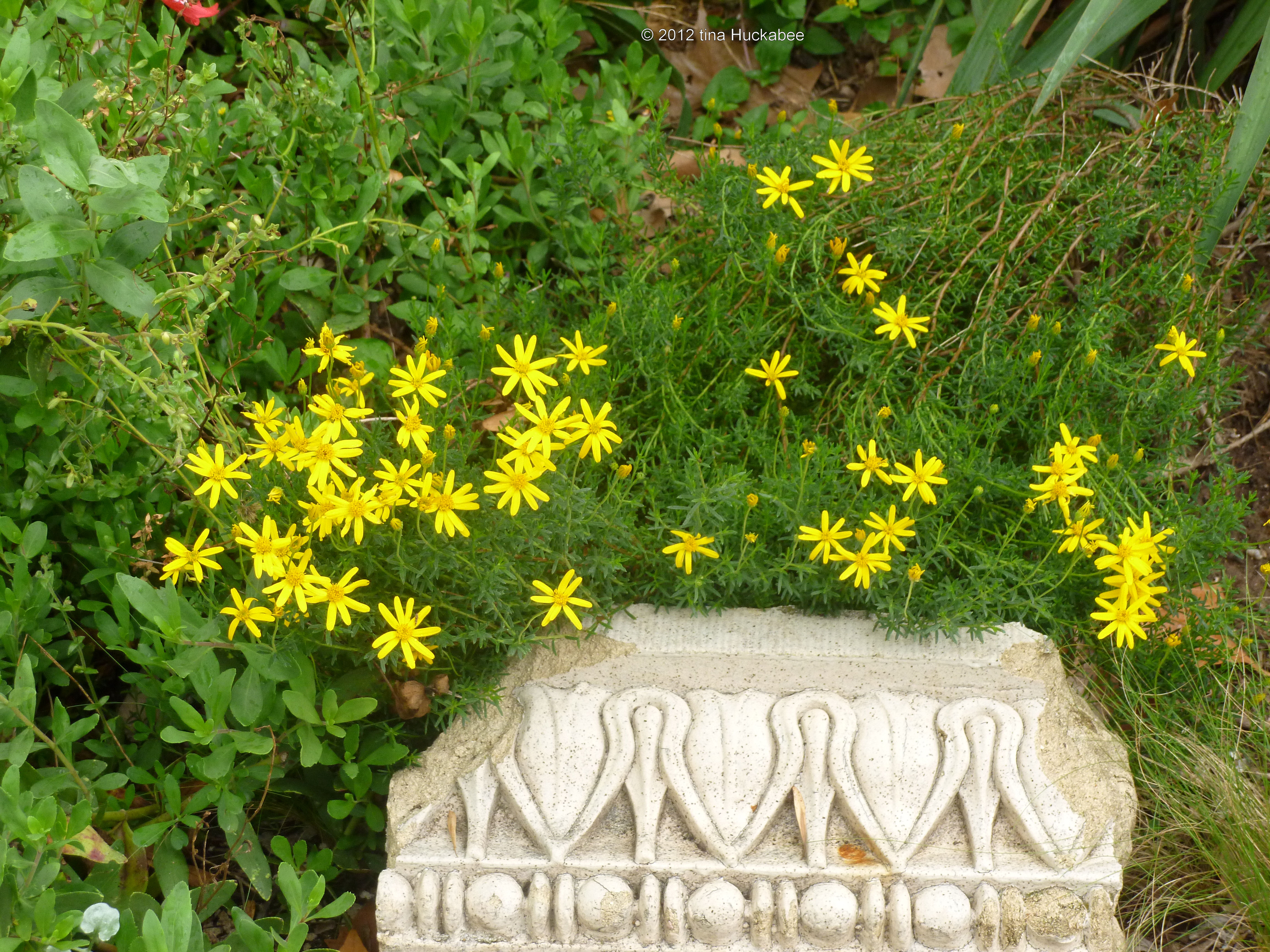
The Damianita (Chrysactinia mexicana) is a plant with shocking yellow flowers paired with striking dark, green foliage.

Damianita blooms on and off for the growing season and is native to Central/West Texas and New Mexico.

Texas native plants fit well within the palette of a large mixed perennial garden.

Natives that are blooming are White Autumn Sage (Salvia greggii), Henry Duelberg Sage (Salvia farinacea, ‘Henry Duelberg’), Yellow Bells (Tacoma stans), Big Muhly (Muhlenbergia lindheimeri).

Wherever you live, plant natives in your gardens.  They’re easy, hardy and reliable and attract wildlife to your gardens.

For more information about native plants of North America, check out the Lady Bird Johnson Wildflower Center site.

Go natives!  Go garden bloggers!