True Beauty

Passed on to me by my gardening buddy, TexasDeb, who blogs at the beautiful austinagrodolce, was this recent article from The New York Times concerning the importance of the home landscape as a  partial fix for the serious decline in natural habitat and the resulting calamity facing native flora and fauna in the United States.


http://www.nytimes.com/2015/02/05/garden/at-plant-o-rama-in-brooklyn-the-message-was-that-beauty-is-no-longer-enough.html?action=click&contentCollection=N.Y. / Region&module=MostEmailed&version=Full®ion=Marginalia&src=me&pgtype=article#


The article is well worth a few minutes of reading, but I especially like this quote by speaker Douglas Tallamy, professor and chair of entomology and wildlife ecology at the University of Delaware:

Landscape ecologists estimate that only 3 to 5 percent of the lower 48 states is undisturbed habitat for plants and animals. Farmland now covers more than half of the country. Most of the rest is taken up by suburban sprawl and about 40 million acres of lawns (“eight New Jerseys,” as Mr. Tallamy put it), along with highways, malls and growing cities. A world with half those lawns, he said, might have 20 million acres of habitat, or more than 13 national parks, including Yellowstone, Yosemite and the Adirondacks, if you added up the acreage.

Instead, thanks to vanishing habitats, Mr. Tallamy said, “We have 50 percent fewer birds than 40 years ago,” referring to results of yearly bird-banding studies that track those numbers. And some 230 species of North American birds are at risk of extinction, he added, citing the 2014 State of the Birds Report (stateofthebirds.org).

“But we can do something about this,” he said. “We can bring nature back to our yards.” 

We can indeed do something.  It is in virtually every homeowner’s ability to add native plants to the garden which provide sustenance and cover for native birds and insects.   Also, those native plants are lovely and require little effort.  Additionally, reducing or eliminating wasteful lawn will not only save water and lower maintenance, but will be less reliant upon harmful and expensive chemicals (fertilizers, herbicides) that many homeowners believe is necessary for “gardening.”

Start with a small garden of easy native flowers and shrubs, then expand as time and money allow.

IMGP5267.new

The paradigm of garden beauty is changing–join in and produce real, positive, and lasting environmental change.

Cedar Sage Sensation

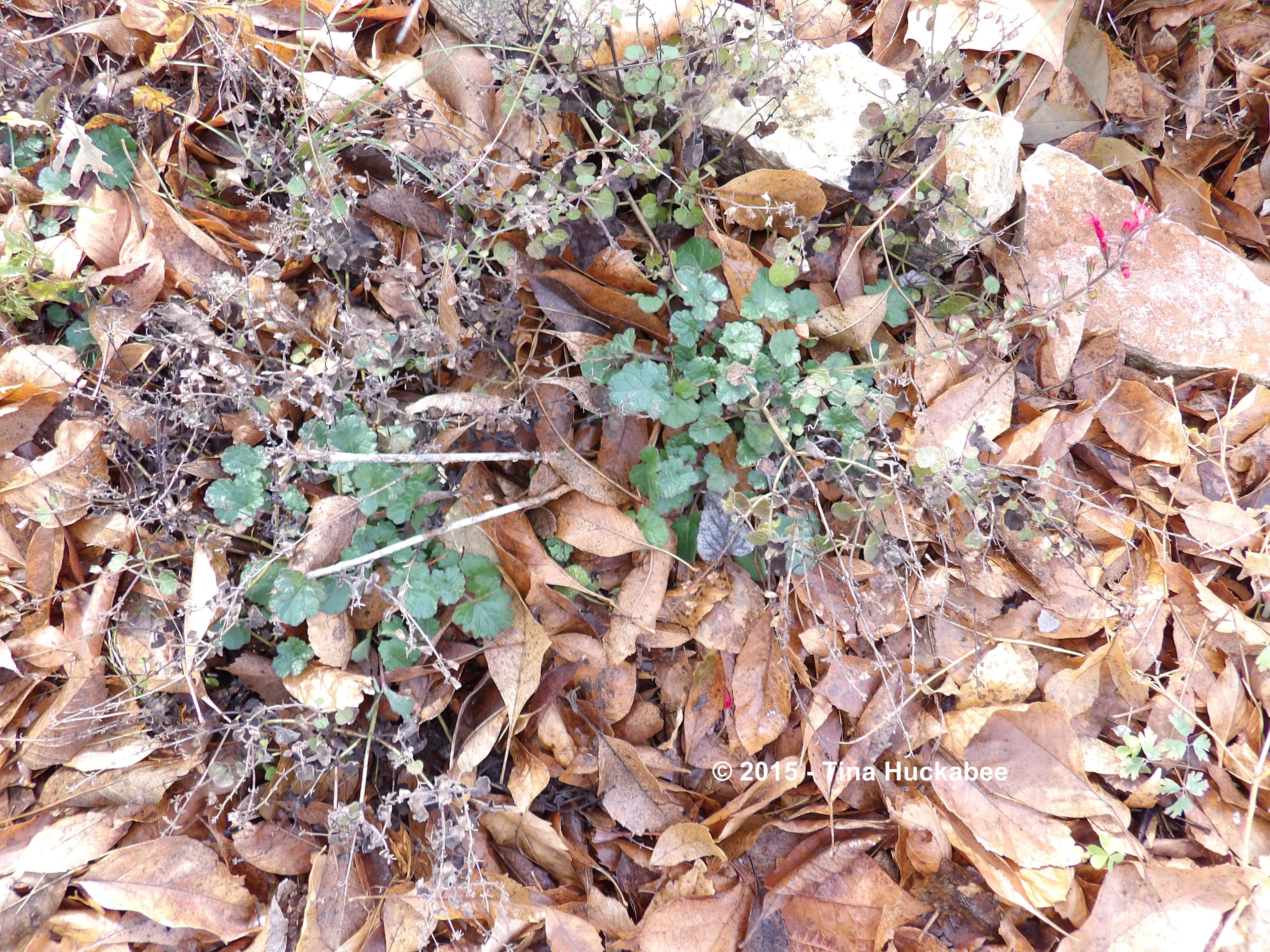
Normally, I wouldn’t give Cedar Sage, Salvia roemeriana, much thought this time of year. A lovely perennial which reaches the zenith of its beauty during spring blooming time, the nice little winter rosettes,

P1030621.new

…are fine-n-dandy, but not enough to ‘wow’ about now.   But it’s Wildflower Wednesday (thanks to Gail at clay and limestone for hosting) and I’m going to gloat a bit because one of my Cedar Sage plants is in flower-power mode!IMGP5086.new

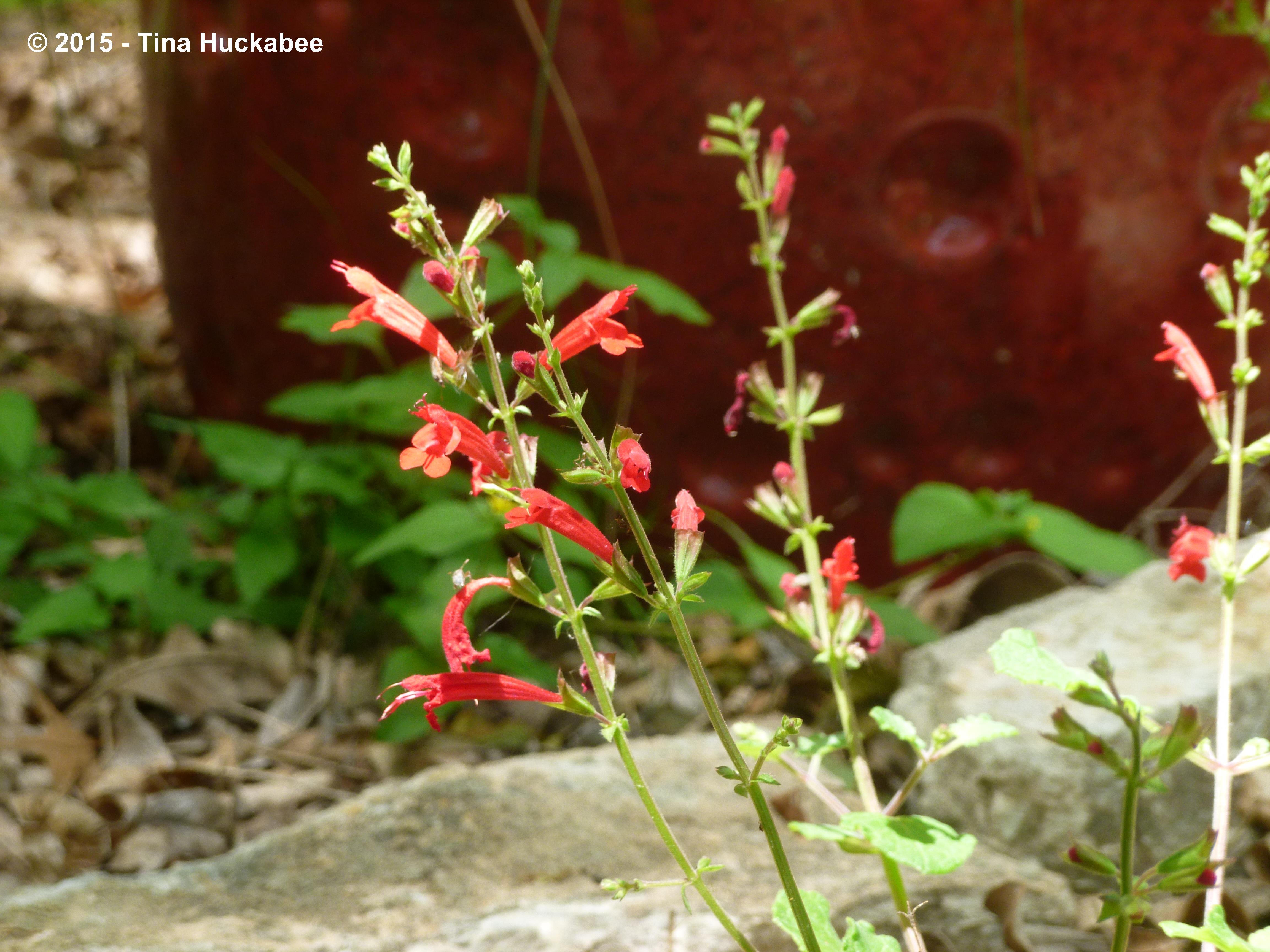
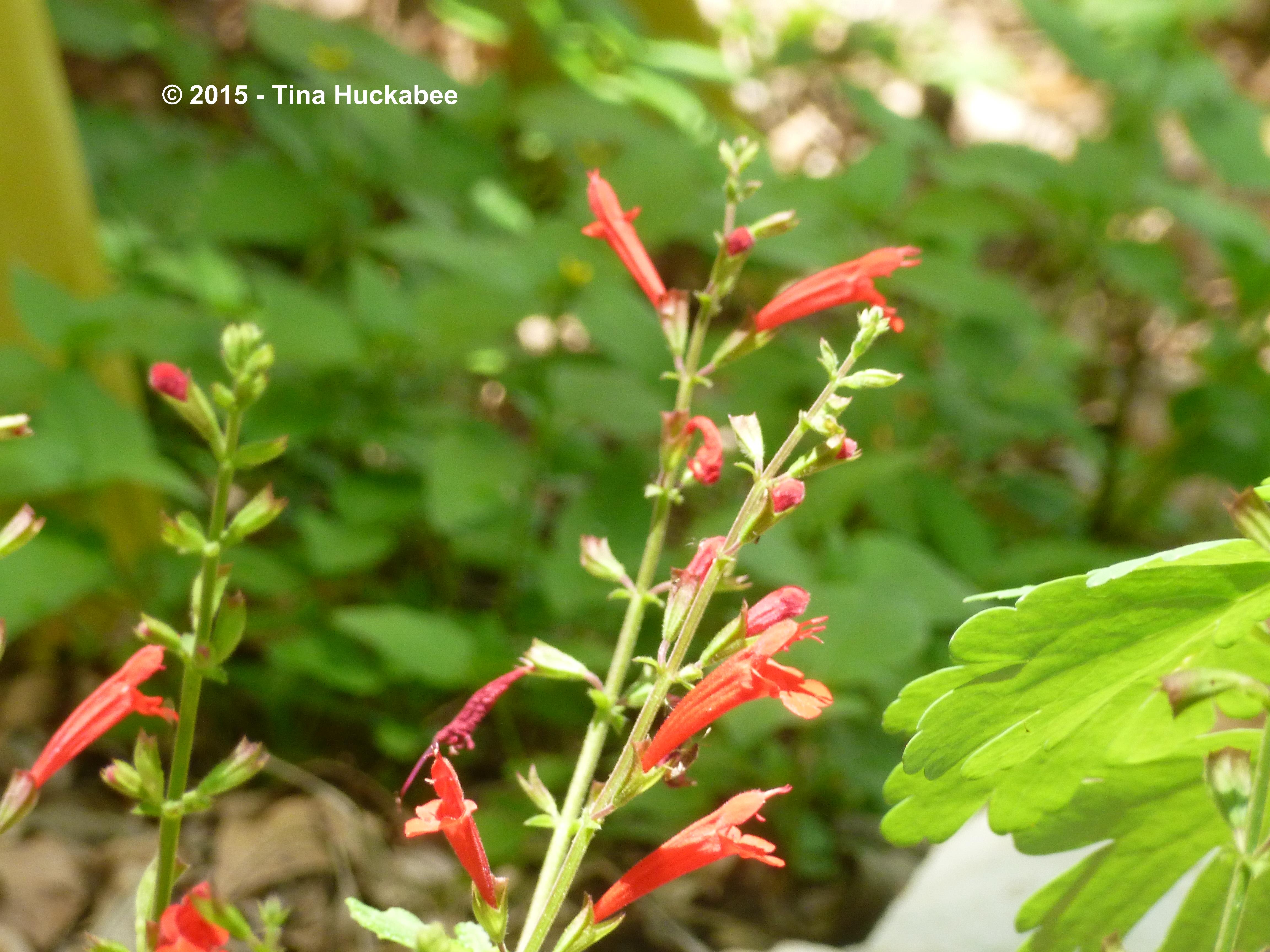
Mmmm. Gorgeous, brilliant red, tubular blooms!!  Such eye candy in a dappled shade garden!  Even more so as there’s almost nothing else abloom at the moment.

IMGP5091.new Normal flowering for this small, Texas native, pollinator-friendly perennial is spring to early summer, roughly April to June. The literature suggests that it blooms on and off throughout summer, though mine never blooms past June. That it’s blossoming in late January is odd–it hasn’t happened in my garden ever before.  In the public gardens where I formerly worked, I once saw a Cedar Sage with flowers in October and I was surprised and pleased at that out-of-season gift.

I’m not complaining about this January wonder–it was a lovely sight last week to see the flowers dancing above the winter rosette, during a rainy few days.IMGP5088.new

But it’s during late spring that this perennial acting-as-a-ground cover really dazzles.

P1030617.new

P1030620.new P1030618.new

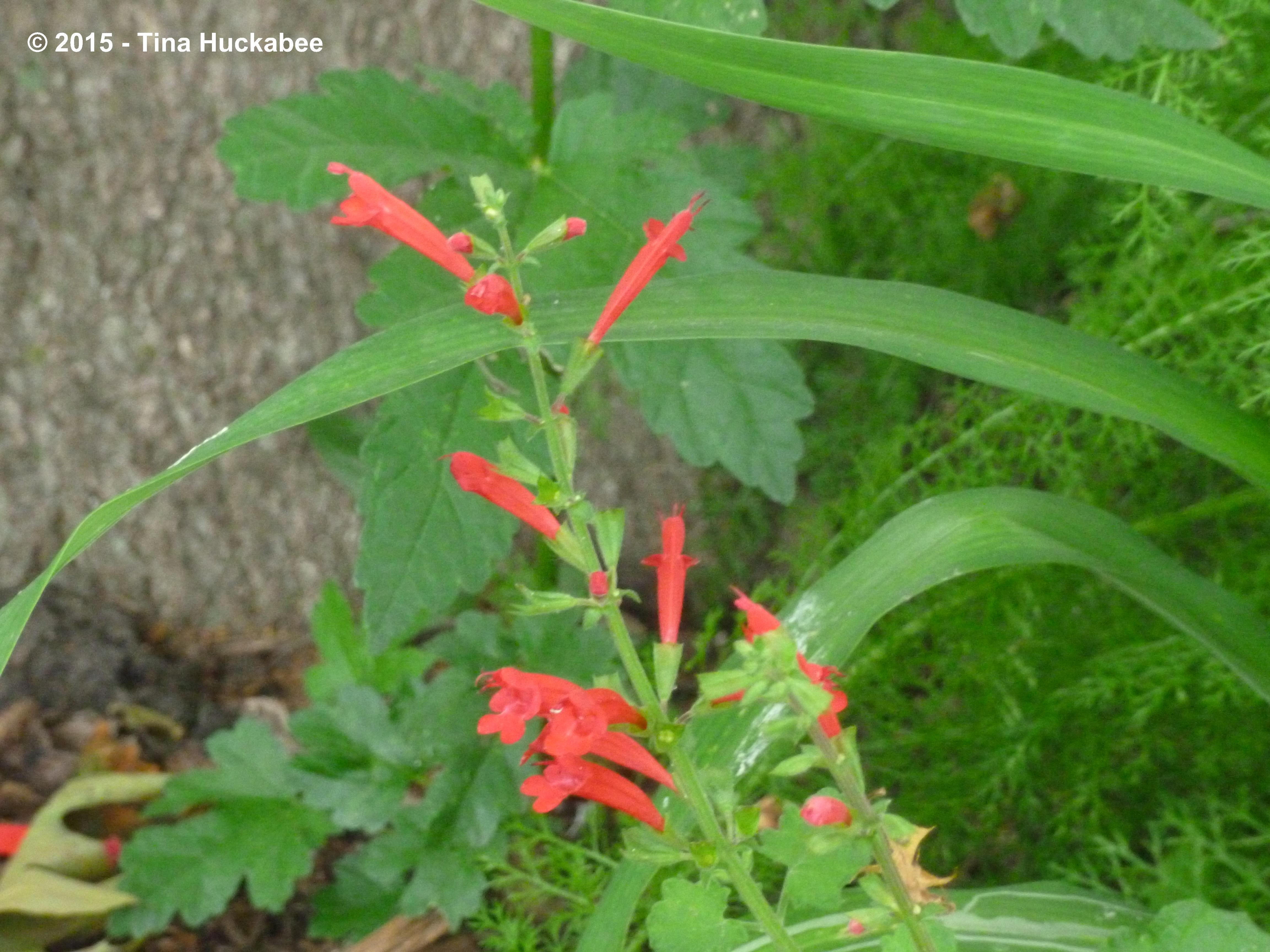
The scarlet blooms brighten the landscape and provide for a variety of pollinators.  I’ve never seen a hummingbird nectaring at the blooms, though Cedar Sage is considered a hummingbird plant.  As a member of the salvia species, you can bet it’s deer resistant and it’s a water-wise choice for the shade to dappled-shade garden.

P1030622.new

After its typical flowering in spring, the seed heads remain attractive through most of the summer. I don’t prune  the stalks back until late summer, or even into autumn–just because I  let them seed out and I enjoy the spidery reach of the tawny stalks from the green basal leaves.

IMGP5092.new

Clearly, I didn’t prune this plant back at all.

IMGP5089.new

The Cedar Sage is so-called because it evolved to grow under the shade of Ashe JuniperJuniperus ashei–commonly called “mountain cedar,” “cedar,” or “damn cedar” (by those highly allergic to its pollen).    The foliage of the Ashe Juniper is fine, thus allowing the Cedar Sage seedlings to germinate easily.  According the the Lady Bird Johnson Wildflower Center plant data base information, Cedar Sage have trouble germinating under the canopy of large-leafed deciduous trees, owing to the fallen leaves blocking the seeds from soil (and light too, I suppose), thus preventing germination. That hasn’t proven true in my garden though.   The plant blooming now is under a non-native Arizona Ash tree, Fraxinus velutina, and the group in my back garden reside under a native Shumard Oak tree, Quercus shumardii.     Of course, I do rake up fallen leaves, but my gardens are well-mulched, so I imagine that I don’t get as many seedlings in the garden proper as I would if I didn’t mulch.  In fact, many of my Cedar Sage seedlings appear in adjacent pathways.  Regardless, there are always a few seedlings each winter from the previous  year’s crop of flowers and resulting seeds, and I transplant them to spread their crimson glory.

Cedar Sage is native to a large, but specific area of Texas–from Central to West Texas, in the Edwards Plateau ecoregion; their native range extends southward into northern Mexico.

P1030594.new

If you live elsewhere, Cedar Sage might be available as a tender perennial or annual.  If you’re in Central to South Texas, it’s a must-have shade plant.

P1030596.new

Thanks again to clay and limestone for promoting the beauty and practicality of native plants–click on over and check wildflower plants showcased this January, 2015.

P1030653.new

Bird Bath Survivor

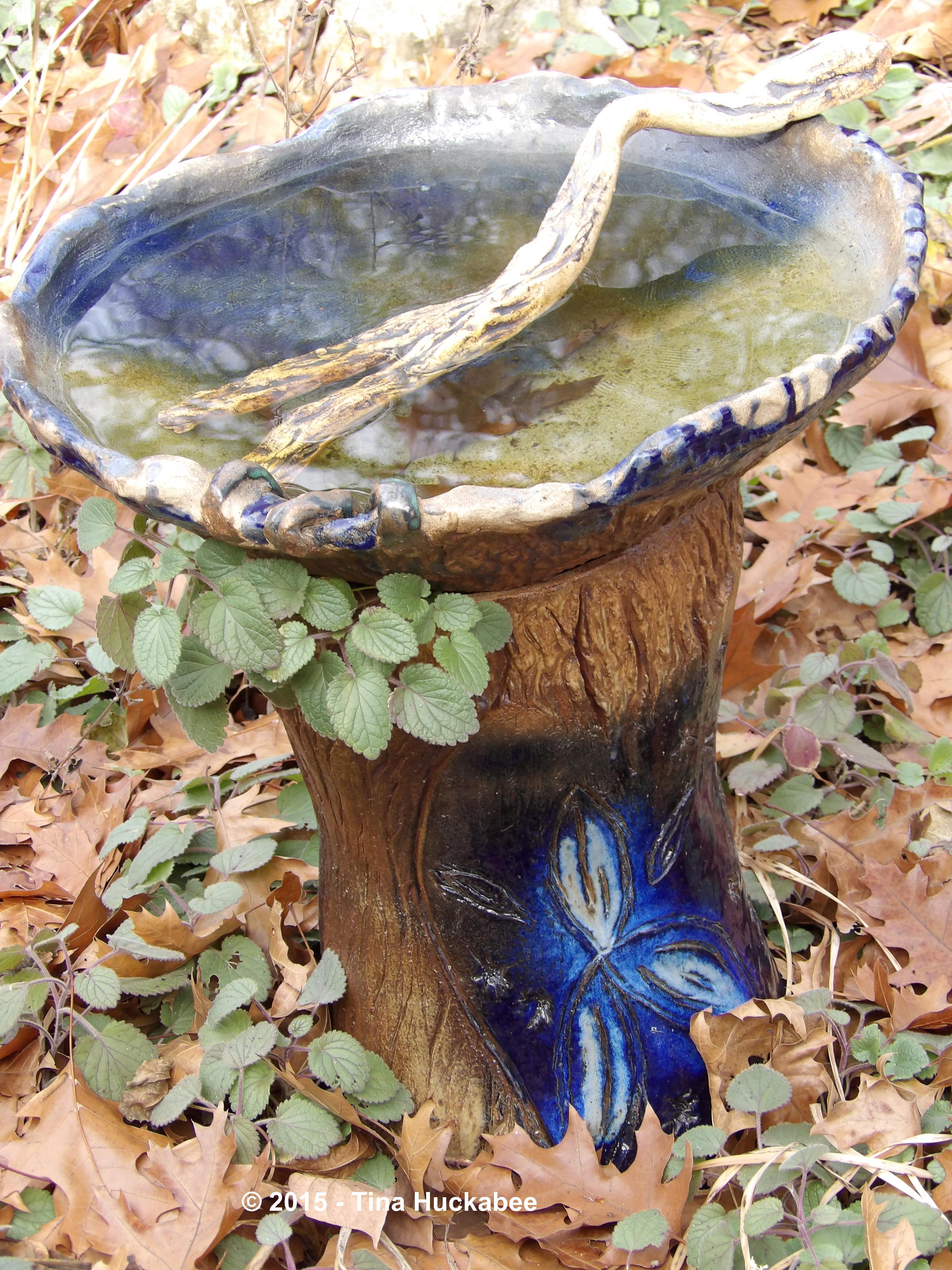
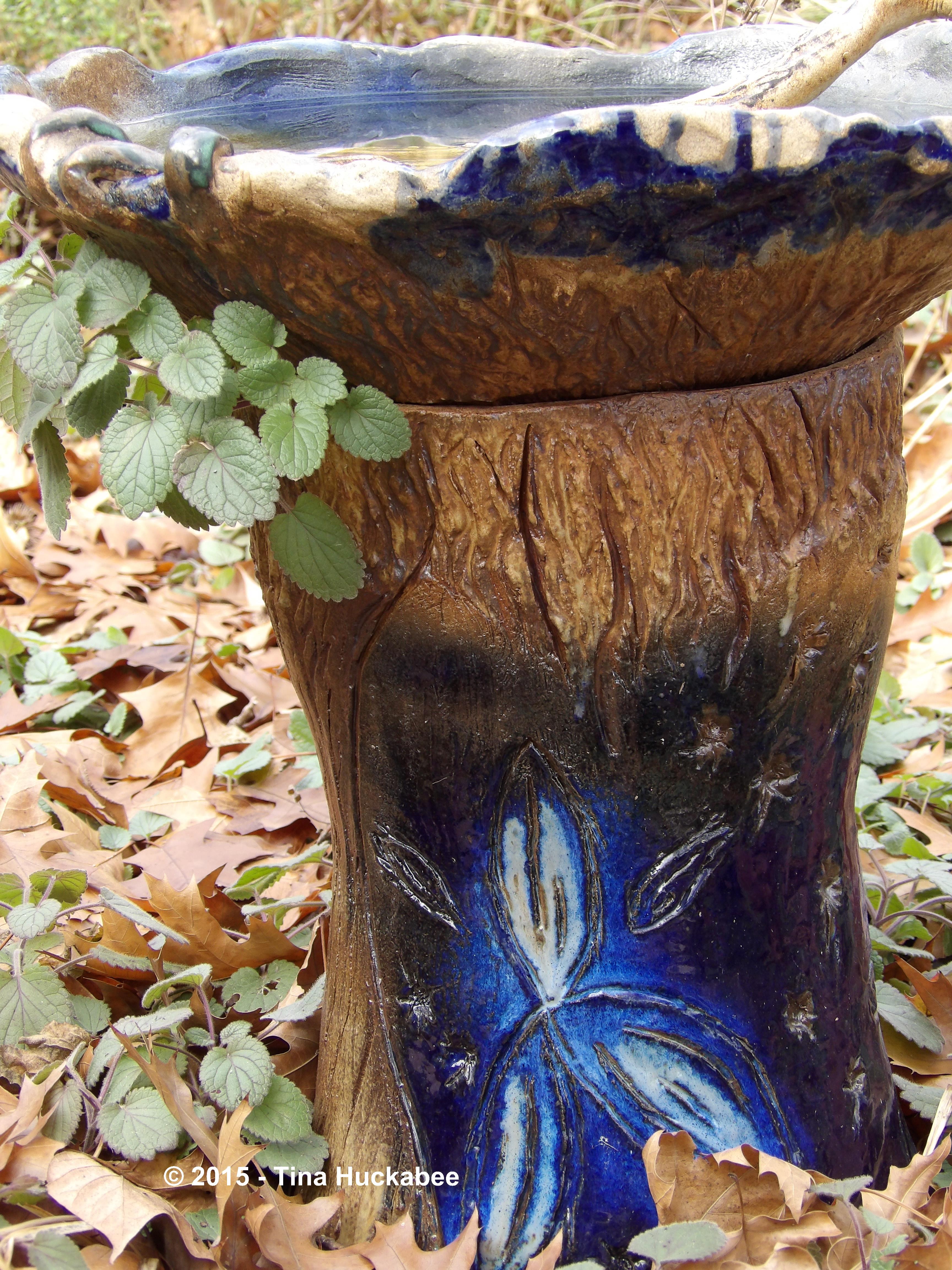
All summer and fall, when lifting the bowl of this bird bath to clean and refill with fresh water,

IMGP5169.new

…I observed a hardy sprig of native Heartleaf Skullcap,  Scutellaria ovata ssp. bracteata, clamoring up from the deep, dark, depth.

IMGP5141.new

Wan and pale, thin and spindly, this bit of perennial was ever-growing from the moist soil of the cavity, trying to make its way into the garden.  I didn’t think much of it, except that it was charming and rather remarkable that this remaining remnant from spring was surviving in less-than-ideal conditions and that it continued growing, inside the pedestal, slowly, throughout summer and into autumn.

Recently, I noticed this.

IMGP5117.new

Yup, that’s the same individual, all grown up and emerging from its bird bath terrarium, into the outside world, saying “Hi!” and readying for spring blooming, hosting of pollinators, and spreading its plant DNA.

IMGP5120.new

The determination to survive is heartening.

IMGP5118.new

I guess it’s true–that native plants survive and thrive in tough situations, without much help from the gardener.