Birds Love ‘Em, Bees Love ‘Em

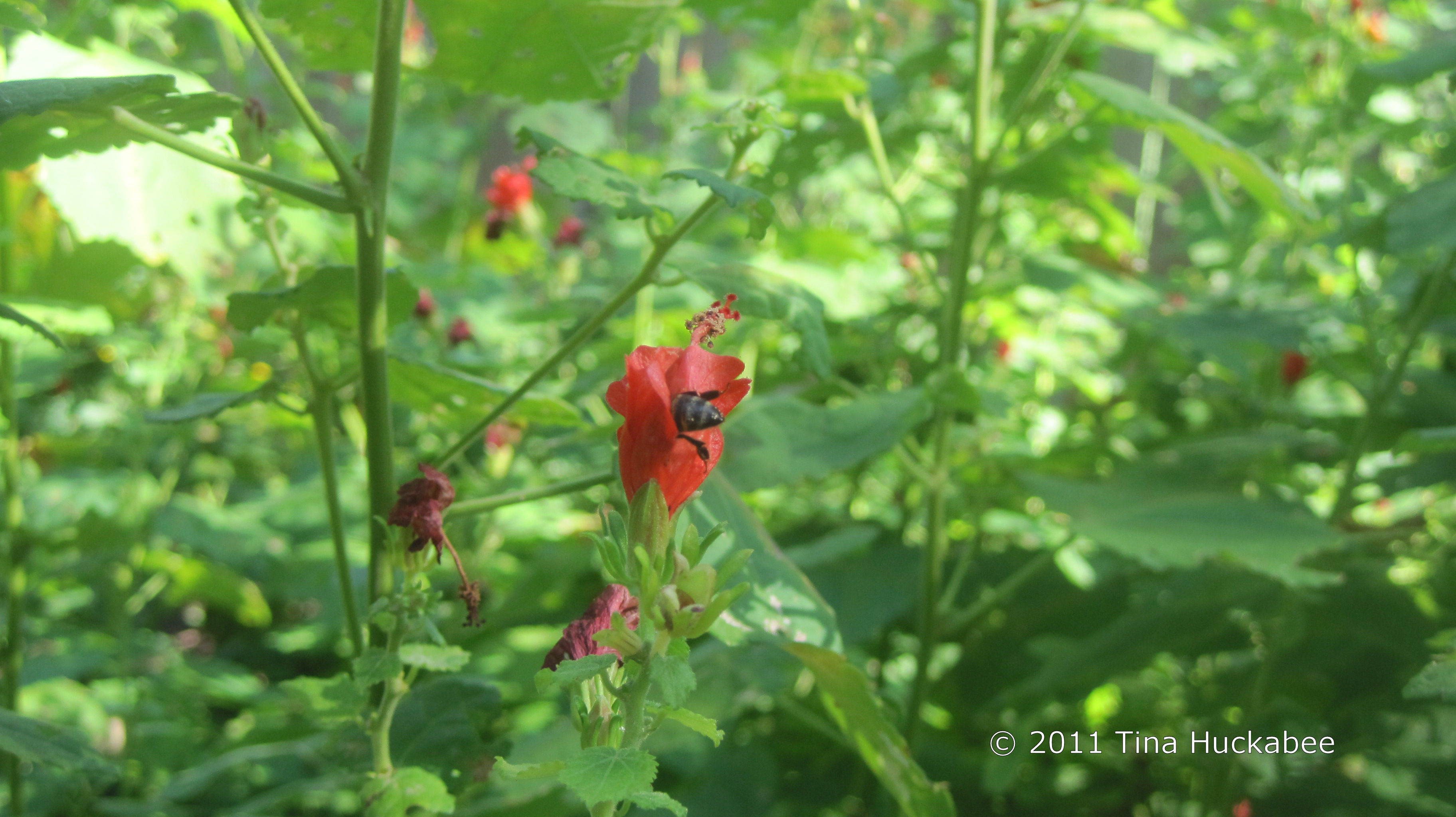
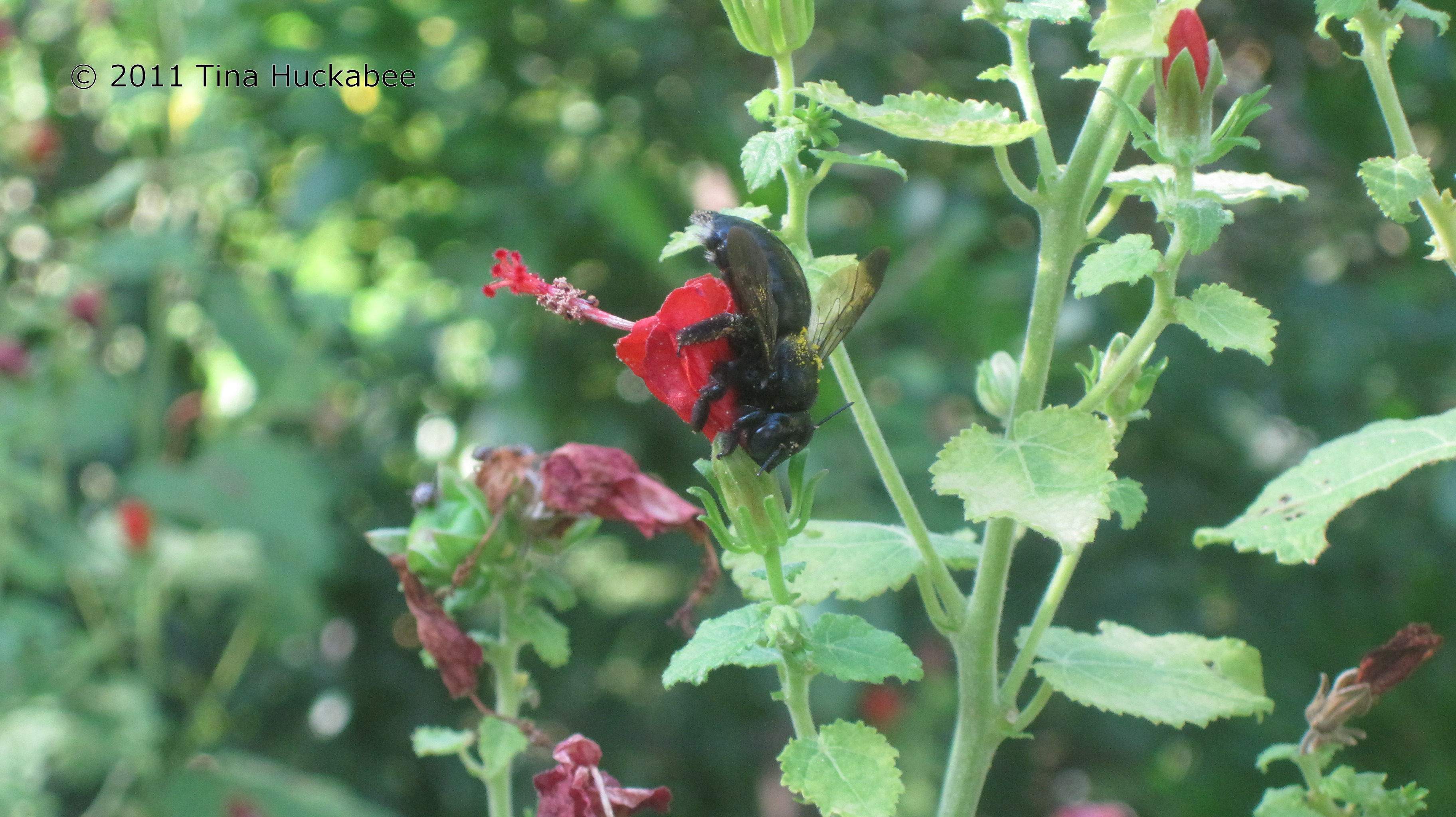
Bees love ’em.

Butterflies love ’em.

Hummingbirds really love ’em. Unfortunately, I’m not a good enough photographer to catch a hummingbird feeding.  You’ll just have to take my word for it!

I love ’em too.  Turk’s Cap, (Malvaviscus arboreus var. drummondii), is one of the first native plants that I fell in love with many years ago.  Turk’s Cap is a deciduous  perennial that  thrives in just about any situation.  It’s a staple in the shady garden, but also does  well in full sun.  It can handle severe drought, but doesn’t rot when we endure occasional floods.  An excellent nectar source (for the above mentioned critters) it also produces a fruit that birds and little mammals love.  (Some might take an exception to my inclusion of squirrels as desirable wildlife, but they are wild, and they are life and they do live amongst us.)  Turk’s Cap also does well in a variety of soil types.  Aside from the difficult soils that we have in Central Texas, I have also seen these plants growing in sandy Texas coastal areas and they do well there too, with the exception that they will dry out more rapidly.  But in Central Texas, one can’t have a more reliable plant in the garden.

Turk’s Cap has a small, bright red bloom that looks like a tiny hibiscus which never quite got around to opening up.

Like hibiscus, Turk’s Cap is in the Mallow family, so the similarity makes sense.  The petals swirl around the stamen, which protrudes upwards and outwards from the center.  The leaves are palm-shaped and tropical looking (again, that Mallow thing).  In the Austin area, Turk’s Cap bloom from May until November–a wonderfully  long and prolific bloom cycle!  They bloom well in full sun, shade and anything in between.

I believe that Turk’s Cap is classified as a shrub, but I always think of it as a herbaceous perennial.  The plant grows from the base at the soil line in long stems.    As the plant grows taller and the roots colonize outwards, Turk’s Cap take on the appearance of a large shrub, especially In established plants (more than 3 years old).

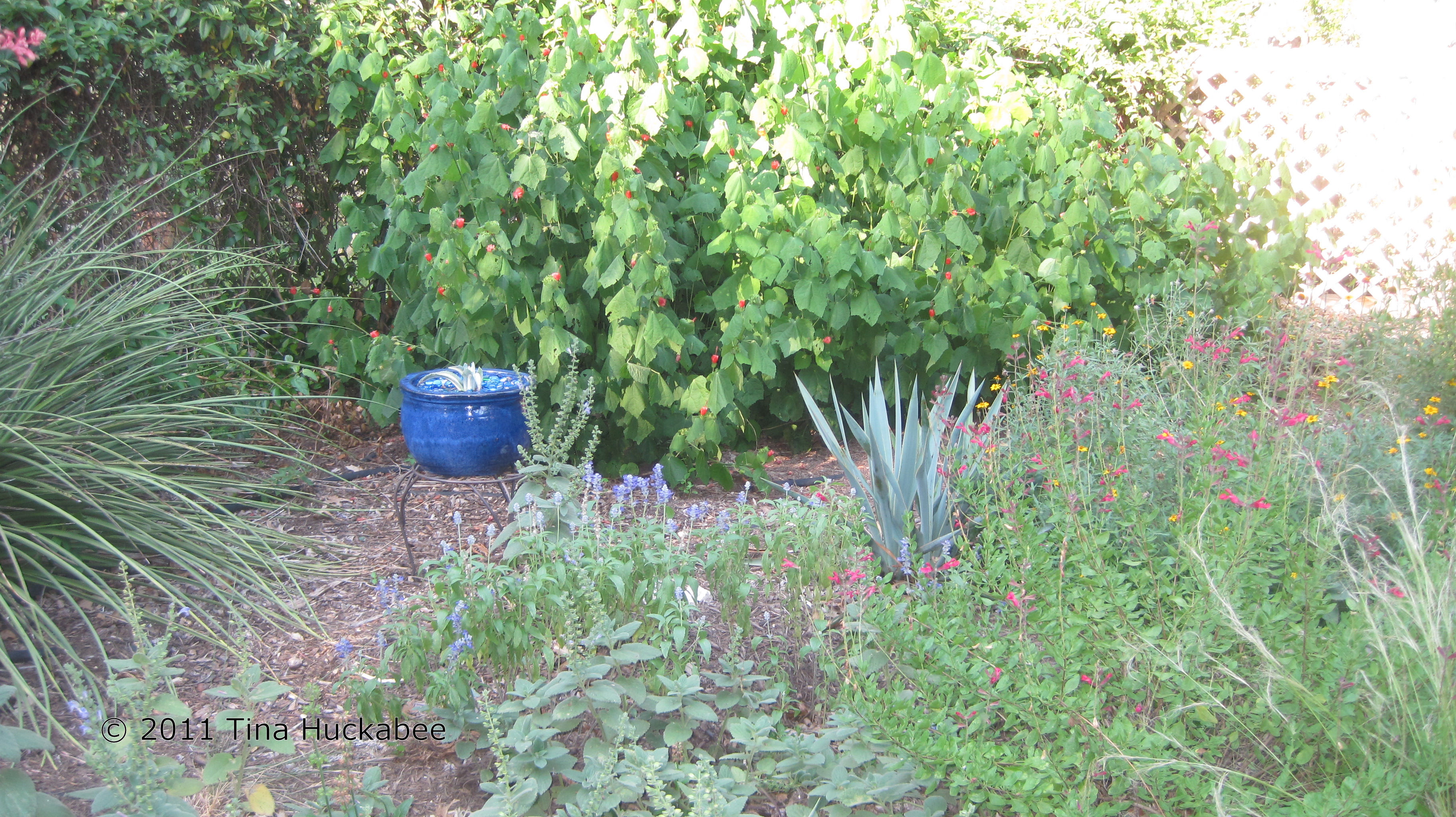
Several of my Turk’s Cap shrubs are easily 12-15 feet in diameter–they are also 10-15 years old.  In normal years, they reach 5-6 feet in height. In wet years (gosh, do I remember those??), Turk’s Cap require pruning to keep the long stems from flopping over. Because of the drought this year, all of my Turk’s Cap are a little shorter in height than normal.

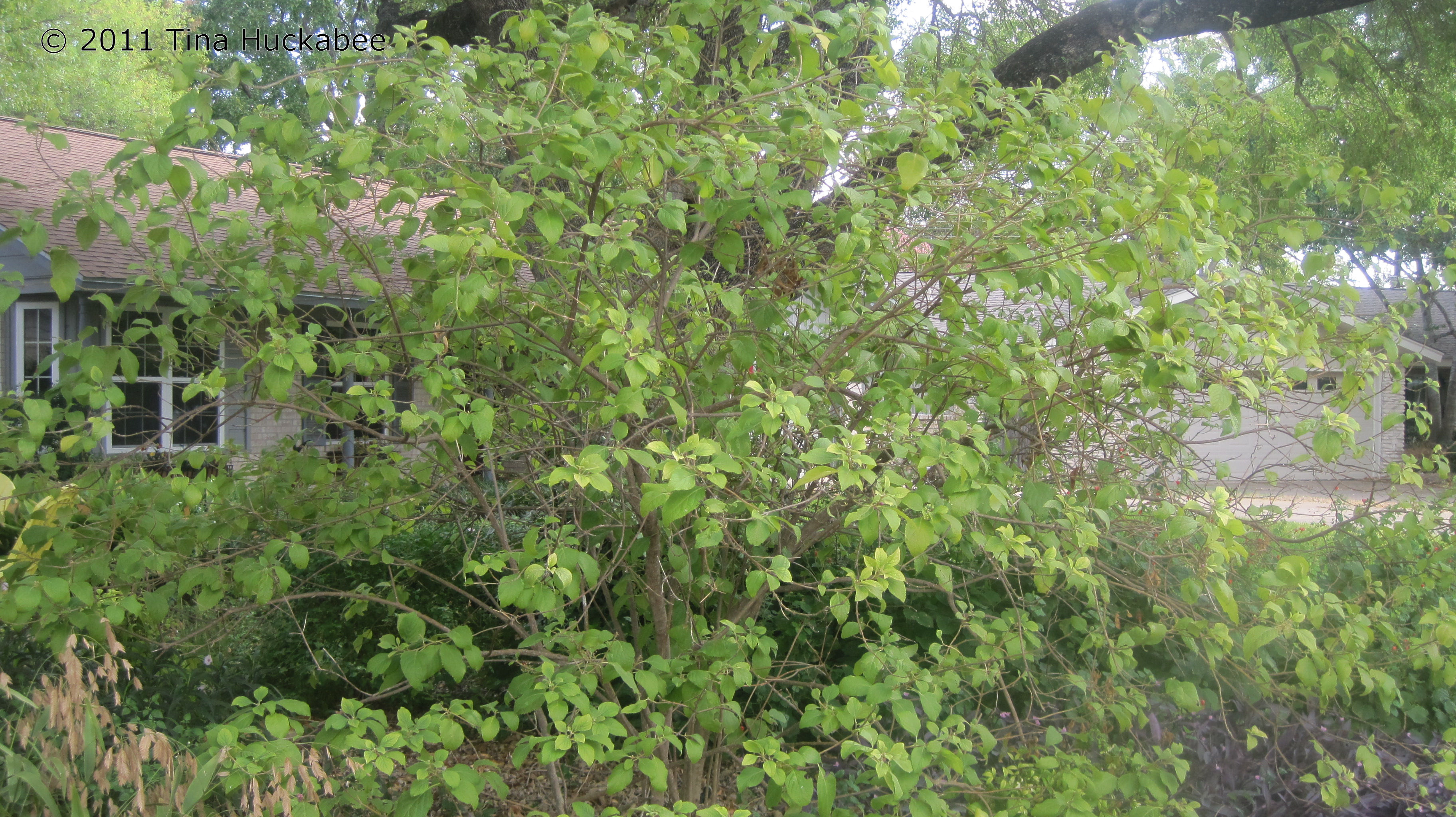
I mentioned in my post about Goldeneye that the Turk’s Cap  behind a stand of Goldeneye (above photo) in my front garden should be taller, but was dwarfed by the drought.  For that particular plant, I only water when I can remember or when it looks sad. It also receives afternoon sun. Perhaps if I’d watered a bit more, it would be closer to its normal height.

The extreme heat this year didn’t seem to have any negative effect on the blooms or the  appearance of leaves in any Turk’s Cap that I’ve grown–unlike some plants which developed sun burn.
Once our nights begin to cool (whew!!) and the sun is less harsh, Turk’s Cap bloom less and some of the leaves will turn yellow.  Turk’s Cap are definitely summer superstars and are not necessarily the most attractive fall plant. They will continue to bloom minimally and they produce fruits, so they remain an excellent wildlife food source well into the fall and even winter months.

The fruits are about 1/2 inch in diameter and are green, then turn red.  Both are visible in this photo:

When we get a hard freeze, the plant’s leaves will drop and the stems die.   For most of this past decade, my Turk’s Caps have remained at least partially green through most of the winter.  During some winters, the whole plant remained green-stems and leaves.  Because we experienced some very hard freezes in the winters of 2010 and 2011, almost all of mine died to the ground.  Regardless of how the winter temperatures affect Turk’s Cap, I prune the stems to the ground in late January/early February because I get tired of looking at sticks.

Every Texas gardener, especially those in Central Texas, should include Turk’s Cap as a part of the the palette of plants in their garden.

More on Turk’s Cap to follow…
Darn Birds

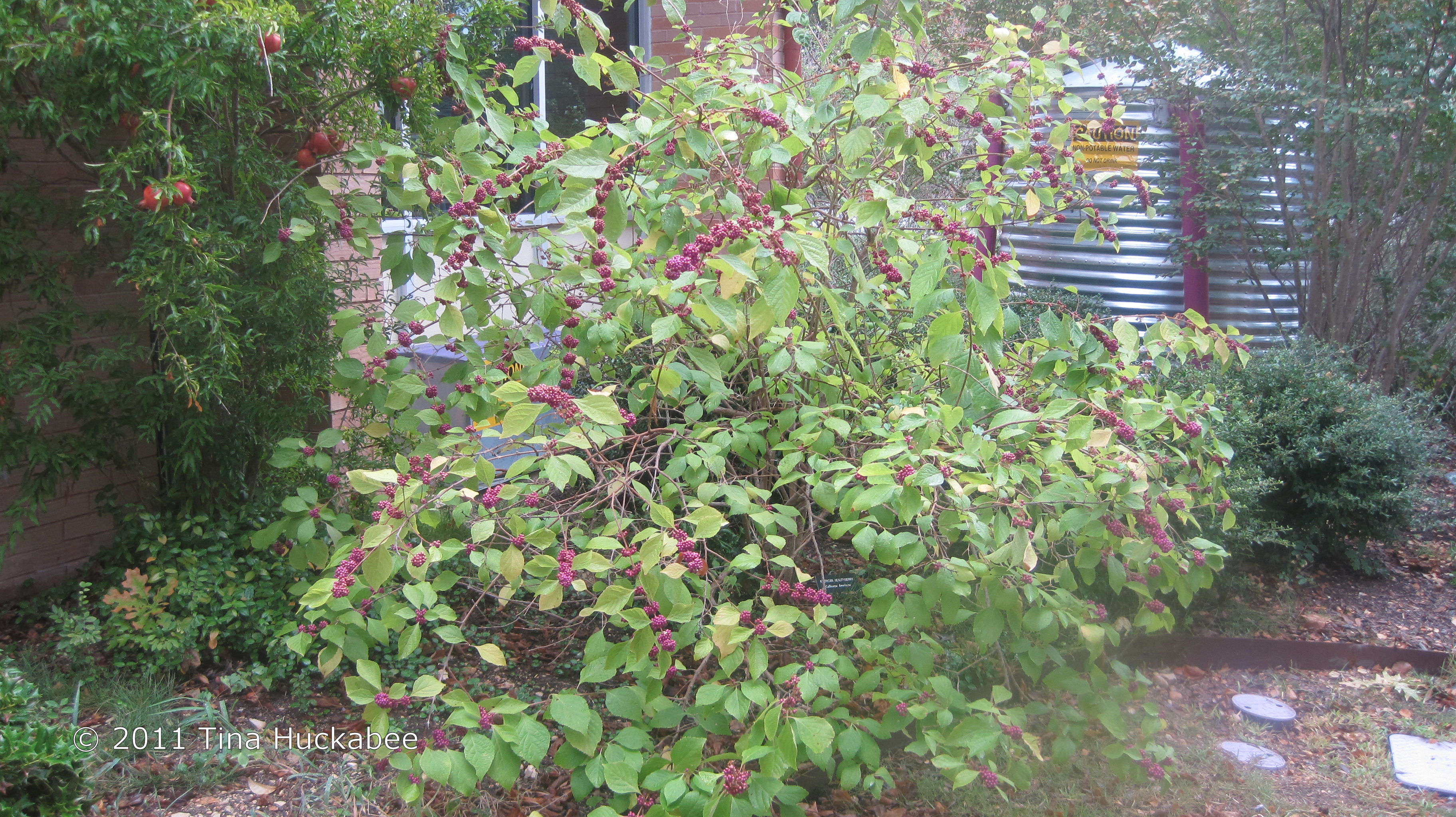
This is a photo of my American Beautyberrry (Callicarpa americana).

Sans berries.  The birds, mostly mockingbirds and a few bluejays, ate them.  All of them.  Within  two weeks of the berries turning the signature outrageous purple, the birds ate every last berry.  I’m not a happy Beautyberry gardener.  Never mind that I planted the Beautyberry to attract birds to my garden–surely they could let me enjoy the berries for a while?  This native-to-the-southeastern-part-of-the-United States plant (including Texas), is a large, deciduous shrub.  In August/September it showcases gorgeous purple (sometimes white) fruits or berries.

The arching stems bear the beautiful berries in multiple clusters.  Until those darn birds eat them.

These photos are of  an unmolested Beautyberry at Howson Library Garden.

I don’t know how the many birds that love those berries have managed to miss this shrub, but they have, at least so far.  Some years, I have been able to enjoy the berries on my Beautyberry (just looking, not eating!) well into the winter, even after leaf-drop.  In dry years, my berries disappear shortly after they turn color.  I assume with the drought this year, the birds are eating what they can, as soon as they can.

This is a large shrub, so it’s best to give it room to spread. I’ve never pruned any that I’ve gardened, but they can be pruned to the ground if you want them to be more compact.  Beautyberry shrubs work well as single specimens or, if you have the space, in a colony–they’re quite striking when planted two or three together. In my personal garden, I only have the one shrub, in dappled shade with some very late west sun. They do well in full sun too,  with a little extra water.  The tiny, delicate, pink blooms occur in June and the clusters of green, then purple, berries develop over the summer months. Without the berries, Beautyberry is a somewhat nondescript shrub.  But it is graceful, open and airy, with attractive arching branches and sometimes, the leaves turn a nice yellow before they drop.  After the darn birds and the first hard freeze, the shrub is barren until spring.

In Shay’s Green Garden at Zilker Botanical Gardens there are two Beautyberry shrubs with white berries.  I prefer the purple berries, because the purple is so…bodacious, but the white berries are lovely too.  In that particular garden, I added some White Mistflower (Ageratina havanensis), and some white Tropical Sage (Salvia coccinea)  and last fall, the combination was very nice–elegant in fact.  This year, the darn birds and the squirrels, ate the berries immediately, so the garden is not quite so dramatic.  Oh, well.  That’s what happens when you plant native plants that are here for the wildlife.  They chow down.

And that’s the way it’s supposed to be.

Can You Really Have Too Many Coneflowers?

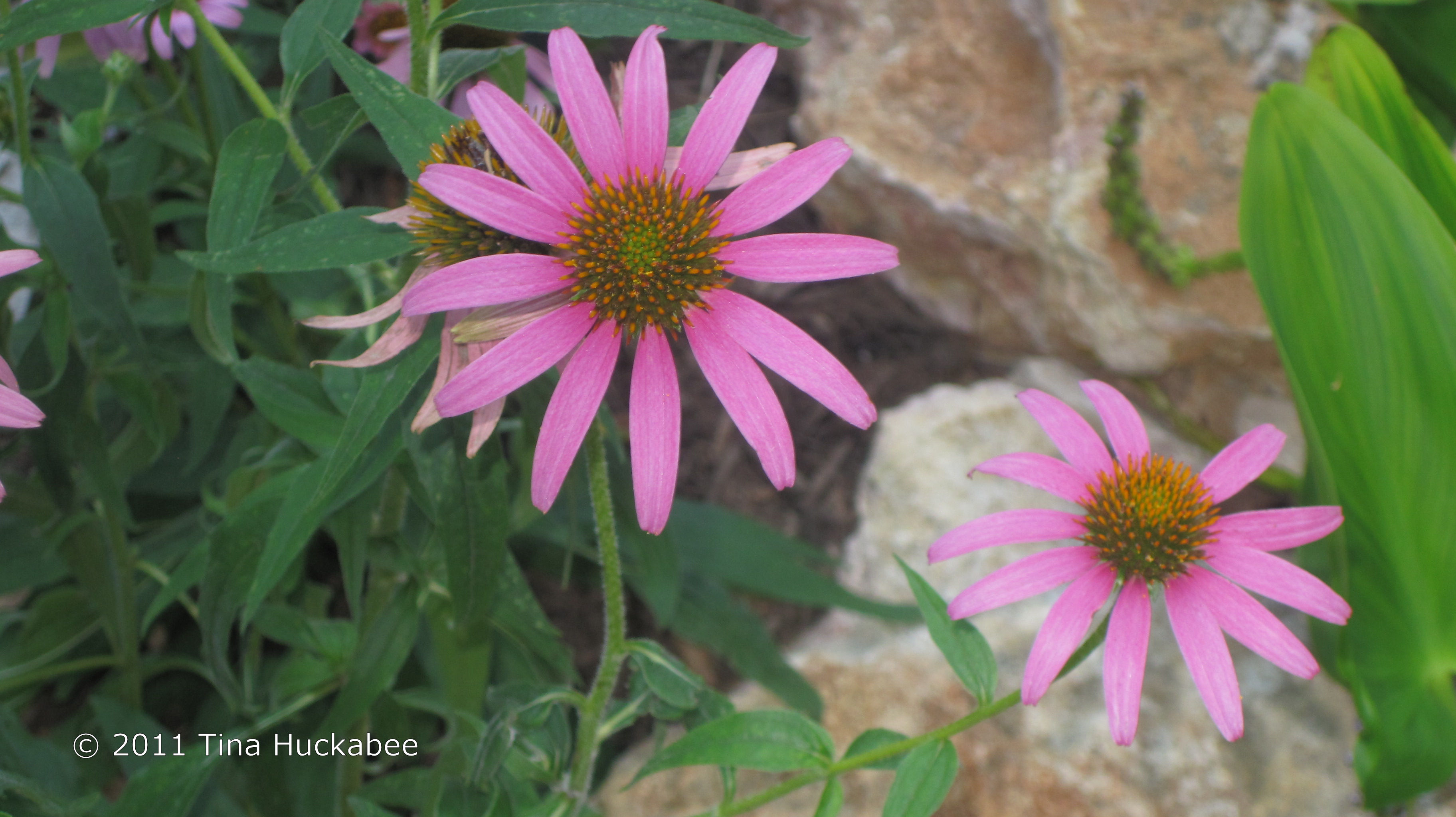
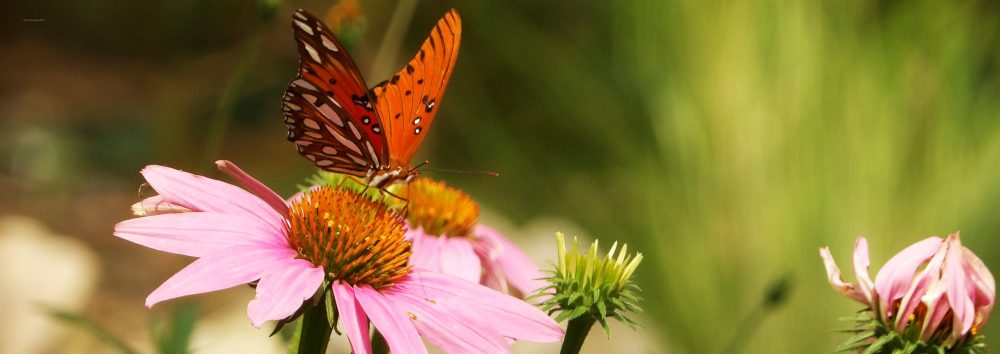
I’m going to stay in the Aster family in honor of Native Plant Week (October 16-22).  I love Purple coneflower, (Echinacea purpurea).  My daughter, Shoshana, always said, “They’re such happy flowers!”

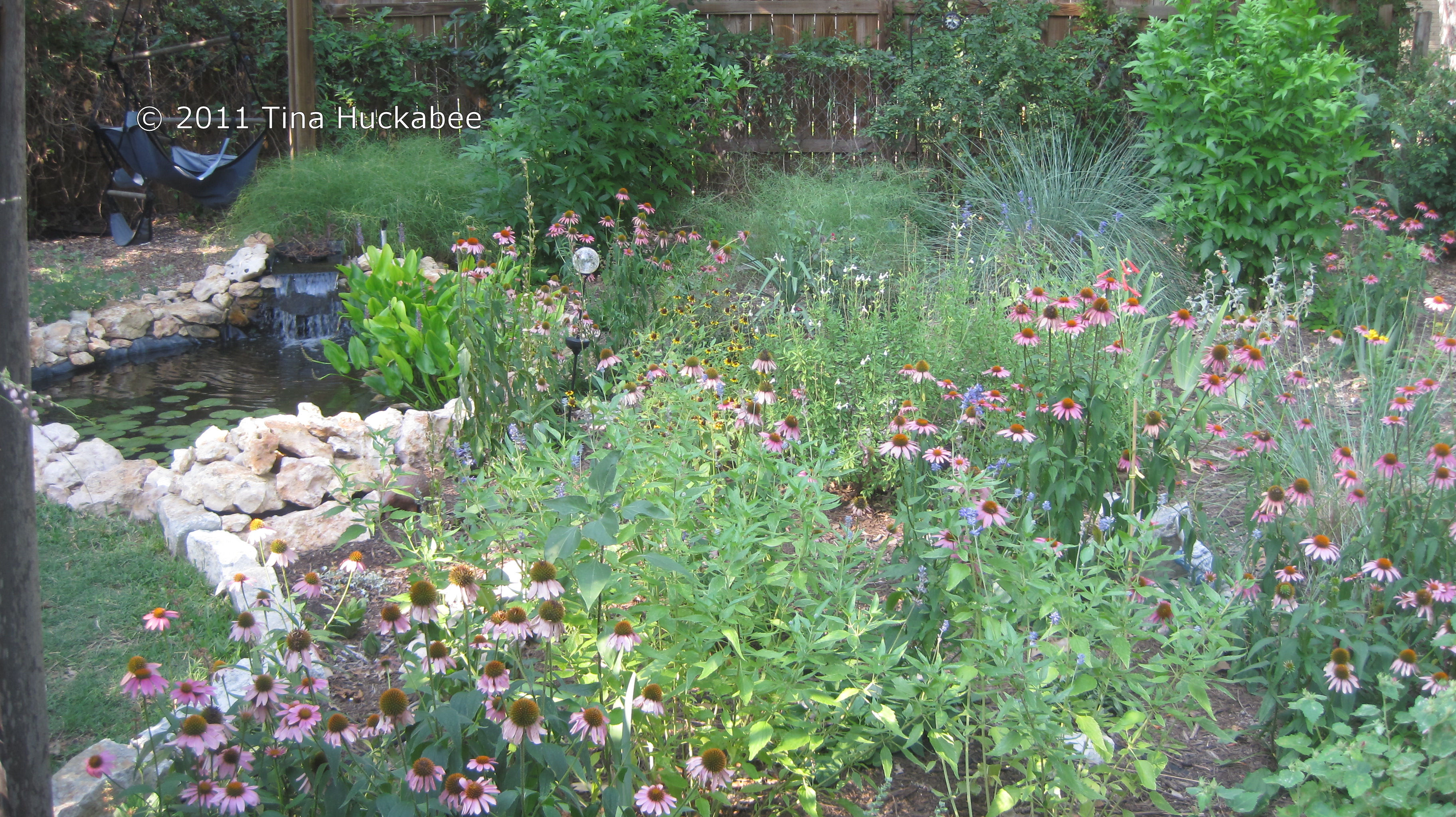
When I removed the last large portion of grass in my backyard for the large perennial garden that I installed, I decided that I wouldn’t buy many plants, but use seedlings of a variety of plants that I had from other parts of my gardens.   I always have scads of Coneflower to give away, toss in the compost, or replant.  So, except for a few other plants, initially this garden,

was primarily planted with Coneflowers.  I wanted to experiment and find out if it was possible to have too many Purple Coneflowers. Well, I found out, that indeed, it is possible to have too many. Not that they didn’t look wonderful when in full bloom, but after the main bloom time, the garden was a little bare. Also, I wanted the garden to be a true mixed perennial/shrub bed, so I removed some of the Coneflowers in that garden.  I still have many individuals of this lovely plant  in that garden and throughout my landscape.

The primary bloom period for Purple Coneflowers is April-July.  In full (or mostly full ) sun, they get 2-3 feet tall and are magnificent in bloom. The individual flowers last a long time and make a beautiful cut flower.

I also have a few as understory plants, in dappled shade.  What I’ve noticed about those is 1) the flowers seem to be a paler color, and 2) they only bloom once and the blooms don’t last very long.

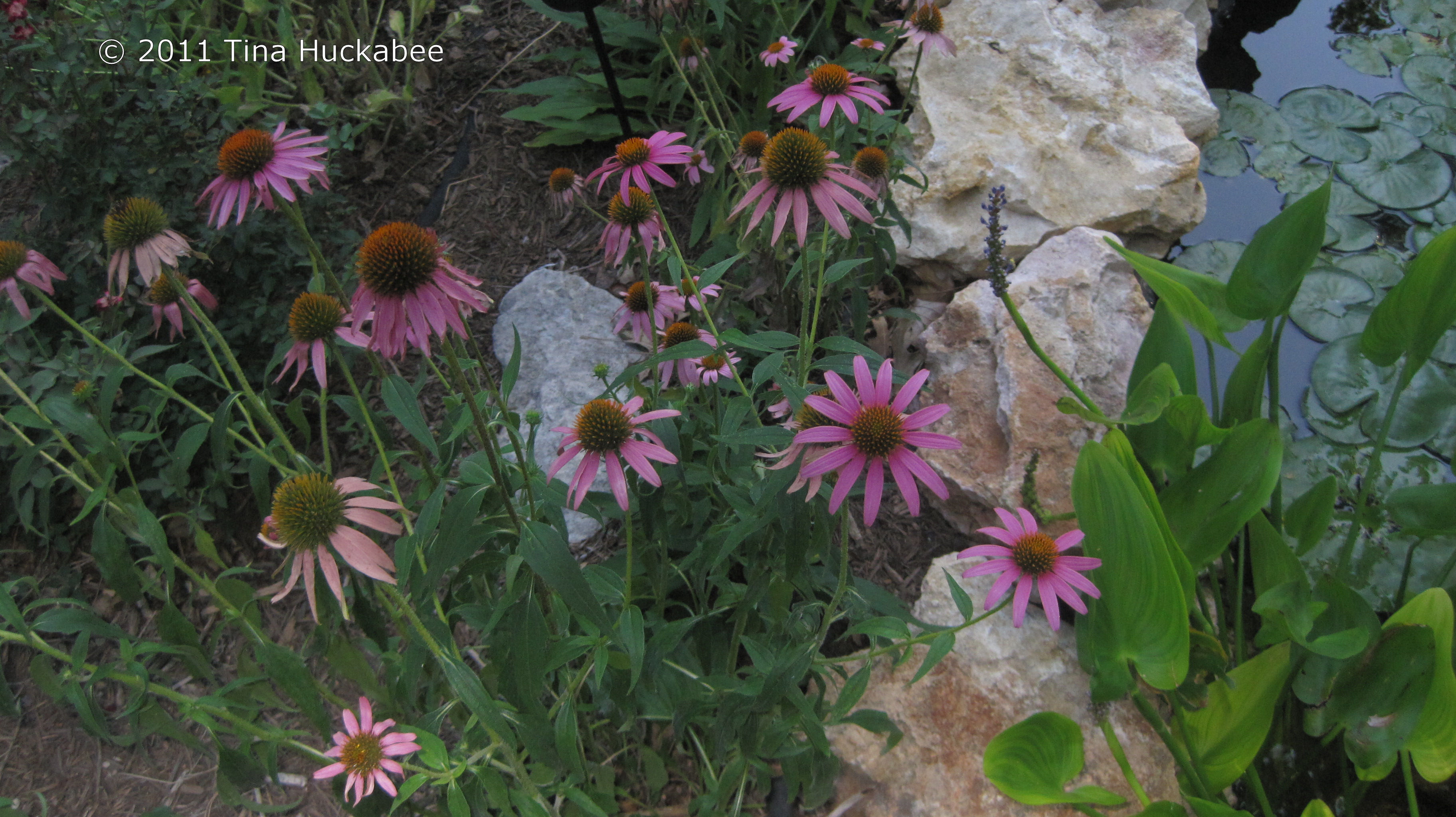
Once summer heat sets in, Coneflowers start to brown–this photo is from late June.  You can see the tips of the petals becoming a little toasty.

Eventually, depending on  heat and rainfall, Coneflowers will  go to seed in July/August.  I rather like them as they dry out, but I prune most of them down to the base plant just to prevent every seed from development and germination. Typically, some of my individual plants bloom throughout the summer, although that didn’t happen this year. Purple Coneflowers are terrific nectar plants for pollinators and I’ve often seen birds (especially finches) eat from the seed head.  I have several stands of spent blooms that I haven’t pruned because I think they’re interesting and the finches are still nibbling from them.

Just right of the spent blooms, in this photo is a Coneflower rosette that I pruned in mid-summer.  Without regular irrigation, this is what they look like from August until a fall bloom.

Usually in the fall, there is another bloom cycle, although not as dramatic as the one in spring.  It is in the fall that the butterflies really enjoy the Coneflowers.  I’m not so sure about this year, as the butterflies are scarce and the Coneflowers haven’t bloomed again.  However, with the rain this weekend (yay!!!), maybe that will change.  My plants tend to bloom until the first hard freeze of winter.  The Coneflower has a winter rosette, so it acts as an evergreen ground cover, if planted in groups.  I like to plant them in groups of three to five, but I’ll let seedlings develop and happen where they will, because each individual plant isn’t that large.  My experience is that Purple Coneflowers complement other plants.  I’m not sure I’ve ever disliked the way they look in a mixed perennial garden–with reds, blues, yellows, whites–they’re a fabulous addition to the mixed perennial garden.

A couple of my  individual Coneflowers didn’t survive this summer–some of those were in blasting sun. As a group though, my plants weren’t adversely affected by the heat and drought this year, except for a shorter bloom cycle.   I’ve heard from other gardeners with  heavy clay soil that they don’t have much luck with Coneflowers.  And years ago, I gave my mother some seedlings to plant (in Corpus Christi, on sand) and hers didn’t do well either.  Coneflowers seem to flourish in moderately rich and well-drained soil.

Purple Coneflowers are endemic to North America and a great plant for any gardener who wants a showy, long-lasting and easy addition to the garden.