Native Texas Plant Week and Foliage Follow-Up–October 2012

Joining Pam at Digging for Foliage Follow-Up and celebrating Native Texas Plant Week, I’ll focus on some of the lovely Texas plants currently wowing with interesting foliage in my garden.

Or, as in the case of the Big Muhly (Muhlenbergia lindheimeri), showing off its slender foliage and its magnificent inflorescence.  Fall has arrived with the plumes of native grasses entering their full glory.  Sigh.  So beautiful.

This Silver Ponyfoot (Dichondra argentea) augments the brighter green and blooming perennials around it.

Its creeping habit is graceful as it spills over edges and rocks.

Most people in Texas would consider this plant, Horseherb (Calyptocarpus vialis),
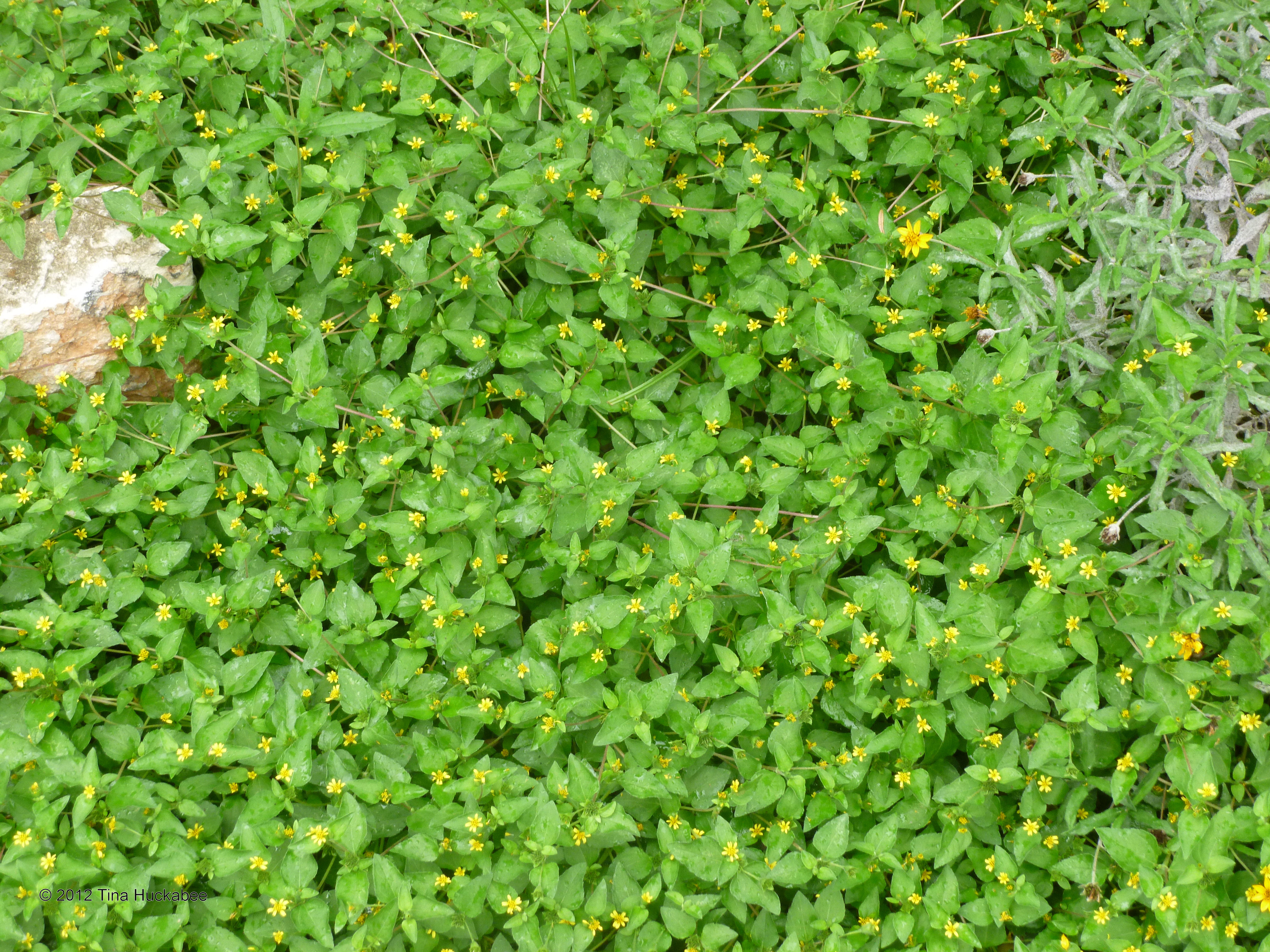
an obnoxious weed.  I’ve found many of these hardy, drought tolerant plants insinuating themselves in cracks between stepping-stones or at the base of raised beds.  I had so many individual mats that I decided to plant as many as possible in a sitting area that was once grass, but has been a mulched area for about ten years.

I planted the left side after some heavy rains last May and the right side, after rains  during the summer. The Horseherb has filled in remarkably well.  Scarily so. I hope I don’t regret have this tough plant so close to a more formal garden.  I’ll need to keep it tidy with a line trimmer, but the area is almost completely shaded, so it won’t need extra water and Horseherb can handle moderate foot traffic.

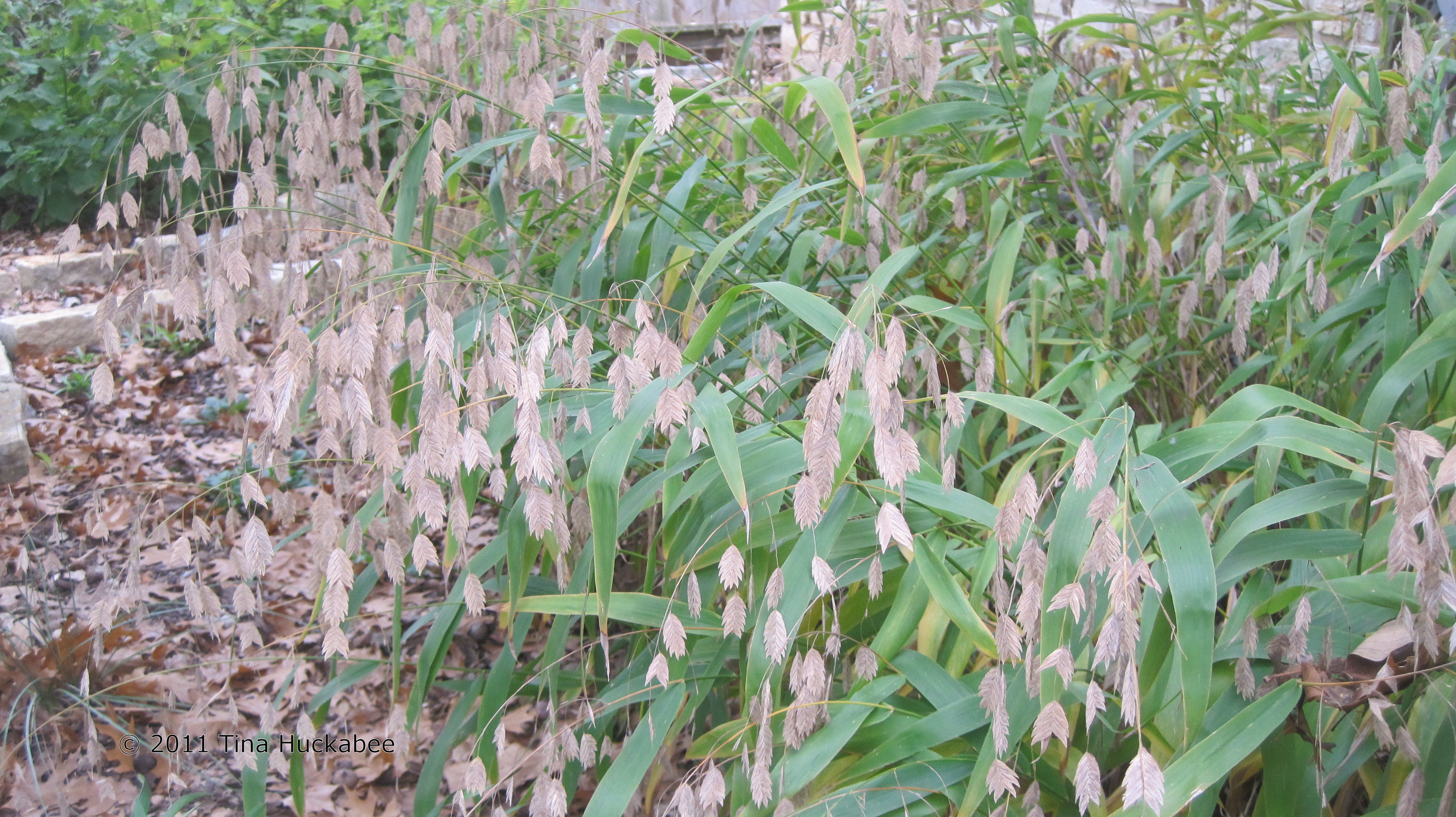
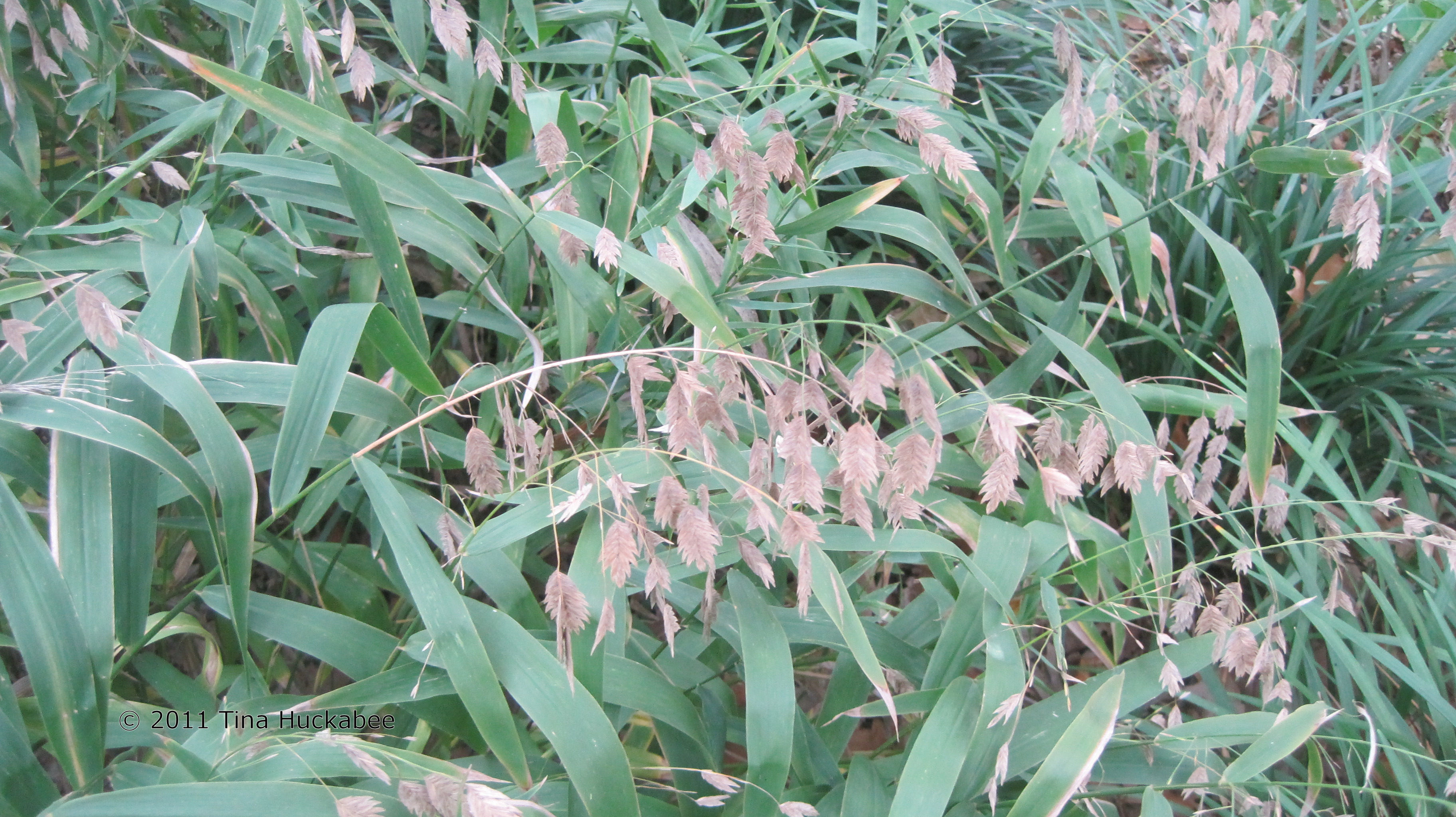
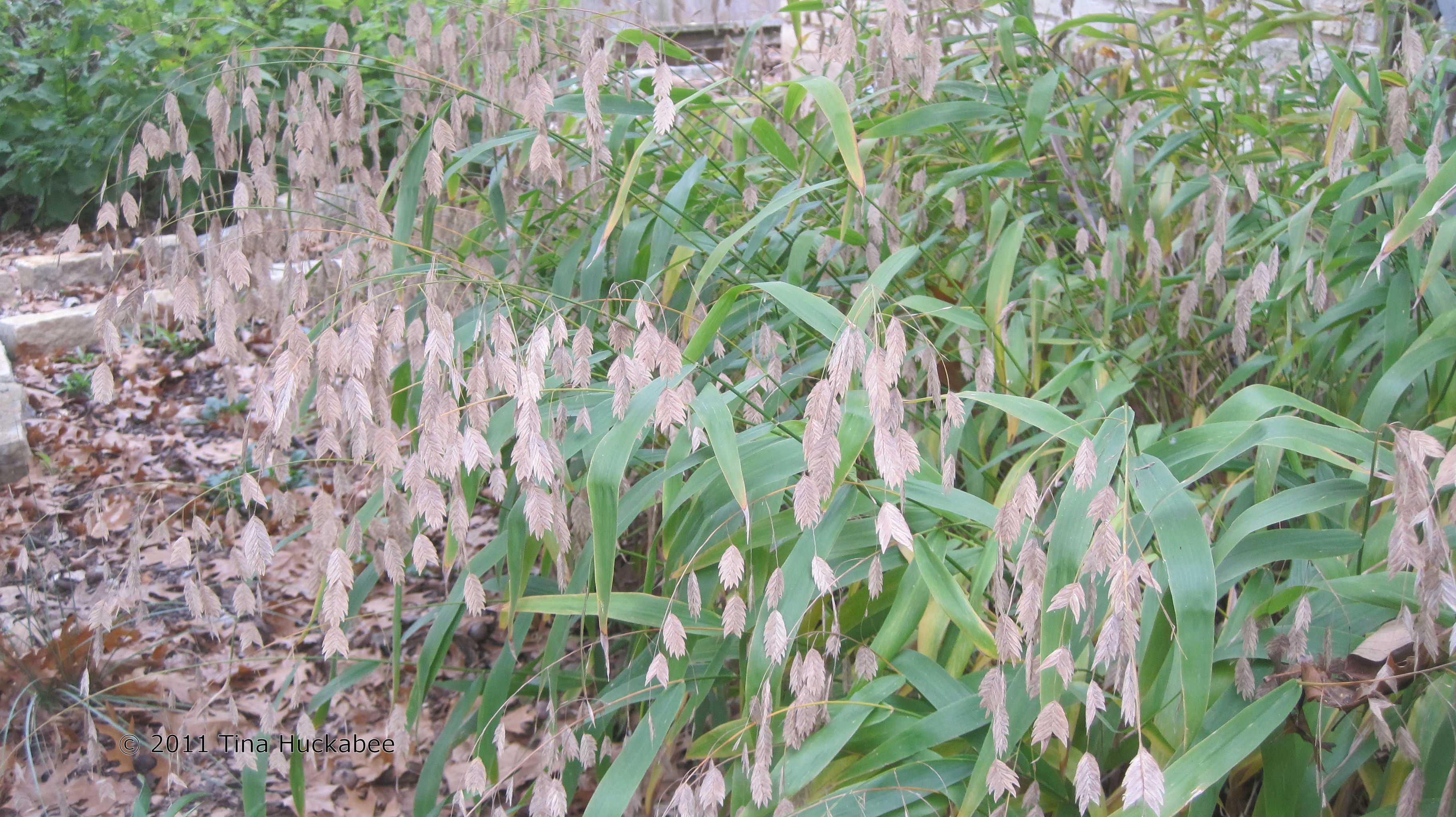
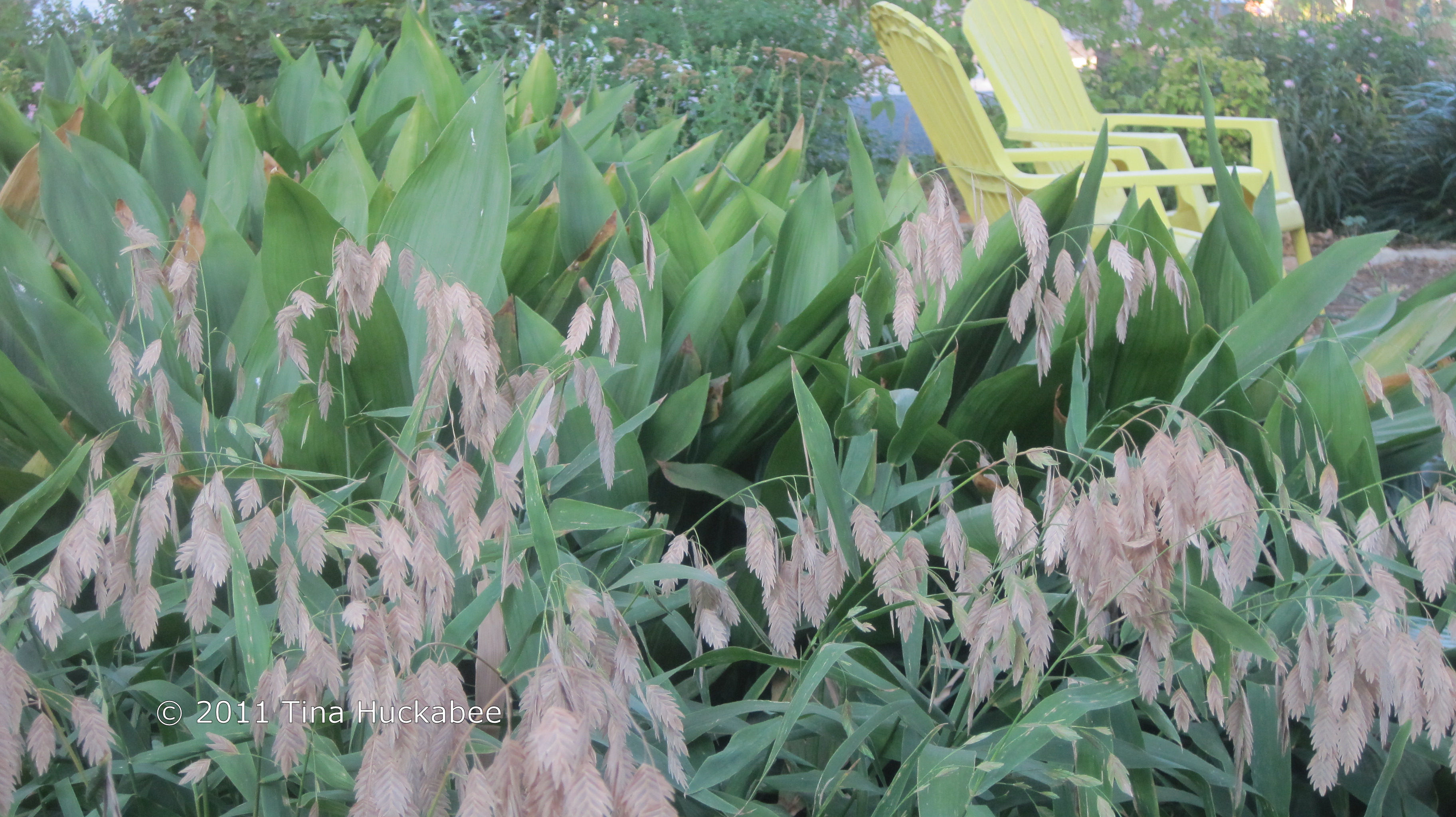
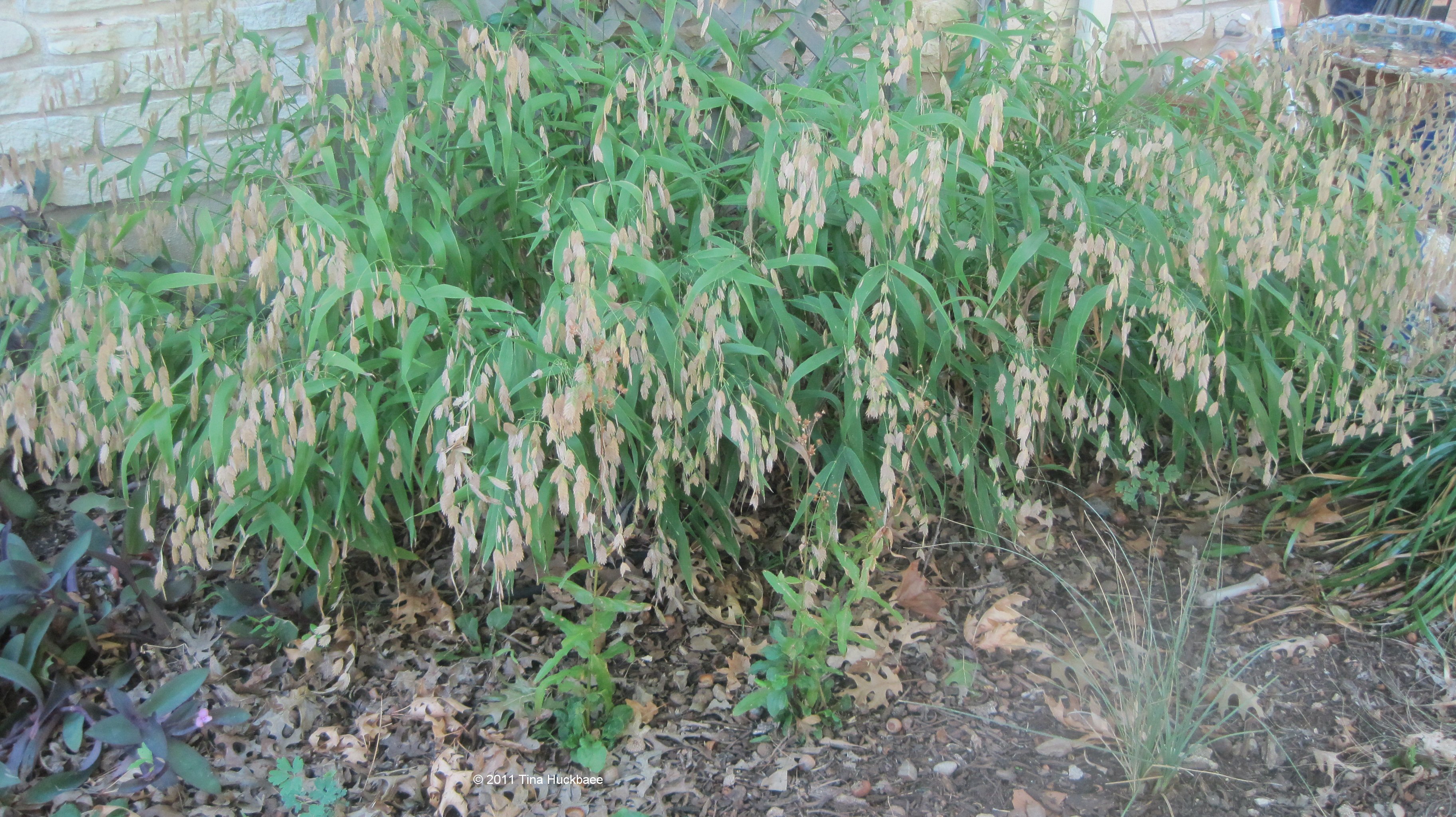
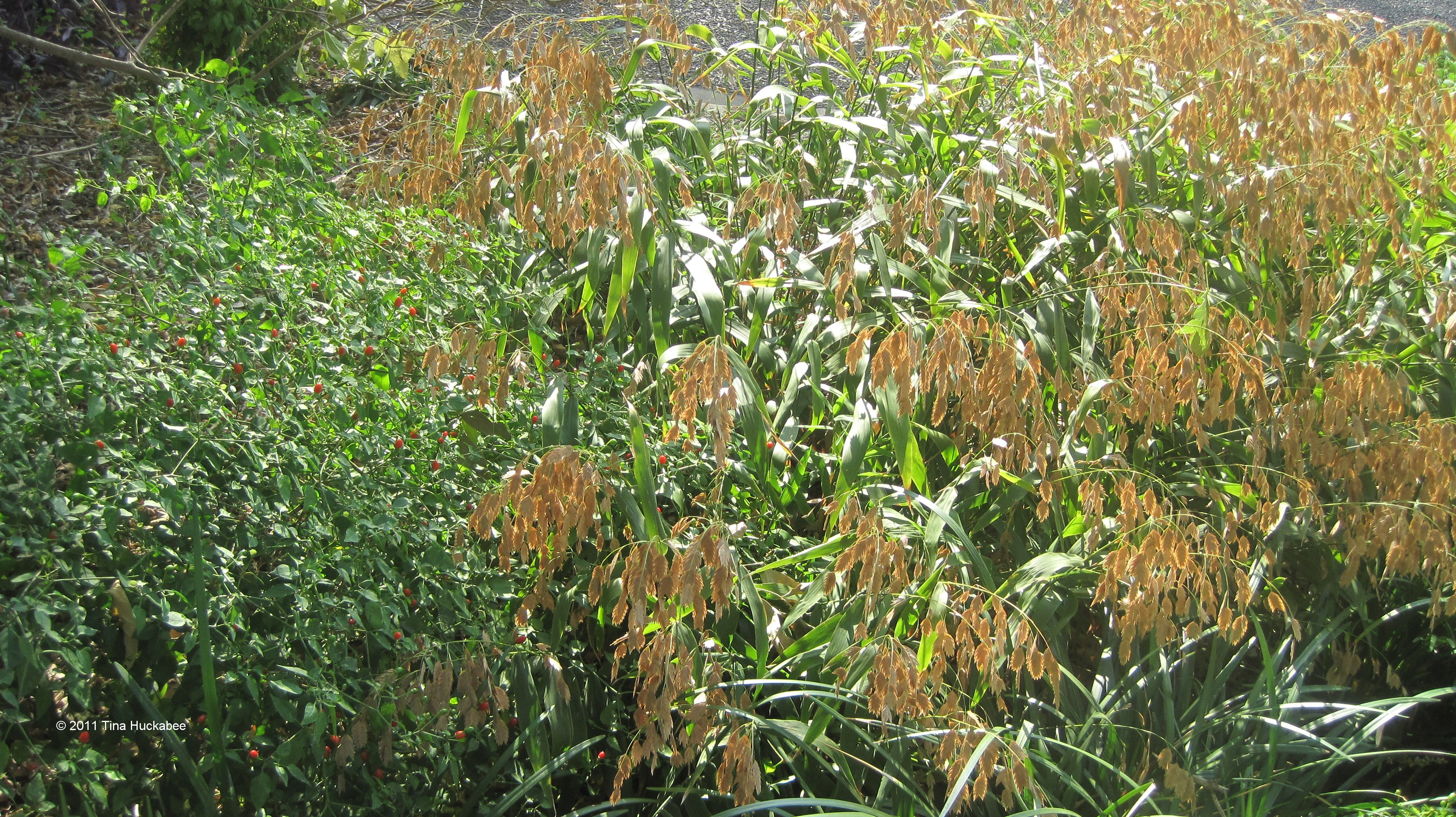
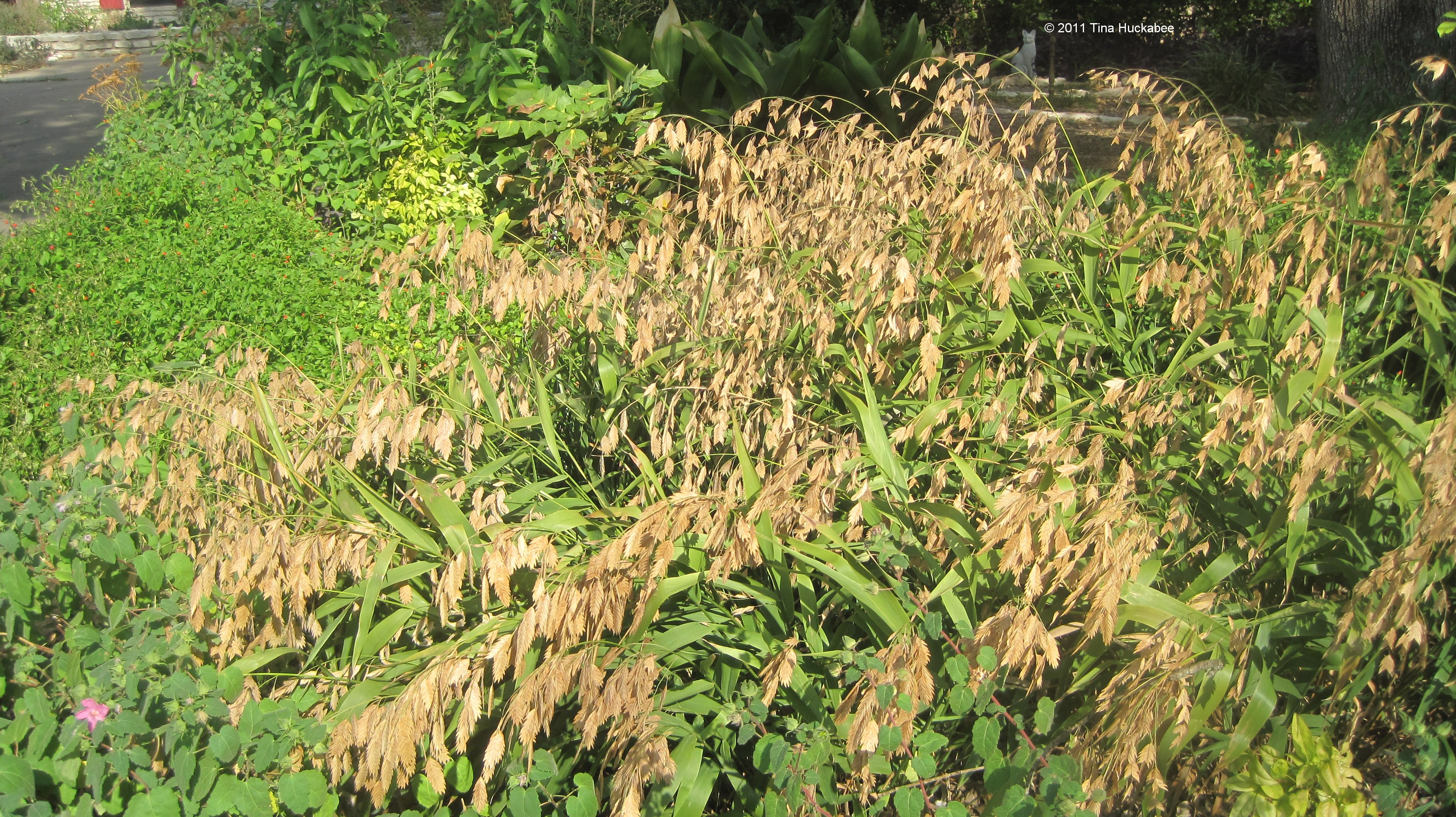
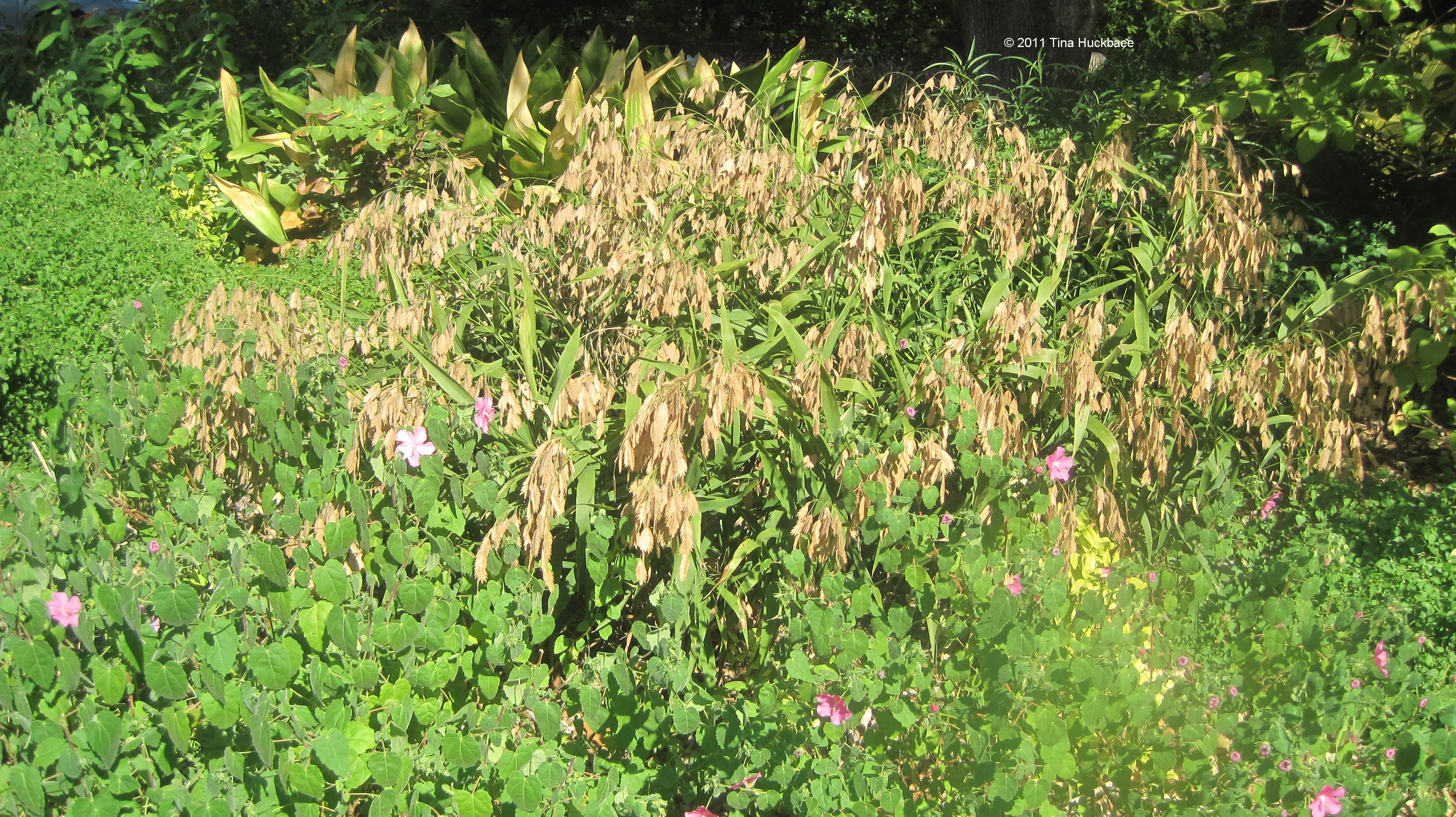
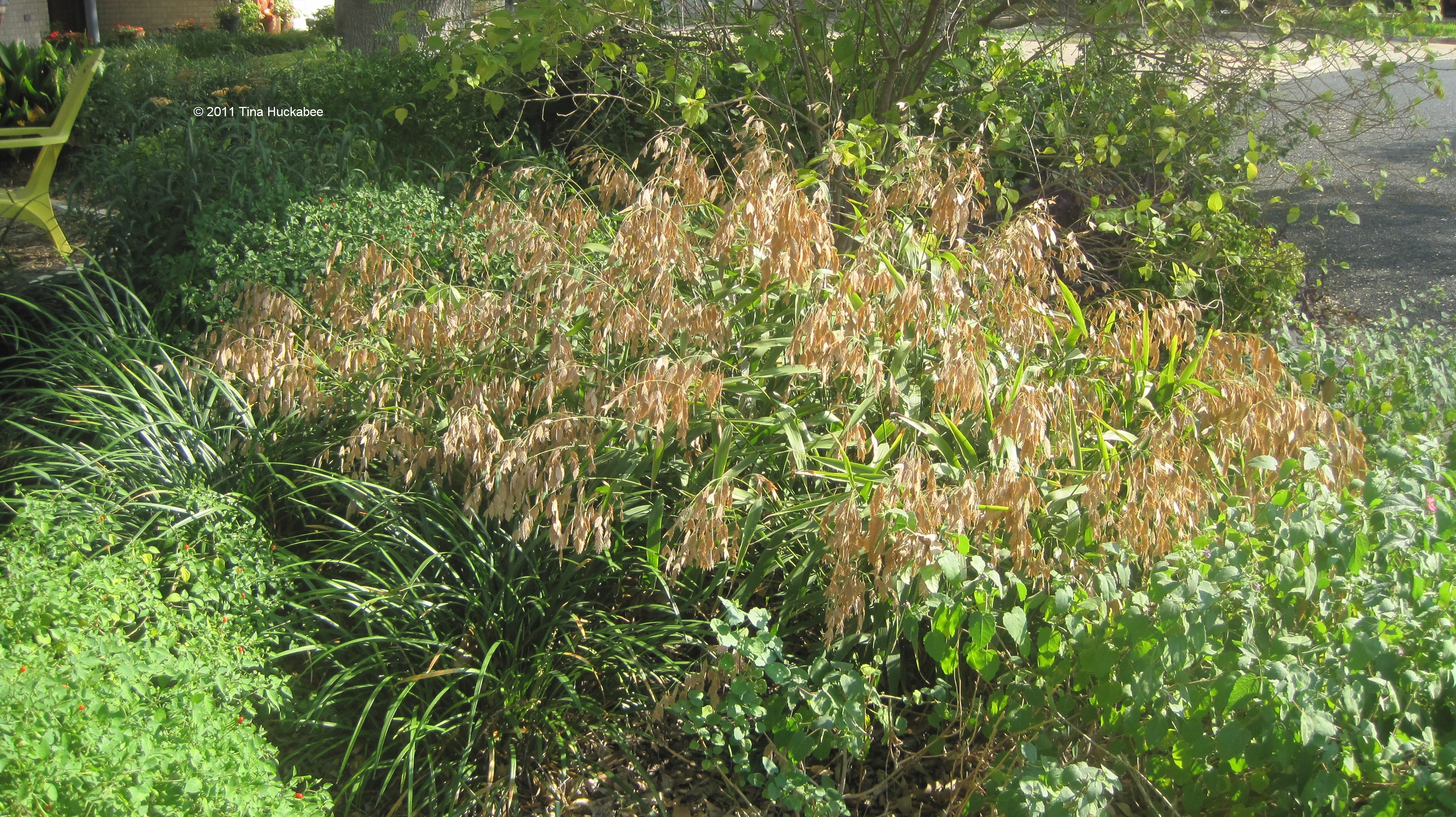
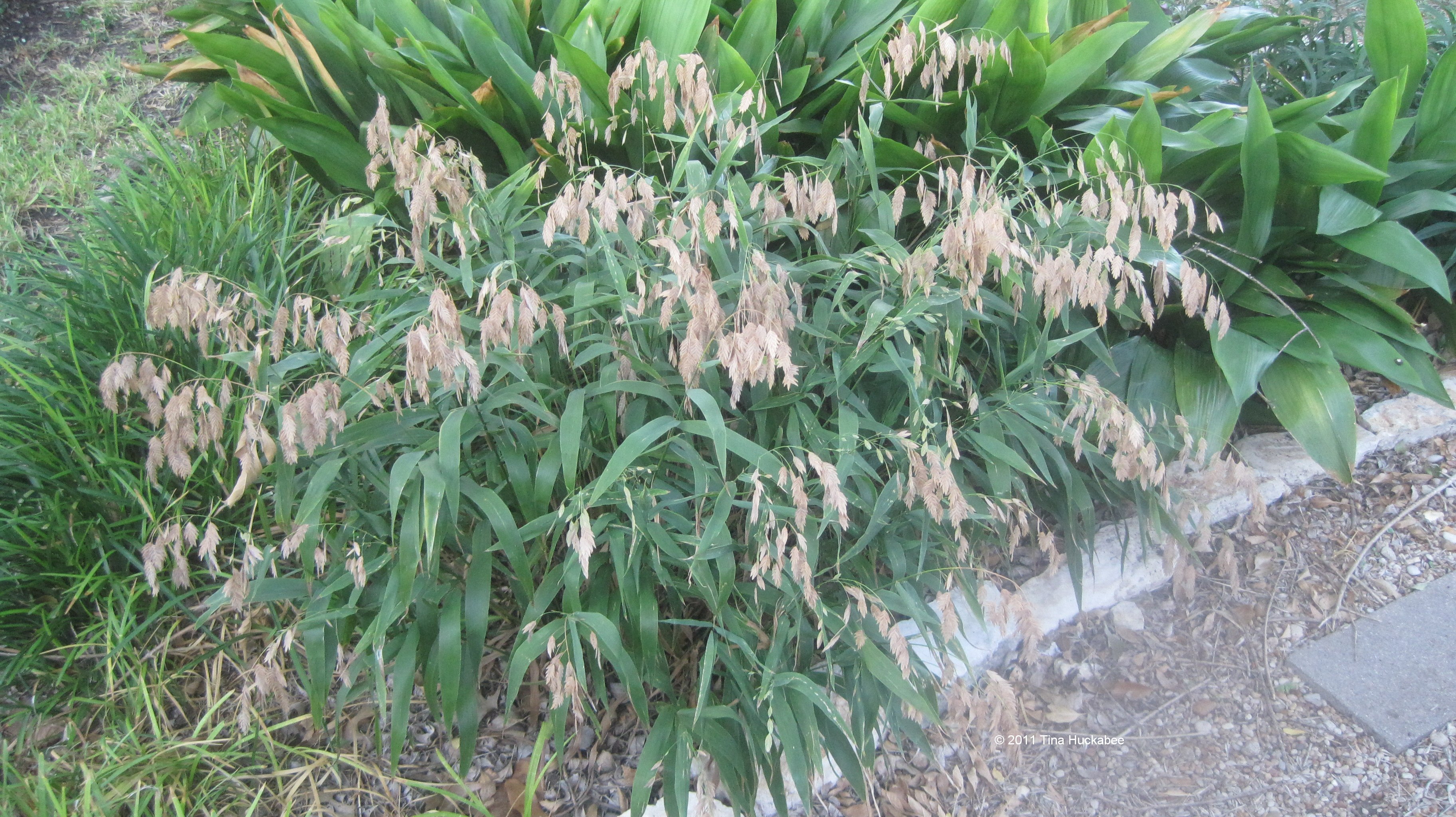
Inland Sea Oats (Chasmanthium latifolium) is sporting its tawny seeds for fall.

Although the pretty yellow blooms of the Lindheimer’s Senna (Senna lindheimeriana) are all but gone and the seeds are ripening for the birds, I still love the beautiful soft grey-green foliage of this native perennial.

Lindheimer’s Senna is especially nice paired with the bright green, more tropical looking leaves of the ‘Esparanza’ Yellow Bells (Tacoma stans).

The always elegant Mexican Feathergrass  (Nasella tenuissima), softens gardens with its thread-like shimmery green to golden brown leaves.

Years ago, someone shared their White Yarrow (Achillea millefolium) with me.  Yarrow is a favorite of mine because of its beauty and durability.  Best in shade, it grows well in even the driest of summers; its blooms are long-lasting.  By this time of year, I’ve pruned the flower stalks, but the leaves remain lush.

This Retama is about seven years old.  It’s grown tall and has yellow flowers all summer.  The bloom cycle is toward its end, but the delicate, feathery leaves are fetching.

Be STILL my beating heart!  I love Gulf Muhly (Muhlenbergia capillaris).

I love it!  Although my little Muhly is no rival for some of the beauties of this species that I see around Austin, I’m still thrilled that I have some plumage.  Someday, little Muhly, someday!

Glory in both blooms and foliage! And if you live in Texas, happy Native Plants Week!  Wherever you live, try native plants for your garden. For more information about North American native plants, check out the Lady Bird Johnson Wildflower Center site.

Springtime For Inland Sea Oats

I’ve written about Inland Sea Oats (Chasmanthium latifolium) previously, but didn’t have photos of these plants during spring to share with readers.  Inland Sea Oats is a native grass which is elegant, easy to grow and an excellent choice for the shady garden.  You can read about this plant further in my post  at: https://mygardenersays.wordpress.com/category/inland-sea-oats/.

This is what one group looked like in March,

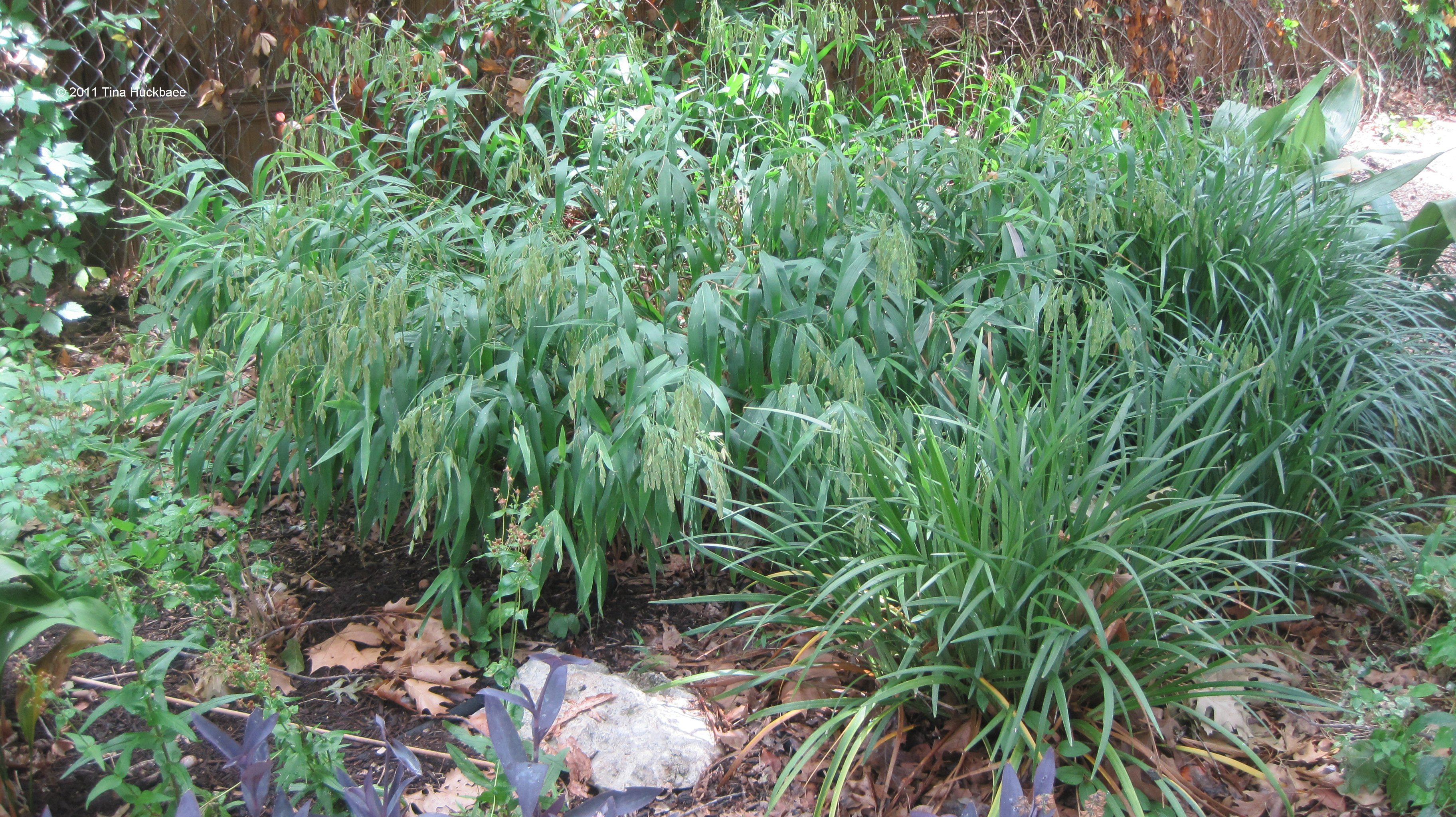
and what they look like more recently.

Inland Sea Oats die back during the winter and arise from their roots in spring .  As a general rule, once they emerge from their winter doldrums, they grow quickly.

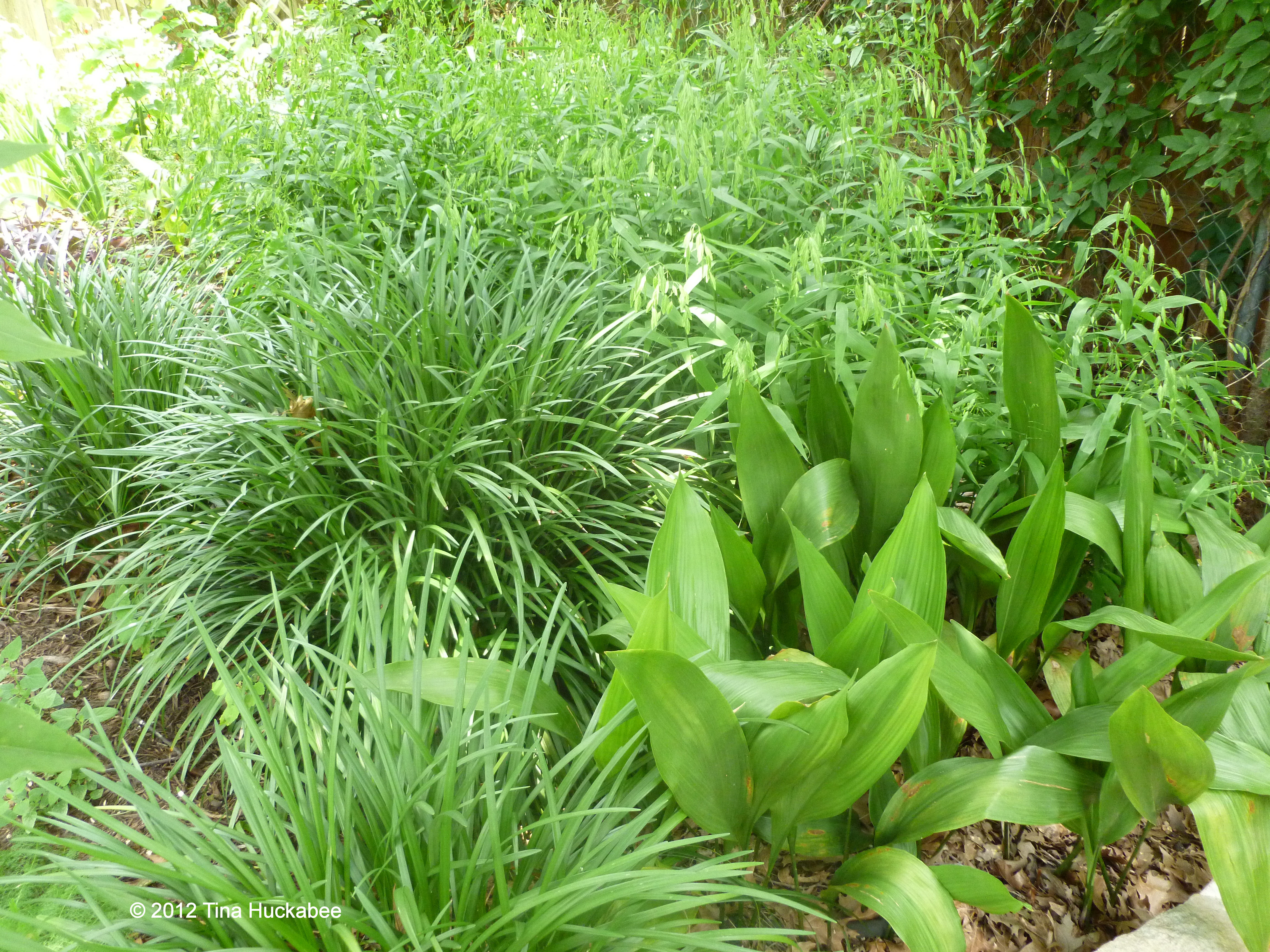
The green of the Inland Sea Oats is brilliant and dramatic,

and pairs well with evergreens such as Giant Liriope (Liriope muscari  ‘Evergreen Giant’), Cast Iron Plant (Aspidistra elatior)                                                                                 

and Rock Rose  (Pavonia lasiopetala).

In late March-April, the graceful seedheads develop,

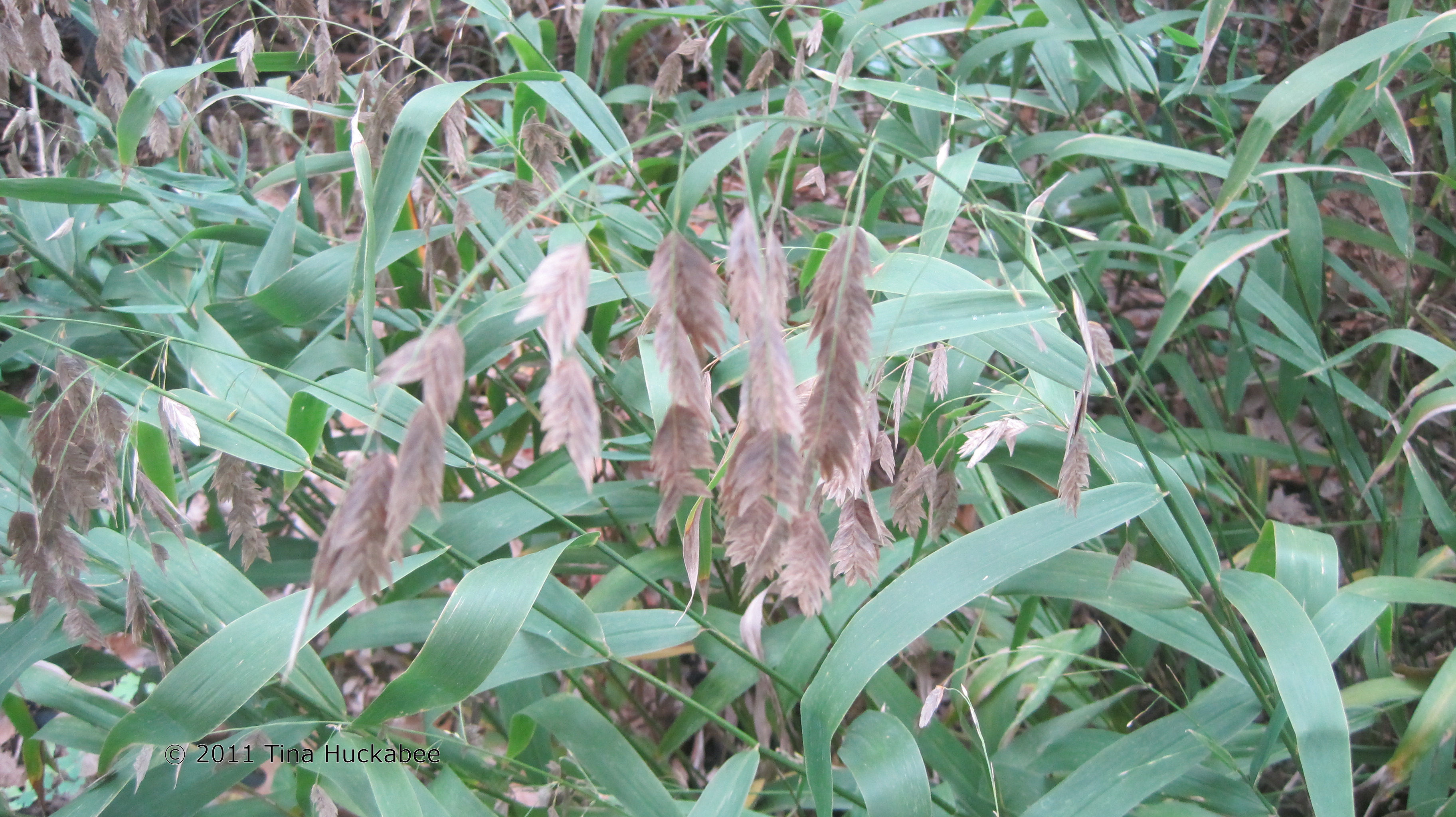
and remain a fetching, translucent green throughout the summer.  In the late summer, the seeds turn a soft cream color and later in the fall, a warm, toasty brown.

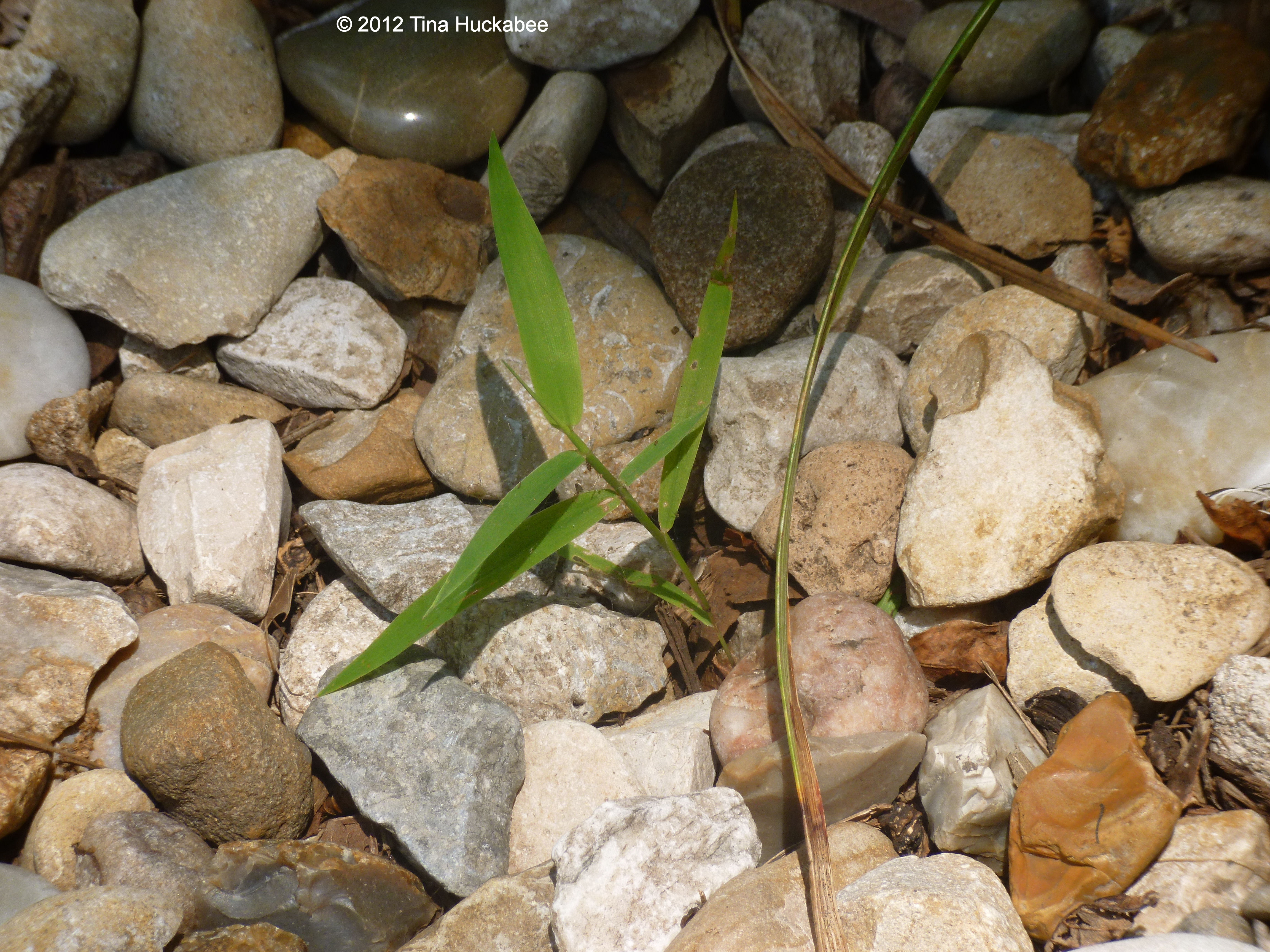
Watch out in spring though, for the proliferation of Sea Oat seedlings.

It’s a great plant for the home gardener, but with regular irrigation and/or rainfall, these seedlings can be a nuisance.  To keep them in control, I simply pull them up as I have the time and inclination.  As long as you don’t allow them to become too tall (more than a foot), they’re easy to yank out.  However, if you’re not willing to engage in some maintenance with these plants (weeding them!), I wouldn’t recommend Inland Sea Oats for your garden.

But if you’re willing to weed what you don’t want and you love the grace and beauty of this shade loving, ornamental grass,

plant and enjoy!

So, Can I Make Cookies From These?

Oats

Lots of oats.

Inland Sea Oats  (Chasmanthium latifolium), to be precise. When you have one plant, you eventually will have many Inland Sea Oat plants. That said, I like this plant–it’s one of my favorites. I like the bright green shoots that appear in spring and I love the beautiful green seeds that develop in early summer atop the stems that give this plant its name.

I anticipate the change of the seeds from bright green to a warm, toasty brown in late summer and fall.

Inland Sea Oats is a graceful and elegant addition to any garden.

This plant is a native perennial grass, especially useful in dry, shady gardens.  It grows from a base rosette to about two feet in height.   It’s not particular about its soil requirements. It has no disease or insects problems and is deer resistant.  Inland Sea Oats is often used as an erosion control measure because of its ability to spread and its beauty when planted in masses.  Usually considered a shade appropriate plant, I’ve often seen it in full sun.  In one of my gardens, this  group gets the late afternoon west sun,

and these handle the shade-for-most-of-the-day, then blast of hot, west sun, beautifully.

I think they’re especially lovely in the autumn, late-day sun.

Inland Sea Oats pairs nicely with Cast Iron Plant (Aspidistra elatior),

and with Giant Lirope (Lirope muscari ‘Evergreen Giant’).
A word of caution though for this lovely, tough grass:  It can spread.  Profusely.  Especially if you have a sprinkler system and/or a moist climate.  I maintain a tight leash on the Inland Sea Oats in my gardens by yanking errant seedlings out of the ground when I see them.  Because I don’t over-water, I’ve not found this plant to be too troublesome for me to control–if you don’t let them reseed, they are manageable.  However, without management, Inland Sea Oats can be aggressive and invasive.  When I first started working as the gardener at Shay’s Green Garden at Zilker Botanical Garden, one the first goals I had for the gardens was to reduce the number of Inland Sea Oats plants.  This plant hadn’t been well-controlled for quite some time, so it was everywhere.   There are still many groups of Inland Sea Oats in the Green Garden, but fewer than before and by ridding the garden of the excess, it gave me the opportunity to plant other perennials that were not showcased in that garden.  I’m not sure I’d recommend this plant to someone who isn’t committed to weeding it thoroughly at the beginning of the growing season. 
Inland Sea Oats can be a marvelous addition to the urban landscape.  It’s a xeric, beautiful and mostly low-maintenance native grass.  It complements many plants, especially evergreens.  Its one drawback is a tendency towards aggressiveness over time and that can be remedied with good garden maintenance.