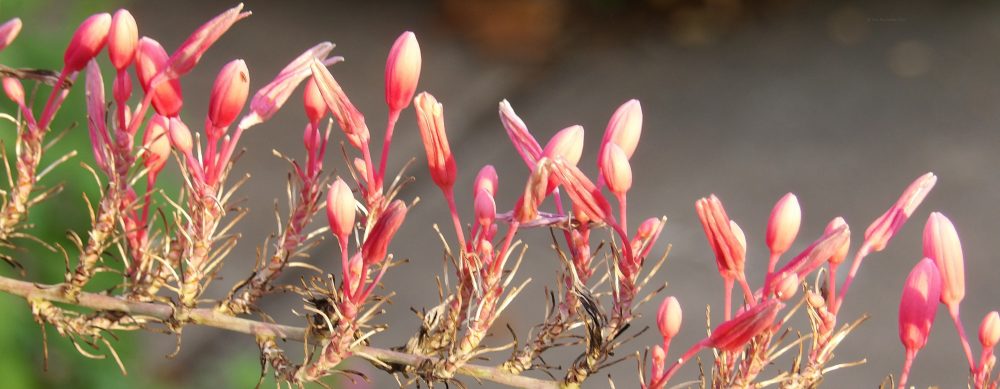
It’s been a warm autumn and early winter here in Austin, Texas. December 2021 is now tagged as the warmest December on record and it sure felt like it. That said, there was finally a significant freeze at the flip of the calendar. While I’m always sorry to see the lush foliage of the garden and accompanying flowers disappear, it’s good that plants will rest, even though gardener’s work will increase.
Here’s a fond farewell to the the last blooms of the long growing season in the garden. When a hard freeze is forecast, I walk through my garden, bidding appreciation and adieu to my plants: those that completed the 2021 growing season and those who started 2021 and will initiate the 2022 growing season in a few short months.
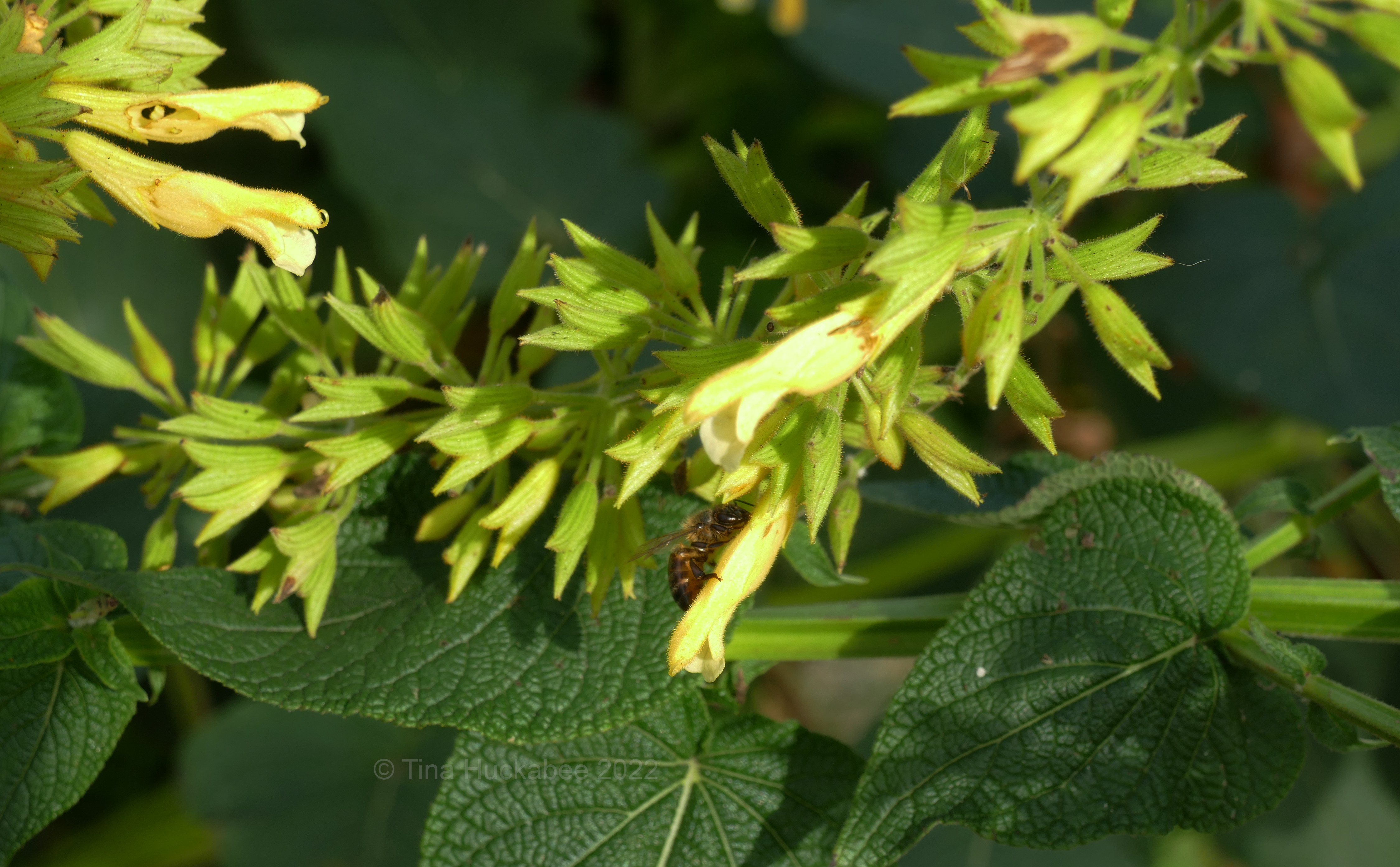
Each year, the last perennial in my garden to flower is Forsythia Sage, Salvia madrensis. With grey-blue foliage during spring and summer and added sunny spikes in mid-to-late fall, it’s a welcome nectar source for pollinators toward the end of the growing season.
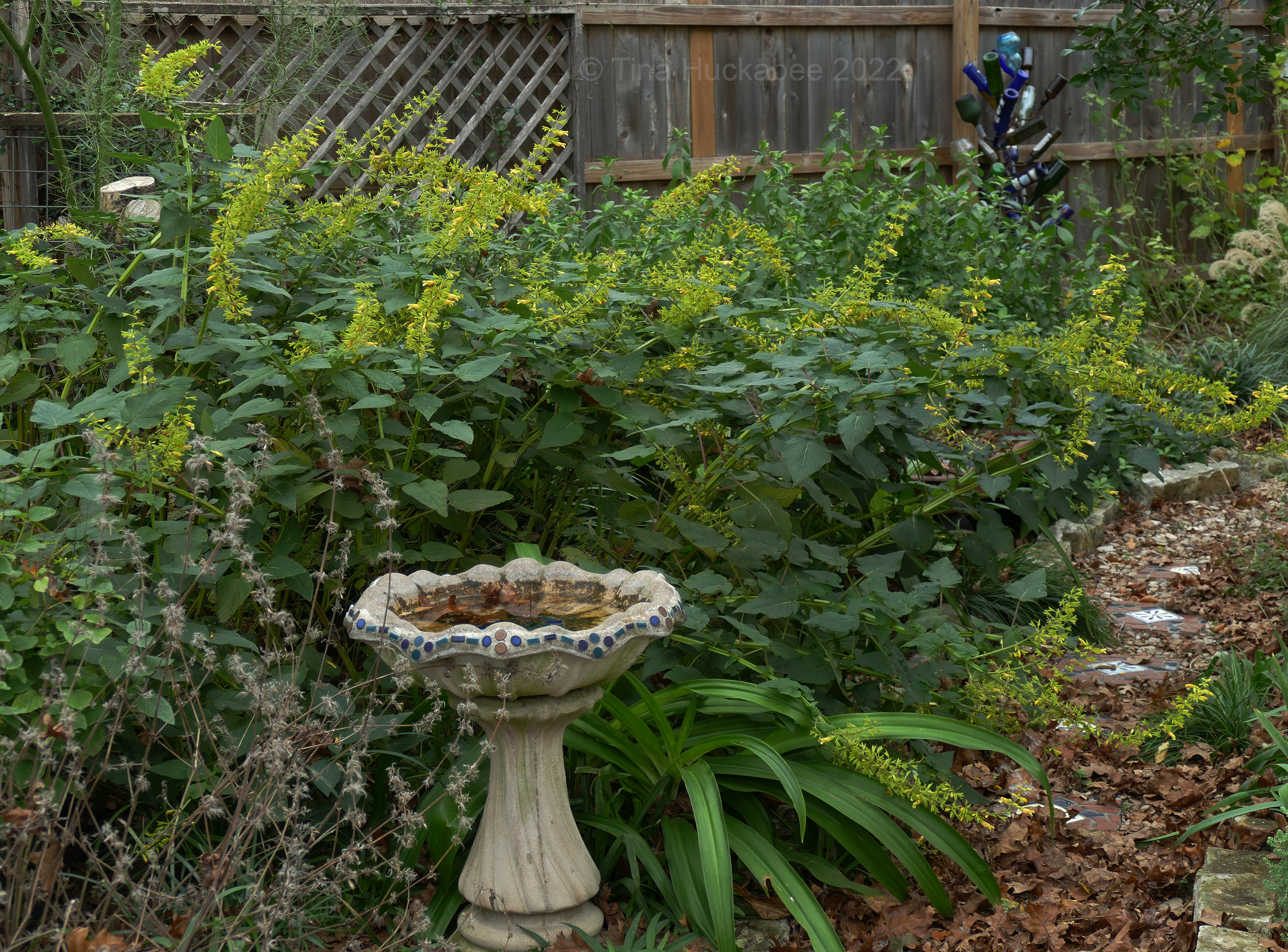
This native to Mexico blooms from September/October and until there is a significant freeze; some years as early as late October; this year in the early morning hours of January 2. Recently, the honeybees have engaged in nectar stealing and it’s a convenient place for them to dine, as the sage grows within about 6 feet from the honeybee hive.
Two days ago, I enjoyed viewing the last bunch of Purple Coneflower, Echinacea purpurea. I don’t pick flowers for indoor vases often, but I was tempted to pick these. Then a butterfly landed and I decided it (and its pollinating colleagues) need the flowers more than my kitchen table. The flowers are done now, after two nights of 26F (-3.3 C).

Most of the Plateau Goldeneye, Viguiera dentata, finished with blooms and graduated to seed production, but this one shrub plugged along with its yellow pops of color. After the freeze, it’ll be naught but seeds, pleasing the various finches, sparrows, and wrens who will visit.

The “new” garden is done–sort of. With mature sections on either side, but no tree in the middle, I’ve planted/transplanted perennials, shrubs, and grasses that will take a few years to fill in. I planted, repaired soaker hoses, and mulched, but I’m still moving in some spring blooming annuals that have developed since November. So I guess the work isn’t actually done.
Almost, I keep saying. Almost done.

A stump is all that remains of the Arizona Ash tree. I placed a large red ceramic pot on the stump, planted with a Squid agave, Agave bracteosa and Silver Ponyfoot, Dichondra argentea. In the garden’s shady past, the pot housed a Texas Beargrass, Nolina texana. With help from The Hub, we removed the beargrass–which was a BEAR– and it’s now planted to the right and in front of the yellow chair, which about 15 feet this side of the chair, though it’s hard to tell from the photo.
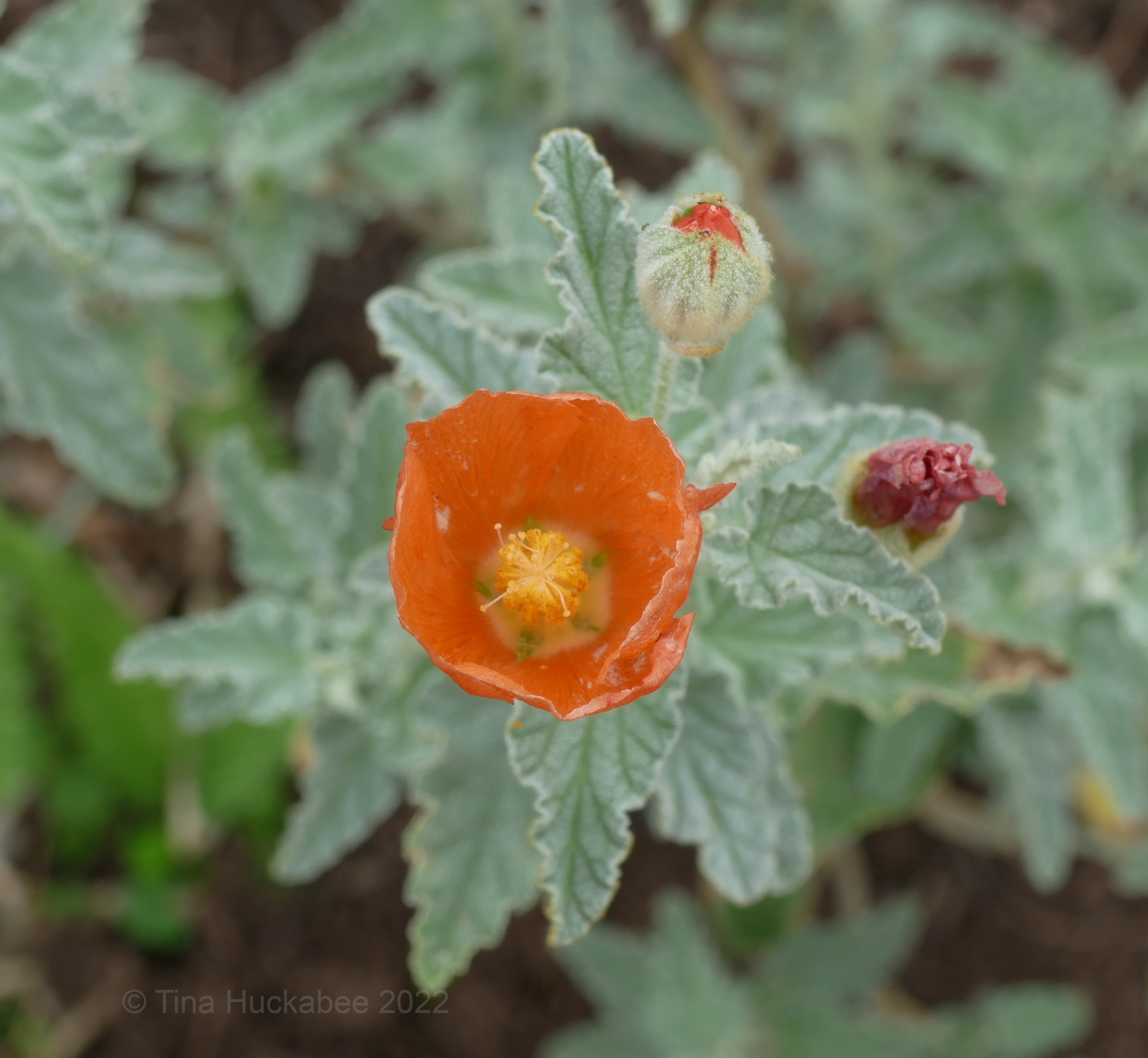
Pre-2022 first freeze, the only bloom in this part of the garden was one luscious Globe Mallow, Sphaeralcea ambigua. It’s a sun worshiper, so it should be very happy in its spot near the street. In fact, this plant blooms more in the cool season; during summer, it’s mostly about lovely foliage.
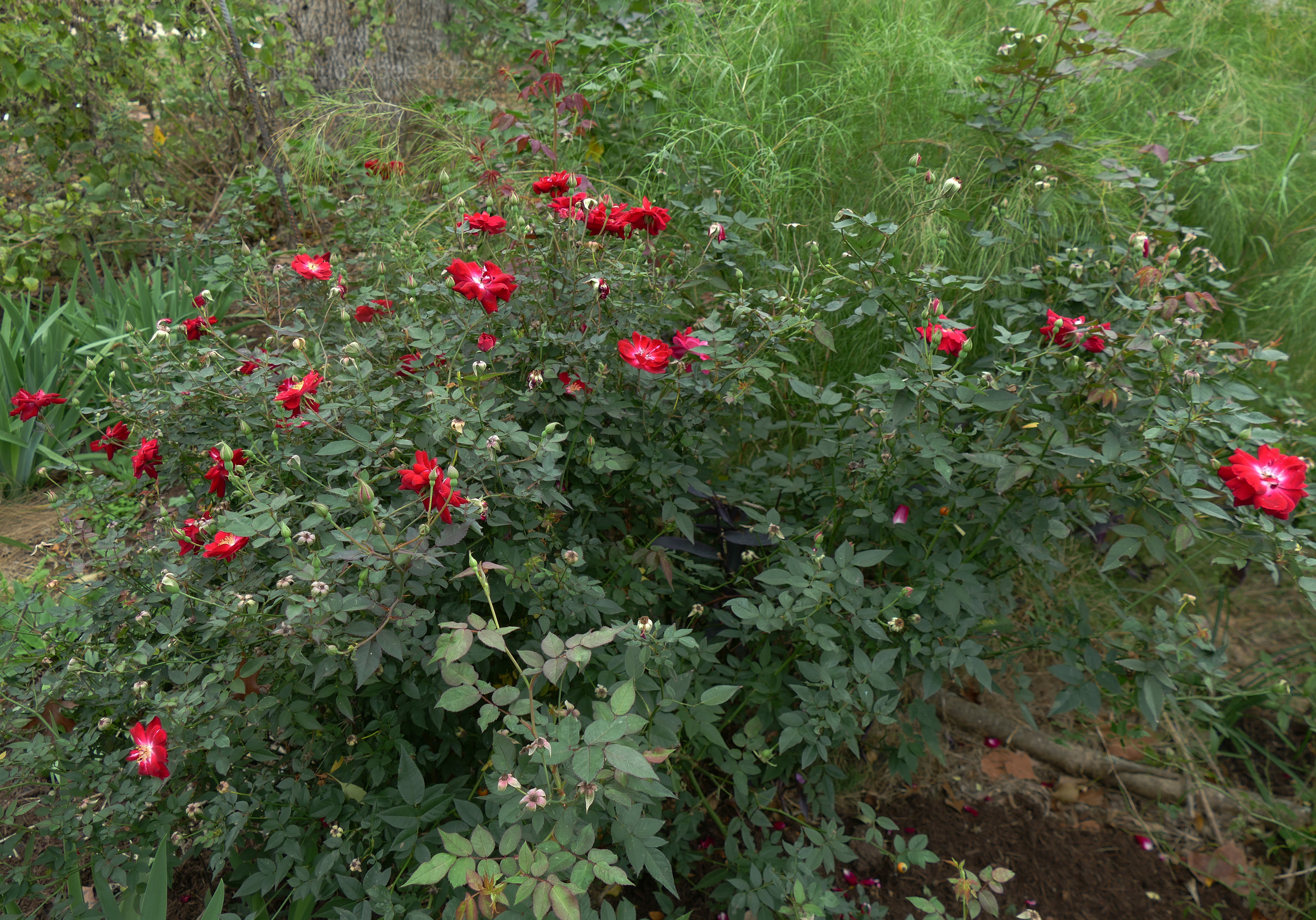
Roses always perform nicely during our milder winters and the Martha Gonzales rose is no exception. These red beauties will be nipped by the freeze, but new ones should develop, so there will be something for the bees.
The crazy-tall American Basket flowers, Centaurea americana have bloomed since mid summer, but I imagine that the flowering is now done. Their winter rosettes should be fine as they hug the warm ground, but those spikes topped by spidery, pinky flowers are vulnerable to cold air. I plan to move some of these pretty pollinator-friendly native annuals throughout my front garden and maybe a couple to sunny spots in the shadier back garden.

Before the freeze, several Queen butterflies, Danaus gilippus, worked basket flowers,

…and remaining blooms of the Mexican Orchid tree, Bauhinia mexicana.

Both plants will be dormant and then pruned to the ground after this hard freeze.
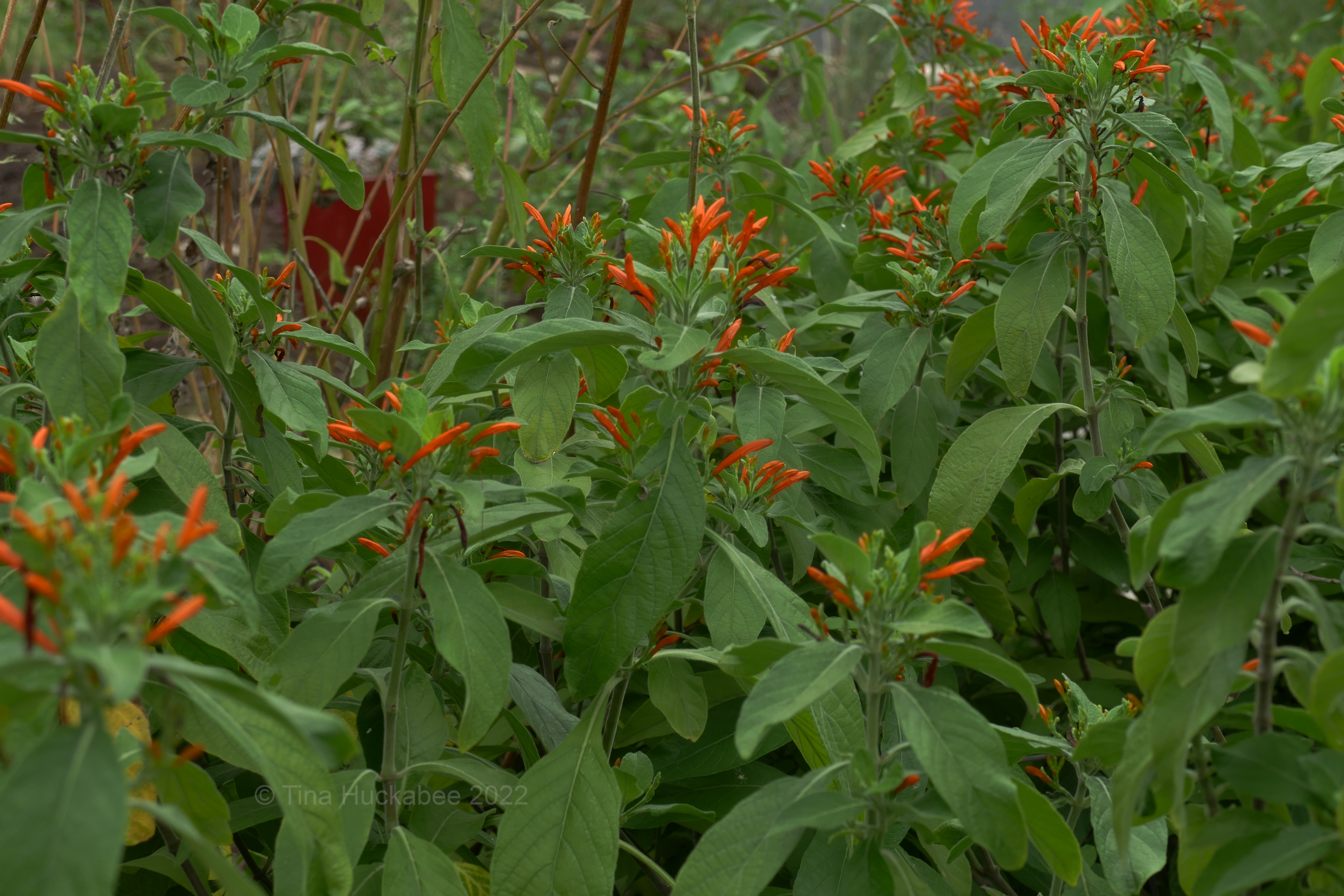
Another native plant to Mexico, Mexican honeysuckle, Justicia spicigera, blooms, as it does during a mild winter. Bees, some butterflies, and an over-wintering hummingbird enjoyed the blooms.
A reliable, long-blooming perennial, Tropical sage, Salvia coccinea, is a favorite of bees. It provides flowers throughout a mild winter, but anything in the 20sF makes it irrelevant for the pollinators until spring warmth brings on the dainty, white blooms.

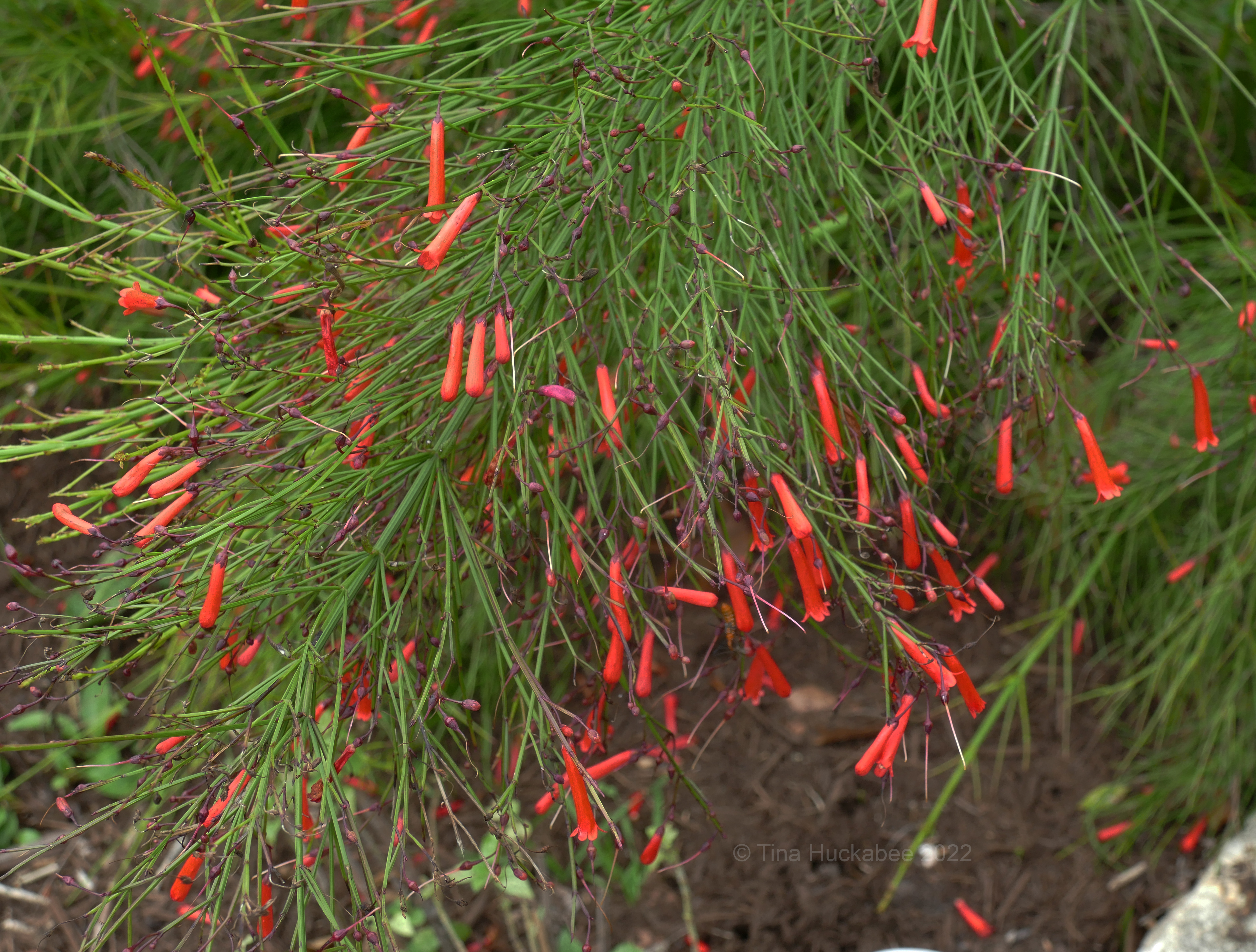
This is also true for Firecracker Plant, Russelia equisetiformis. It blooms throughout the growing season, reveling in the heat of summer. These tubular blooms attract small metallic sweat bees. I’ll be pruning it to the ground after these chilly temperatures.
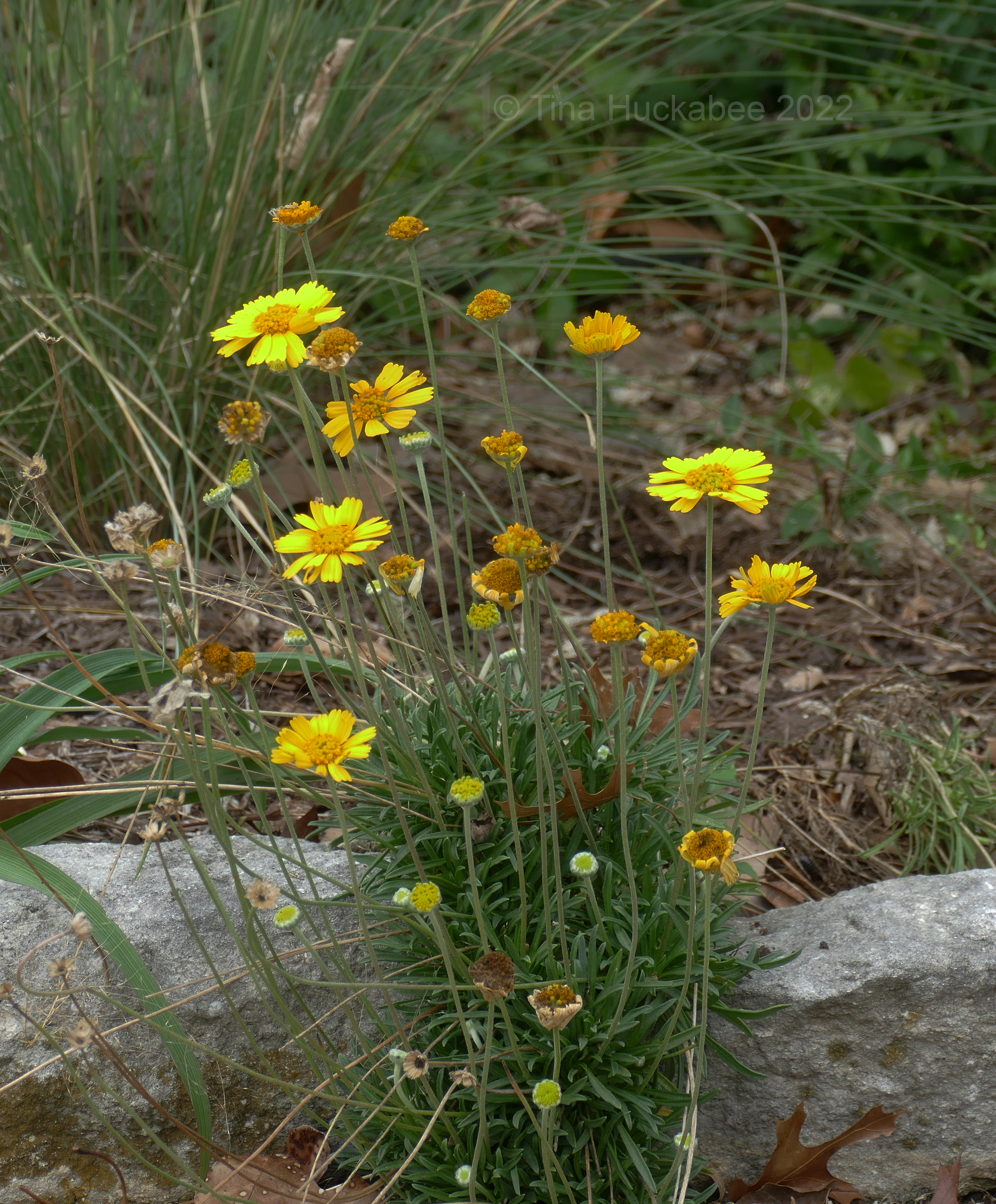
Four-nerve Daisy, Tetraneuris scaposa, will bloom throughout winter. The freeze will impact current daisies, but new ones will replace them immediately. It’s nice to have some cheerful yellow during the winter months.
The last bloom I noticed on the goodbye tour was a singular Lemon Rose Mallow, Hibiscus calyphyllus. I’ve never seen this plant flower so late, though with a record warm autumn and early winter, I guess continued blooming of the warm-season perennial makes sense. I’m certain that the freeze will render this sunny hibiscus defunct until sometime in May.

After the freeze, the garden rests. All it will need is occasional water, preferable in the form of some gentle rain, though with the drought conditions, will probably come from the end of my hose. This week I’ll begin pruning to the ground those that benefit from a complete whack and later in winter, pruning to shape for those that prefer a less dramatic end to the growing season. It won’t be too long before some of the spring-blooming trees will offer life to the insects awaiting meals and the cycle will begin anew.
 My Gardener Says...