I’ve profiled foliage from my garden in the past, but I’m going to hang out with the Europeans today by joining with Christina and her beautiful blog, Creating my own garden of the Hesperides, as she hostesses Garden Bloggers’ Foliage Day for December 2014.
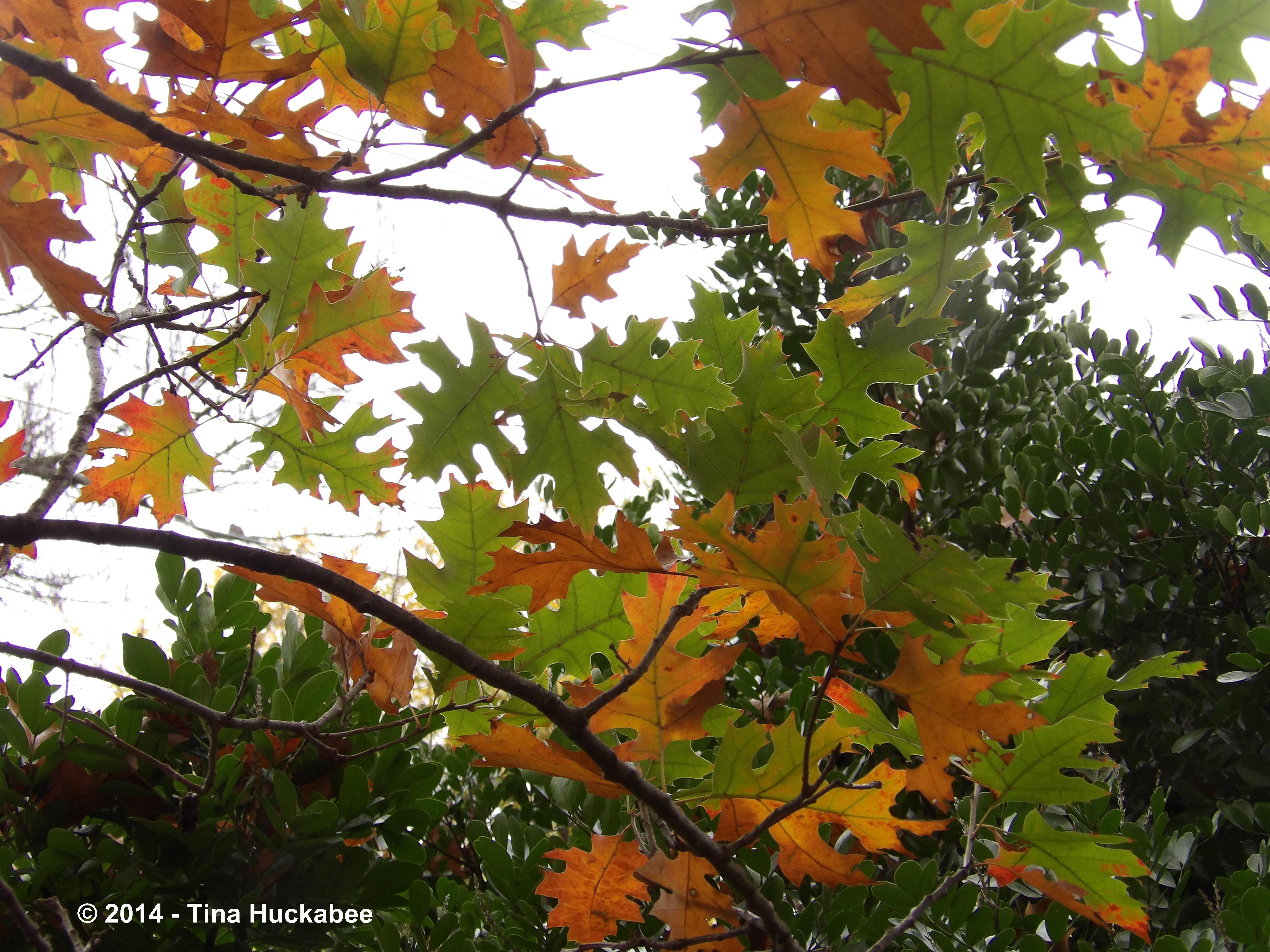
Folks who’ve relocated to Austin, Texas have complained to me (usually in whiny voices), there’s no fall color here. That gets my “Texan” up a bit, because we do enjoy autumn color in Central Texas, at home and all around.
 Lovely fall foliage.
 The color evolution happens later than in other parts of the Northern Hemisphere, closer to the actual start date for winter. Additionally, the turn of foliage is gradual, beginning in November, peaking in late November/early December, and typically finishing by New Year’s Day. It’s not a dramatic foliage show, loud and boisterous like you’d think something in Texas would be. Instead, the change is gradual, subtle, and gentle.

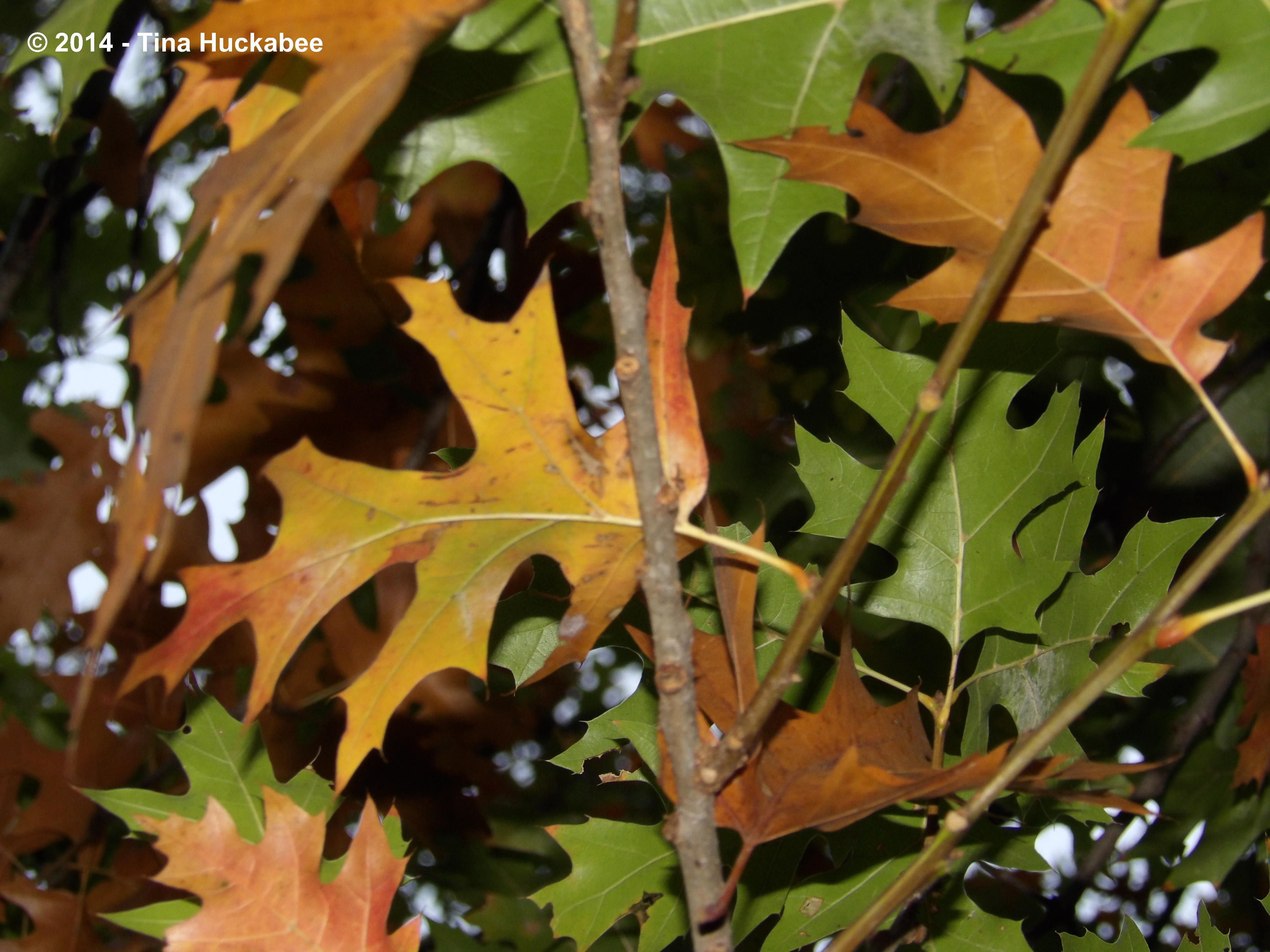
In my gardens, the two Shumard Oak, Quercus shumardii, trees extend their color change over many weeks.

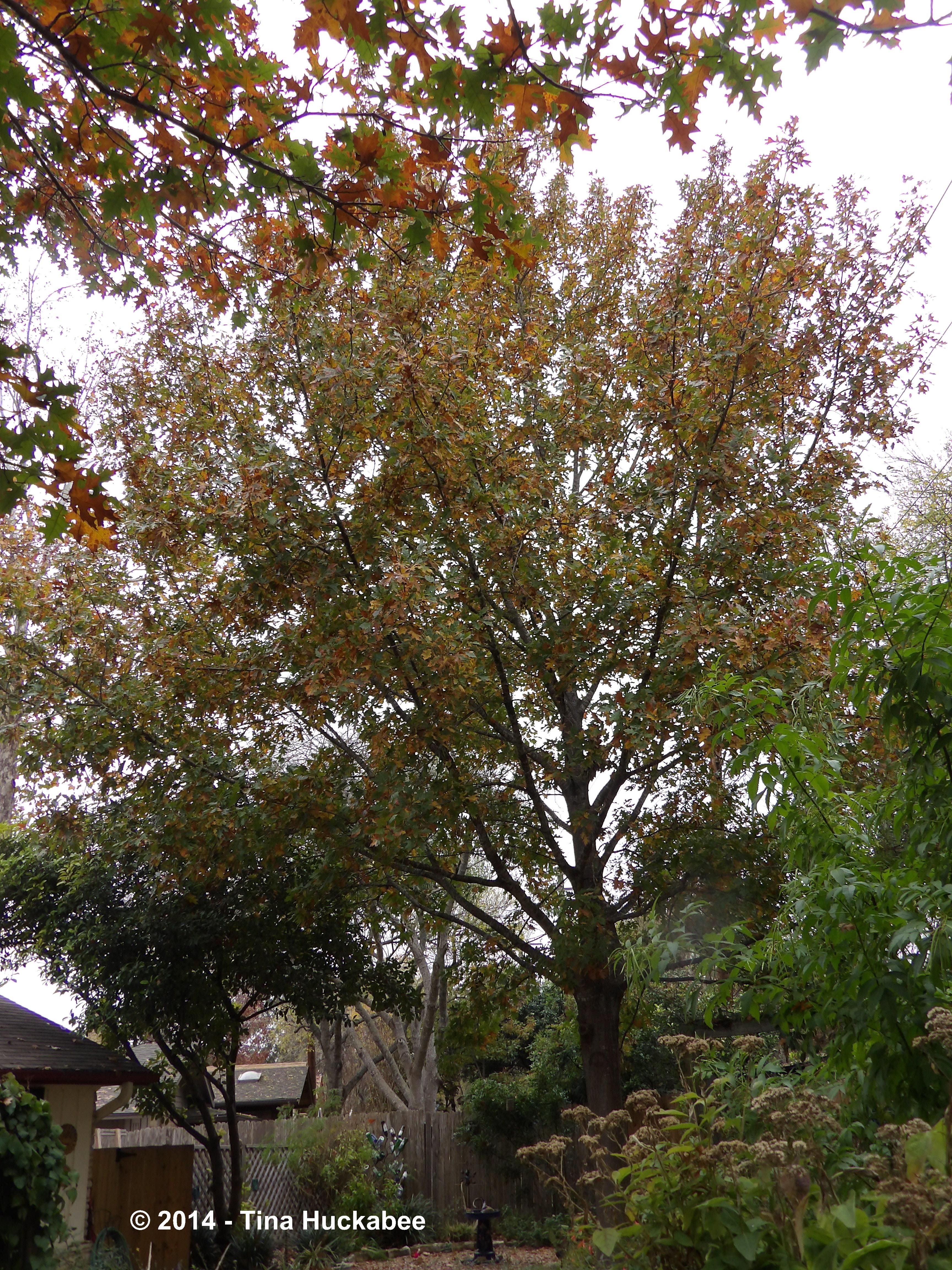
There are several species of oak trees in Texas that are commonly referred to as “Red” oak. I’m guilty of misnaming the two major arboreal specimens in my back garden as “Red” oaks. In fact, both are Shumard Oaks.
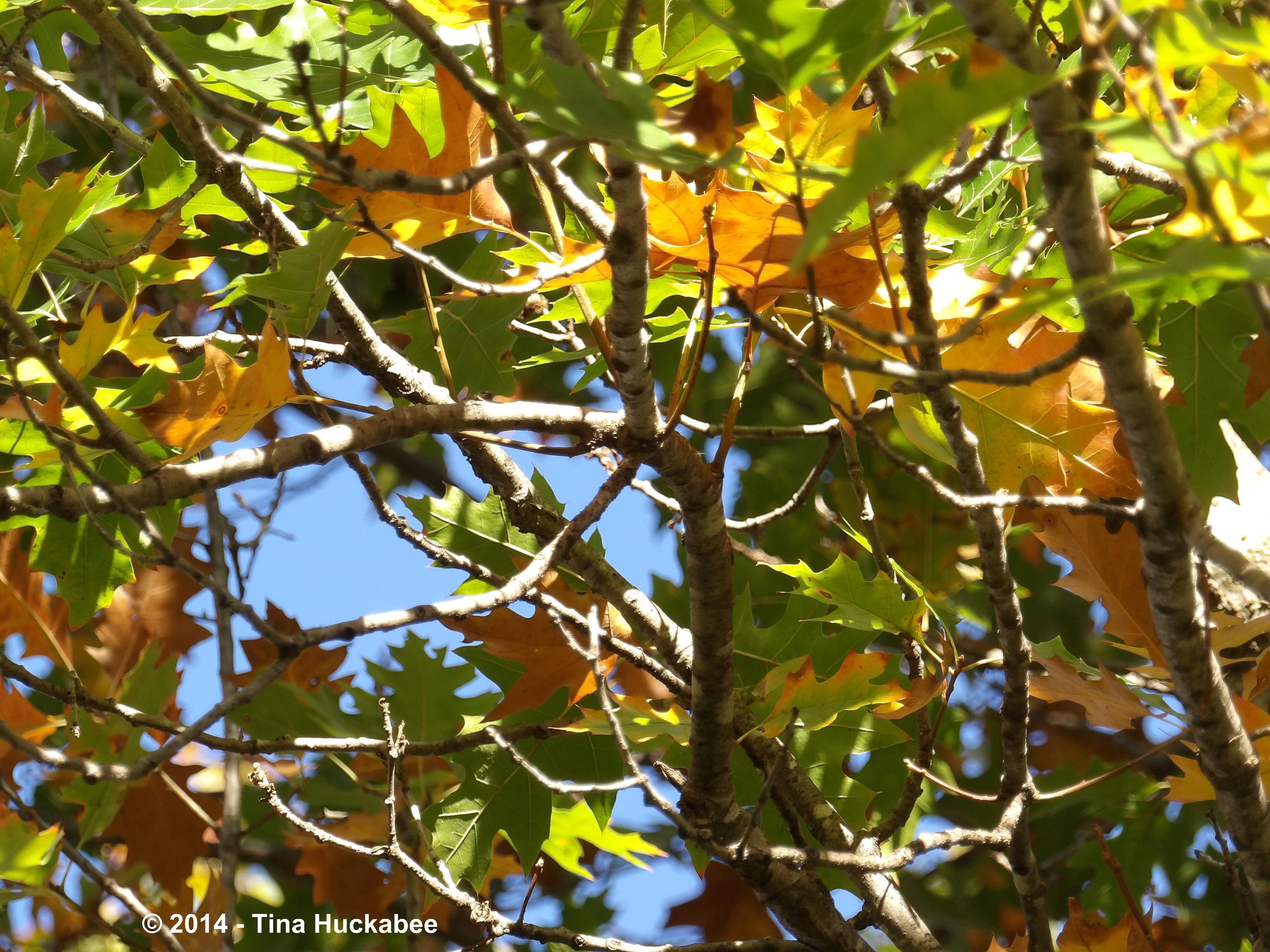
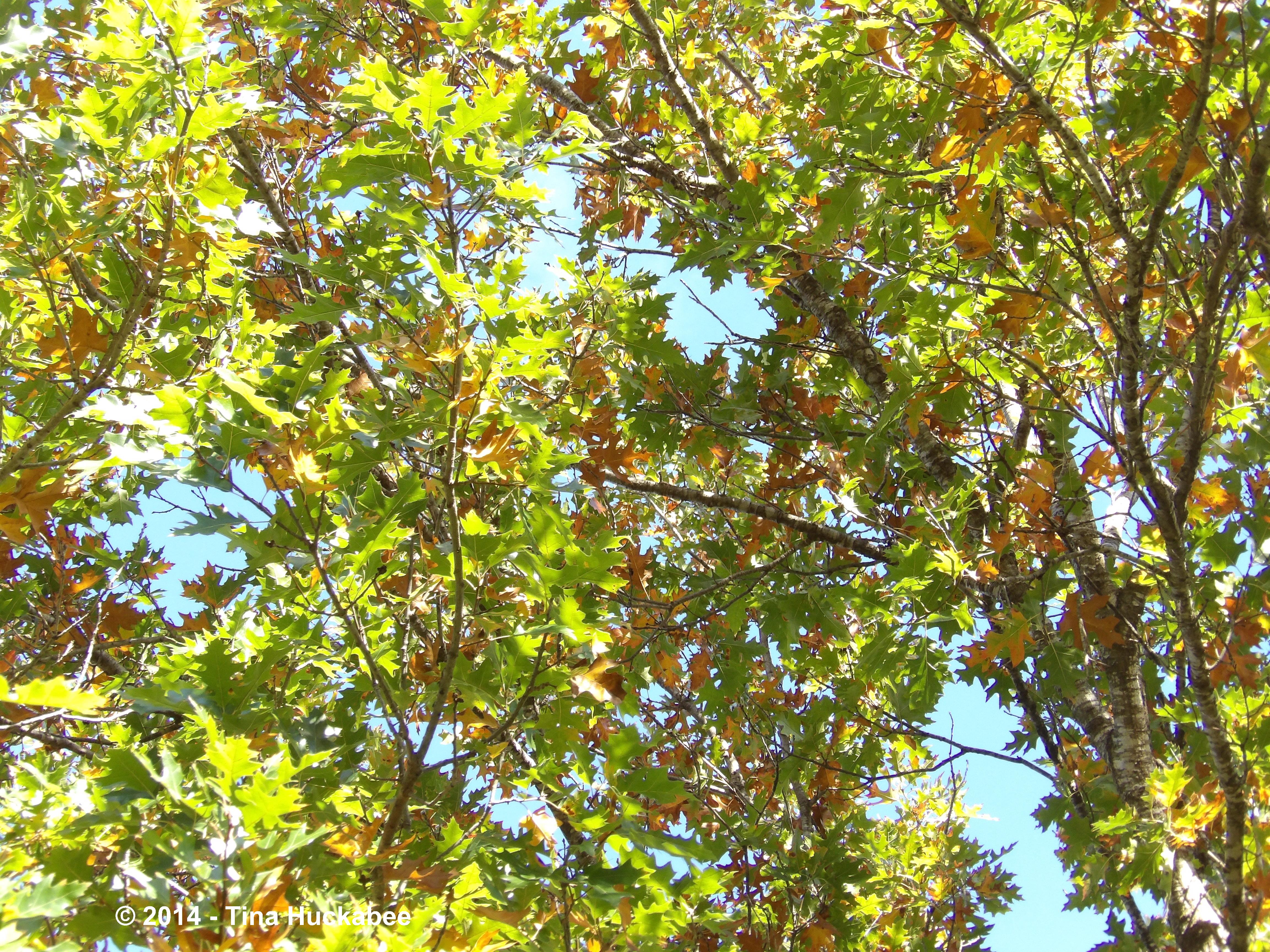
Gorgeous trees, I appreciate their many attributes: the shade they cast in summer, the cover and food provided for the many birds and other wildlife who visit or make these trees home, and the fall foliage mosaic (albeit in December) that these two trees provide.


Another tree residing in my realm, though probably not one I would have planted on my own, is the American Sycamore, Plantanus occidentalis.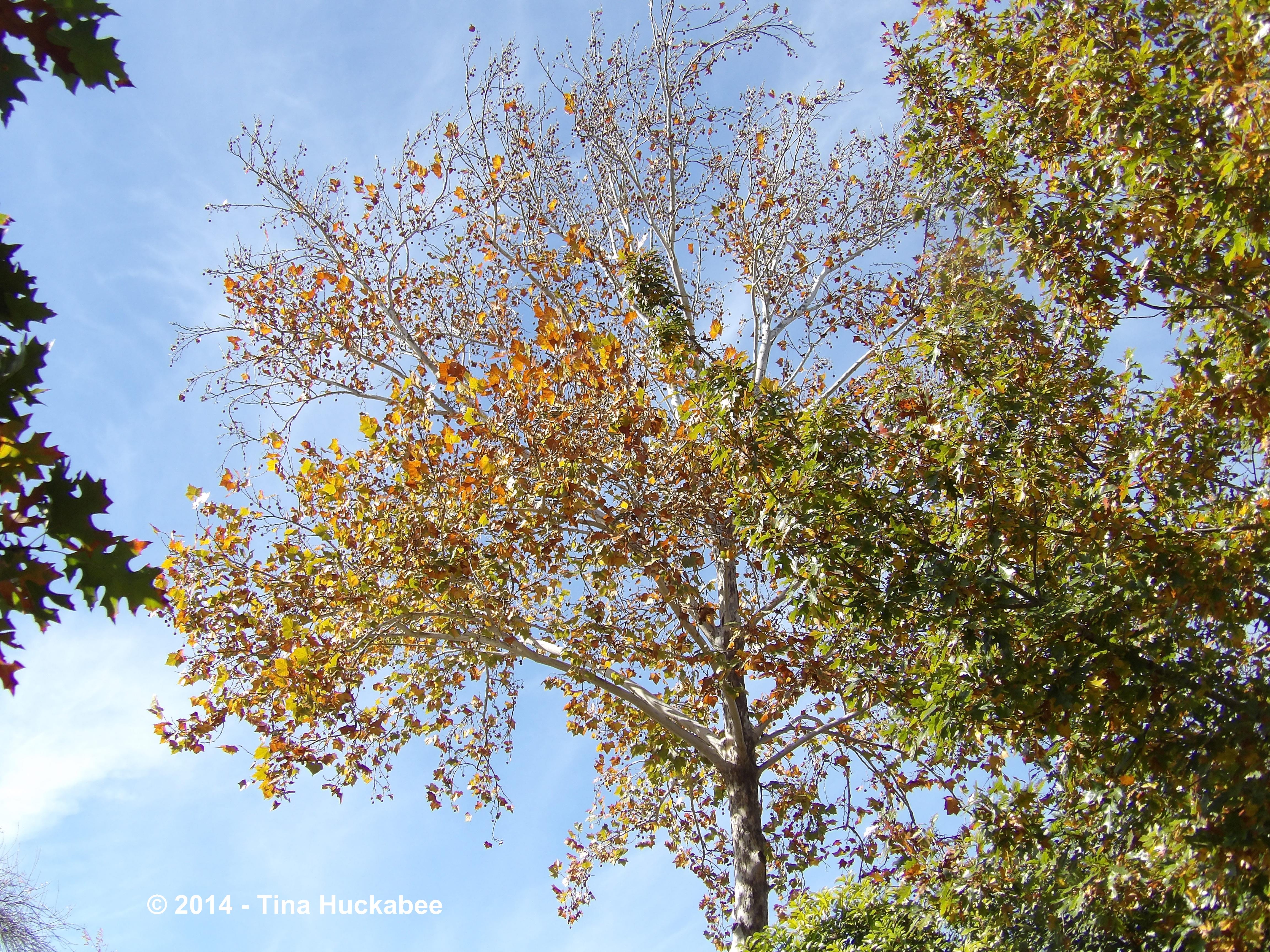
I don’t hate this tree, but it’s a bit water thirsty for Central Texas–it’s naturally found along stream banks and bottomlands which hold moisture from floods, and that’s not where my home resides. The tree was established when I bought my home and I wouldn’t remove a mature tree, so it’s remained as a major shade source for my gardens. Aside from its struggles during dry periods (drought-stress causes defoliation), the leaves are thick and big.
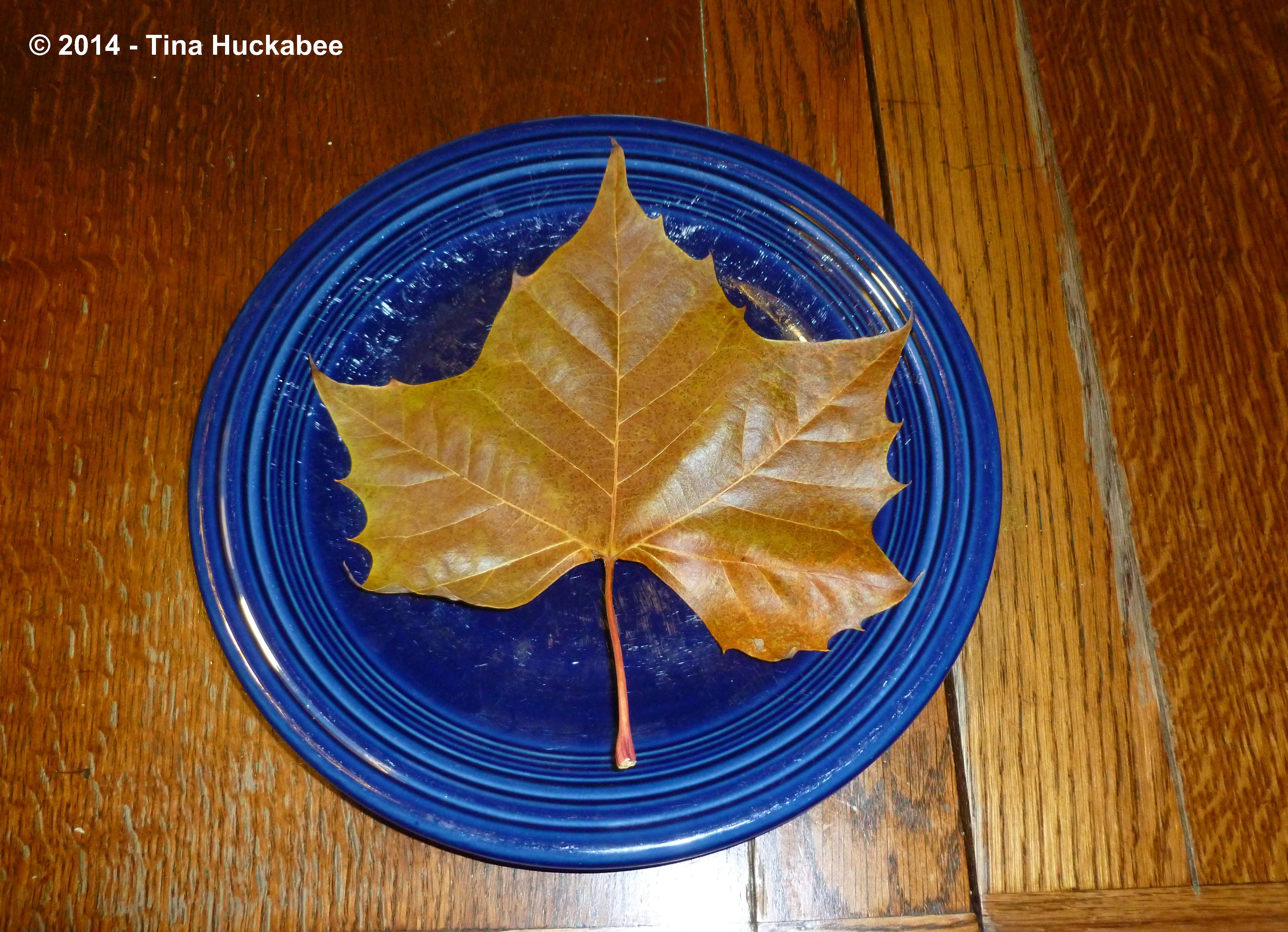 Really big.
Awkward and especially messy in the garden, the leaves don’t break down in any reasonable amount of time. Here you can see a small sampling of Sycamore leaf litter.
 There are points during late December when all that is visible in certain parts of my gardens are those dinner plate-sized leaves. A garden is not so nice when those huge leaves obscure everything in it! Sycamore leaves are too large and thick to leave in the garden (for this OCD gardener), or to place, as is, into the compost. They mat together, forming a barrier against moisture, thus slowing the composting process.
But in the tree, especially during the seasonal change, Sycamore foliage is quite lovely.


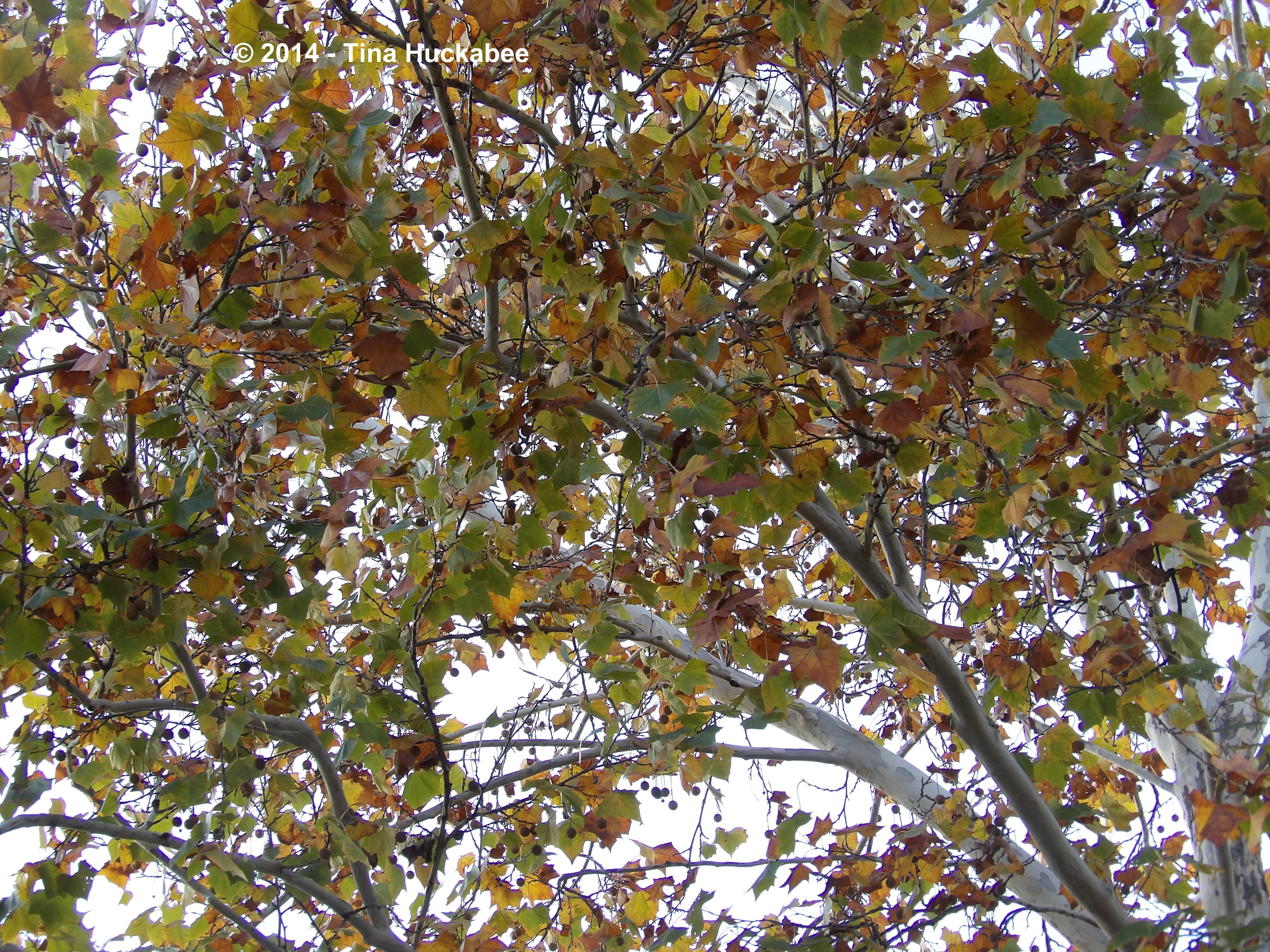
Fluttering in the breeze, in an array of colors,

 …the leaves are resplendent against the blue sky.
Once the leaves drop and I’ve vacuumed and shredded them, dumped them directly into my compost bin and/or onto the gardens as mulch, the spherical seed pods decorate the tree throughout winter. In spring, the seed balls explode, releasing feathery seeds aloft in the wind.
On the ground, foliage also makes its presence known. Floating in the bird baths, 
…accompanying the bee hives,

…and blanketing the gardens and pathways. Here, the brown oak leaves combine with the stalks of the Retama, Parkinsonia aculeata.

A bit upwards from the ground sit perennials which also sport fabulous foliage this GBFD. The colorful foliage of the Ruby Red Runner, Alternanthera hybrid, which is part of the biological filtering system of my pond, is eye-catching.
Tiny floral gomphrena puffs accompany the plum leaves. Ruby Red Runner provides foliage interest nearly year round; a hard freeze will render this plant dormant.
The Butterfly Vine, Mascagnia macroptera, showcases lush green foliage and fascinating chartreuse seed pods which resemble butterflies, thus the common name for this native plant to Mexico and southwards.

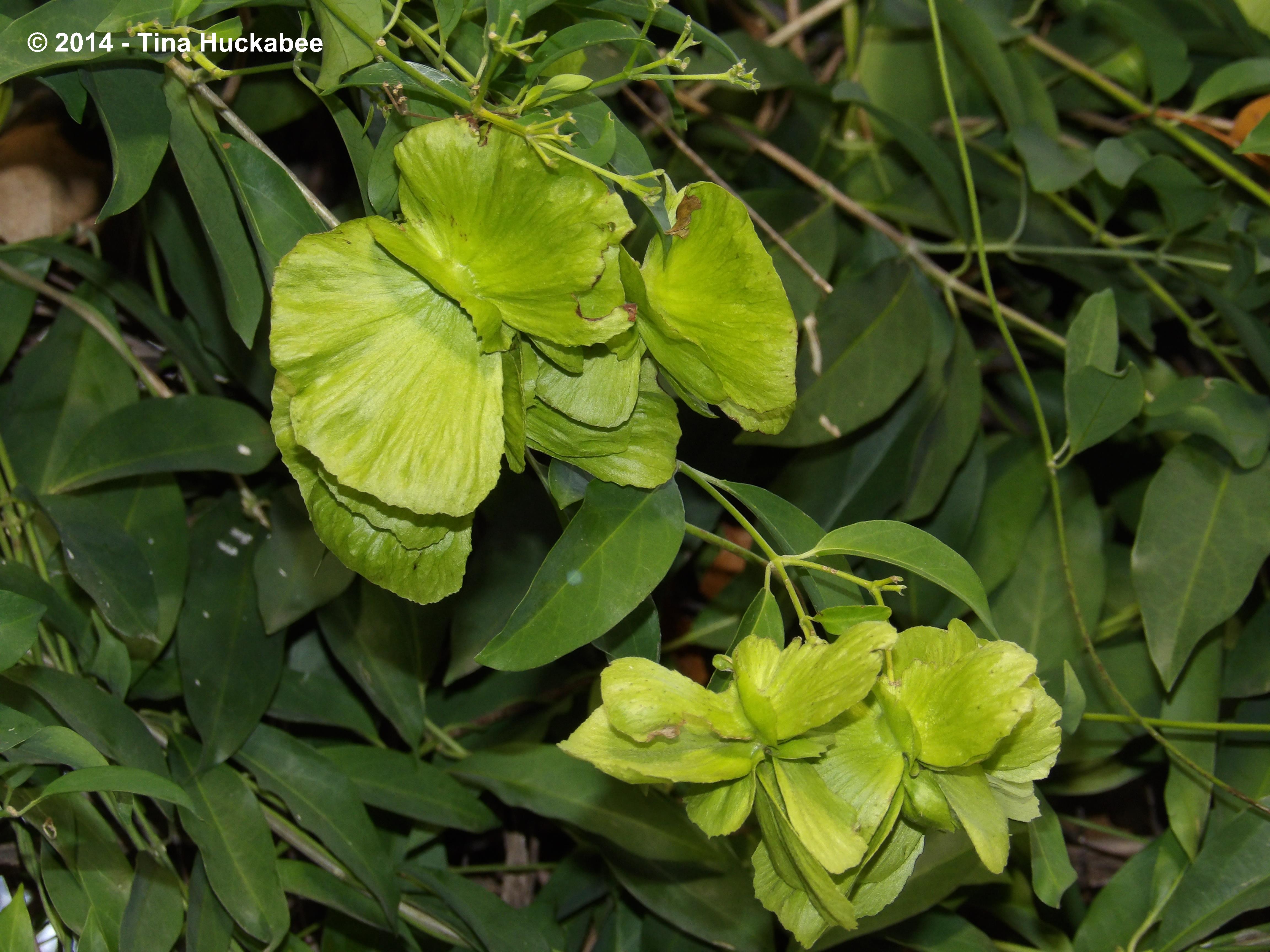
Currently, none of the seed pods are the rusty-brown they eventually become, but it’s quite a picture when there are differently pigmented “butterflies” resting on the vine.
Firebush, Hamelia patens. speckles after frost damage to its foliage,


…but I like it. No blooms remain on this heat-loving, native-to-Florida. Once we have a killing freeze, it will be dormant until late spring.
Lastly, the Chile Pequin, Capsicum annuum (var. glabriusculum) adds major hotness to the garden.
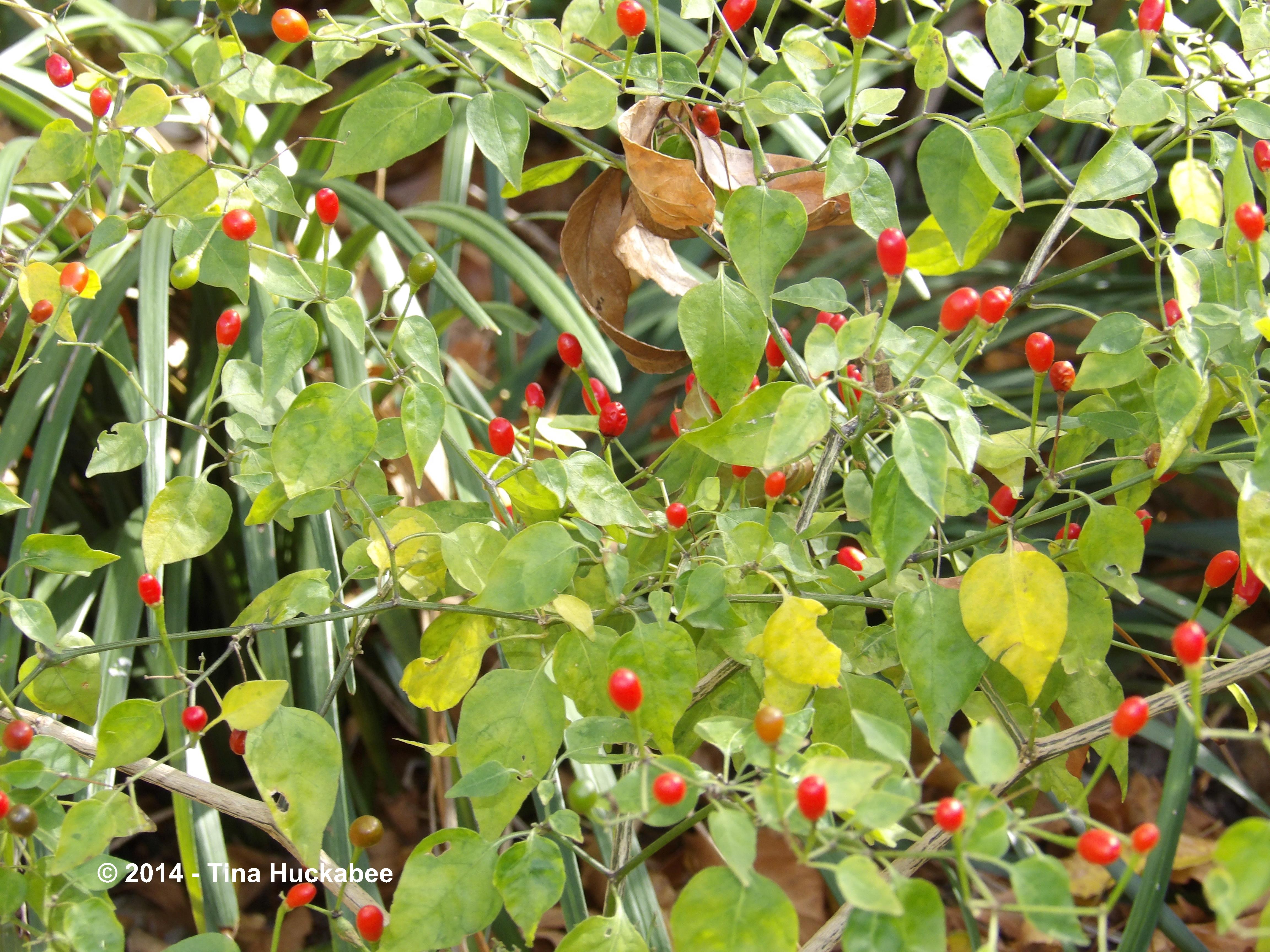
Pepper hotness, that is. A beautiful, shade-tolerant and deciduous (in most winters) shrub, many birds (and my husband) favor these chile peppers, the only truly native chile pepper in Texas. Here, it’s accompanied by Yarrow, Achillea millefolium.

Such a lovely plant for this time of year. Who says we don’t have seasonal foliage color in Texas??
For foliage celebrations from around the world, visit Creating my own garden of the Hesperides for GBFD!




 My Gardener Says...