Crowning Glory

Winter Texans have arrived in Central Texas.  They’re here in the form of seed and insect munching, delightfully feather-sporting, song-singing warblers.  I’m in warbler-watching nirvana because these birds are such pretties: tiny and colorful, sweet-faced and dulcet-voiced, warbler-watching provides great entertainment as I observe their bird business in the trees, at the perennials, and along the pathways.

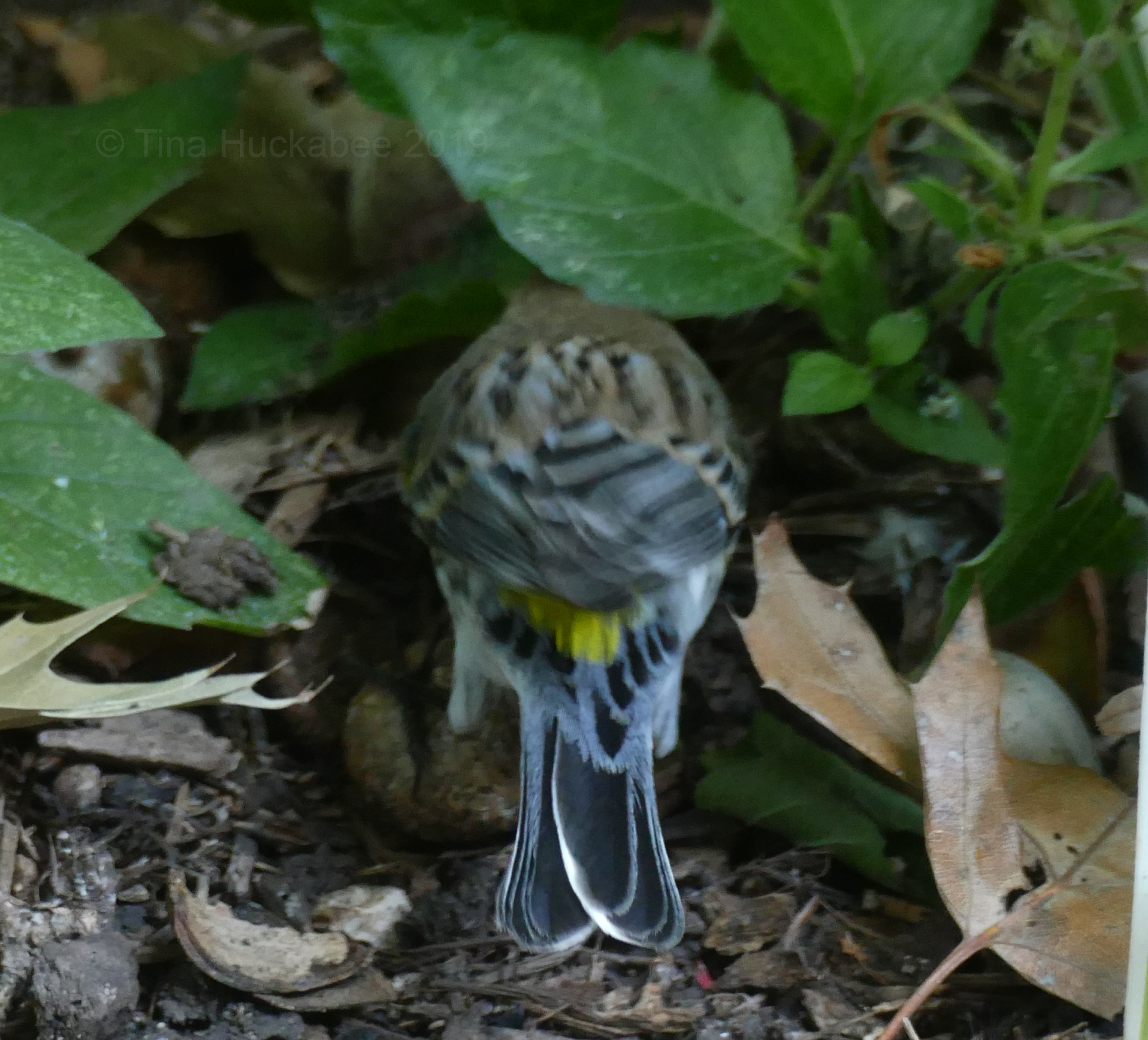
I’m enjoying suet and peanuts visits from a female Orange-crowned Warbler, Leiothlypis celata, and recently, this little Yellow-rumped Warbler, Setophaga coronata, has joined in with some autumn/winter decoration of my garden.

Her cheery cap is charming and that flash of sunshine under the wings?  It positively swoon worthy!  Her little face is darling, too.

But(t) the crowning glory is–drum roll–her yellow bum.

Affectionately called Butter Butts  by avid birders, Yellow-rumped warblers’ show of their lemony rear-ends appears when they’re flying and when hunting for seeds on the ground.

Celebrating cute bird bums, I’m happy to join with Anna and her Wednesday Vignette–check out other colorful butts or perhaps less bottom-centric garden musings for today.

Eat or be Eaten

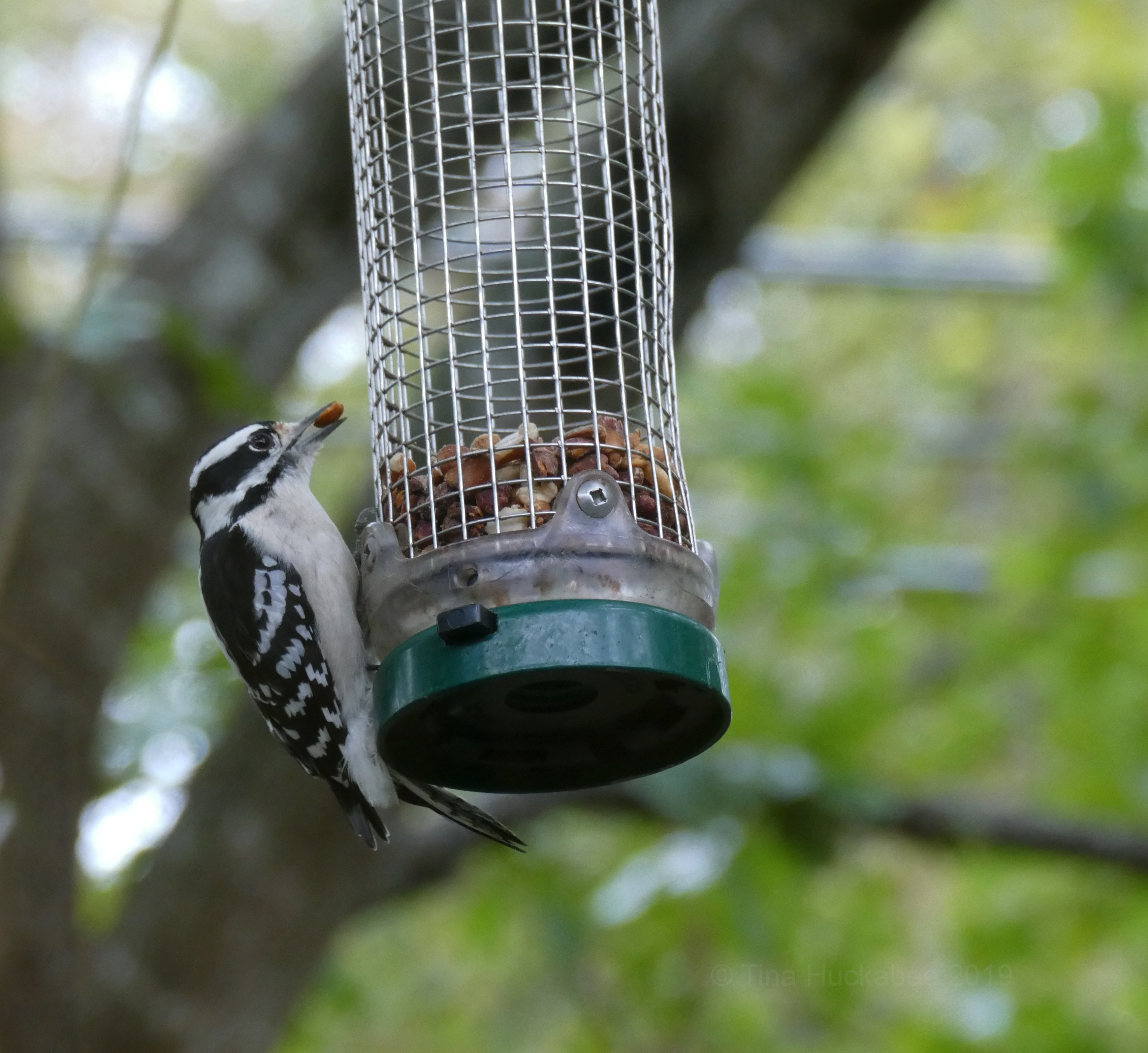
I watched the Downy WoodpeckerDryobates pubescens, for several minutes.   She was rock-still:  nothing moved, not a feather, despite the gentle sway of the feeder and the clasped piece of peanut in her beak.  Because she was motionless–abnormal for a bird–I realized that there must be a predator nearby.

I Downy-watched from my kitchen window, my favorite bird blind.  Even with my movements at the window–slow and careful, as not to startle the little bird–she didn’t move: no head turn, no shuffle of claws, no gulp of the prized peanut, nor snatch of another.  From my standing position, no predator was obvious, so I squatted at the window, looking up into the oak tree just beyond and around at the outdoors as best I could see.

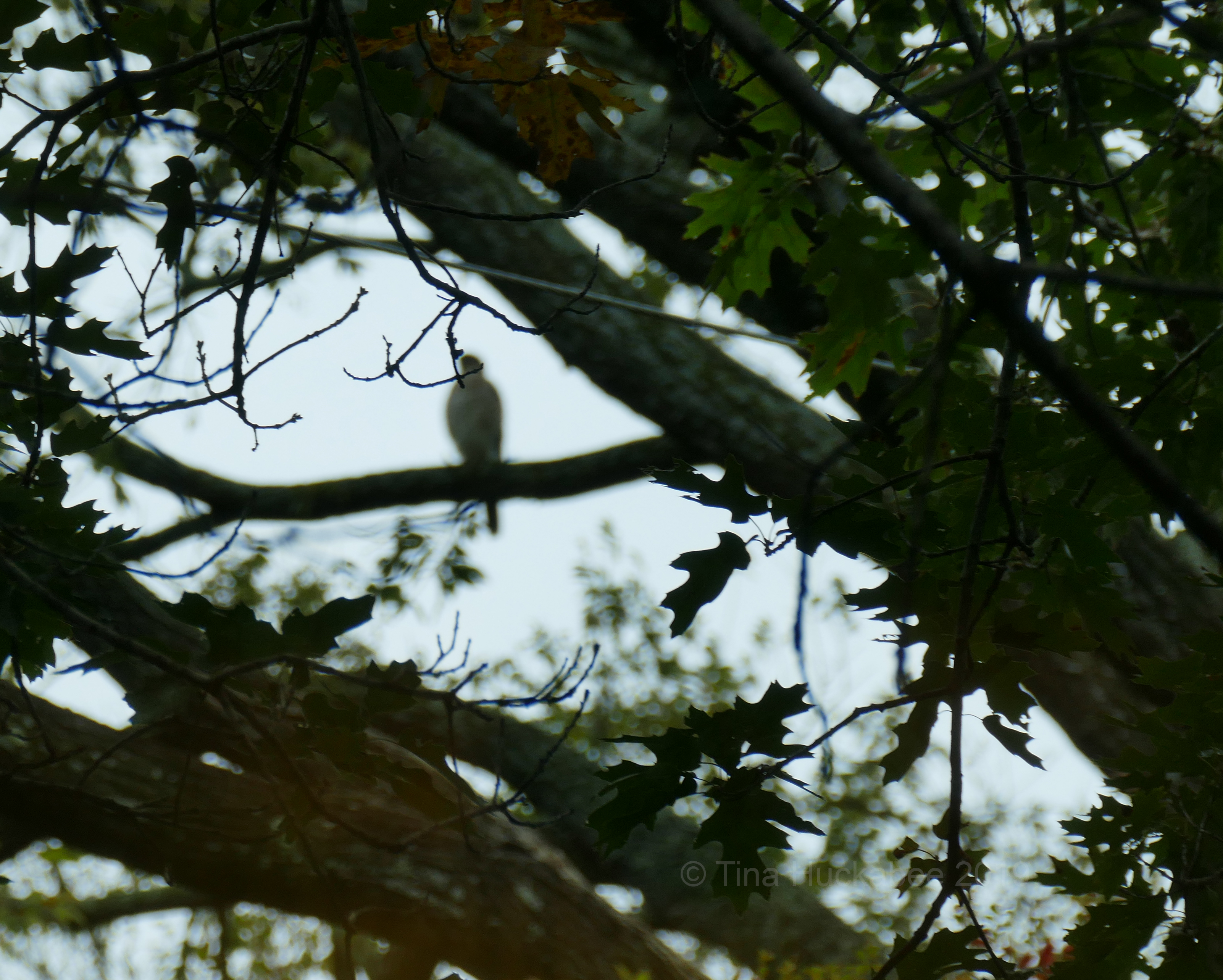
I finally spotted that which froze, in fear, the heart of the would-be feeding woodpecker. The culprit perched far across my property, high in the neighbors’ elm tree.

The photo is poor, taken through the window and at some distance, with plenty of foliage and limbs as distractions.  The hawk is a big one, probably a Cooper’s Hawk, Accipiter cooperii, as they’re common here, especially in autumn, winter, and early spring.

The Downy was still for a good five minutes, maybe longer.  Finally the hawk took flight toward my house, but high above.  A split second afterwards the Downy pushed off from the feeder, heading in the same direction as the hawk, though much farther below and toward the protection of a large evergreen shrub.

I don’t know if the hawk swooped in for the woodpecker, though I doubt that’s what happened; there’s too much cover which would serve as safety for the woodpecker and too much interference for the hawk’s dive.  I imagine the hawk winged to another part of the neighborhood in search of an easier catch, one less aware of the hawk’s existence.

It was an eat or be eaten life-cycle moment.  I’m certain the woodpecker finally ate her peanut, because I’ve seen her since.  And I’m equally certain the hawk found something to eat; I’m just not sure what, when, or where.

Appreciative for the life lessons a garden bestows, I’m joining today with Anna and her Wednesday Vignette.   Check out her beautiful Flutter and Hum for musings of various sorts.

They Have Arrived

They’re back.  The Monarch butterflies, Danaus plexippus, are now wafting through Central Texas, orange and black wings gracefully flit against the Texas sun before alighting at blooming plants for nourishment, sustaining their long flight, continuing their annual life cycle.

Like so many of us, Monarchs face an uncertain future:  climate change, deforestation in Mexico, overuse of pesticides and herbicides in urban gardening and commercial farming in the United States are just some of the challenges to a viable population of these insects.

I am joyful at the first Monarch sighting in spring and then again, in autumn.  Currently, my garden offers a diversity of flowering plants–native and nonnative–in which the butterflies nectar from before they move southward toward their winter home.  In autumn, it’s all about providing blooming flowers for these hungry, hungry butterflies.

In spring, the availability of milkweed (Monarchs’ host plant) is paramount for the hungry, hungry caterpillars.

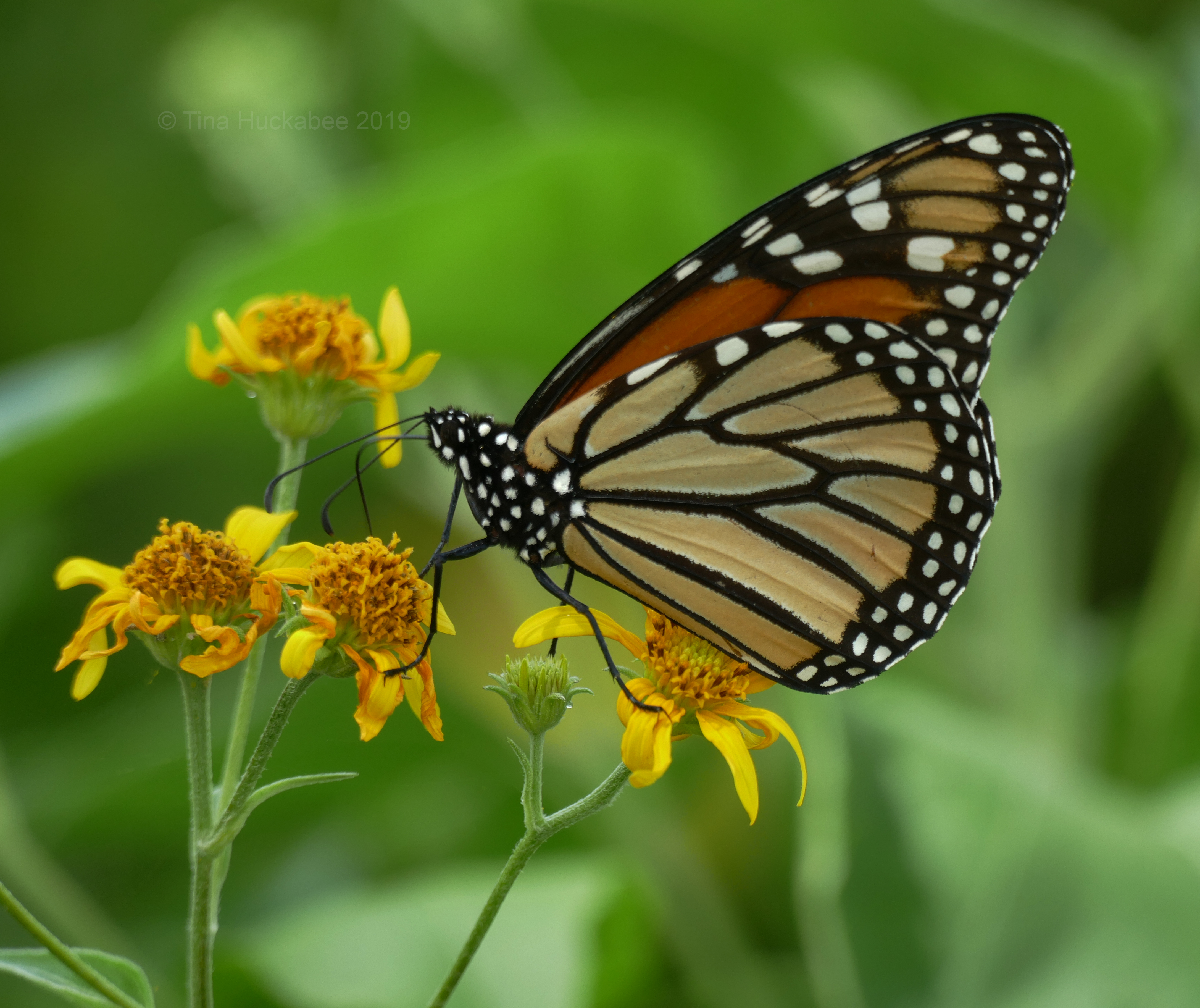
Female Monarch on Frostweed (Verbesina virginica)

This generation of adults are those last born in the northern parts of the United States and Canada and are now headed to Mexico.
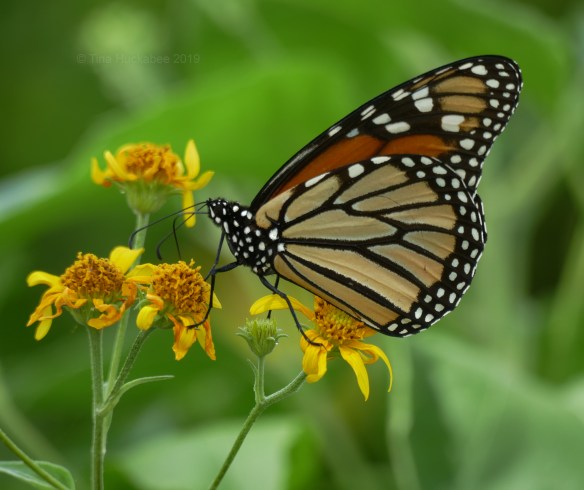
Female Monarch on Plateau goldeneye (Viguiera dentata)

Once these remarkable insects arrive at their destination, they will gather in dramatic clusters by the millions, high up in the Oyamel fir forests of the Sierra Madre Mountains in Mexico. The unique situation offers cold temperatures and high humidity during the winter–the evolved perfect environment for Monarchs’ winter rest.

Male Monarch on Frostweed. The two black marks located on the hind wings, plus thinner black webbing indicate a male.

The adults who overwinter in Mexico are those who will return through Texas (the major migration pathway) next March, laying eggs on a variety of native milkweed plants.  That first (or is it the last?) generation begins the life cycle all over again: adults mate, females lay eggs, the adults then die.  Eggs hatch, caterpillars eat the milkweed, morph to the next generation, the flights resume.  The ancient rhythm continues in leap-frog fashion, northward through spring and into summer.
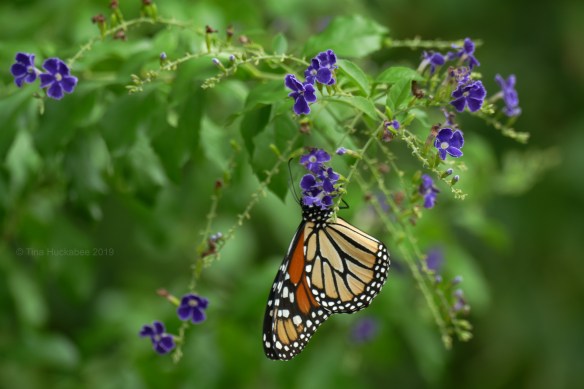
Female Monarch on Skyflower (Datura erecta)

At some point in August, six generations later, because of a change in light and through a magnetic pull that the Monarchs have responded to for eons, the last set of adults turn southward and begin their 2000 mile journey toward the Mexican mountain firs which await winged occupation.

Stopping briefly as they migrate to Mexico, Monarchs are enjoying a respite in my garden; the first of many arrived a couple of days ago.
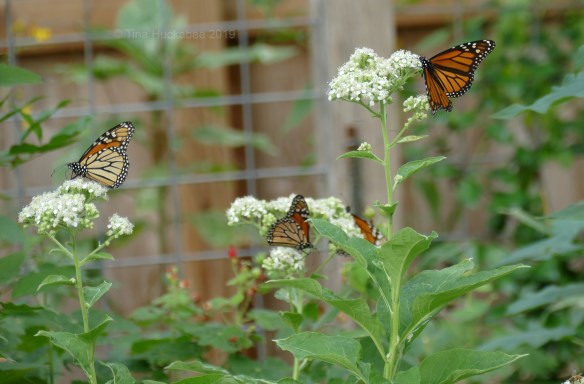
I am an appreciative witness to this natural event.

I’m joining today with Anna and her Wednesday Vignette.   Check out her beautiful Flutter and Hum for musings of various sorts.