Wood-n-Things

Holes.

IMGP8729.new

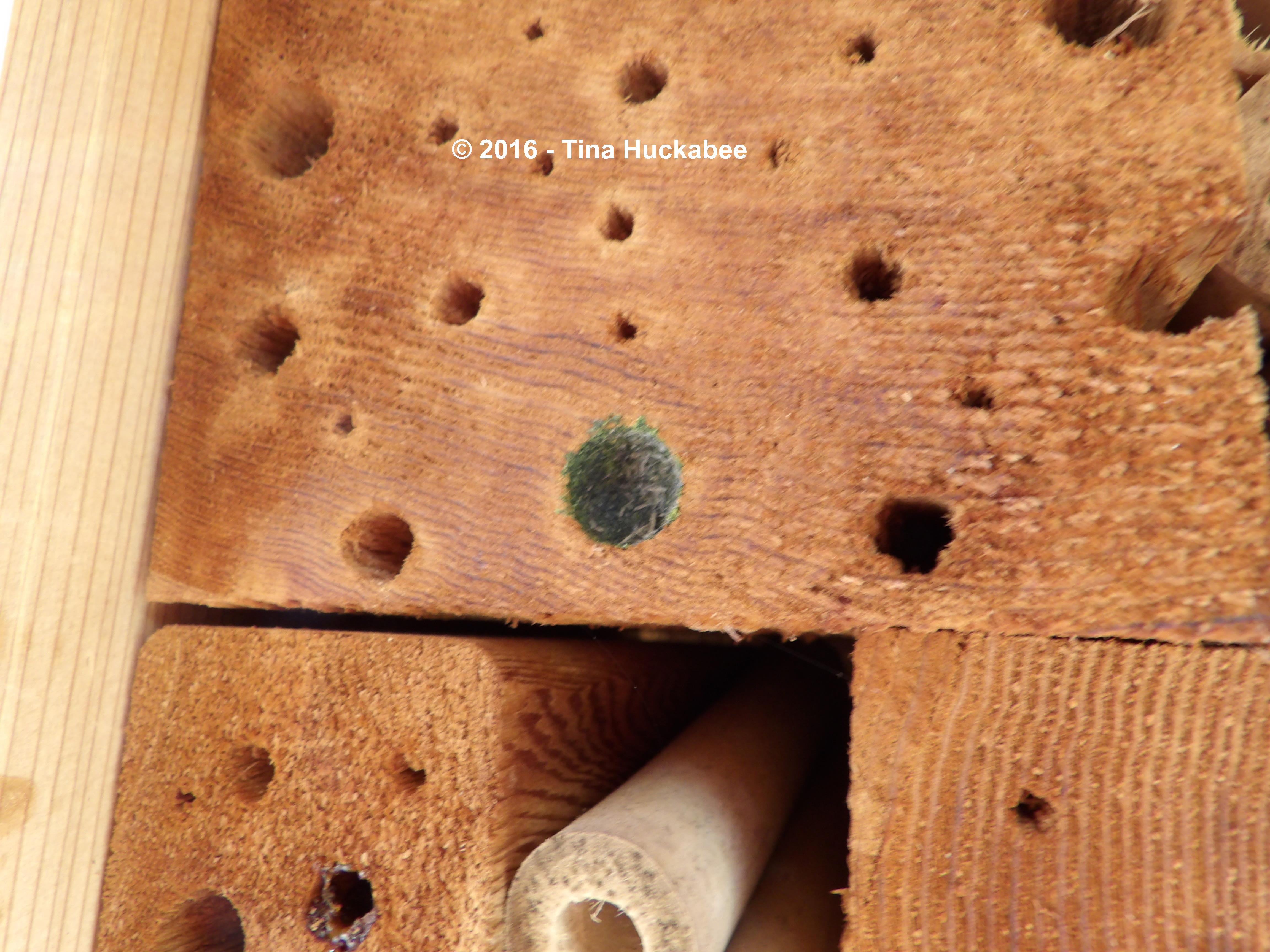
Hole originally drilled in limestone to hold a shelf on an outside wall of my home, but taken over by a native bee and packed with soil and pollen.

Holes are a good thing.

IMGP8654.new

Holes drilled by a native bee in a log and also in the wood frame on my back patio.

Holes in wood and masonry and bare ground and leaves suggest that pollinators are at work and planning for the next generation.

Continuing  the celebration of National Pollinator Week, let’s talk  about those critters making the round holes: let’s talk native, or wild bees.  According to the U.S. Geological Survey on native bees, there are roughly 20,000 native bee species in the world, about 4,000 of which are endemic to  the U.S.  Native bees are found on every continent (except Antarctica) and are some of the most important, if unnoticed and unappreciated, of the hard-working pollinators.

Many native bees are so tiny that you wouldn’t see them unless you’re really looking.

IMGP7434_cropped_3120x2677..new

Tiny miner bee on a Zexmenia (Wedelia acapulcensis).

Other native bees, like this Horsefly-like Carpenter bee, Xylocopa tabaniformis, are larger.

IMGP8568_cropped_2936x2792..new

Horsefly-like carpenter bee on a Engelmann’s daisy (Engelmannia peristenia). Additionally, check out the holes on the petals–probably made by a leafcutter bee.

Native bees are remarkably beautiful.

M0066017.new

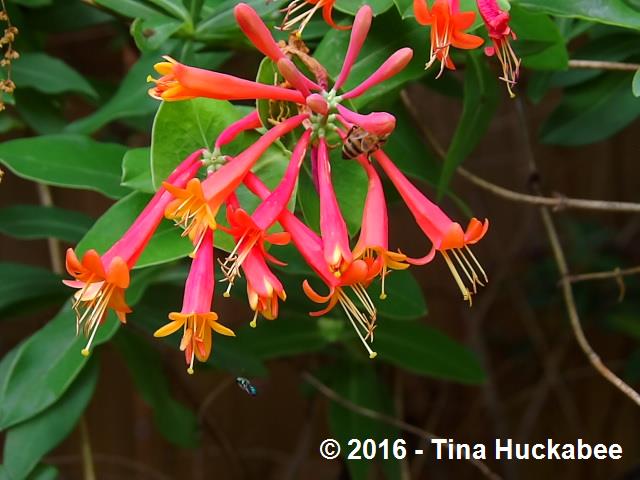
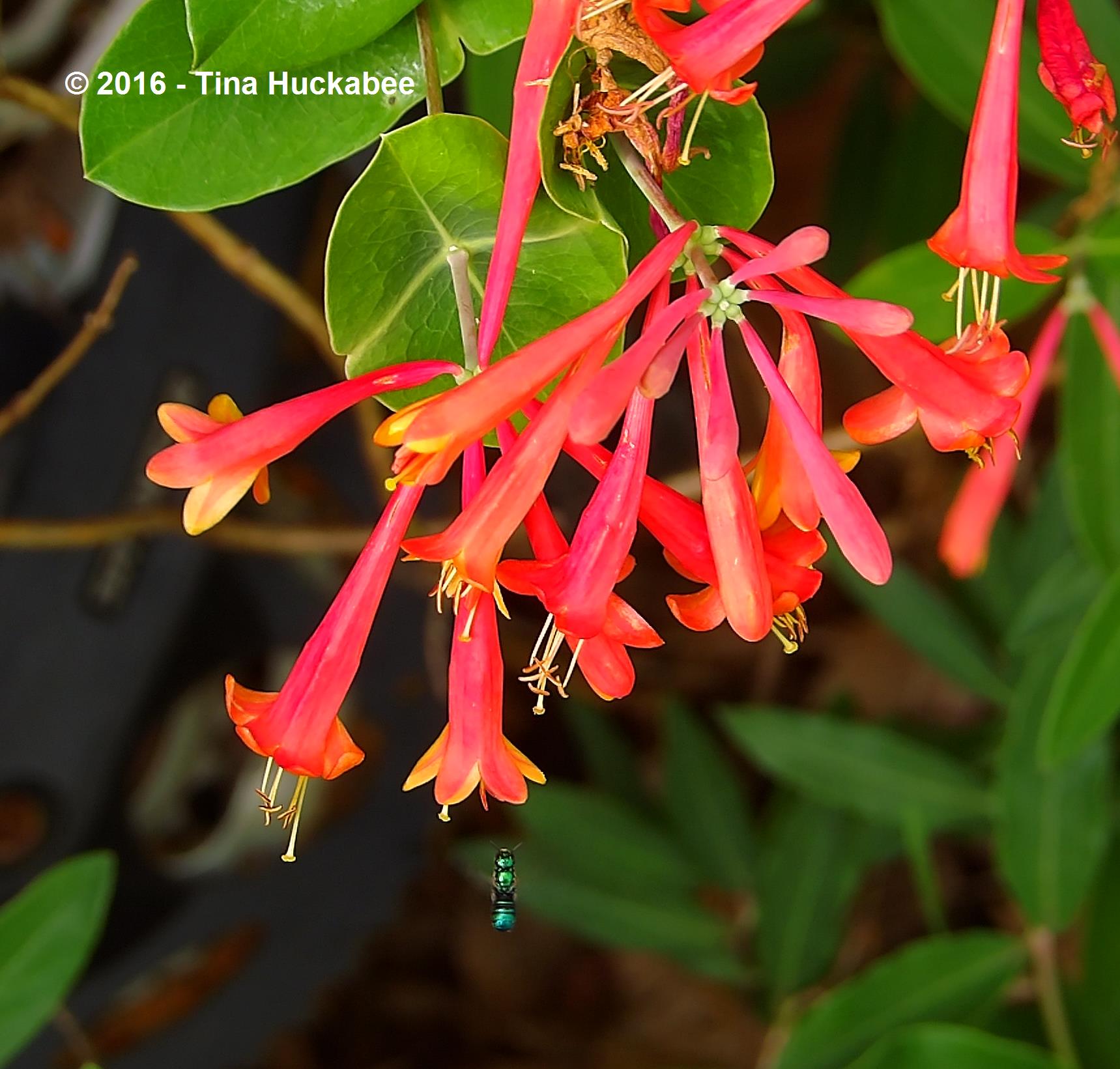
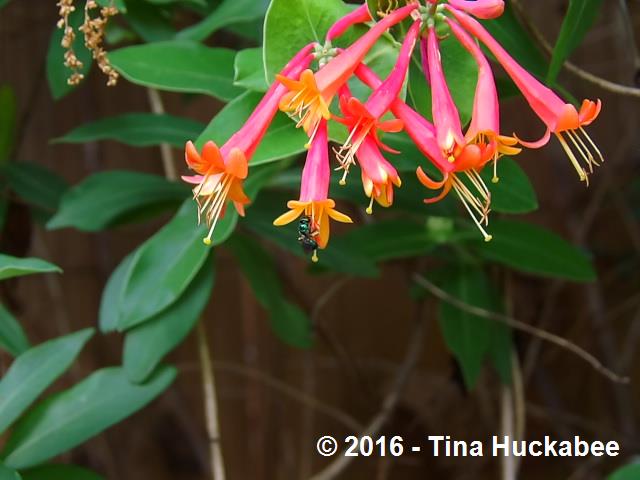
Colorful metallic sweat bee on a Coral honeysuckle (Lonicera sempervirens).

Regardless of size or looks, native bees are the bomb when it comes to pollinating abilities. They are some of the best and most efficient pollinators you’ll ever want to invite into your garden.

Not all native bees make holes in wood or leaves and petals for their nests, but they all need certain environmental qualities to live and thrive.  We know that native bees are declining and some of the common reasons are as follows:  reduction of habitat, pesticide use, lack of pollinator plants.

How can you be a part of the solution to slow the native bee decline? Make your garden welcoming to these important creatures. Many native bees (like bumblebees) nest in the ground. You can allow a portion–it doesn’t have to be a large area–of your property to host some bare soil: no mulch, no cement, no hardscaping, no garden or turf of any sort.  I keep a fenced-off work and storage area where my compost bin is located.  It’s not mulched, though I’ve allowed some native plants to seed out. (I just can’t help myself.)  To some eyes, it’s “messy,” but to native bees’ eyes, it’s a welcoming neighborhood with good homes for their babies. And we all want good homes for our babies, right?   A sterile, uber-clean look is not something that native bees like.  While I haven’t spent much time searching the area for bees’ nests, I have noticed that my gardens host more native bees since I allowed this area some wildness.

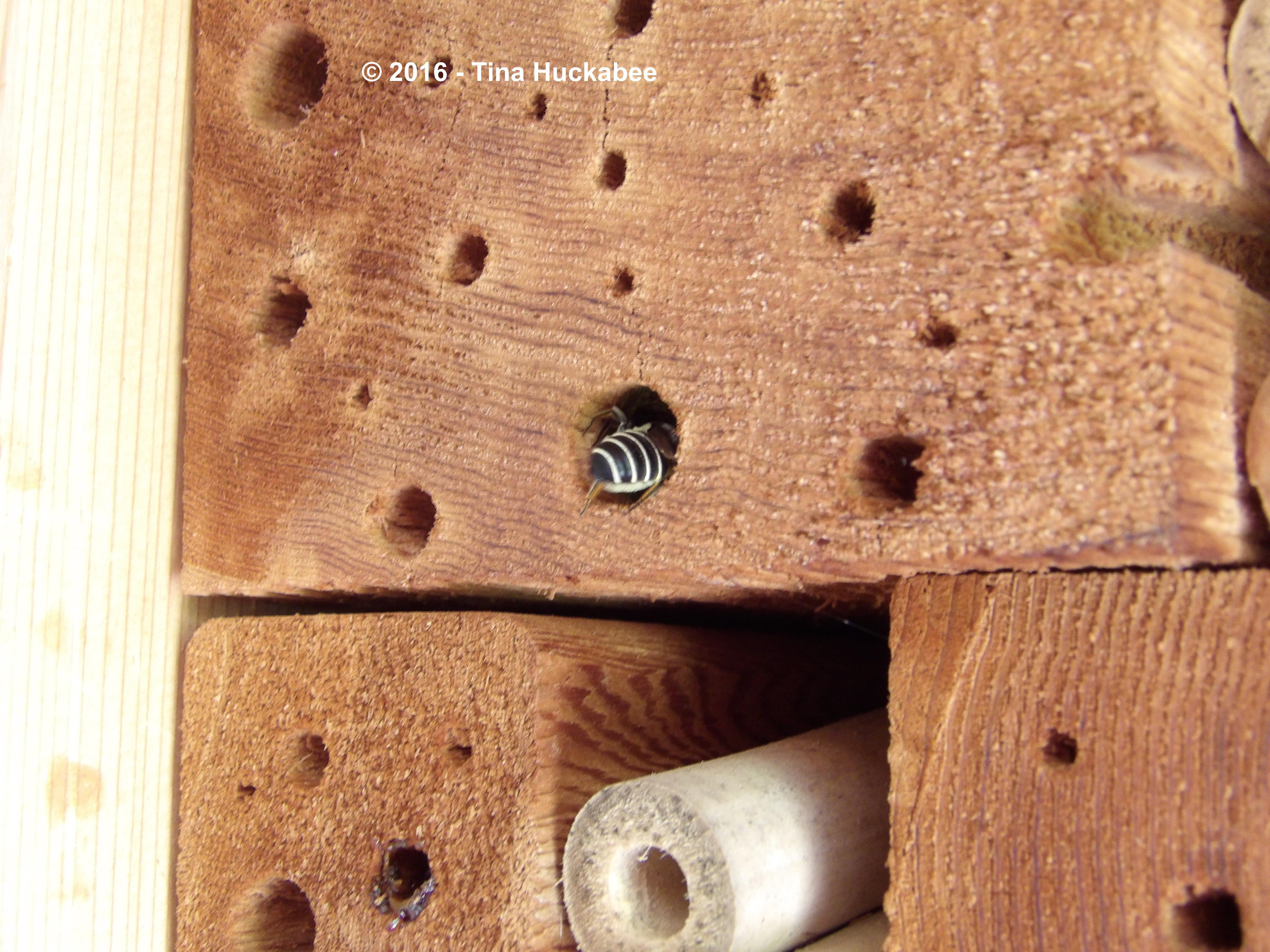
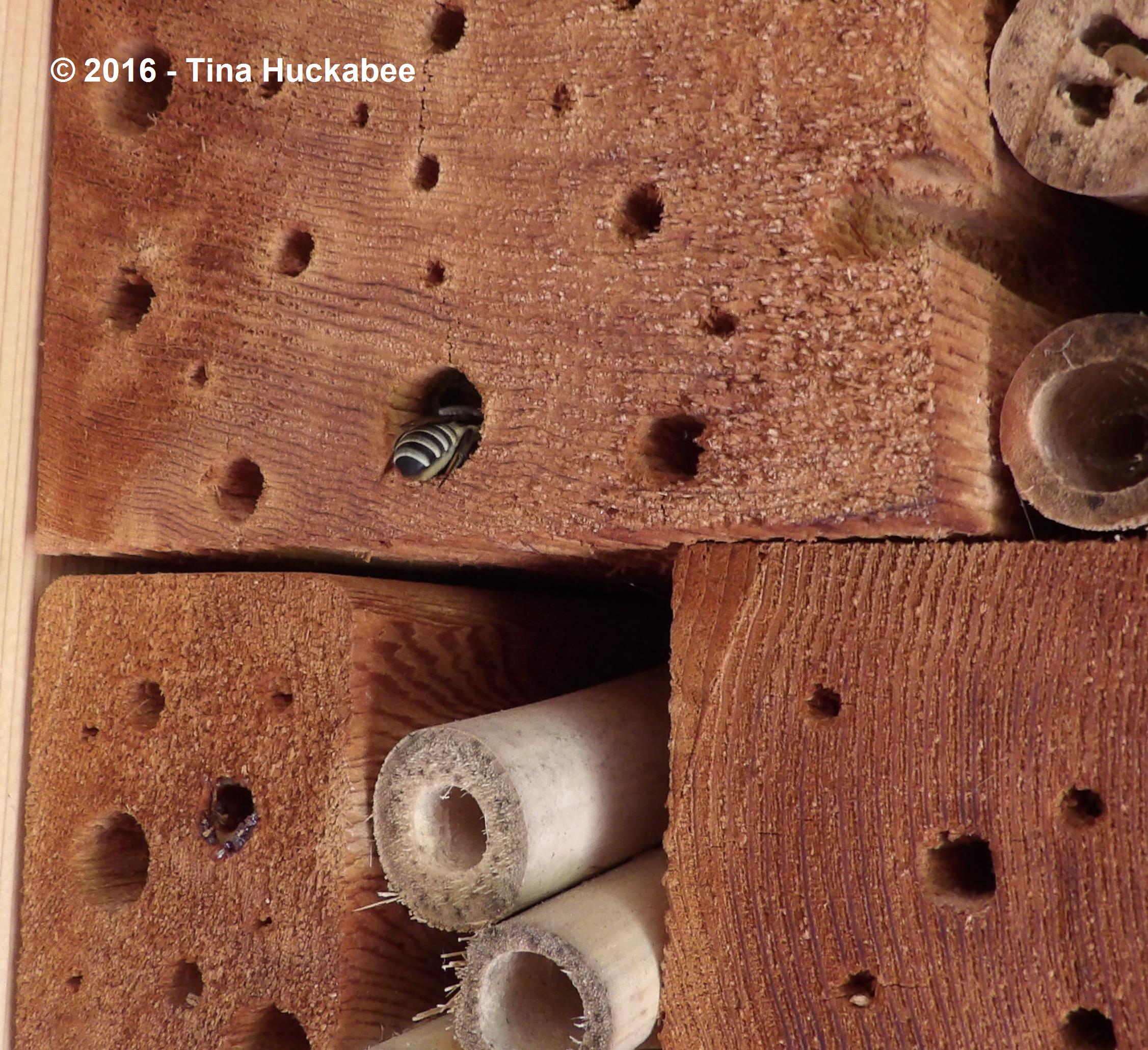
Many home gardeners are building native bee/insect hotels and that’s a fun way to help native bees find protected homes for their offspring.
IMGP8557.new

This leafcutter bee flew in and out of the hole over the course of several days.
IMGP8555_cropped_2253x2060..new

IMGP8600.new

When she was done, she’d packed the hole holding her eggs with pollen, leaves and who knows what else. Her babies are safe and sound.
IMGP8483.new

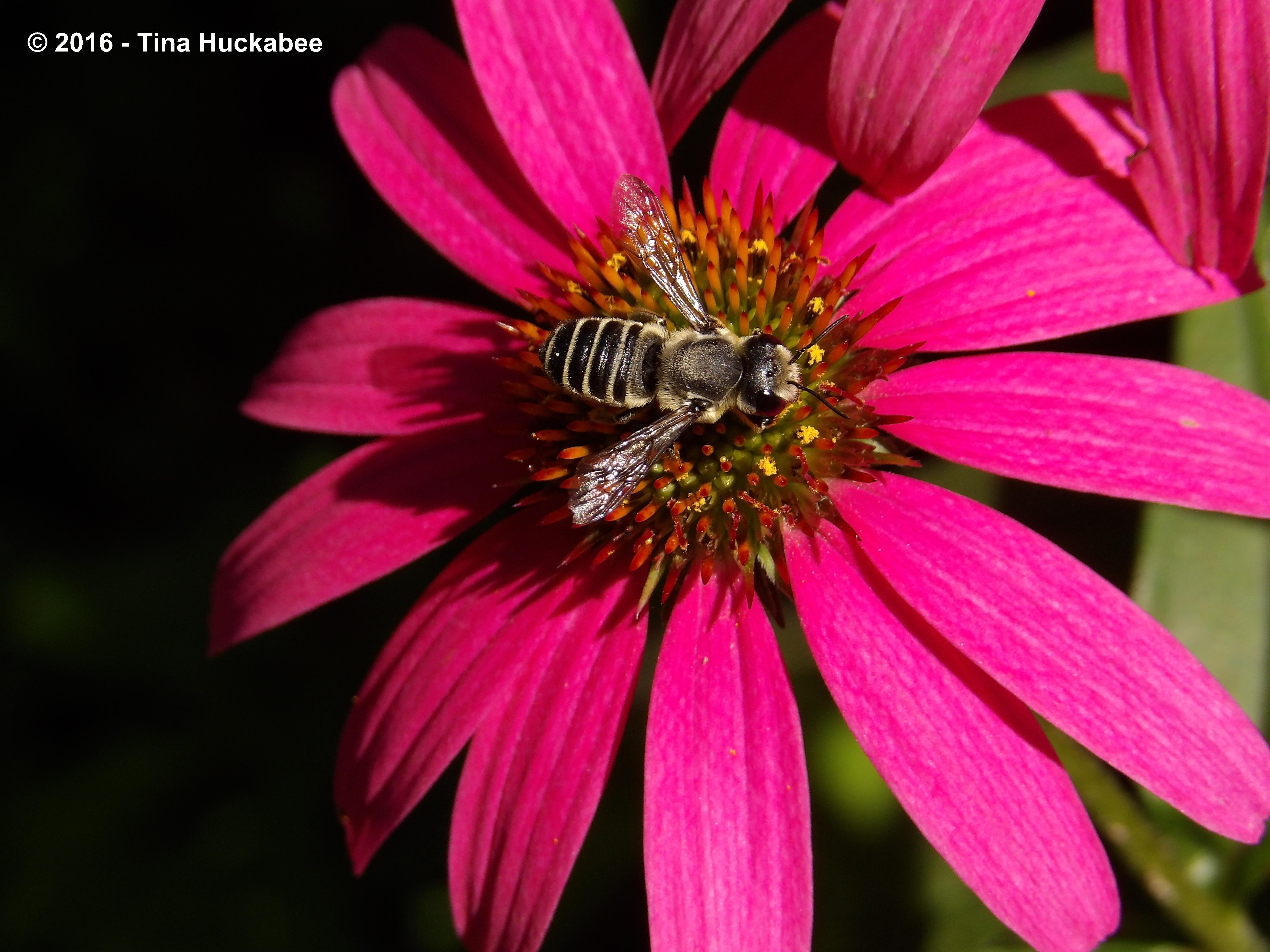
Here’s the same bee type nectaring away on a Purple coneflower (Echinacea purpurea).

I wrote about my insect hotels here, but there’s plenty of information available on the Internet or through garden resources about building insect hotels or houses. These are simple and fun projects to do with kids.

IMGP8480.new

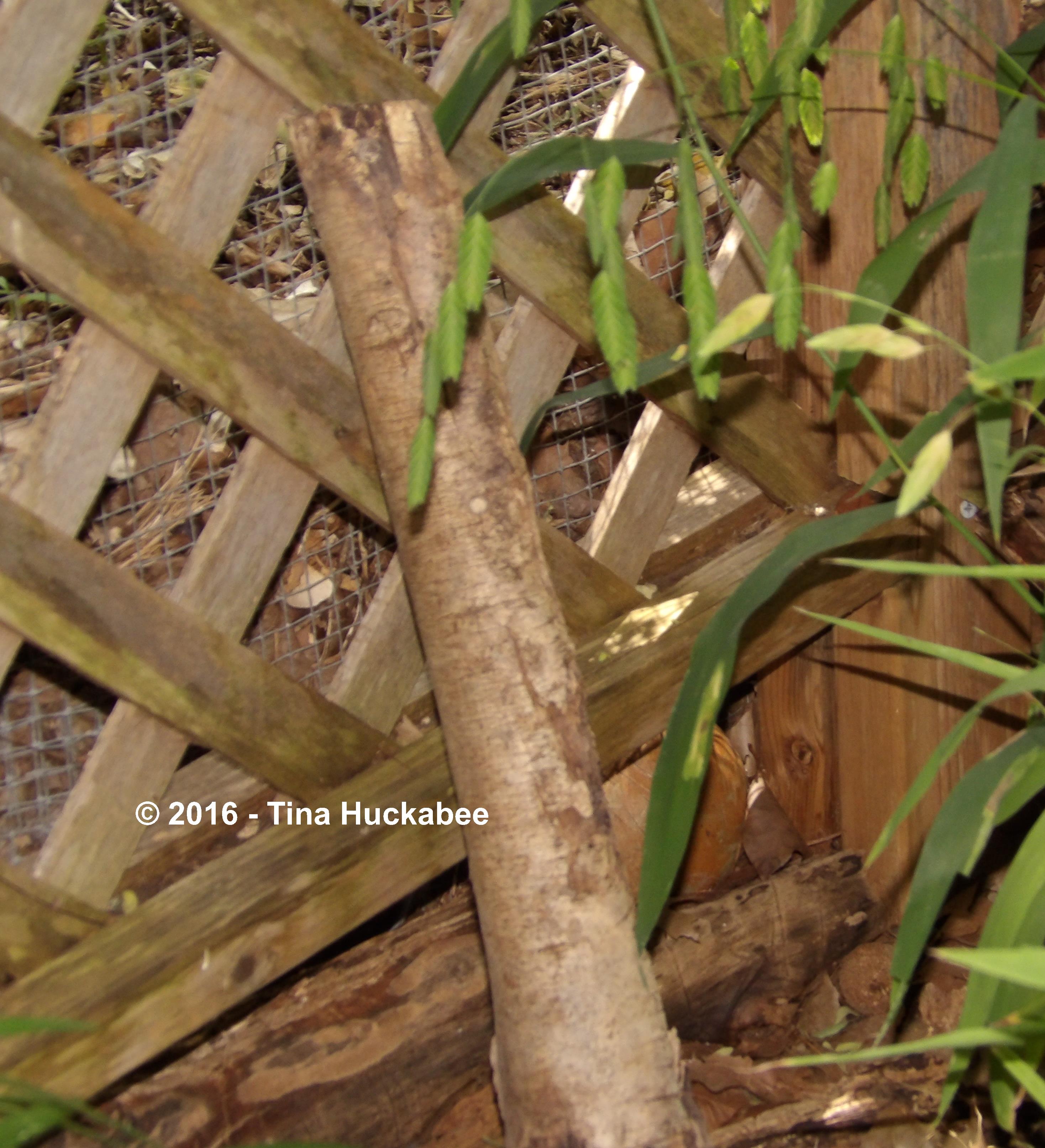
One of the easiest things that will allow native bees to settle in to your garden is to leave firewood (that you won’t use) or downed tree limbs on your property.
IMGP8737_cropped_2936x3226..new

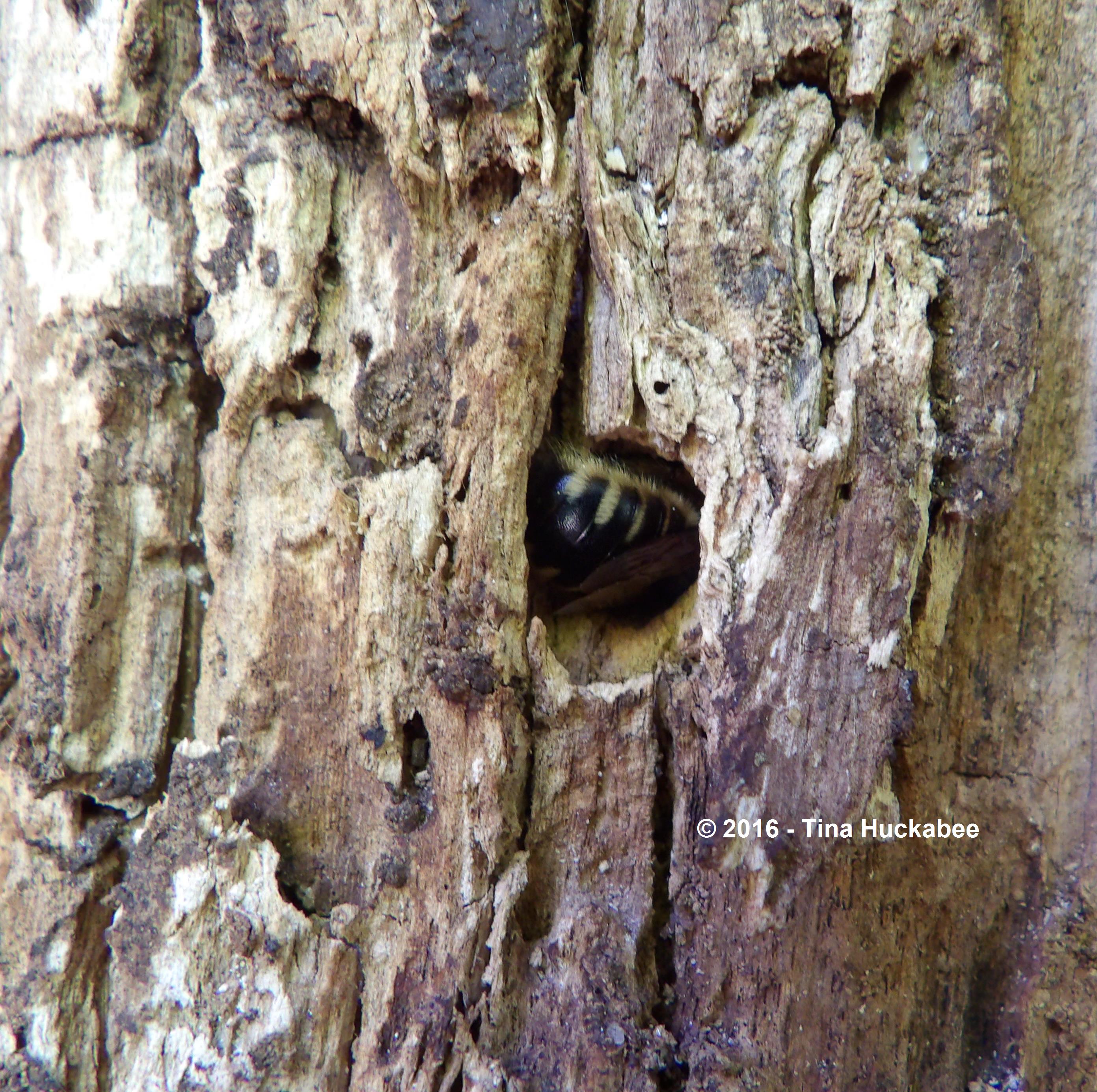
Certain species drill into wood and lay their eggs, so it’s a effortless way to ensure that they have a safe home for their bee babies.
IMGP6970_cropped_2783x2770..new

Horsefly-like carpenter bee working in her nest in a wood log.

I’ve laid logs of wood in various spots around my garden; bees have no trouble finding the wood and getting to work making nice homes for their families.  If you cut down a tree, keep some of the wood and maybe even the stump.  You can drill holes to give your native bees a head start, or leave them to it.  Either way, it’s a win and native bees and your garden will be healthier for it .

Another way to help slow the decline of native bees in your area is to refrain from pesticide use.  There are myriad reasons why home gardeners shouldn’t rely on pesticides, but allowing native bees to nectar and collect pollen, and to create those cool holes in leaves for their nests, are but a couple.  Remember that pesticides kill–that’s their job.  For example, if you’re spraying for adult mosquitoes,  the pesticide will kill bees, butterflies, moths, and all other insects that the chemical comes in contact with.  Pesticides don’t discriminate–they kill all “pests”, aka, insects.

Plant for pollinators!!  That’s the fun part.  It’s best to use native bloomers if you can get them.
IMGP7001_cropped_2930x2866..new

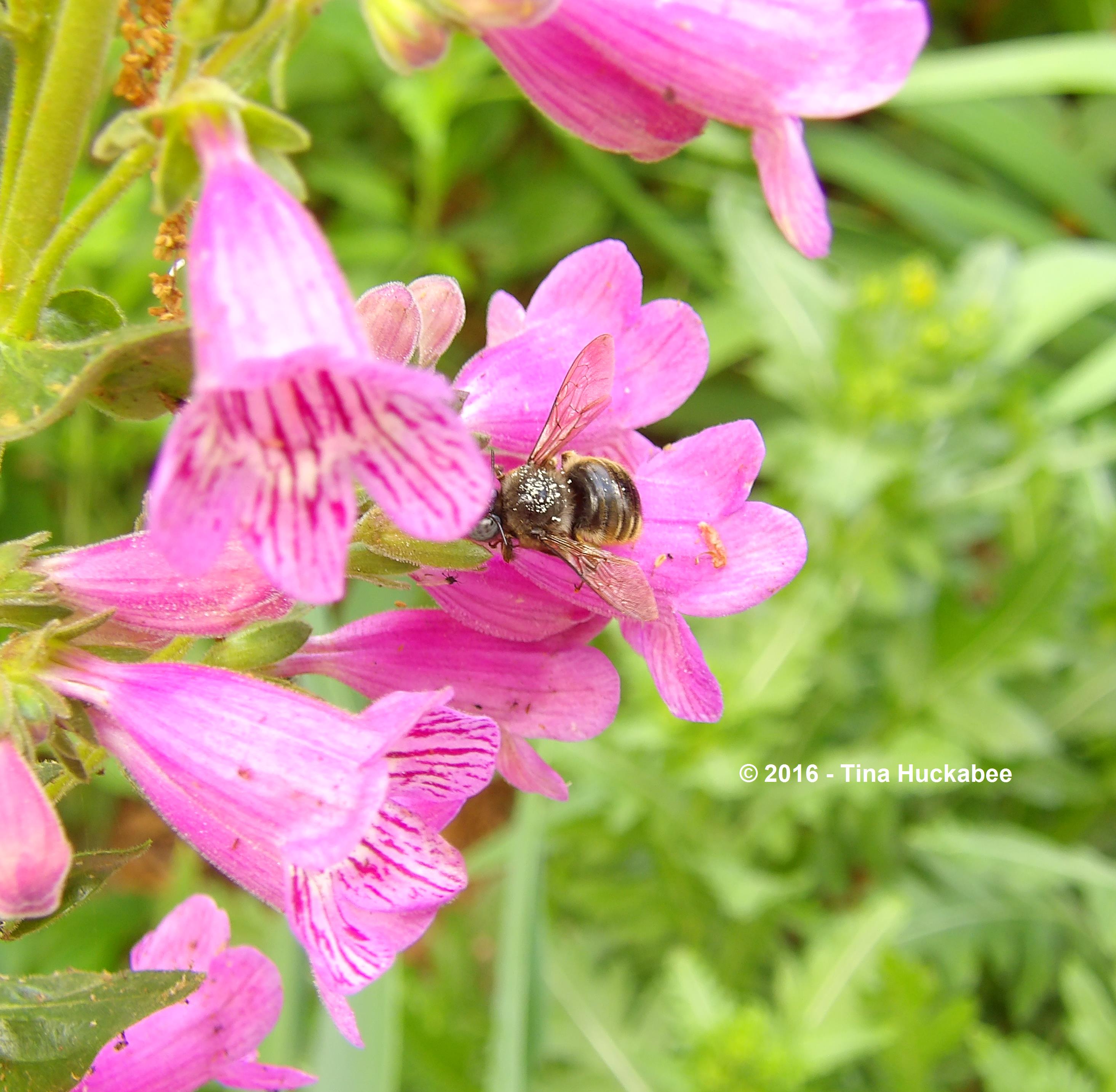
Horsefly-like carpenter bee working a Hill Country penstemon (Penstemon triflorus).
IMGP8479.new

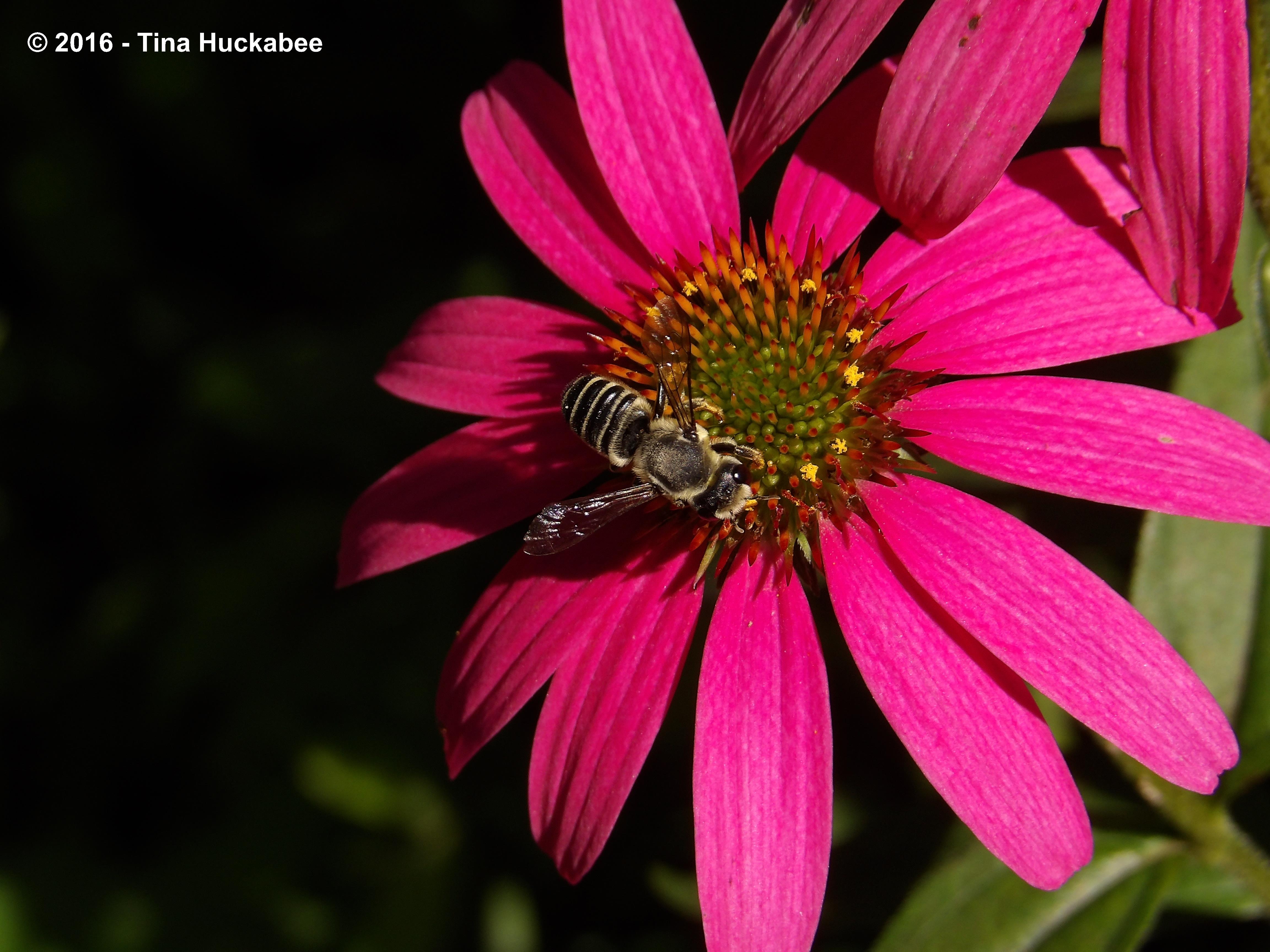
Leafcutter bee on a Purple coneflower.

IMGP5430_cropped_2682x2272..new

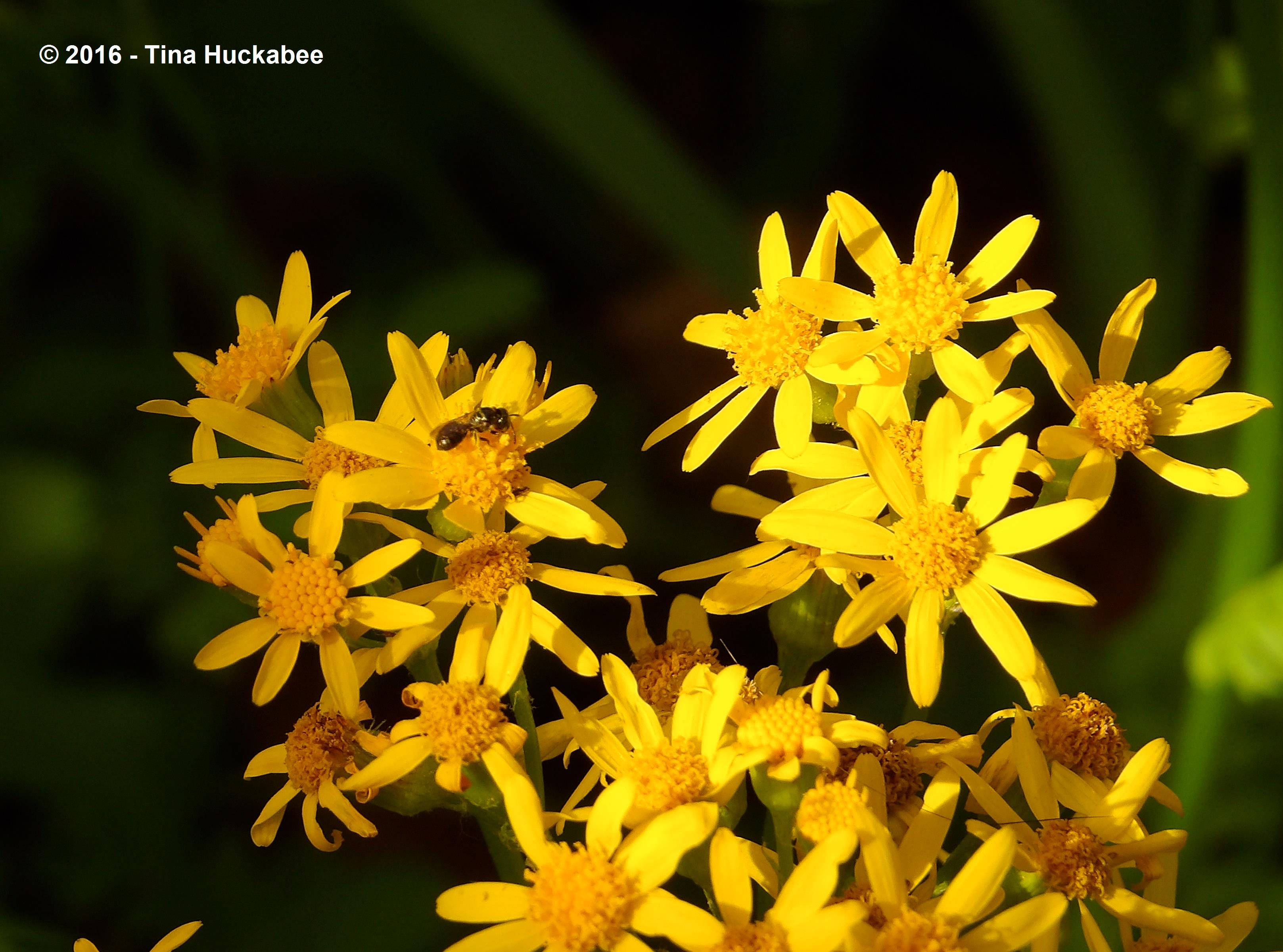
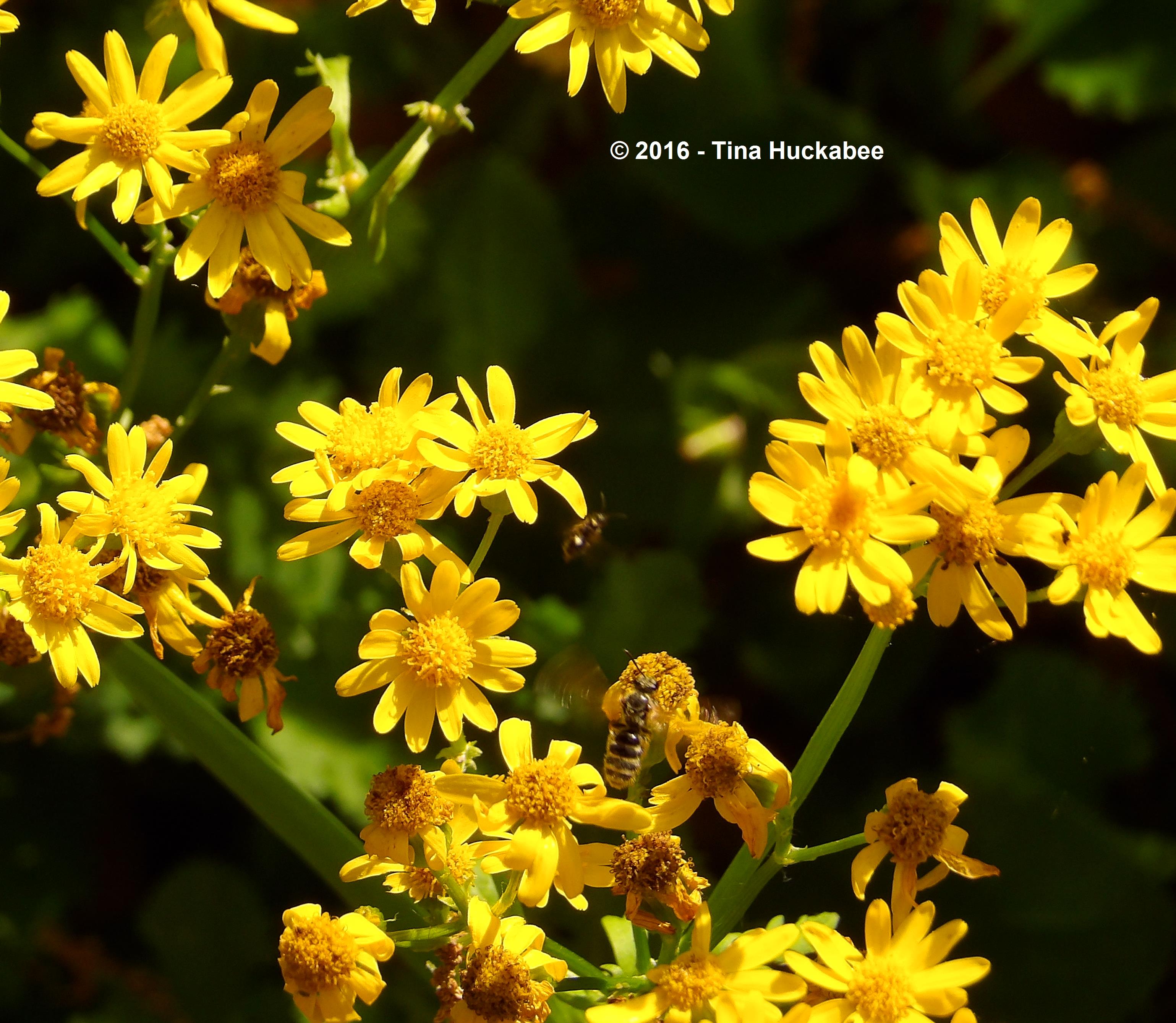
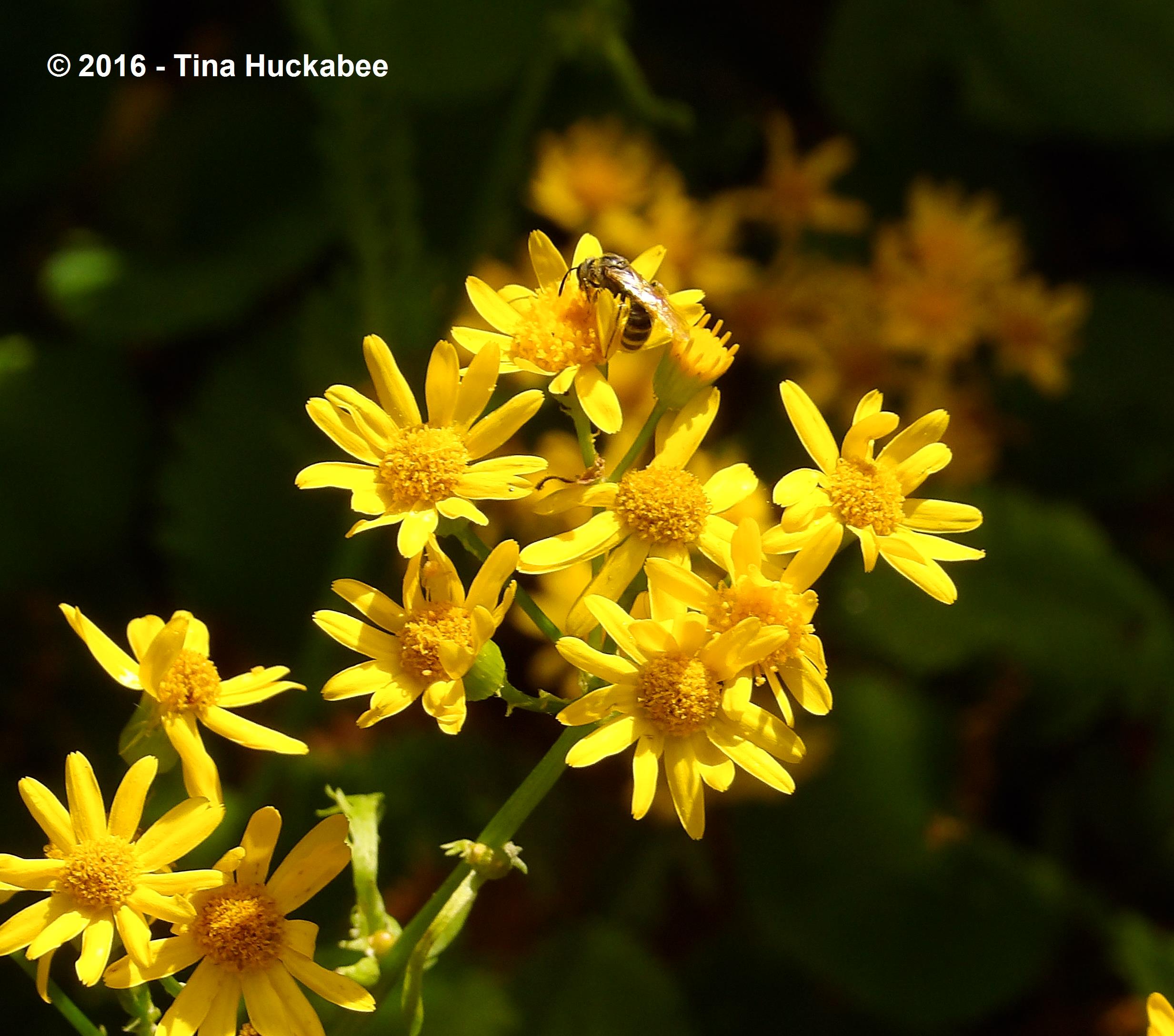
Mason bee (Osmia) (?) on Golden groundsel (Packera obovata).
IMGP5381_cropped_2465x2175..new

IMGP8476_cropped_2456x2466..new

Horsefly-like carpenter bee on Henry Duelberg sage (Salvia farinacea ‘Henry Duelberg’).

If native plants are not readily available, choose well-adapted, non-native perennials and annuals and have fun planting!

IMGP8897.new

Metallic sweat bee on passalong daylily.

Don’t forget that flowers bloom in seasons other than spring–plant for year-round flowering (even in winter if you live in a mild climate) so that pollinators are kept busy and happy.  You’ll enjoy the beauty of the blossoms and the insects that visit and you’ll help repair the world in your own back yard. And front yard too!

When my children were little, we enjoyed observing the the visits of giant, gentle bumblebees–you know the type, the huge black, yellow and fuzzy bees.  The bees were especially fond of a large salvia shrub with blue blooms and at times, there were 20 or 30 of these bees working the blooms all at the same time.  They were fascinating to watch–so focused and single-minded as they gathered nectar and pollen and so gentle, that I could pet them. (I didn’t do that in front of my little ones. No sense in encouraging that!)

There was a field not far from our street, full of native wildflowers and grasses.  Of course, it was going to be developed at some point and in fact, two new neighborhood streets with tidy little single family homes were built over the field.  From a neighborhood perspective, it was the best possible outcome; certainly better than a hotel or yet another shopping center.  But after the construction began, we never saw the bumbles again.

Not one.

Not ever.

I recently saw a giant black and yellow and fuzzy bumblebee in my back garden.  I only saw her twice, didn’t get a good photo of her, but she was there, early two mornings, working the flowers.  I have no idea where her home is.  I can only hope there are more like her and that they have a safe ground home somewhere and plenty to survive on.

Pollinators are life–they pollinate the food we eat, products we use, and they make the world a lovelier and more interesting place in which to live.  Pollinators deserve our attention and respect; they deserve to live.  If you don’t have a pollinator garden, well, why not give it a whirl?  It’s not hard to plant for pollinators–you’ll be amazed by their beauty and impressed with their work ethic.

Happy National Pollinator Week!
Wildlife Wednesday, April 2016: Spring Things

My garden and its inhabitants are in full swing, reveling in abundant sunshine, pleasant temperatures, and rain at the right times.  I hope your garden is thriving with similar conditions, fully awake and alive not only with flowers and foliage, but the things that the flowers and foliage are intended for:  birds, pollinators, amphibians and all other wildlife that requires what nature provides.

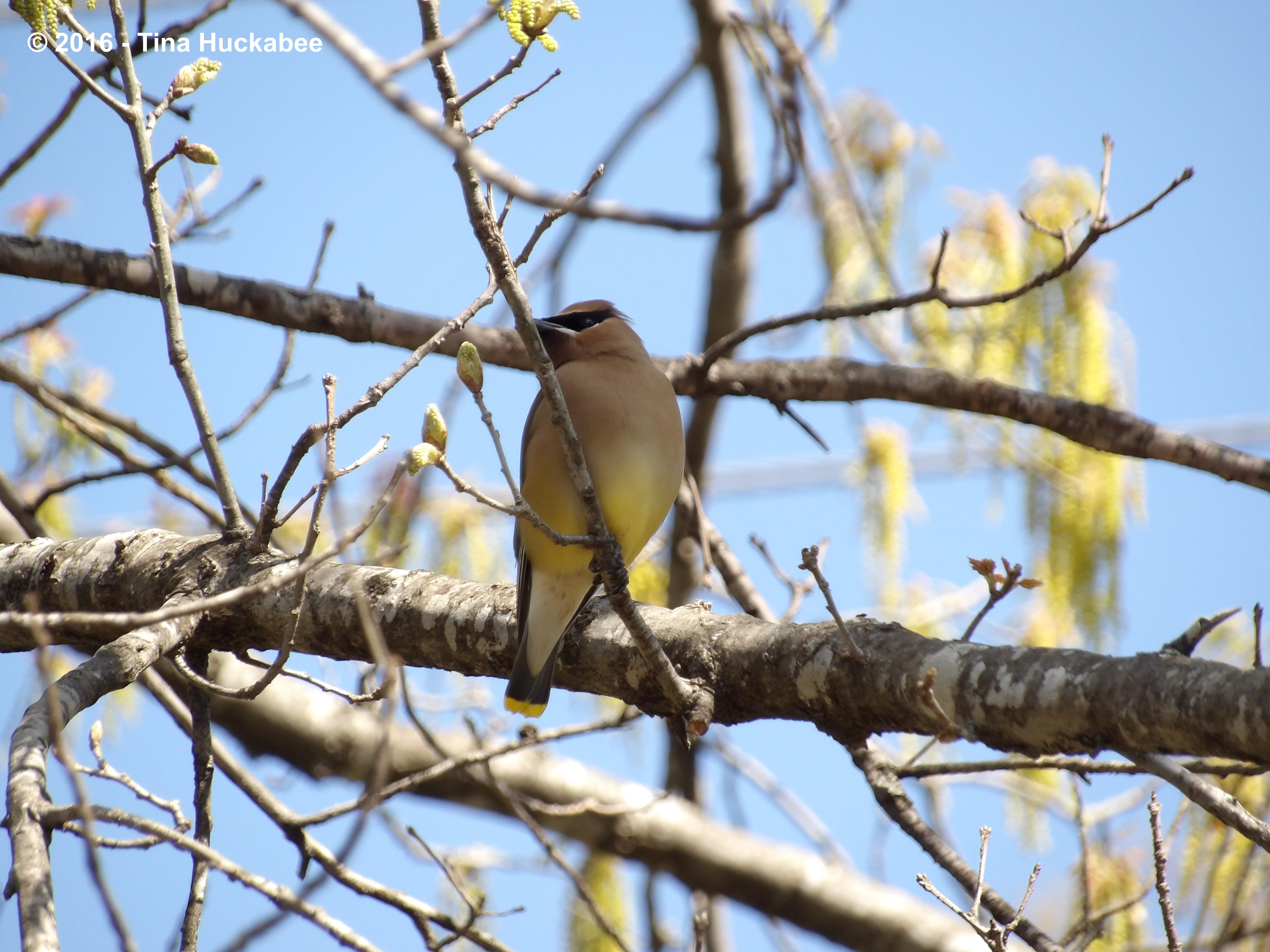
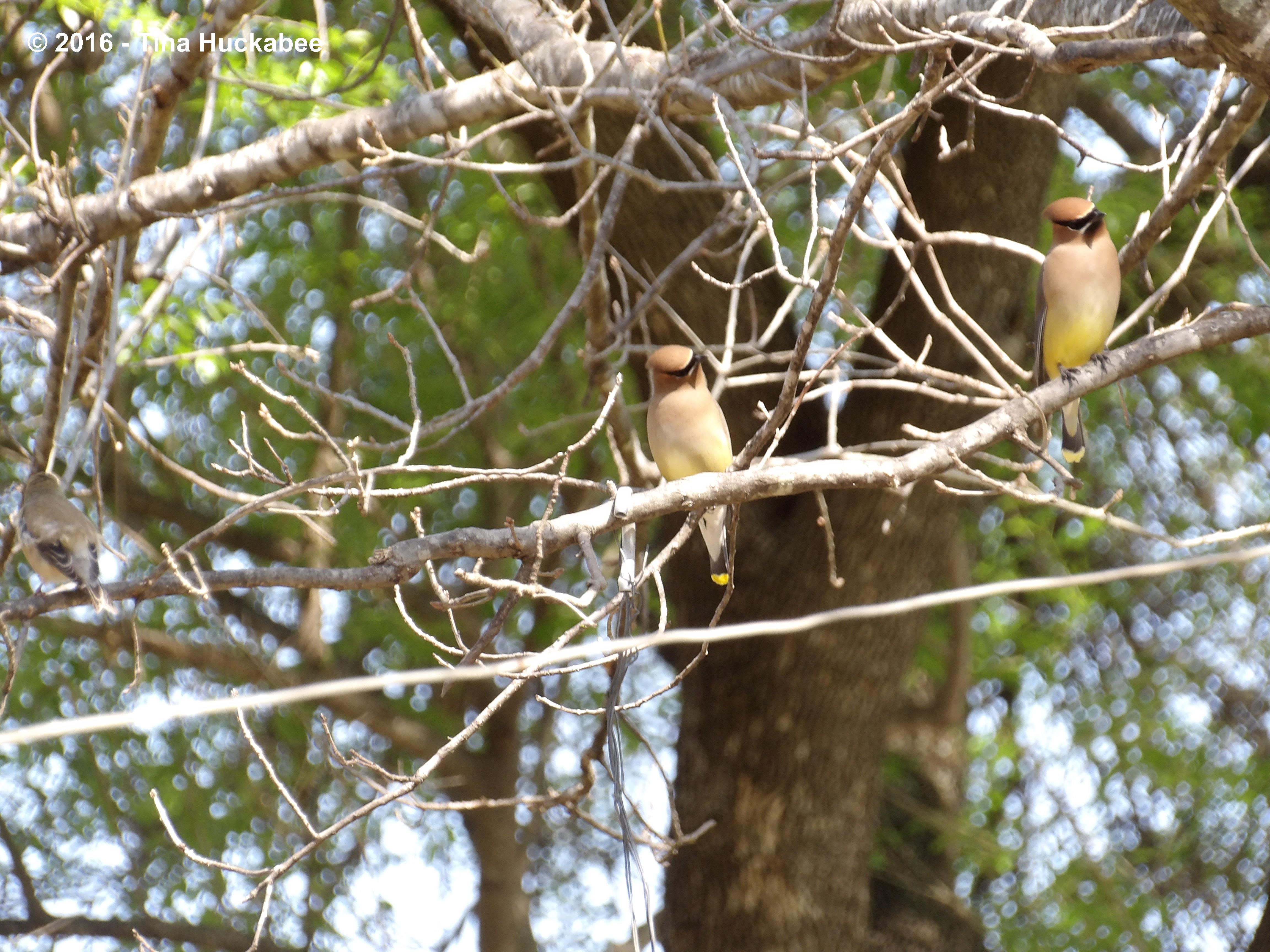
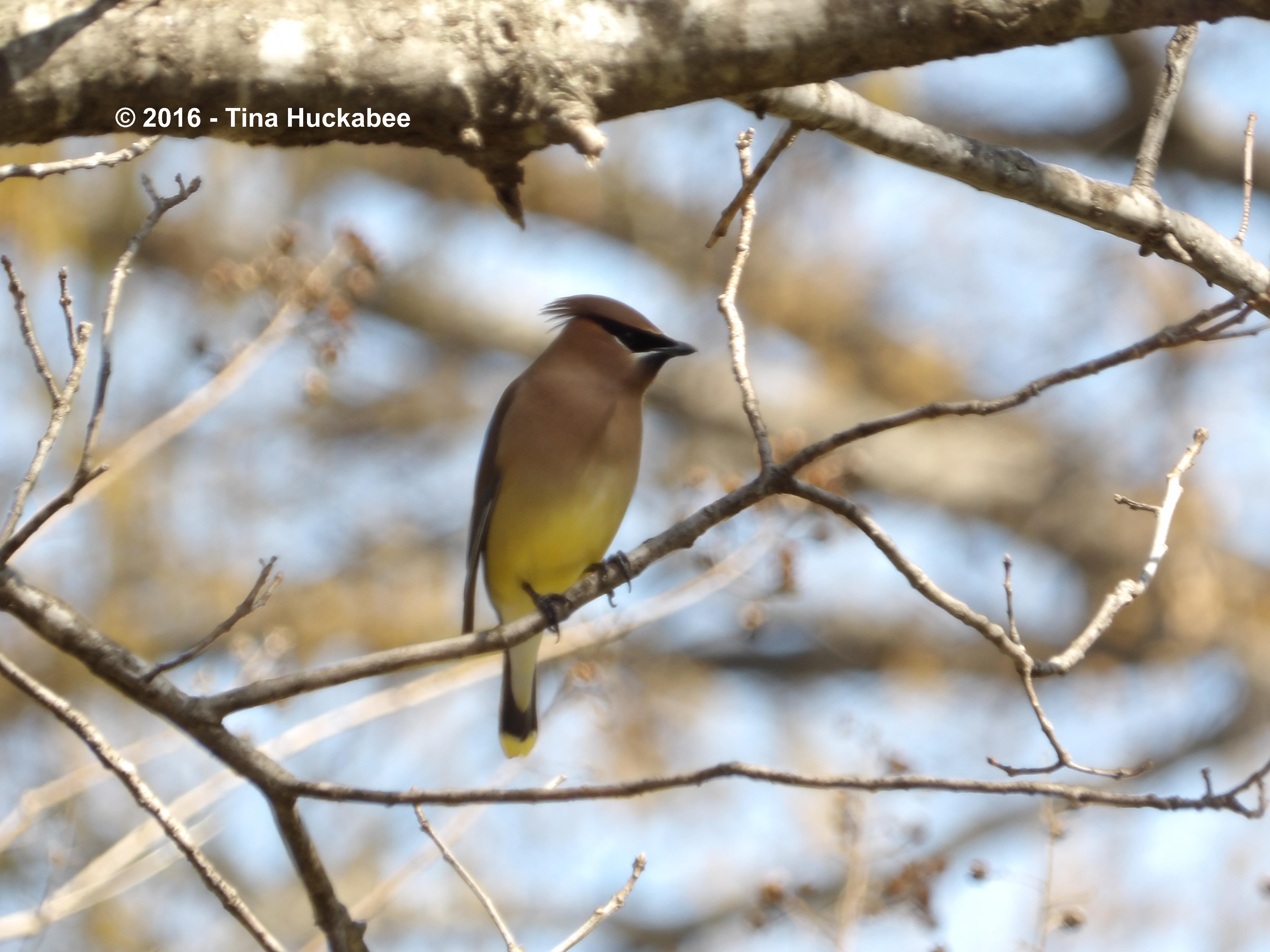
Because I think they’re mostly gone now, I’m starting the wildlife musings with some of the birds who visited my gardens and are now probably on their way northwards for the summer breeding season.  I still hear Cedar Waxwings, Bombycilla cedrorum, from time-to-time and a flock swooped over me one evening last week, but I haven’t seen any in my trees for a couple of weeks.  Cedar Waxwings usually perch high atop my trees, but the last time any dropped by the garden, each bird was within easy eye and camera shot.

This guy looks like he wants to make sure I get a really good look at him before he heads north.

IMGP4786.new

Such a gorgeously color-coordinated bird.

IMGP4787.new

With the splash of yellow on the tummy, echoed by the yellow strip at the tail’s end, plus the jaunty mask across the eyes, he’s lovely as he watches me, watching him.

IMGP4793.new

And, another view of this pretty bird.

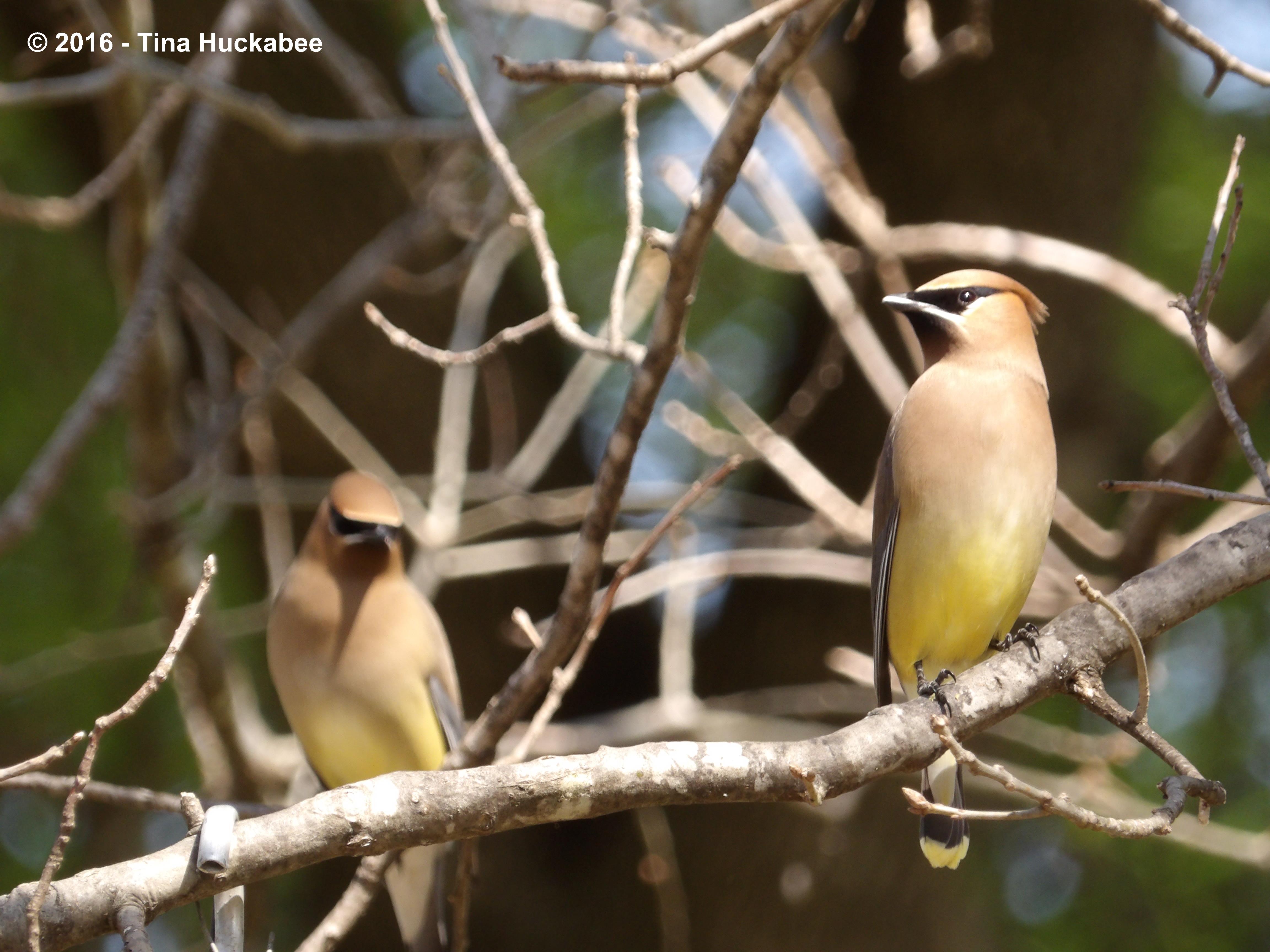
These two,

IMGP4803.new

IMGP4798.new

…pose agreeably, keeping one another company as I ooh and aah at their handsomeness one last time this season.  I admit that I’m a little jealous of northern wildlife gardeners who enjoy these birds year-round in some places and for the whole of summer, further north.

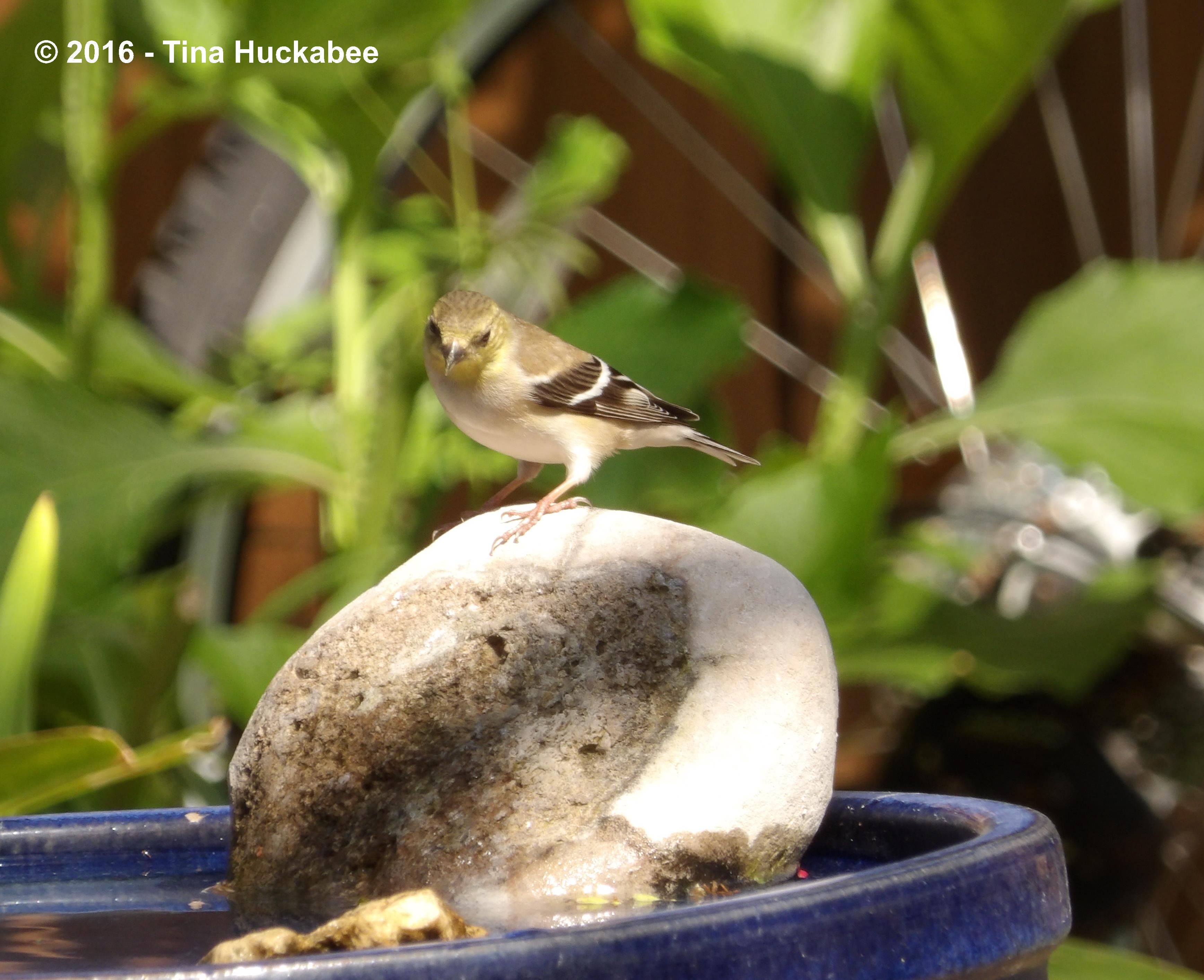
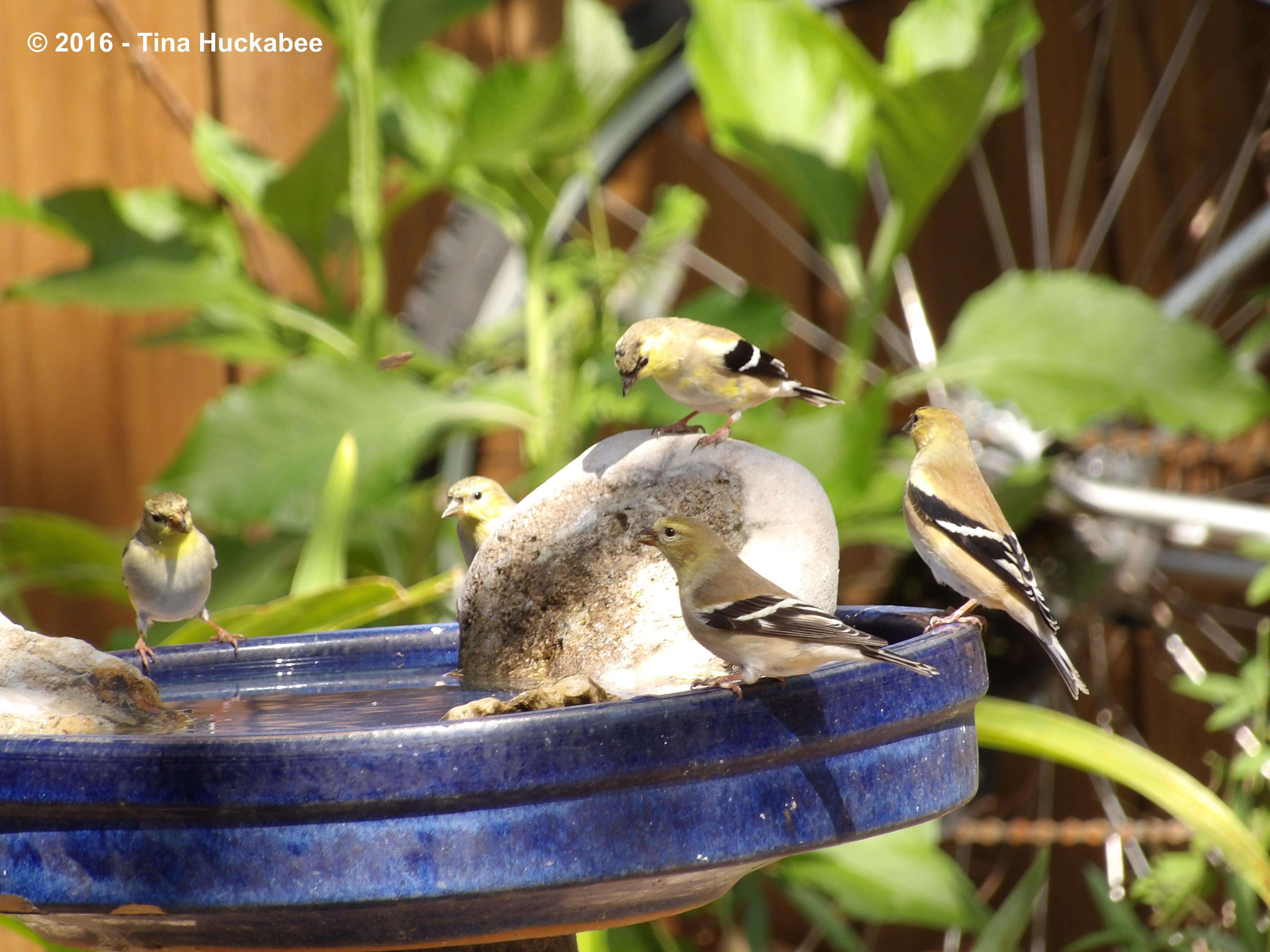
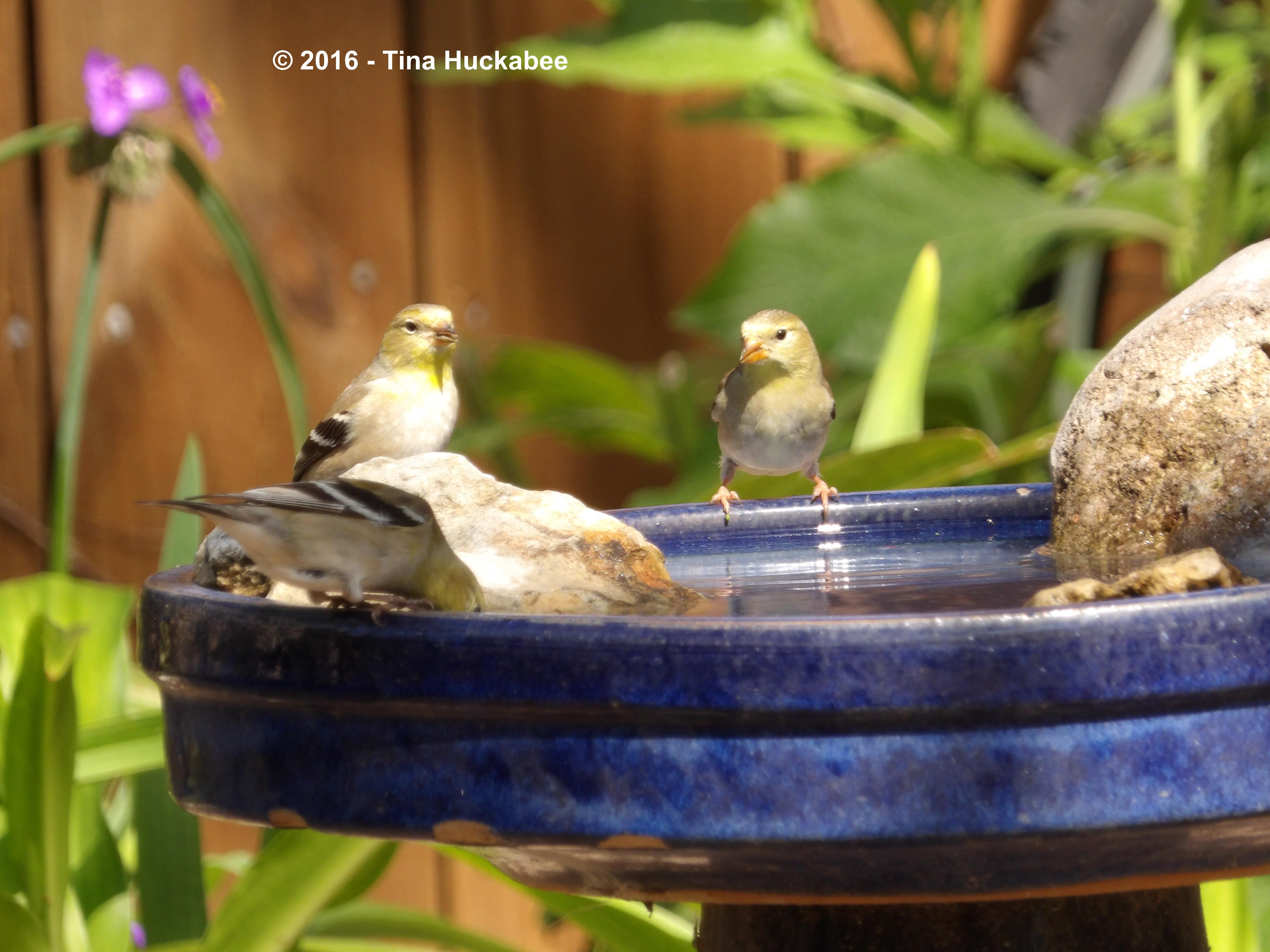
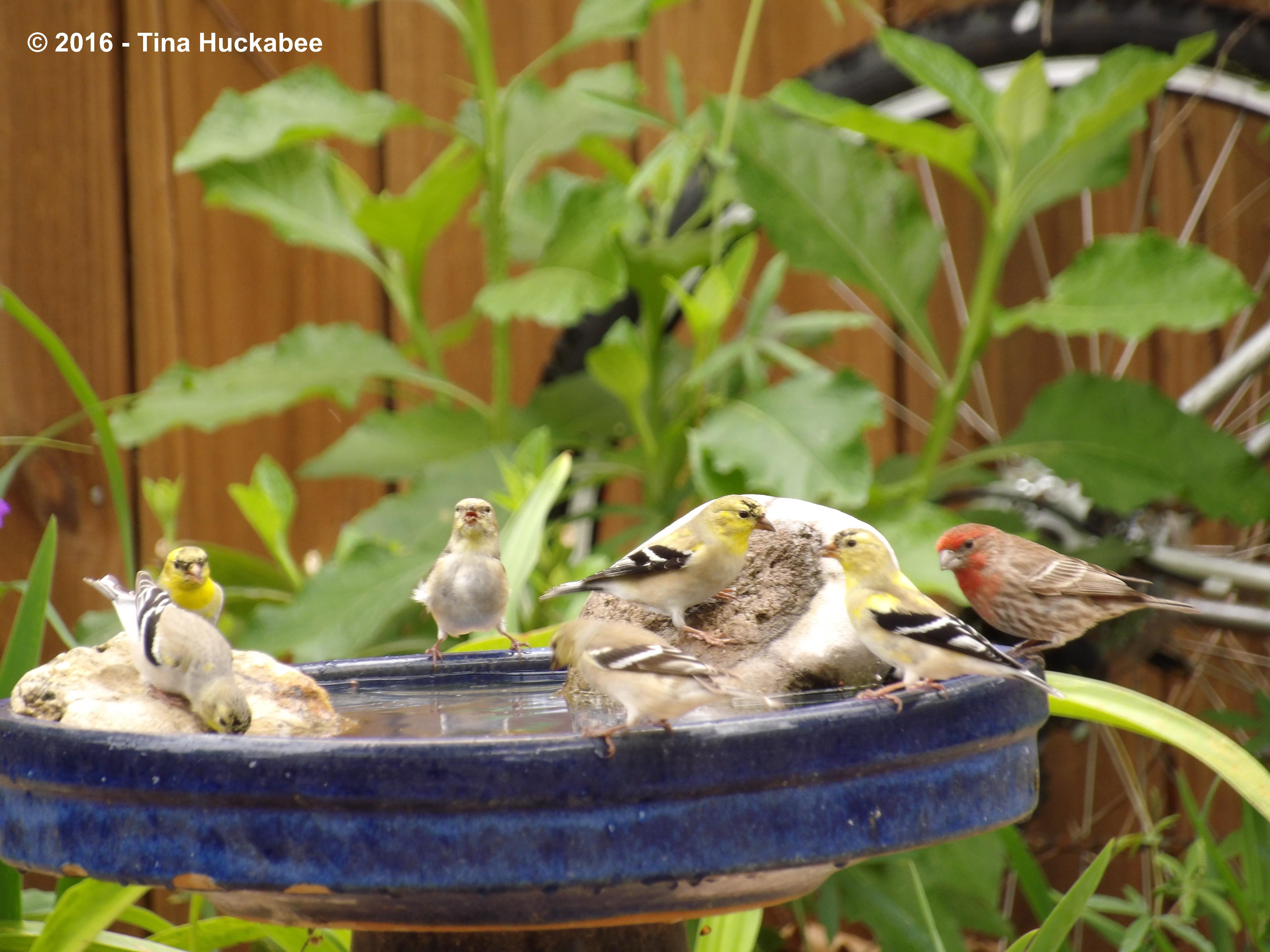
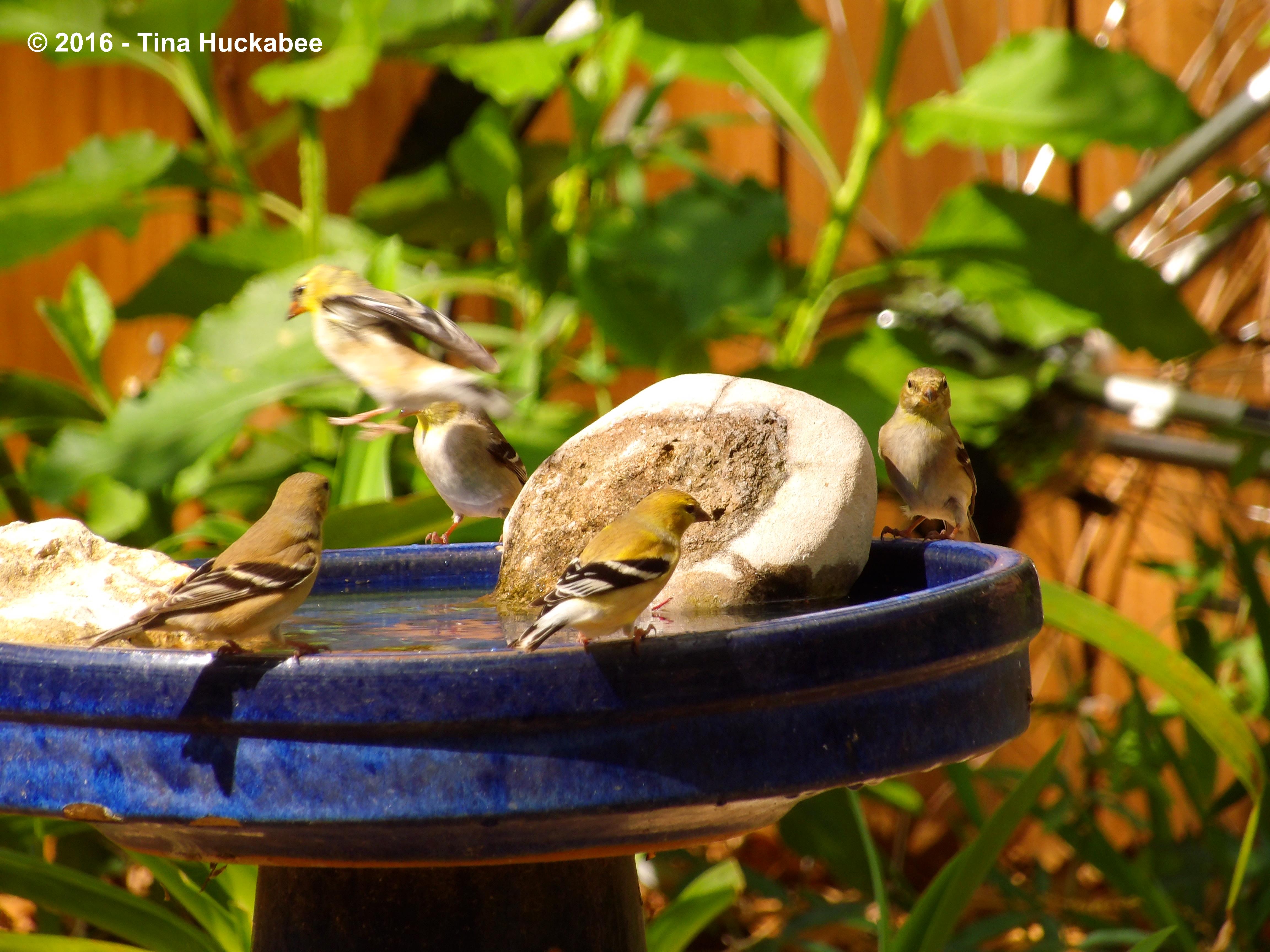
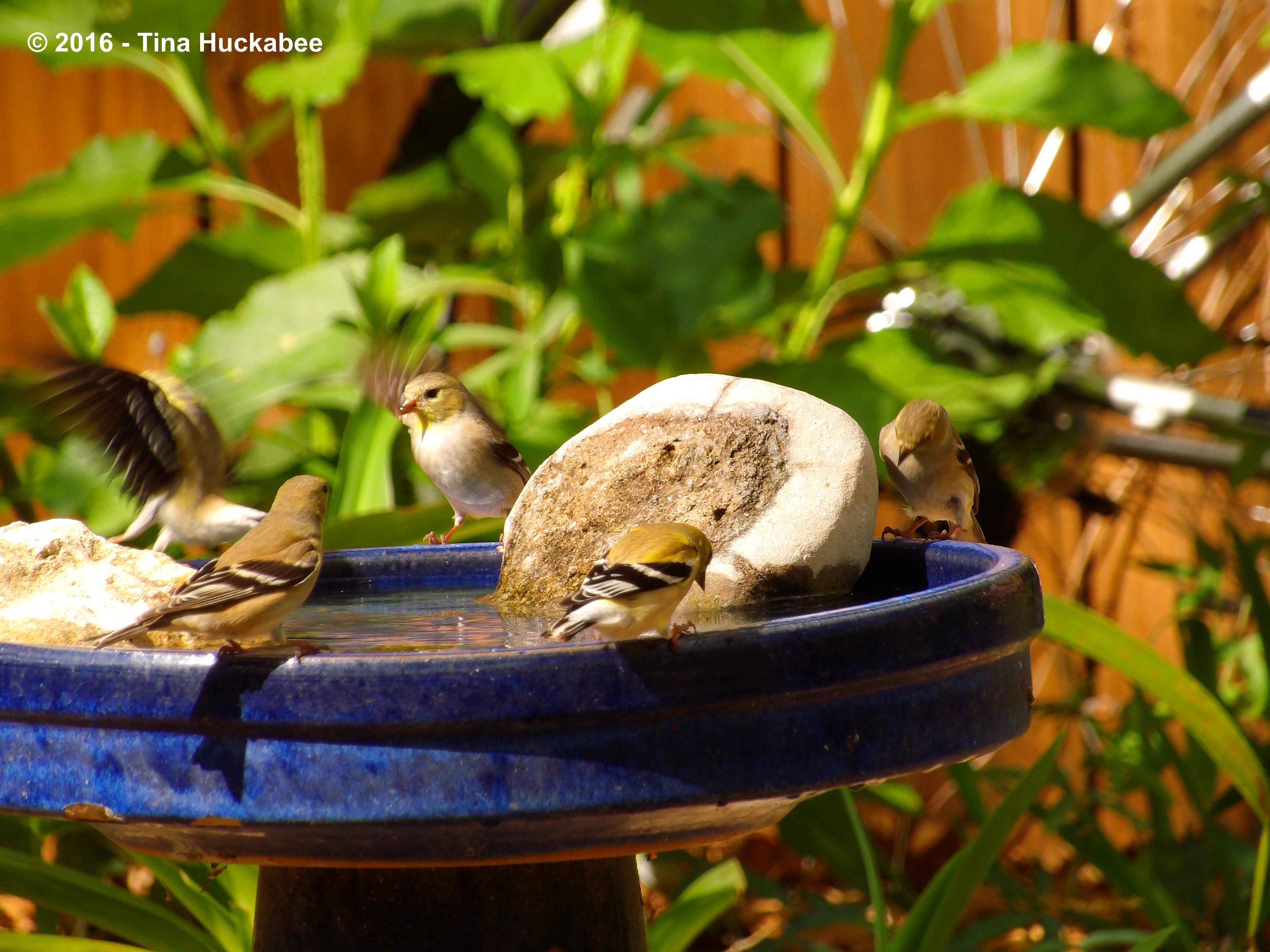
American Goldfinches, Spinus tristus, were late arrivals to my garden this year. They were daily callers throughout February and March and their presence was a cheery gift.  Their song is sweet and like Cedar Waxwings, they’re humorously chatty, congenial birds. They love to hang out at the pool, either alone,

IMGP4791_cropped_3474x2829..new

Is the rock a bird-version of a diving board?

…or with friends,

IMGP4789.new

IMGP4796.new

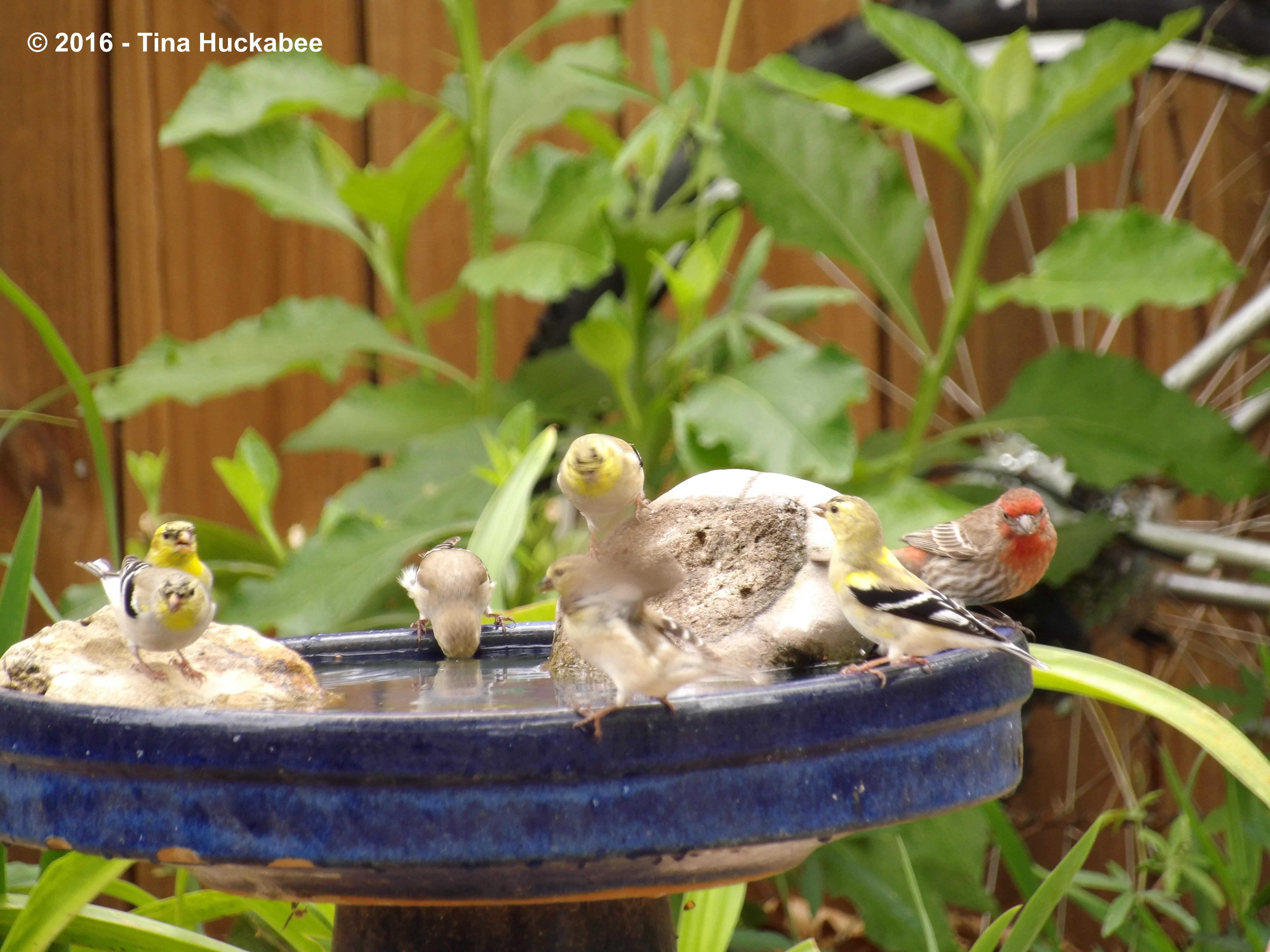
American Goldfinches are pleased to share their bath with others, not of their ilk–like the rather confused looking House Finch, Haemorhous mexicanus.

IMGP4871.new   IMGP4875.new               .

The show with this group begins with the one on the left, with  landing gear at the ready,

IMGP4914.new

Feet flat…

IMGP4915.new

Wings up for the landing…

IMGP4916.new

Good stop!

IMGP4917.new

Oops! The rock is slippery.

IMGP4921.new

Ready for a nice, long cool one.

The Goldfinch on the far right, beside the rock, is attempting to take a sip, though not quite sure if he can maintain his balance. Whoopsie!  Good thing those wings provide some leverage.  Like the Cedar Waxwings, American Goldfinch breed much further north than Texas (into Canada).  I haven’t seen the Goldfinch gang in about a week–I assume “my” group is on their way.  I’ll miss them.

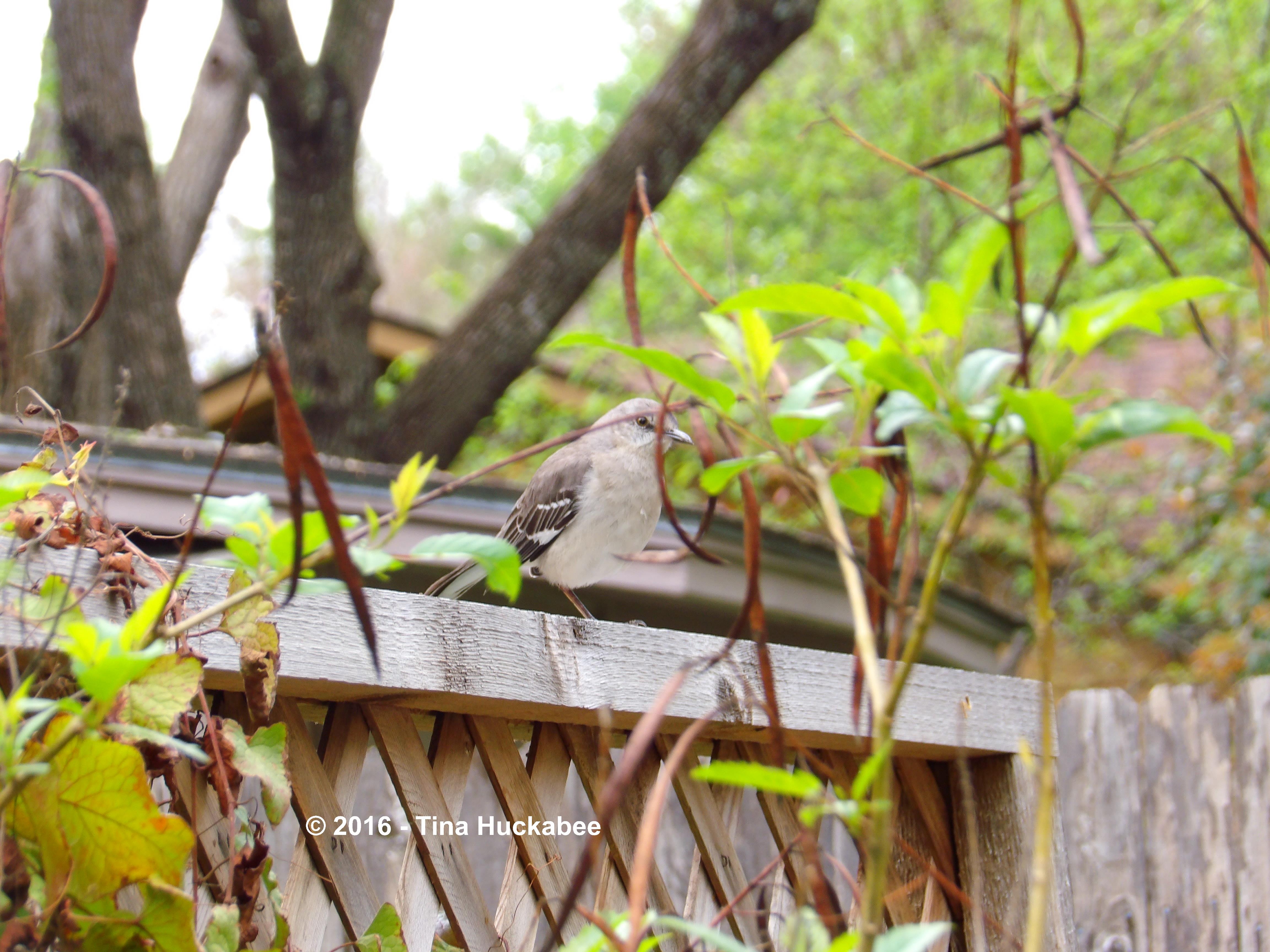
A Northern Mockingbird, Mimus polyglottos, serenaded me one morning.

IMGP5052.new

He let me sidle up close before he flew to the neighbor’s house.  Mockingbirds are the official state bird of Texas and frequently provide melodic company when I’m working in the garden.

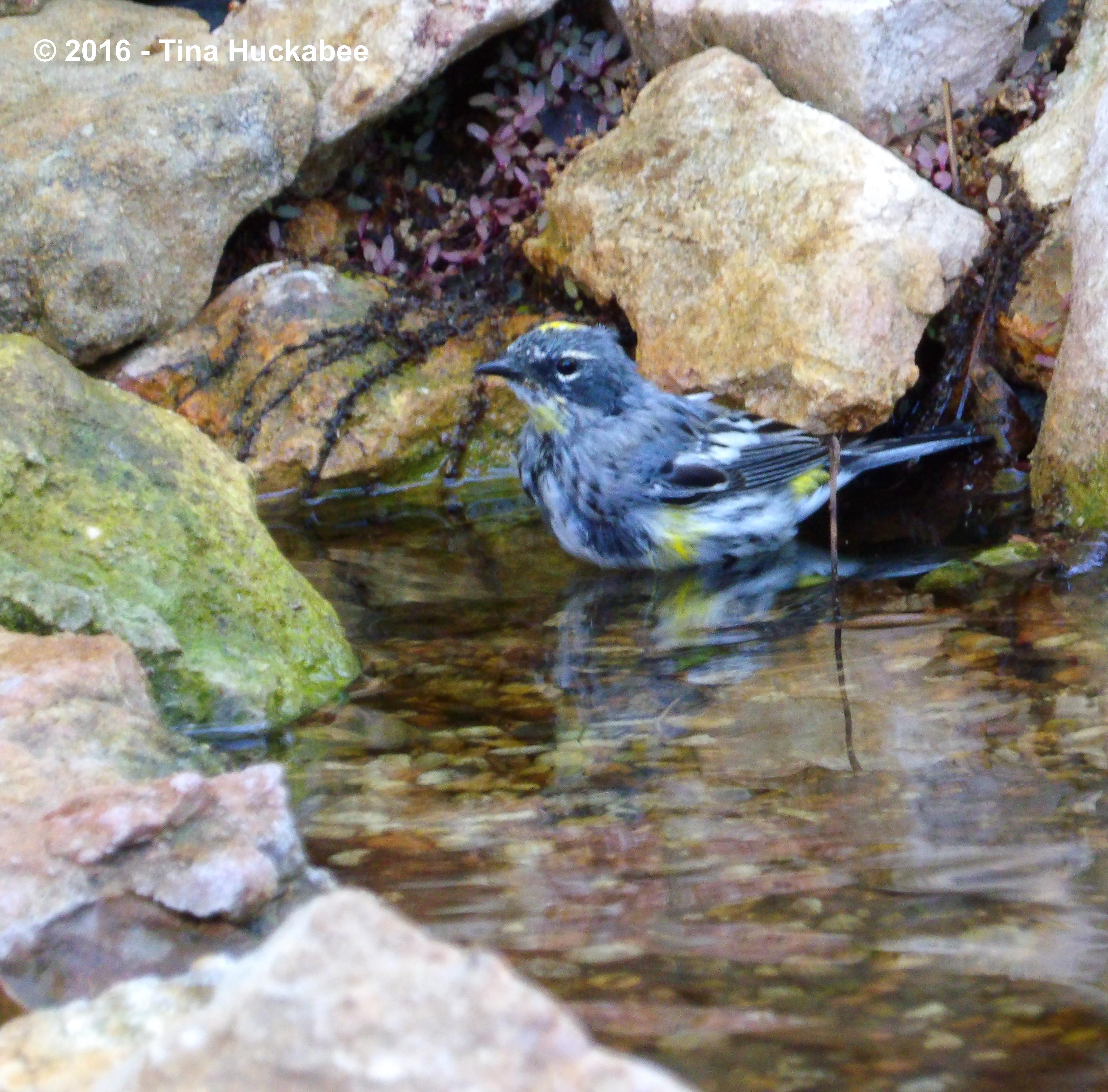
I hadn’t seen a Yellow-rumped Warbler, Setophaga coronata, in a week or so, when I spotted this one bathing in the bog of my pond.

IMGP6467_cropped_3282x3236..new

IMGP6472_cropped_3019x3254..new

A bathing bird always makes me smile.  Butter-butts, as Yellow-rumps are affectionately known by birders, breed in the the Pacific Northwest and in Canada during summer.  Since spotting this one I’m observing 3 or 4 early most mornings, but I’m sure they’ll be heading  out for migration soon enough.

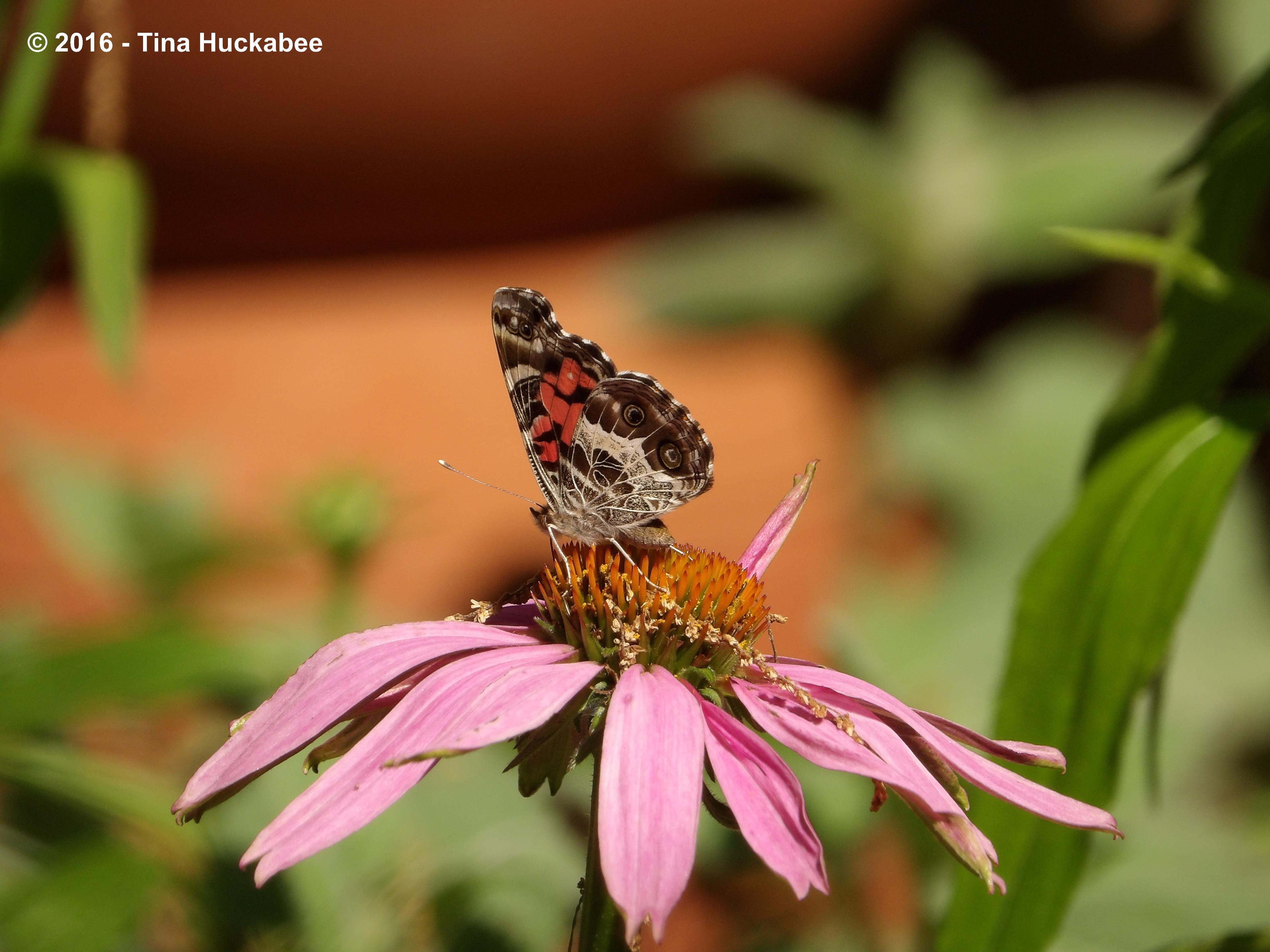
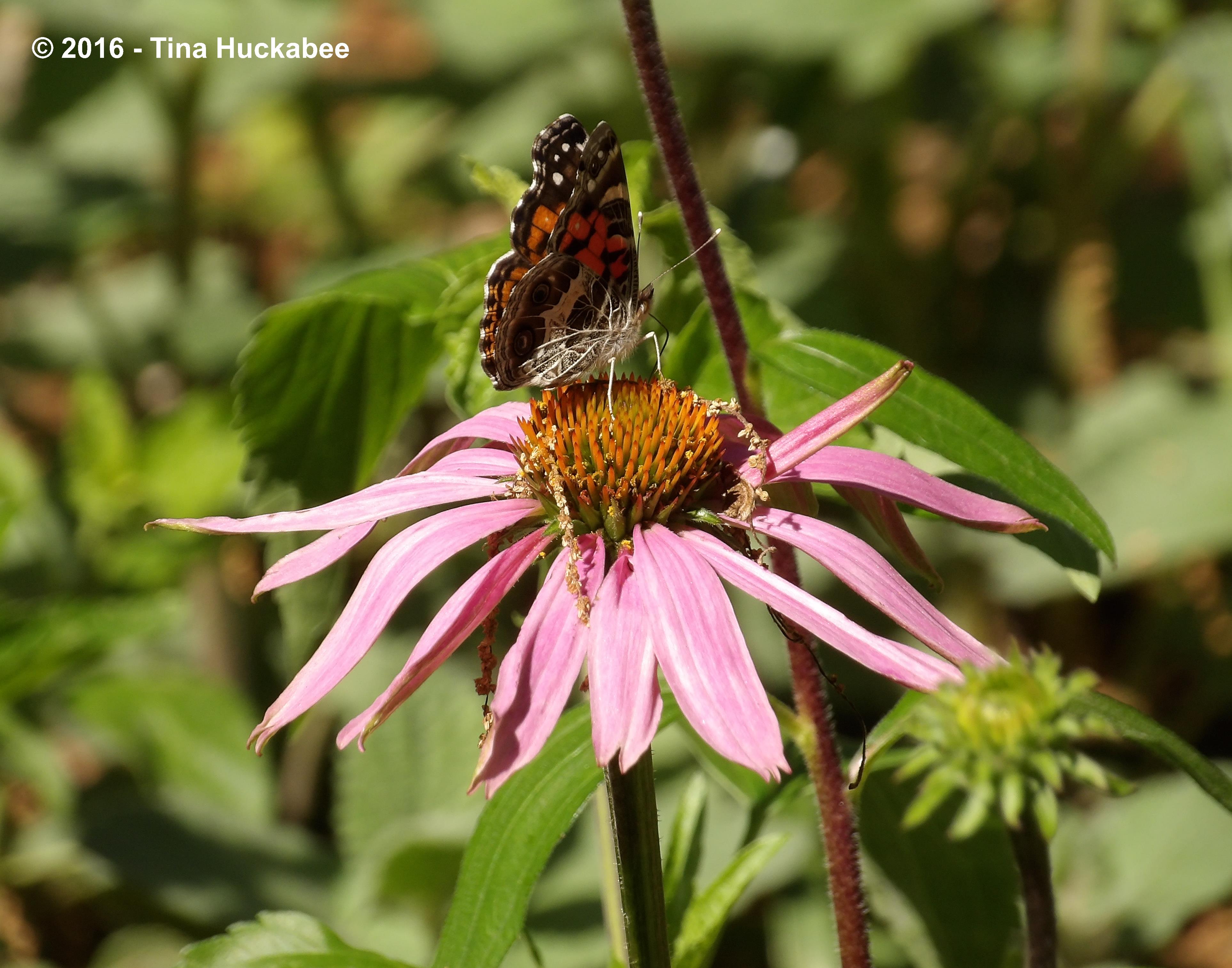
Quite a few butterflies have flitted through the garden, but I never have my camera ready when they land–which they don’t do all that often.  This American LadyVanessa virginiensis  enjoyed the bounty of several individual Purple Coneflower, Echinacea purpurea.  Plants in the aster family are listed as both larval and nectar sources for this species.

IMGP5184.new

IMGP5187_cropped_3852x3028..new

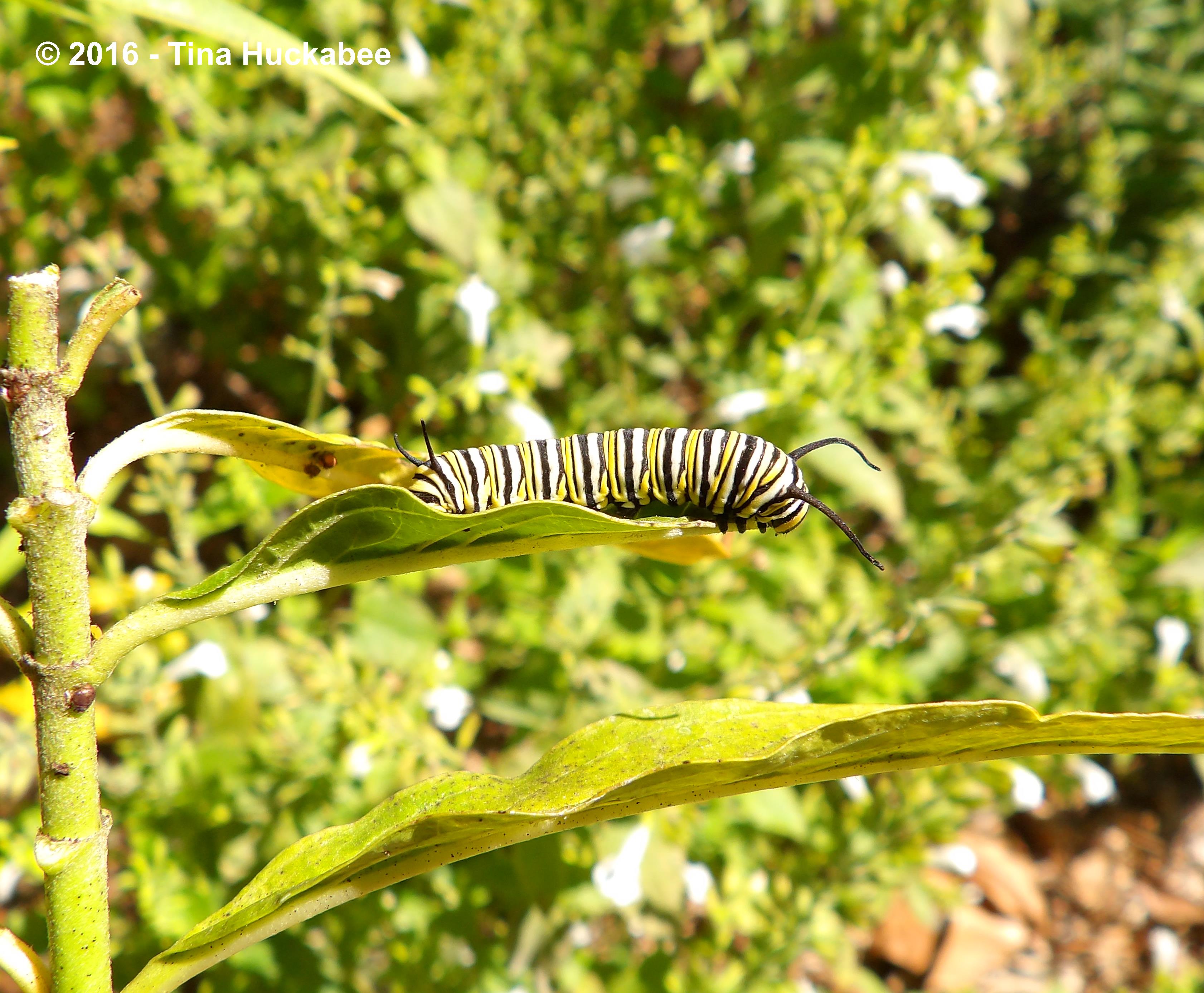
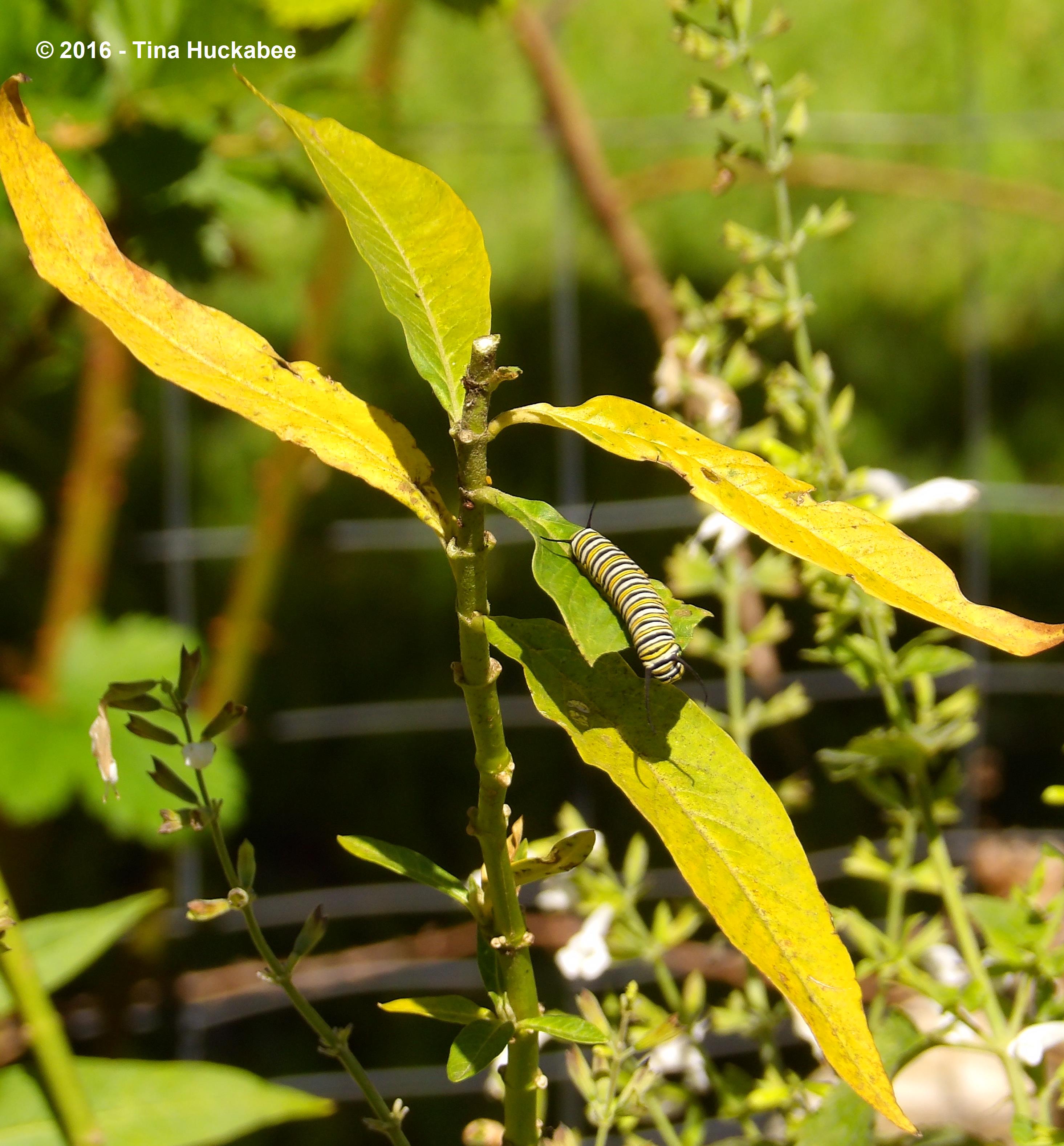
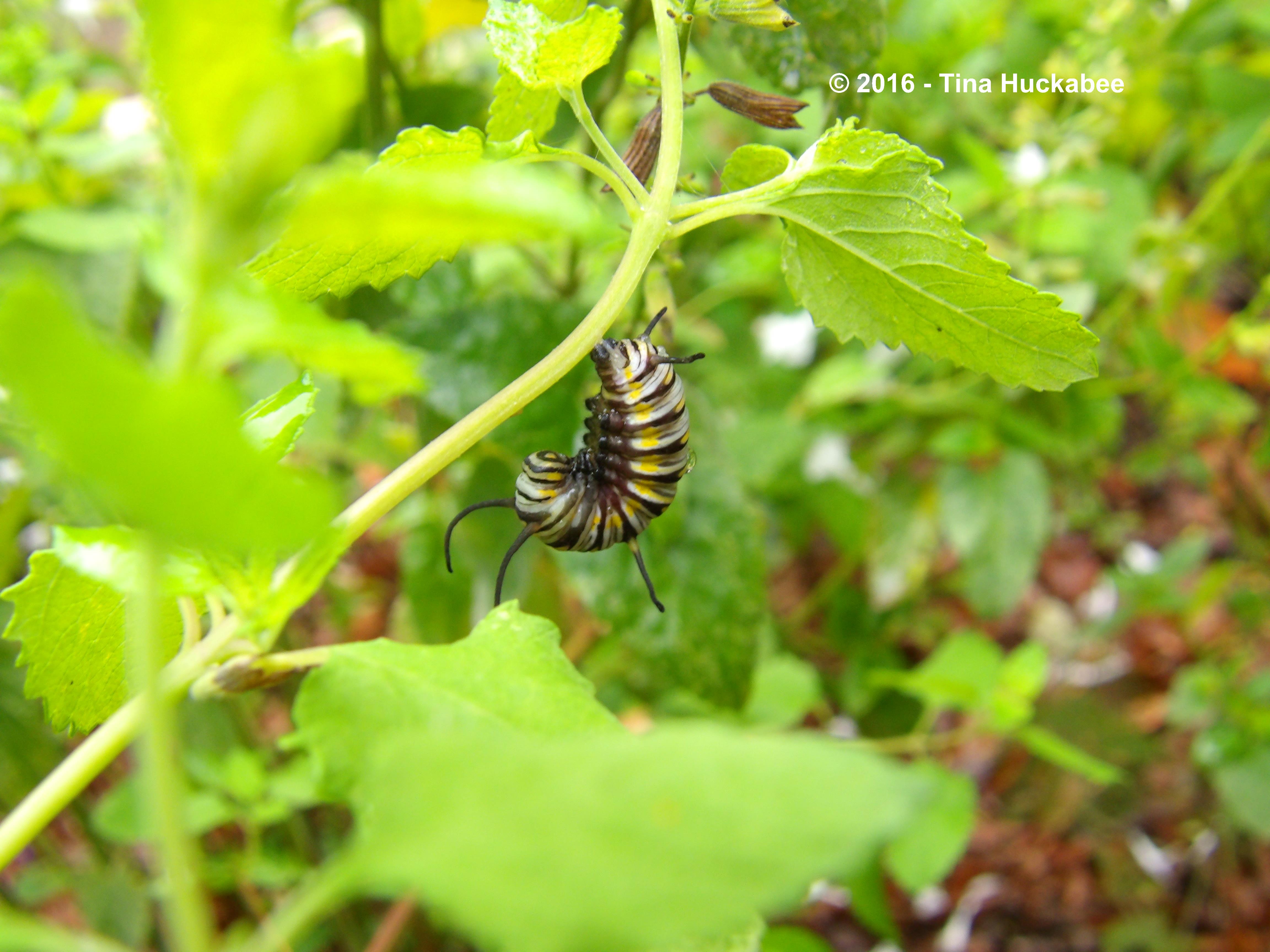
Other butterflies I’ve enjoyed seeing include several Queens, Danaus gilippus, and  a couple of Monarchs, Danaus plexippus.  The adult butterflies were too fast for me to photograph, but thankfully, caterpillars are slow.  I witnessed a Monarch laying an egg and must assume this guy is the result.

IMGP6477_cropped_3364x2774..new

IMGP6478_cropped_2930x3156..new

I haven’t found the chrysalis, but hope it’s attached to a safe spot for its metamorphosis.  I assume the parent left Mexico before the snow and ice storm hit.  It’s still unclear how many Monarchs died in the storm, but suffice to say it was too many.

Poor Monarchs, they can’t seem to catch a damn break.  Monarch lovers throughout the Americas cheered a few weeks ago with the news that Monarch numbers were up in the winter roosting areas and then the ice storm blasted them as they left the roosts and began migration.   I sincerely hope the survivors and their descendants find plenty of milkweed and nectar plants here in Texas and northward, and that the journey to Canada and back again next autumn will be free from harm.

Fingers crossed.

The Queen larva is in ‘J’ ,

IMGP6800.new

…and next month, I’ll have a photo of its gorgeous chrysalis.  With good timing and luck, I’ll witness the emergence of the adult.

I wrote about some of the native bees in my garden recently, but more photos of those lovely pollinators are always in order.  I’m fairly certain that the identification of his little bee is Perdita ignotaa type of Minor bee.

IMGP5419_cropped_3235x2401..new

And this one,

IMGP5372_cropped_3078x2677..new

The photo shows two native bees. Can you spot the other, in blurry flight?

IMGP5379_cropped_3115x2608..new

IMGP5427_cropped_3250x3226..new

…is a maybe(?) a Halictus tripartitusa type of Sweat bee.

I’ve snagged some reasonable photos of the tiny and stunning metallic blue/green bees, which are probably some sort of Sweat bee. As there are apparently a couple of species of metallic Sweat bees residing in Central Texas, I won’t guess which these might be. I’ll just enjoy their beauty and appreciate their work.

M0055896.new

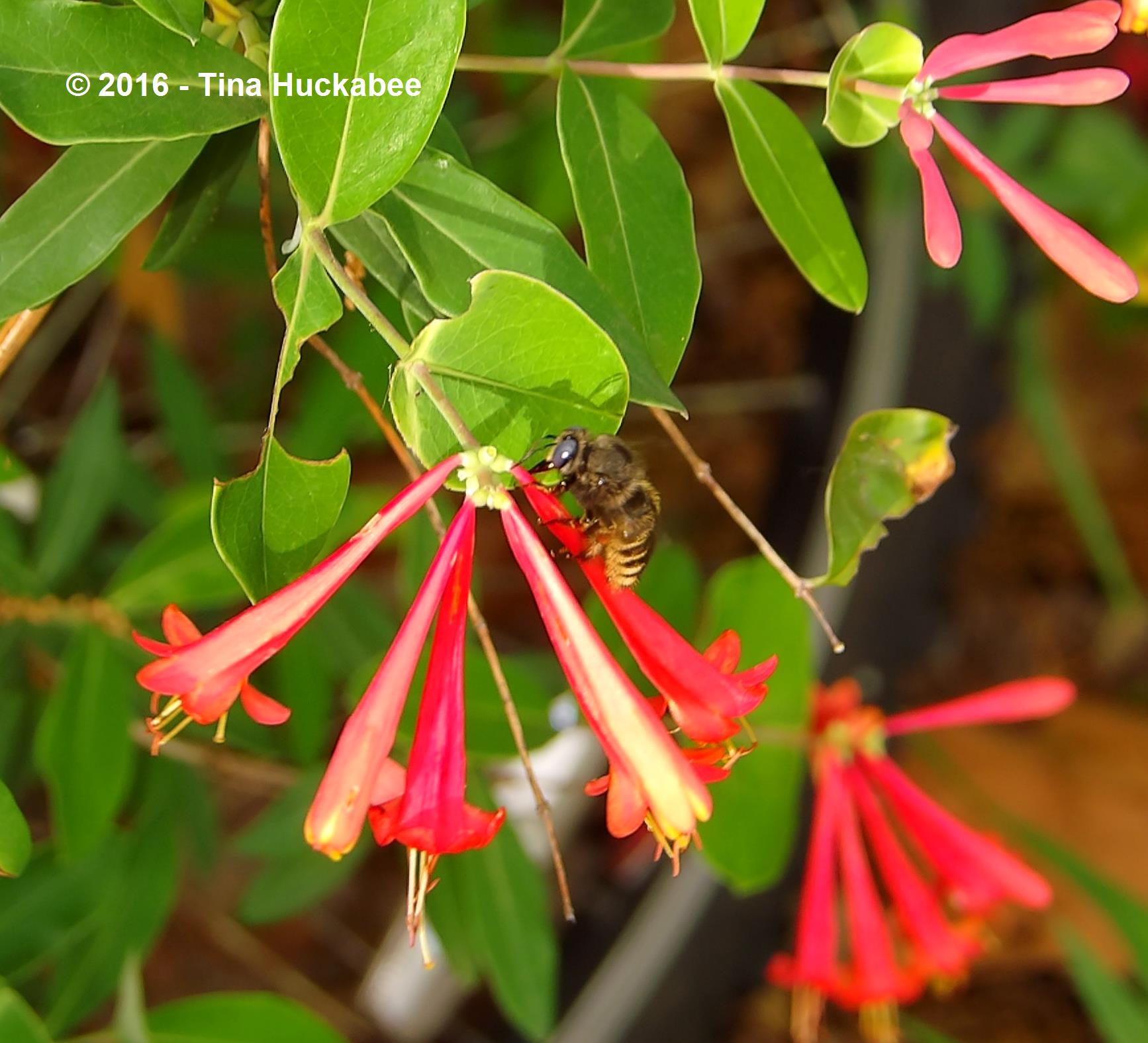
Native metallic bee AND honeybee working the blooms of a Coral Honeysuckle vine.

M0035619_cropped_1719x1641..new

Native bee flying in for the nectar.

M0066013.new

Native bee resting on the stamens of a Coral Honeysuckle bloom.

The site that I utilize when researching native bees in my garden is the The Jha Lab, which is the research website for The University of Texas Austin’s Section of Integrative Biology. The photos on the site are taken from various area wildlife preserves. What trips me up in wild bee identification is that professional photos are phenomenal–incredible close-ups of teeny, tiny bees in gorgeous detail.  My photos are okay, but not of scientific quality.  My photos don’t have the detail required for definitive identification, so my id’s are approximate.

These bees I can definitely identify!  They’re MY honeybees.  Aren’t they cute?

IMGP6301.new

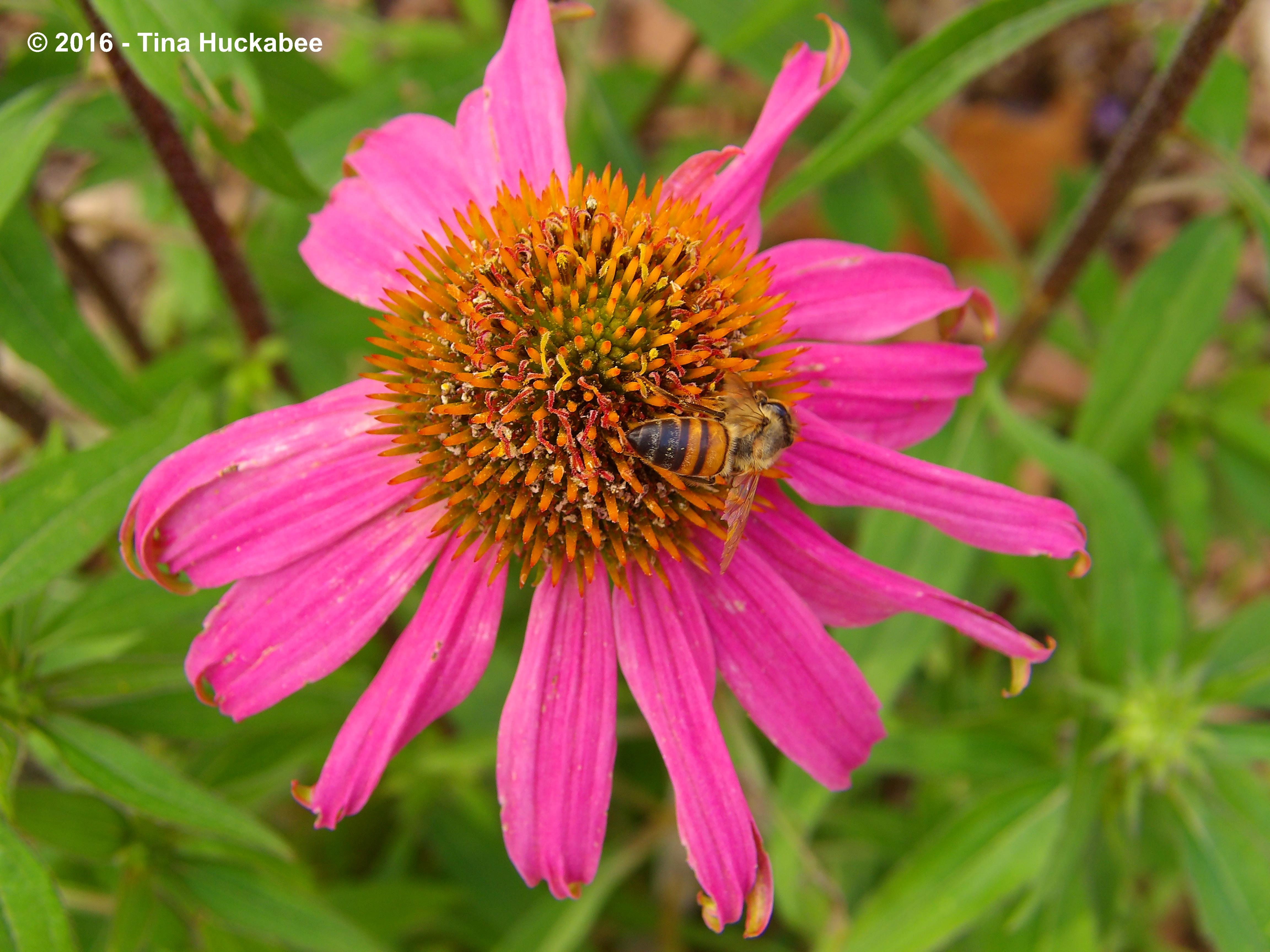
Honeybee on Purple coneflower.

IMGP6297.new

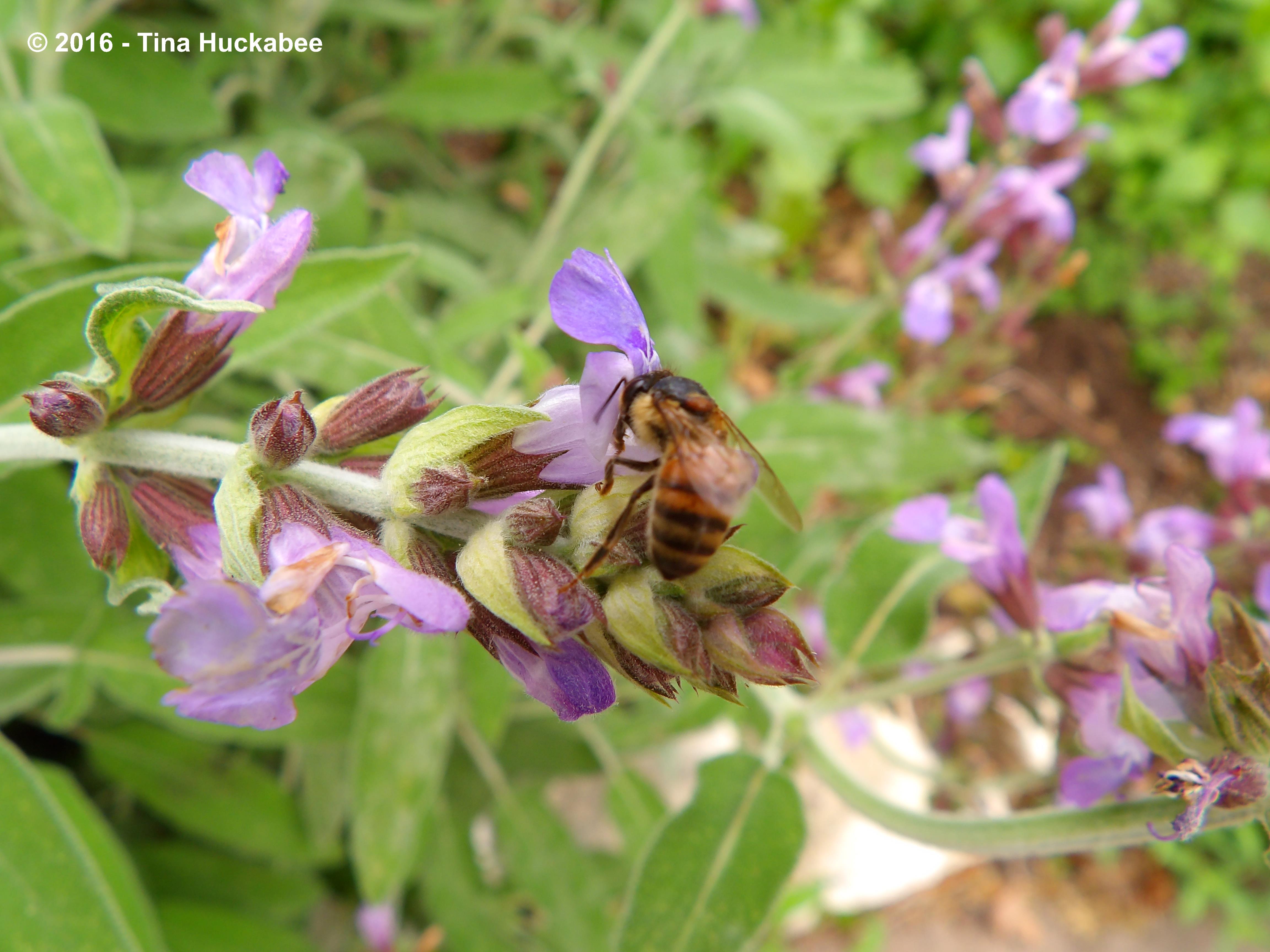
Honeybee working sage bloom.

These belong to our remaining honeybee hive, Scar.  They are the gentlest bees we’ve had the privilege of “keeping.”  Scar, by the way, is doing just fine–full of busy, working bees and a queen who is laying eggs out the wazoo.  I don’t think wazoo is the technical term.

My all-time favorite native bee species is the Horsefly-like Carpenter bee, Xylocopa tabaniformis.   With lovely blue peepers and snazzy abdominal racing stripes, these gals are all over my gardens, buzzing from bloom to bloom.

M0025565_cropped_1734x1575..new

Carpenter bee on Coral Honeysuckle bloom.

IMGP6837.new

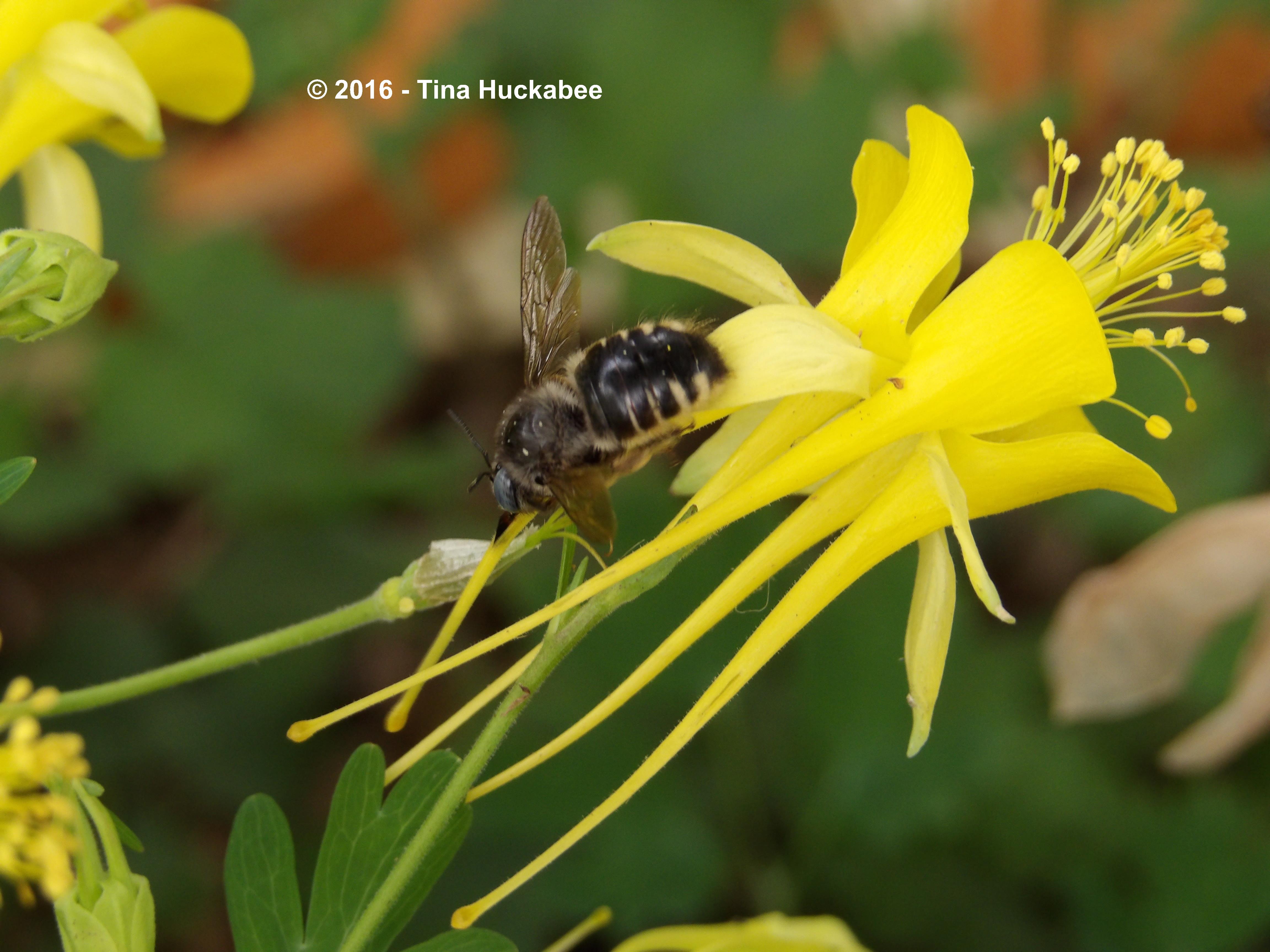
Carpenter bee “stealing” nectar from Yellow columbine.

IMGP6840.new

Go girls!

This Paper waspPolistes exclamans,  is the first of its kind that I’ve seen this year and was resting for a moment on daylily foliage–just long enough for a photo.

IMGP5148_cropped_2885x2364..new

Clad in autumn-like colors, paper wasps are beautiful insects.

I like these insects, though many people do not.  Wasps of most sorts are good pollinators and I’ve never experienced any aggression from this species or others. Wasps are aggressive if nests are disturbed–and  who among us isn’t aggressive (or at least annoyed) when someone is disturbing our homes?

And Wildlife Wednesday wouldn’t be the same without  a Green Anole lizard, Anolis carolinensis, saying a cheery Hi!.

IMGP6272.new

His look suggests that perhaps it’s more of a wary Go away! . 

Did wildlife visit your garden this past month? Please post for April Wildlife Wednesday–share the rare or mundane, funny or fascinating, beneficial or harmful critters you encounter. When you comment on my post, please remember to leave a link to your Wildlife Wednesday post so readers can enjoy a variety of garden wildlife observations.

IMGP4783_cropped_3926x2742..new

Happy wildlife gardening!