Still Green

Often by mid-August ( I realize it’s not “mid” yet, but, close enough), summer’s heat and dry is stressing my American SycamorePlatanus occidentalis.

It’s a tough tree and hard to kill, but it likes a river bottom situation with plenty of regular moisture.  In droughty times, the Sycamore will shed leaves as a survival mechanism, though mine has never gone completely nude.  But Sycamores are also subject to some disease problems which can hamper growth and beauty. 

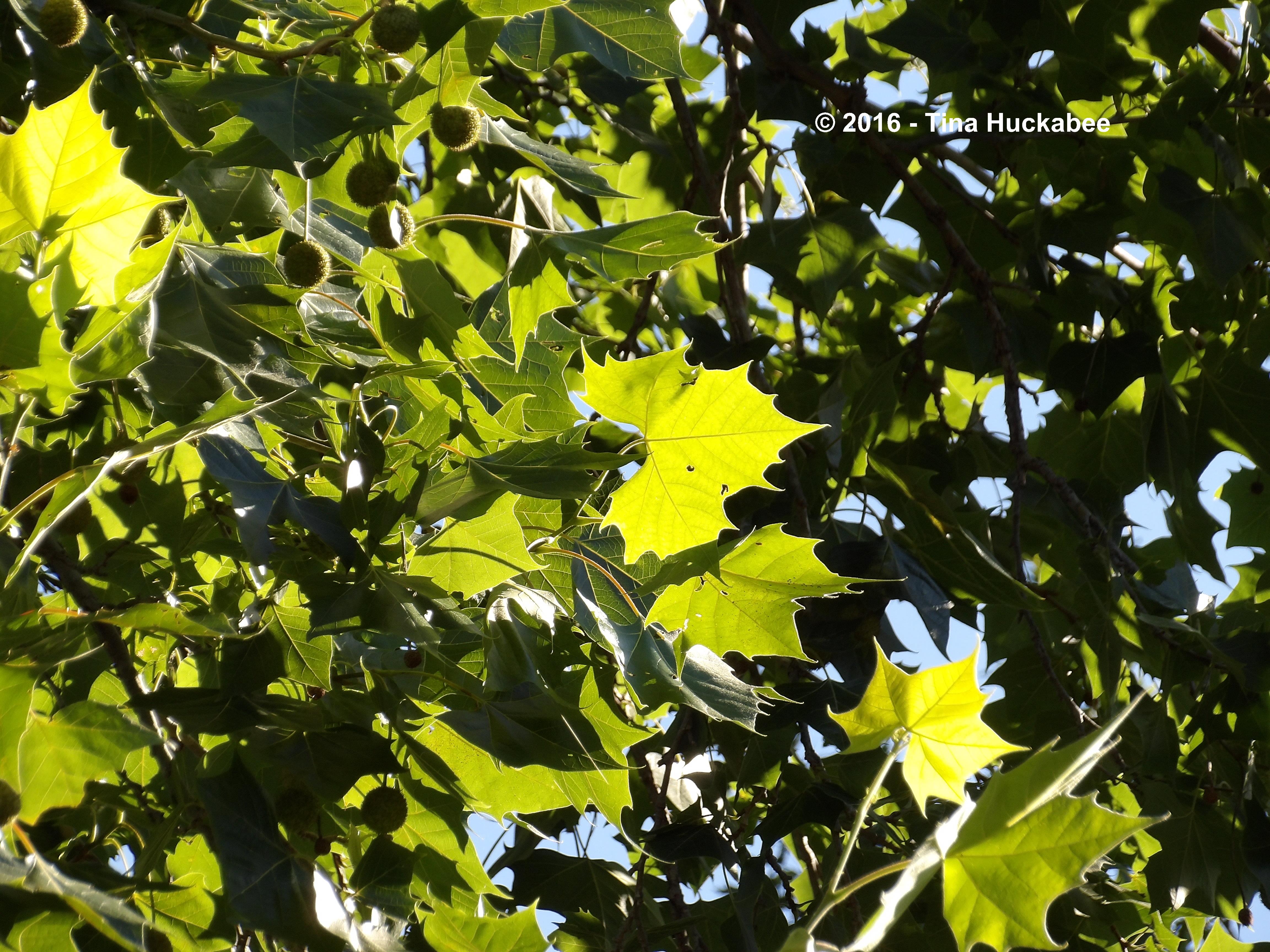
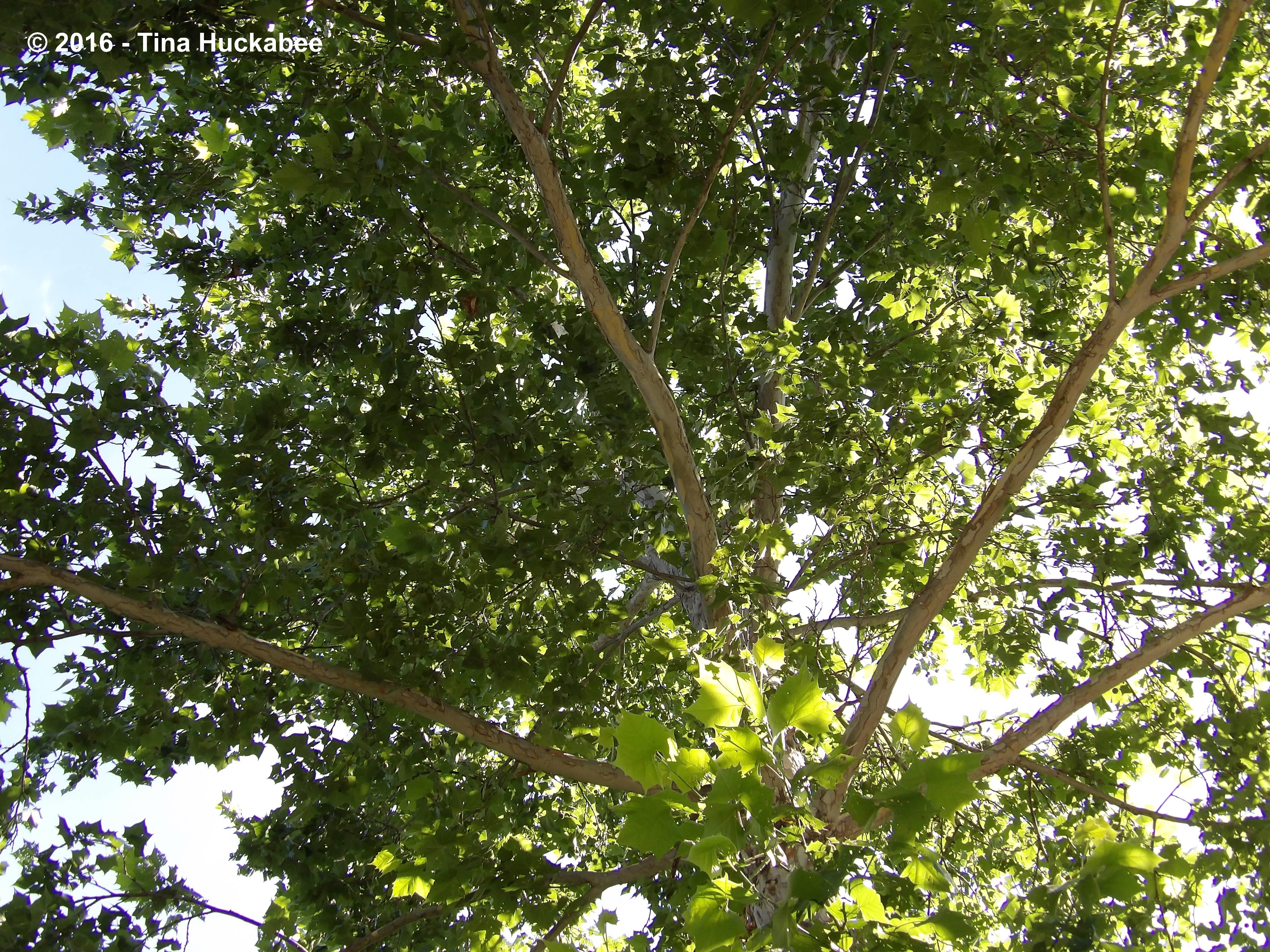
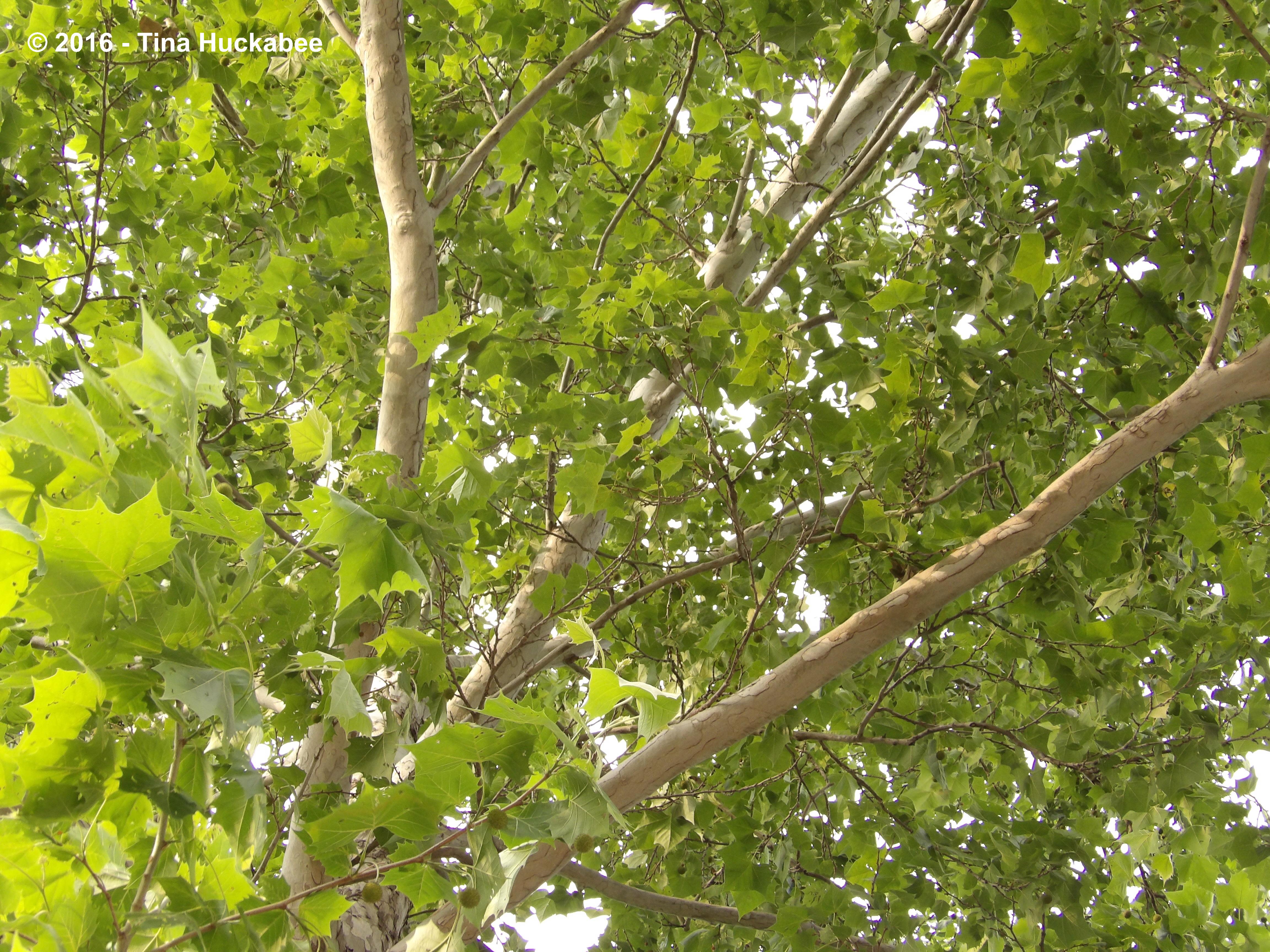
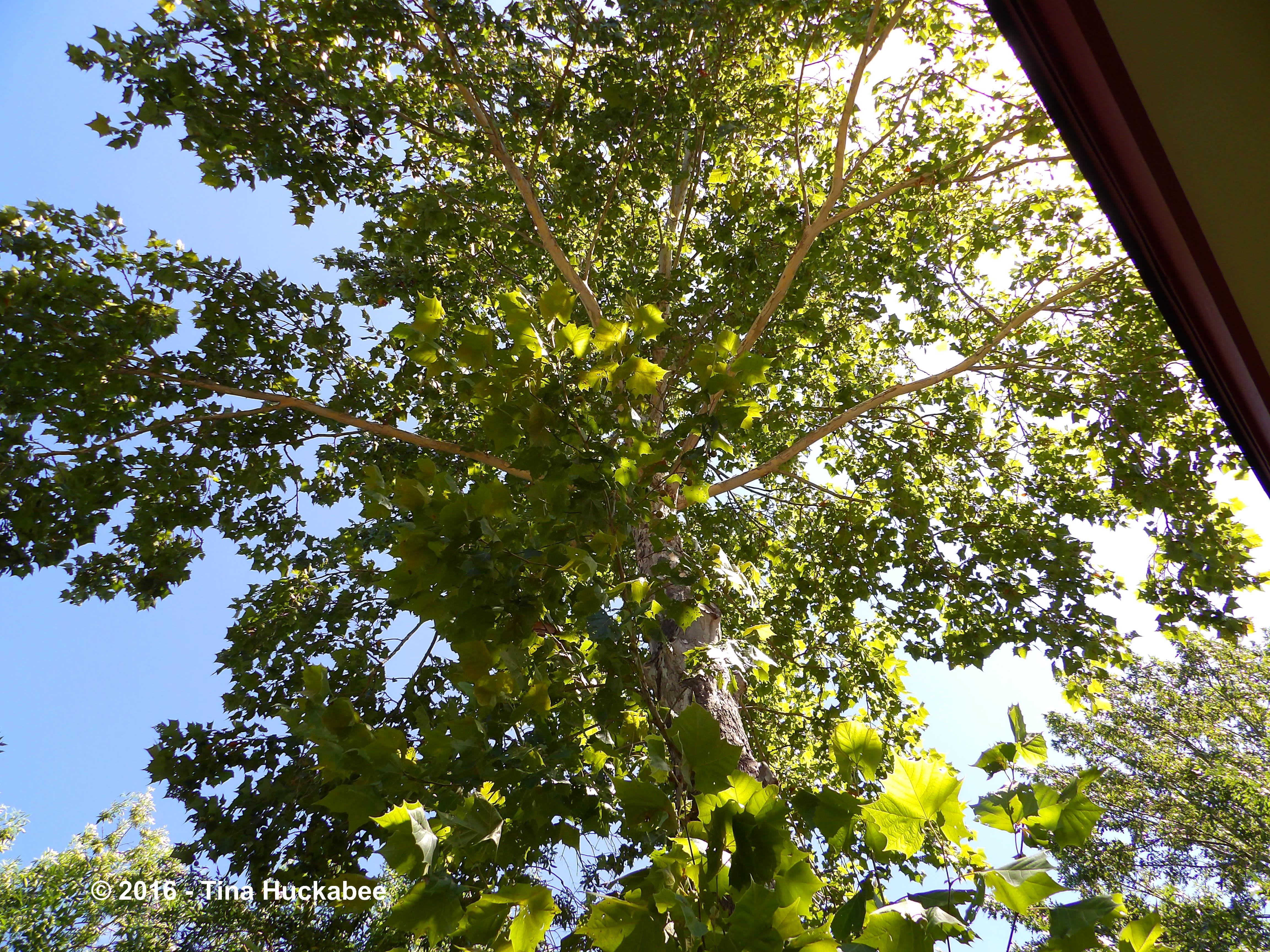
The upper canopy of my Sycamore looks healthy to me–green and lush–though that might simply be a result of distance, rather than reality.

IMGP9120.new

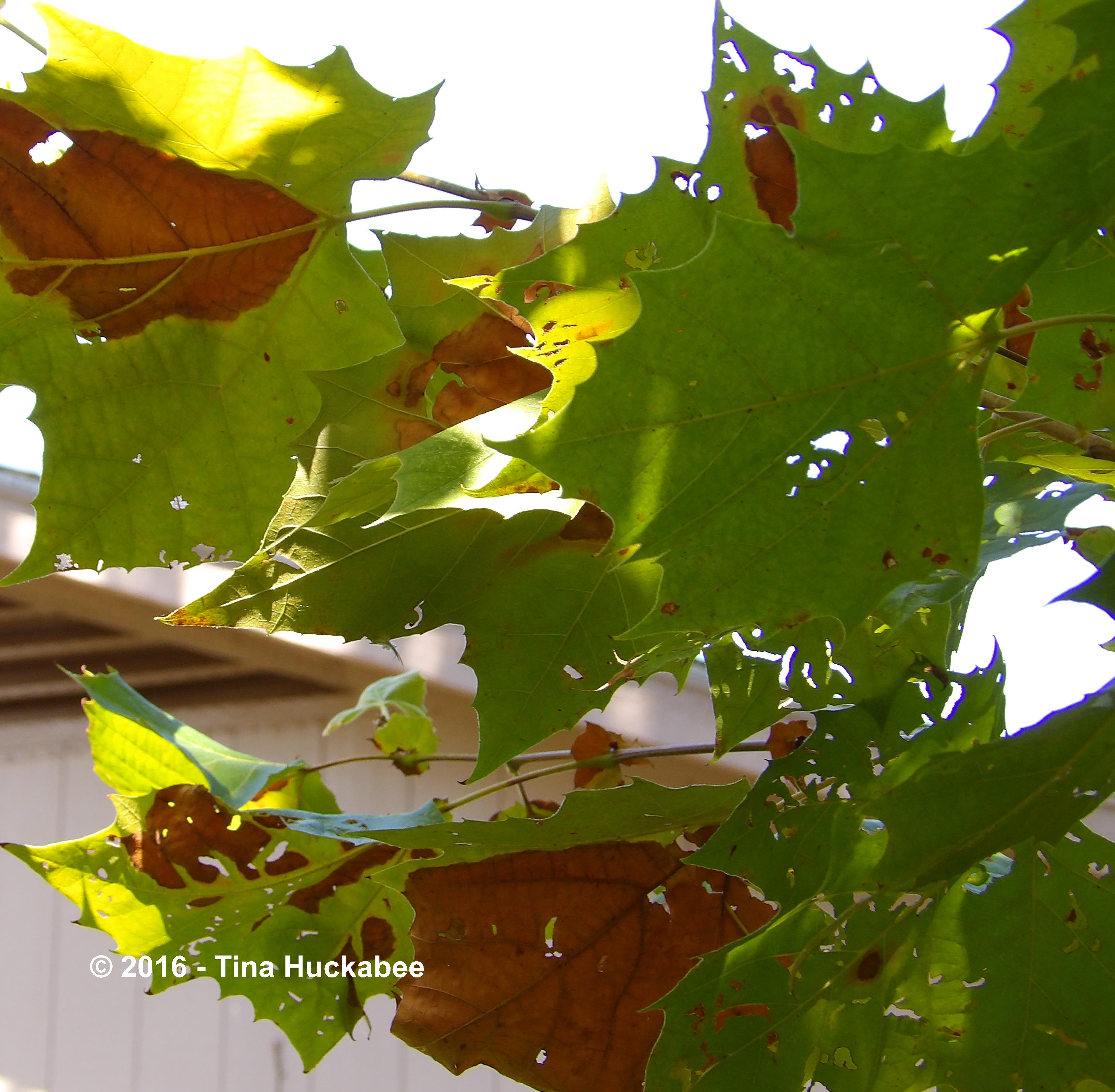
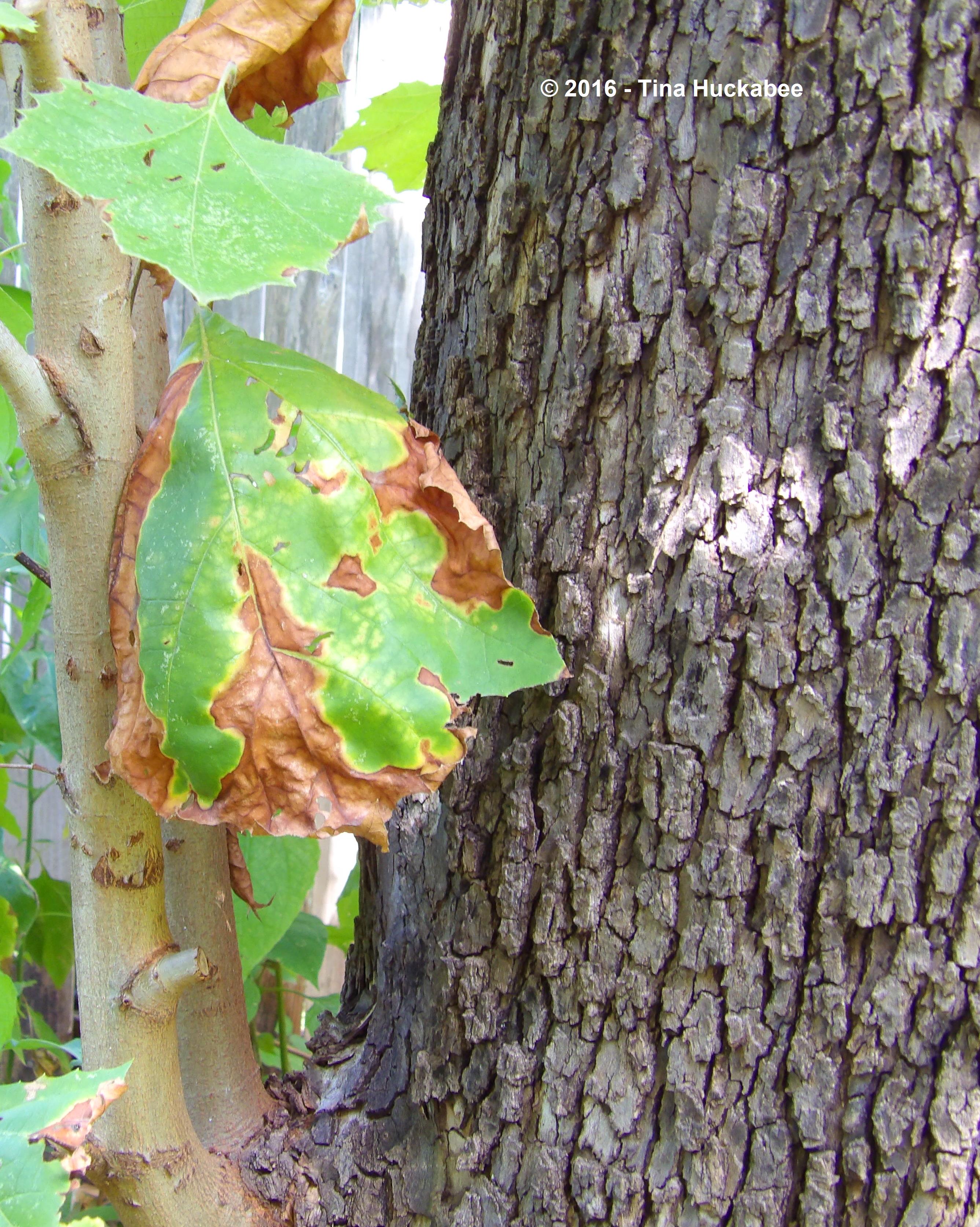
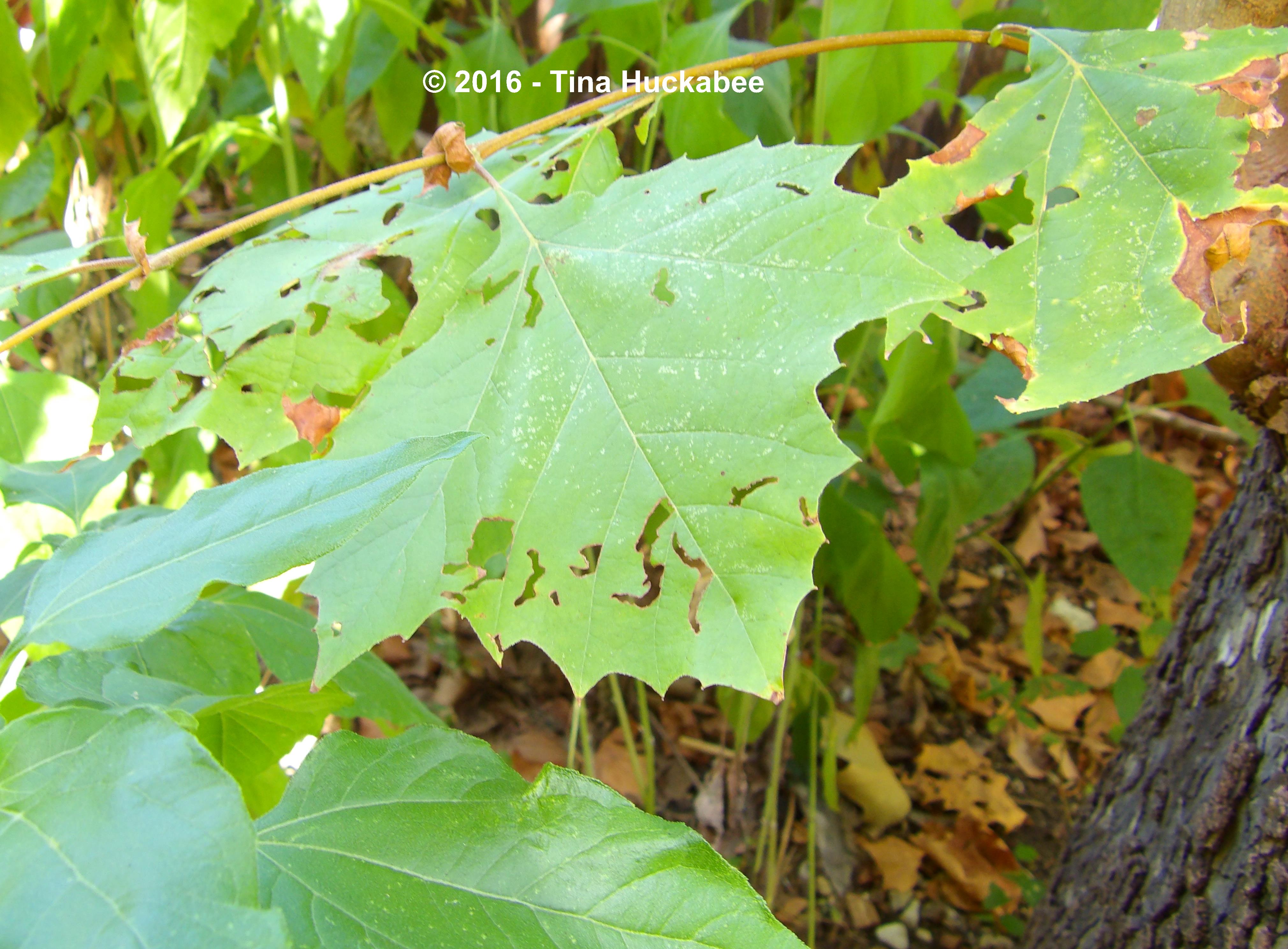
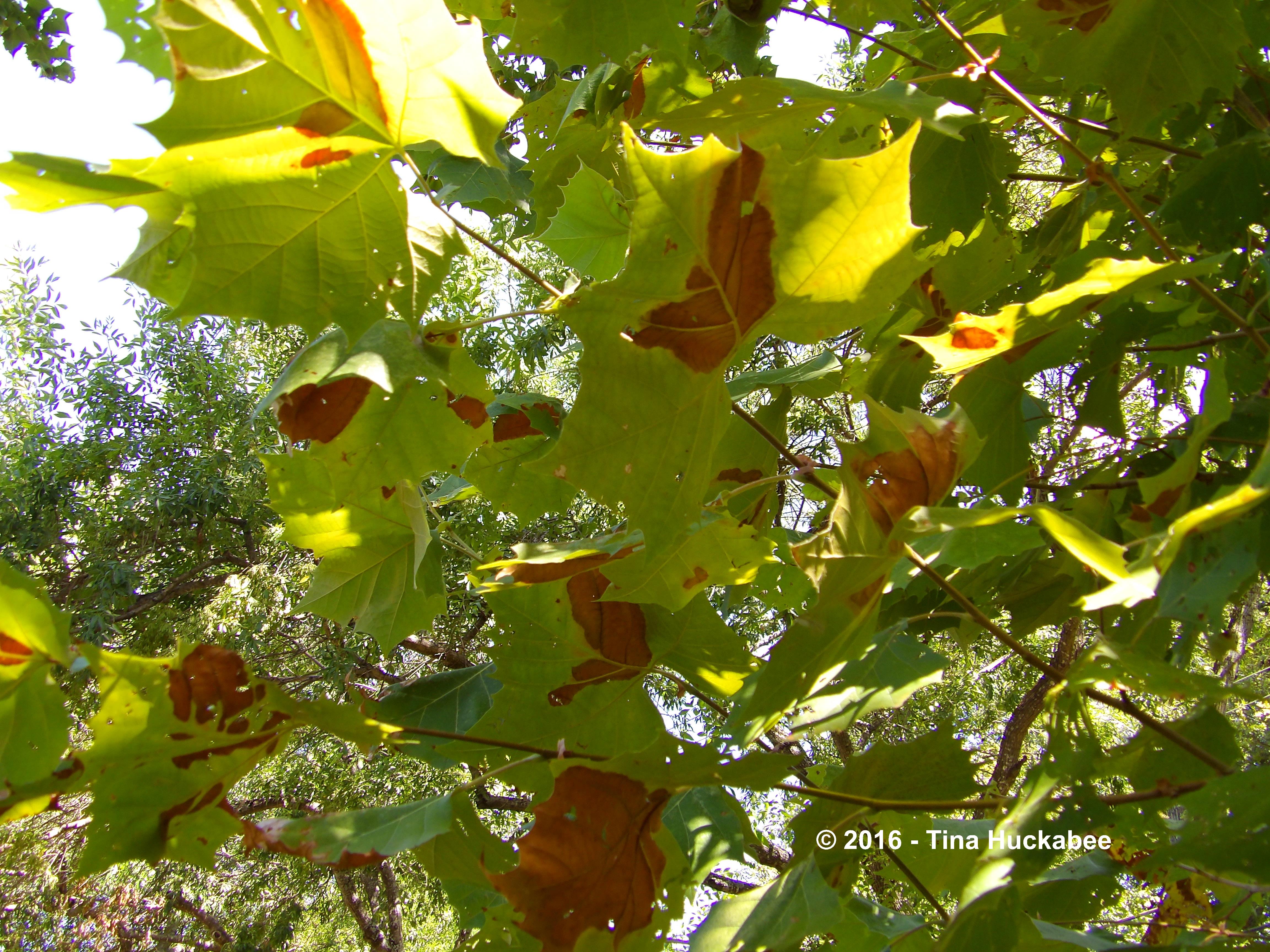
Two lower branches (which I plan to remove soon; then again, I’ve been saying that for a while) demonstrate foliage damaged by one of Sycamores’ various banes–anthracnose.
IMGP9117_cropped_2673x3346..new

IMGP9118_cropped_4041x2976..new

According to the Missouri Botanical Garden website, Anthracnose is caused by a fungus, Apiognomonia veneta, and is common in urban Sycamore trees.  The brown spots show a tell-tale “V” shape and the fungus can eventually cause the whole leaf to brown and drop prematurely.
IMGP9121.new

IMGP9119_cropped_3309x3240..new

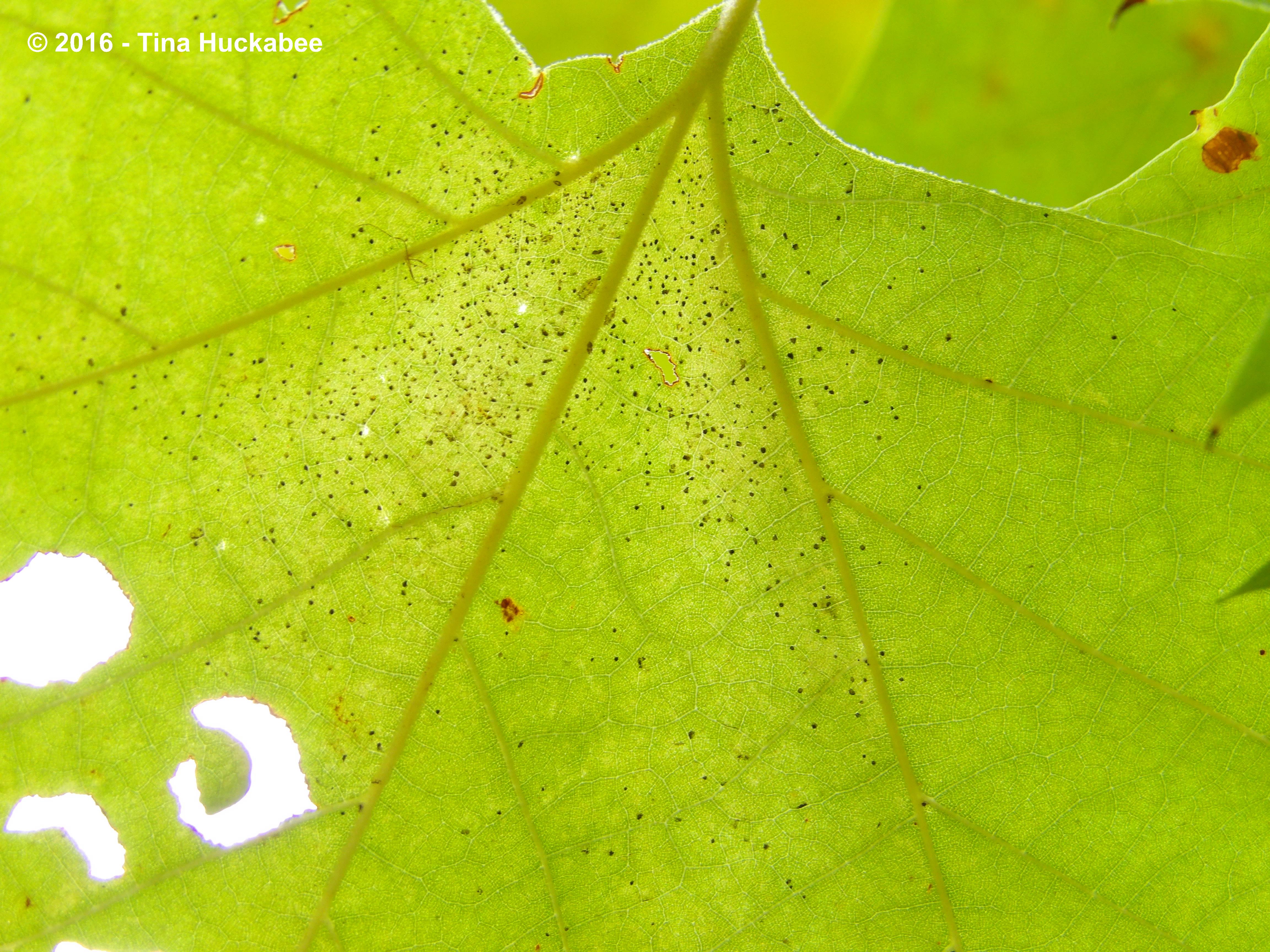
The article also mentions tiny black spots which are the “fruiting bodies” of the fungal spores and, sure enough, they’re visible on the undersides of some of the leaves.
IMGP9126.new

My Sycamore shows some anthracnose damage almost every summer, but it’s usually worse in wet years, which 2016 certainly qualifies for.  Spring saw deep, soaking rains and that set up a situation for fungi to flourish.  Additionally, there have been some heavy rains this summer, no doubt continuing the stage for fungal spread.

What to do?  Well, I probably won’t do anything.  I’m certainly not going to spray with a fungicide, but as good garden sanitation practice, I should rake up the fallen leaves.

IMGP9123.new

There aren’t many leaves dropped this summer,

… just enough that one or two hitch a ride on the the dog’s fluffy tail or for some to whoosh into the house when the back door is opened.  My Sycamore stands in a work/storage area, and I tend to procrastinate in regular tidying of this area.  Plus, as a wildlife gardener, I’m prone to leave limbs and leaves on the ground as cover for a variety of critters. I suppose a little compromise is in order: picking up potentially diseased foliage to protect the tree’s viability, while avoiding the sterility brought on by obsessive weeding, raking, and “cleaning” of garden areas.

During prolonged drought periods, I soak the soil around the tree once or twice a month, which prevents massive leaf drop, but with this year’s summer rains, that hasn’t been necessary.

I’ll keep a watch on the tree as August progresses into September, but unless I see significantly more damage, I won’t fret about this tree.
IMGP9122.new

There seem to be plenty of other things to fret about!

Thanking Pat of The Squirrelbasket for graciously hosting this fun and interesting meme about trees. Check out her blog to learn about trees from all over the world.

 

Lean-n-Green

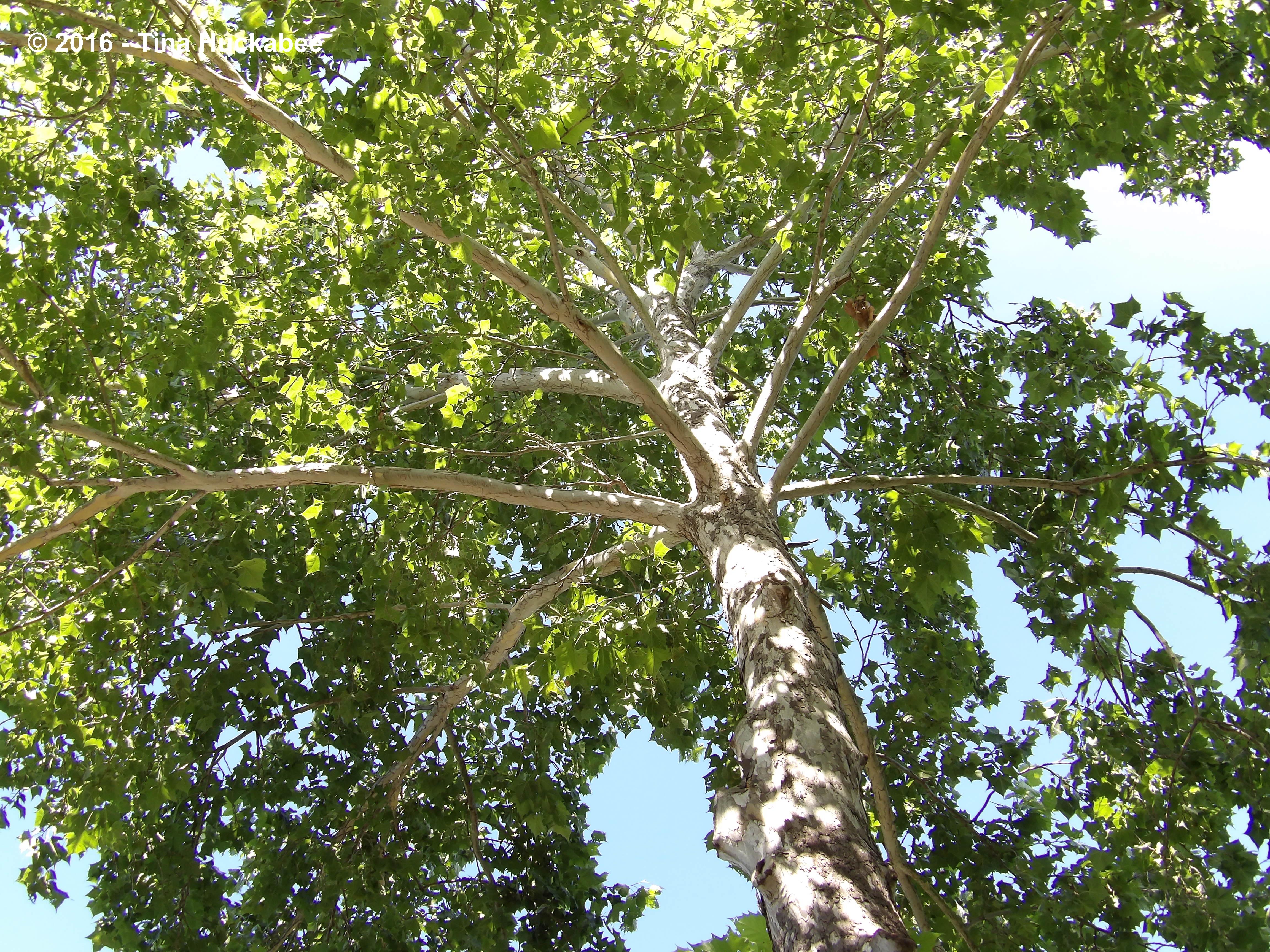
It’s been a wet March-May here in Central Texas and as a result, my American Sycamore, Platanus occidentalis, is plenty green and leafy-lush at this June Tree Following check-up.

IMGP8486.new

I never realized that  at this viewpoint, it looks like a chunk at the top of the tree has been removed.

Truly, there’s not much to report this time around, except that the Sycamore is in summer mode, full-leafed and providing cover for birds.  In fact, it’s such a good protector of birds’ privacy that I’ve  enjoyed no good luck in getting photos of birds resting, mating, or feeding their young–all activities that this tree has recently hosted.

IMGP8487.new

The birds are in the tree, but well-hidden.

Darn these big ole leaves!

IMGP8488.new

IMGP8490.new

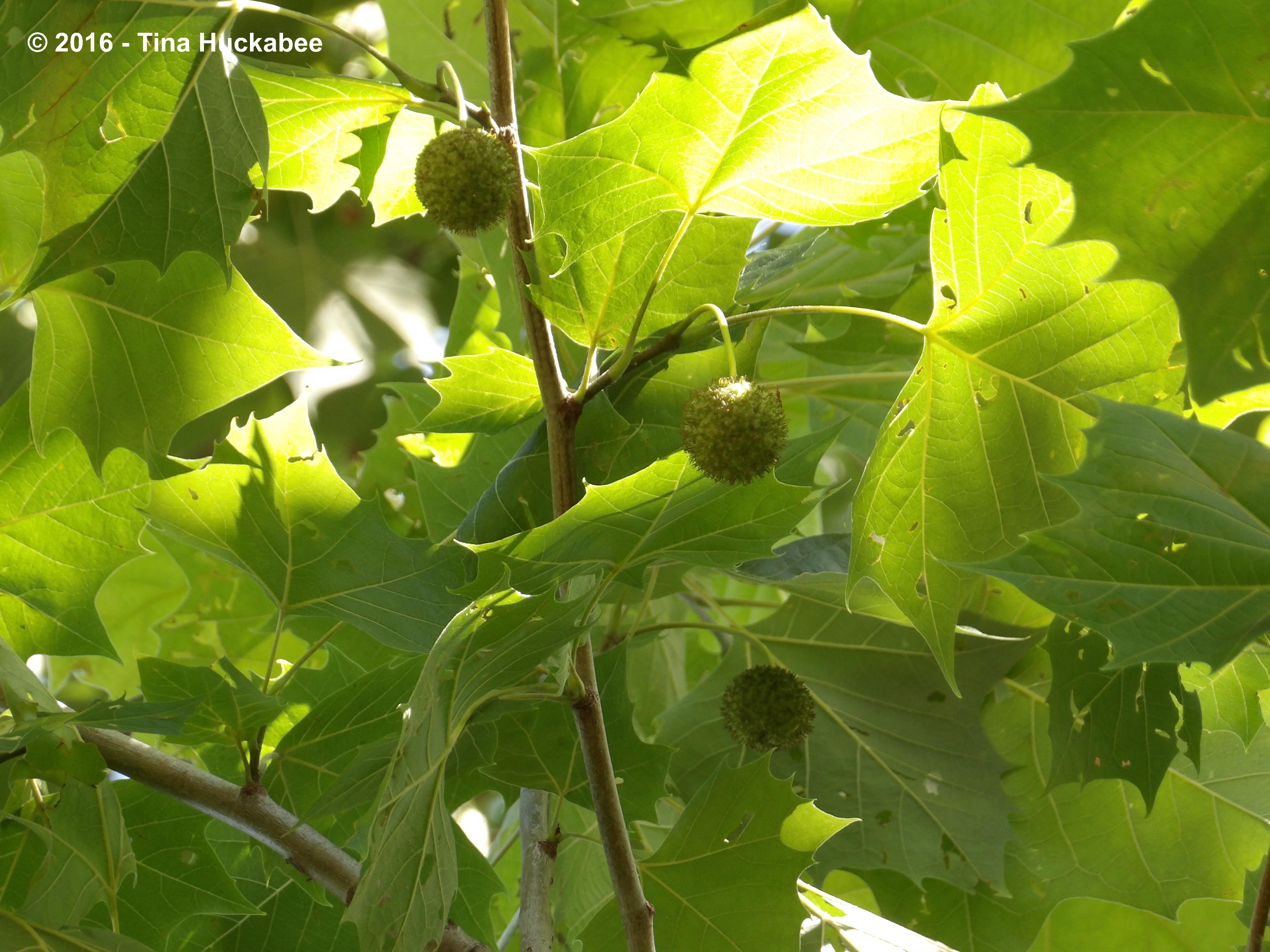
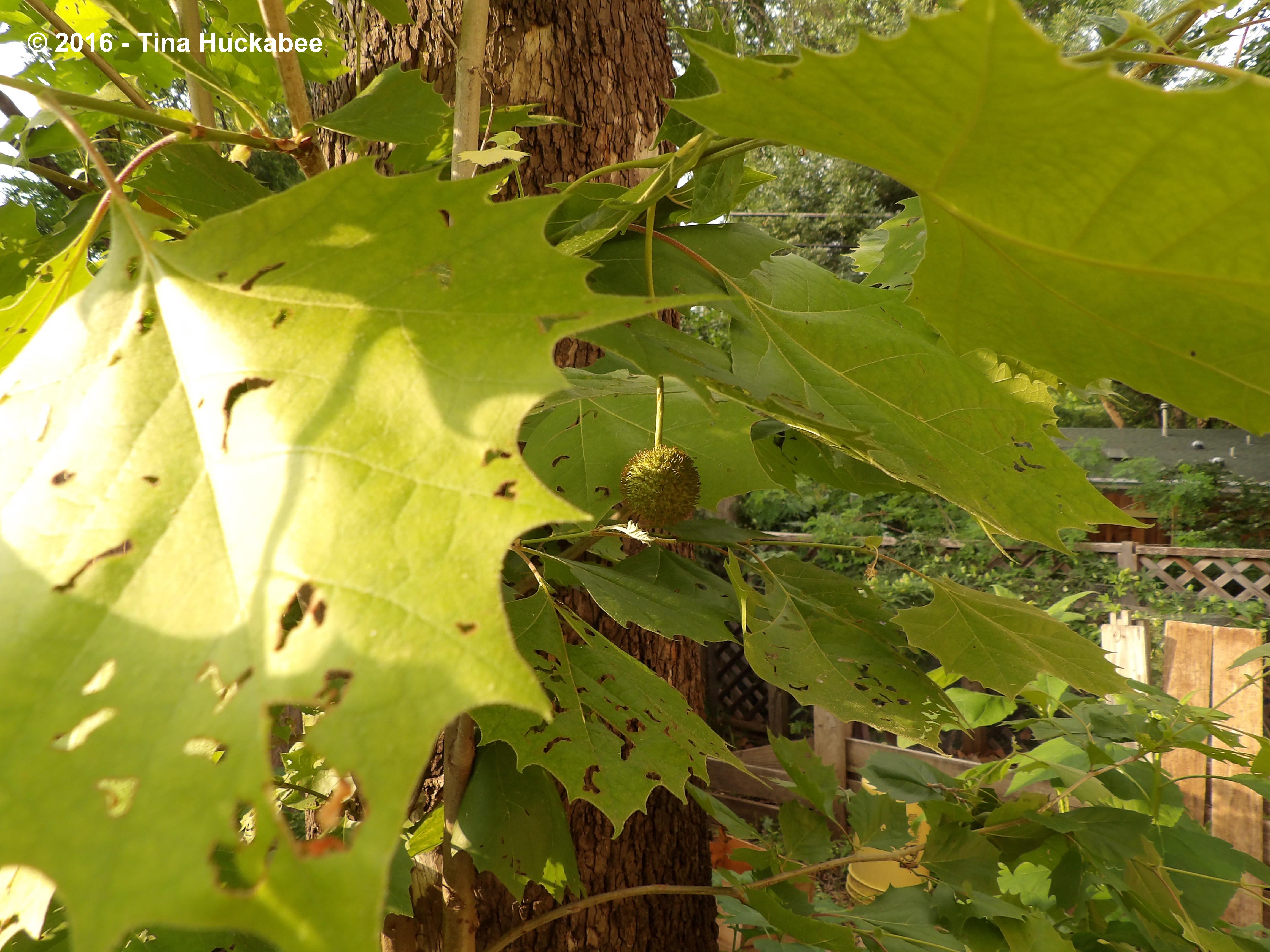
This year’s seed-balls are in form–and developing.

IMGP8548.new

I guess these big leaves are providing lots of oxygen too, while also helping to absorb pollutants in the air.  One of the reasons that American Sycamores are commonly planted in cities is just for that reason–they’re an excellent antidote for the multiple pollutants that urban life so excellently produces.

IMGP8491.new

As Central Texas segues into summer, it’s very likely that the generous spring rain spigot will shut off and the thermostat will be turned on. My gardening experience has taught me (repeatedly…) that after a mild and wet spring, summer drought and Texas heat can be especially harsh on certain plants–trees included.  Because the American Sycamore prefers more, rather than less, moisture, it tends to suffer a bit (more than other native trees) in that particular situation where the spring is gentle and moist, but summer is, well, Texas summer.  Changes in the Sycamore will depend upon just how hot and how dry the summer is. Time will tell whether this summer will be super hot-n-dry (as has become normative), or, perhaps, just normal hot-n-dry. That will make watching the Sycamore all the more interesting in the coming few months.

For today,  the American Sycamore is a lean and green arboreal machine.

IMGP8547.new

Thanking Pat of The Squirrelbasket for graciously hosting this fun and interesting meme about trees. Check out her blog to learn about trees from all over the world.


Leafed Out in Full

Spring has sprung, rain has fallen, temperatures have climbed and here in Austin, Texas, we’re mostly through our beautiful and glorious spring weather and headed into the lovely–though admittedly somewhat less pleasant–summer season.    Summers in Texas are hot and humid and that’s one reason why Texans have historically liked trees; trees provide respite from the sun and cool our souls.  The American Sycamore,  Platanus occidentalis is a tree that the Native Americans and later, European and American pioneers, scouted for when they wanted to find water and shade in Texas.

Stately and tall, the American Sycamore is springtime resplendent in its lush, green foliage, all leafed out and ready to provide protection for critters–large and small, furred and feathered, two-legged and four-legged.

IMGP7907.new

IMGP7913.new

The limbs are graceful as they reach into and support the canopy.

This month, the leaves have been munched upon and are a bit holey.

IMGP7905.new

IMGP7906.new

I’m not sure exactly who’s been eating the leafy greens, though I know I’ve seen this sort of damage in previous years on the Sycamore’s leaves.

IMGP7909.new

The mature leaves have some damage, but there are new leaves, too.

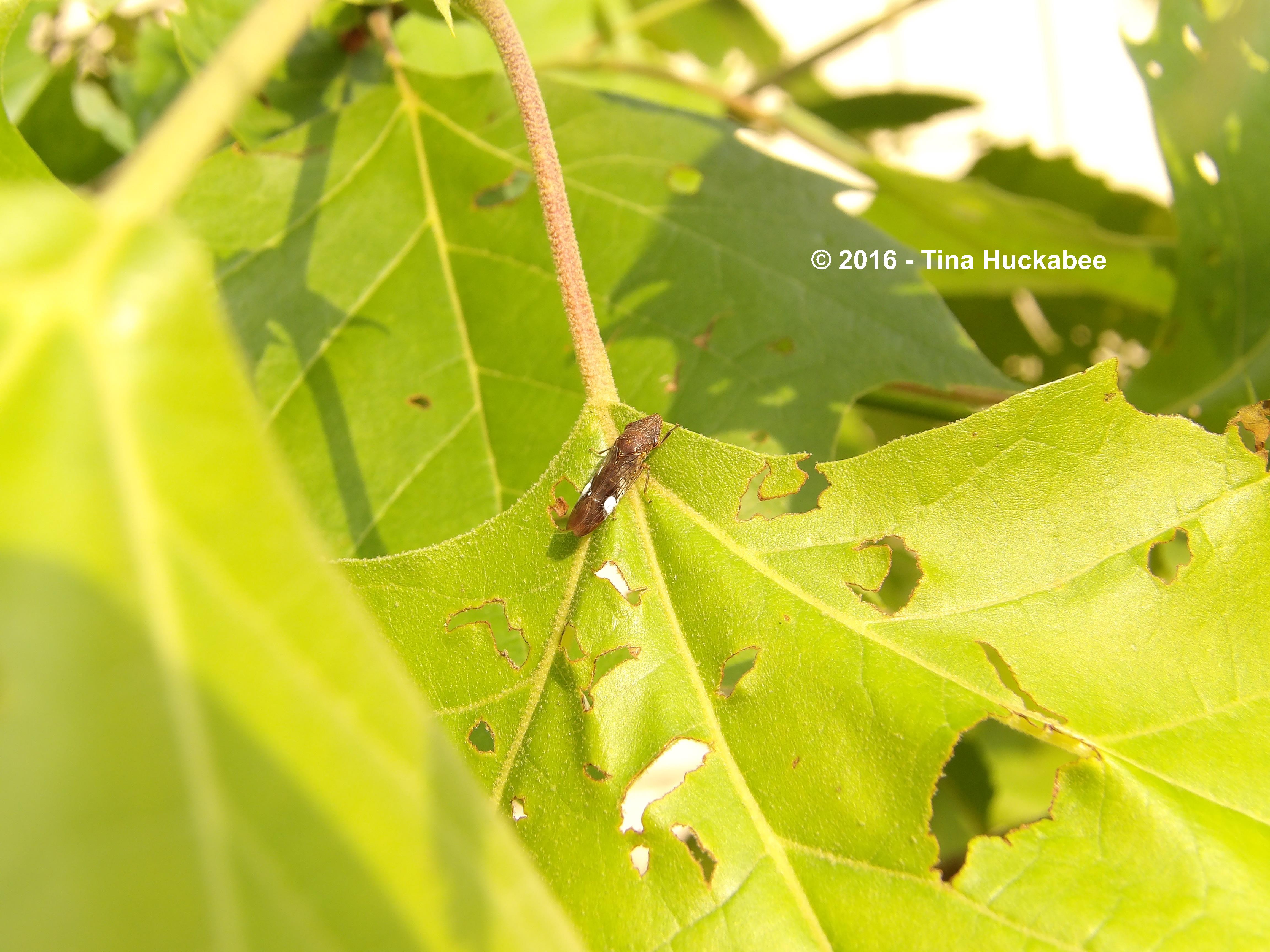
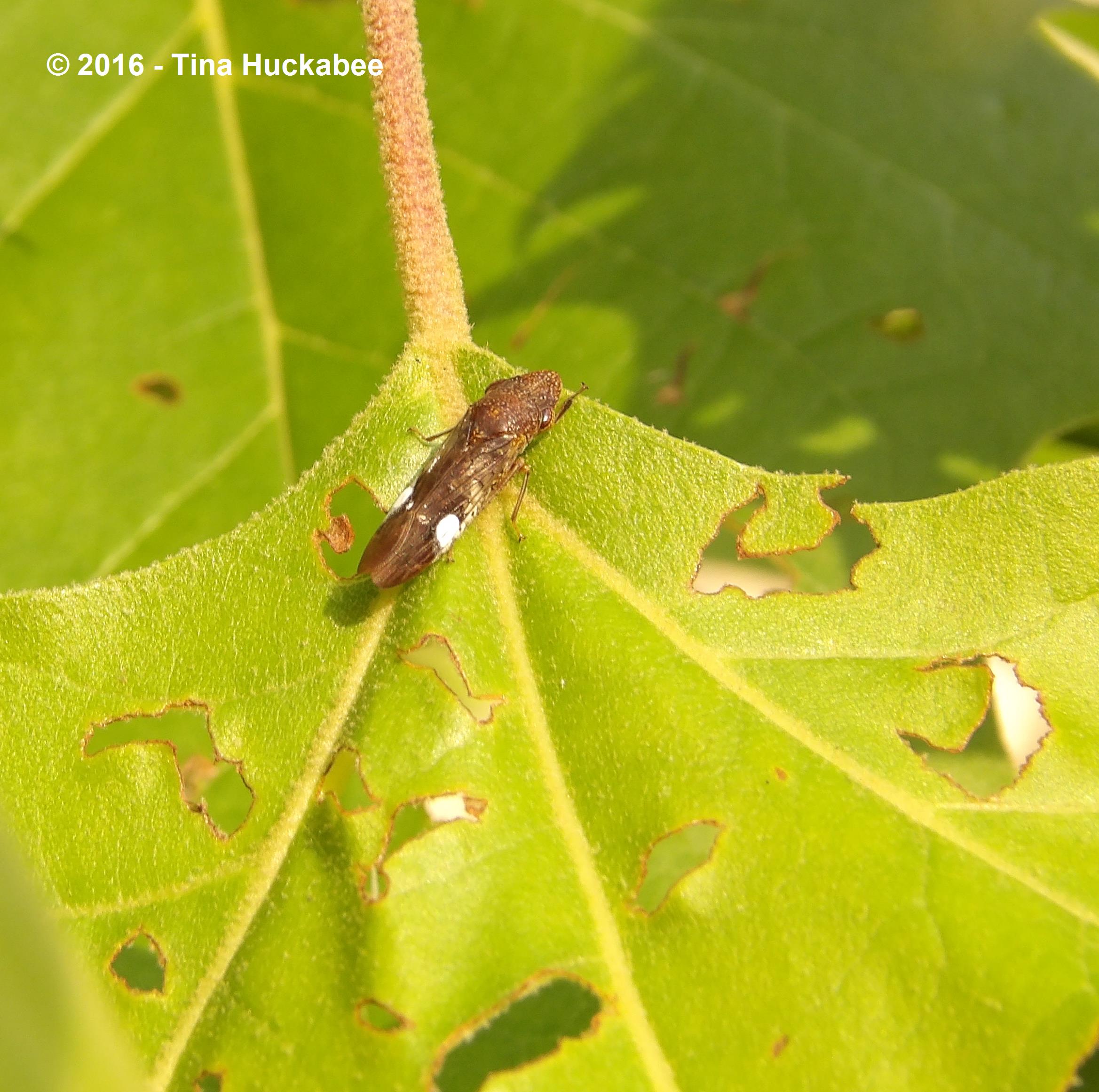
I did see this fella, a Glassy Winged SharpshooterHomalodisca vitripennis,  on one of the leaves.

IMGP7911.new

Now, I’m not suggesting that this particular one is responsible for all the holes, but apparently, the Sharpshooter undergoes several molts in its trip toward adulthood and it had to eat something, so I think the leaves are a good bet.  Since I caught the Sharpshooter near the holes, he gets the blame for making the holes.

The Glassy Winged Sharpshooter is a type of leafhopper insect, of which there are a bunch who munch on shrub and tree foliage here in Central Texas.  I’m not one to fret about a few holes in leaves–everyone has to eat and one function of foliage is to feed insects.  The Glassy Winged is common here in Central Texas and according to literature, they do little long-term or serious damage to trees and shrubs.

This one–the one I referred to earlier as a “fella” and “he”–is actually a female.  The white patches on her wings are call egg brochosomes.

IMGP7912_cropped_2337x2322..new

Most leafhopper species have brochosomes, which produce a sticky substance used to coat their bodies for waterproofing.  Additionally, the female stores and then uses the substance she holds in the brochosomes to cover her eggs once she lays them.

Also, if you stand under the Sycamore (and my oak trees, too) right now, you might feel a few “drops” from the trees, sort of like rain drops, but with a clear, blue sky above. No, the drops aren’t rogue precipitation, but, more than likely, are leafhopper excrement.

Well, that’s nice.  Just don’t host your next picnic underneath a tree with “drops” coming out of it.

The Sycamore in May is in full leaf, foliage, and life.

IMGP7910.new

Not all the leaves have been insect damaged.

It will be a harbinger of safety, food, and protection for many and for months to come.

Thanking Pat of The Squirrelbasket for graciously hosting this fun meme about trees. Check out her blog for interesting information about trees from all over the world.