In June we spent time in New Mexico, re-visiting favorite spots and adding a couple of new adventures to our itinerary. We’ve always wanted to visit Chaco Culture National Historic Park and finally made it happen. Chaco Canyon is located in the northwest corner of New Mexico, bordered on three sides by mountain ranges: the Chuska, the San Juan, and the San Pedro. The canyon was created by the Chaco Wash in the San Juan Basin which is part of the Colorado Plateau. All that geography is very interesting of course, but the bottom line is this: this remarkable place in North America is kind of in the middle of nowhere.
Obviously, this area isn’t nowhere. There are plenty of small communities, pueblos, and farms dotting the dramatic, harsh landscape. But for visitors to Chaco, other than camping in the park itself, most places to kip overnight are a decent drive from the park. We stayed outside of Cuba, a town about 75 miles from the park, the last 13 miles (and especially, the last mile!) a teeth-chattering rough dirt road.
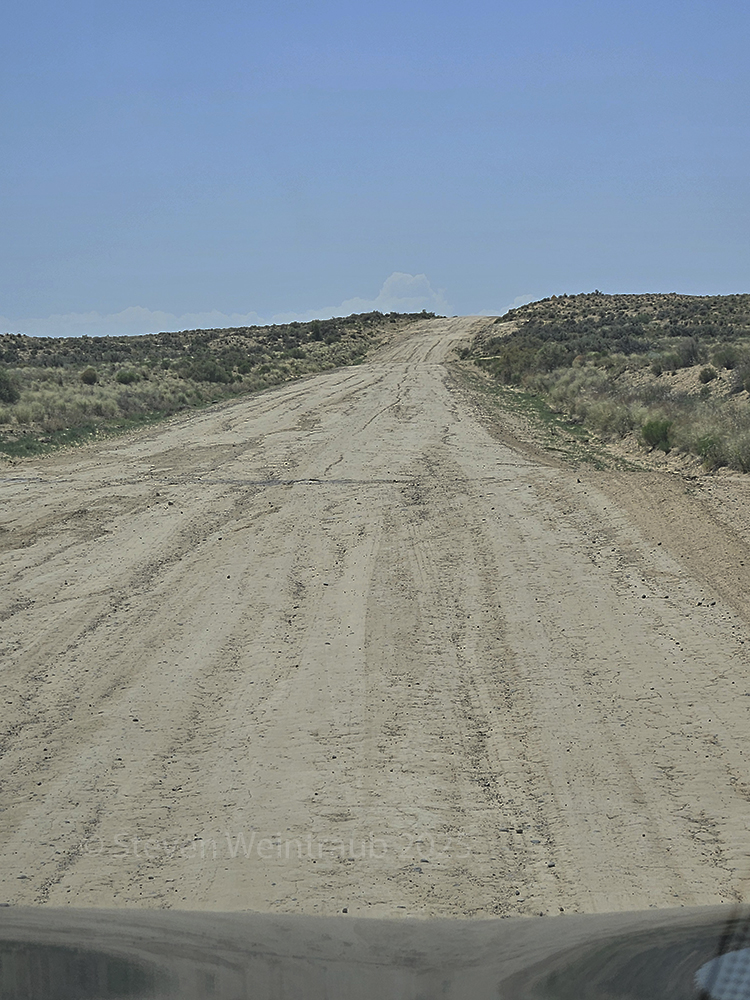
You really must want to visit Chaco in order to get there!
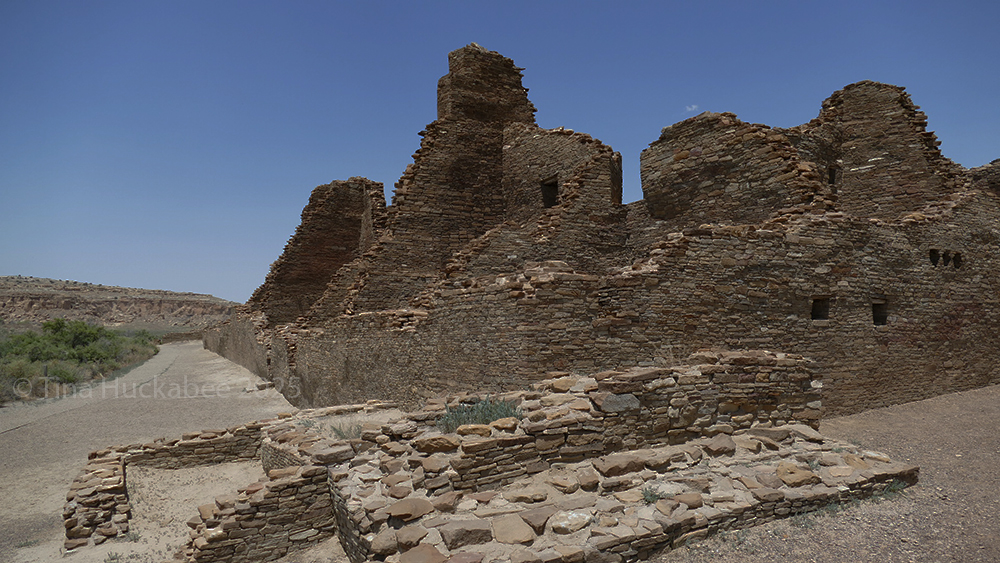
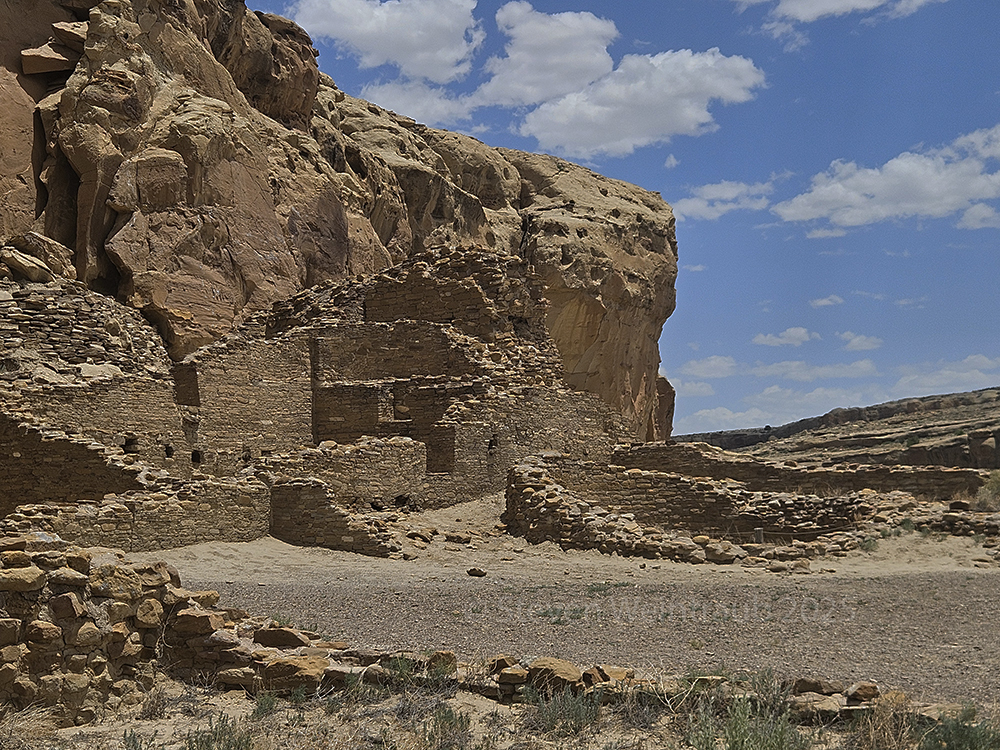
We wanted to and we did!
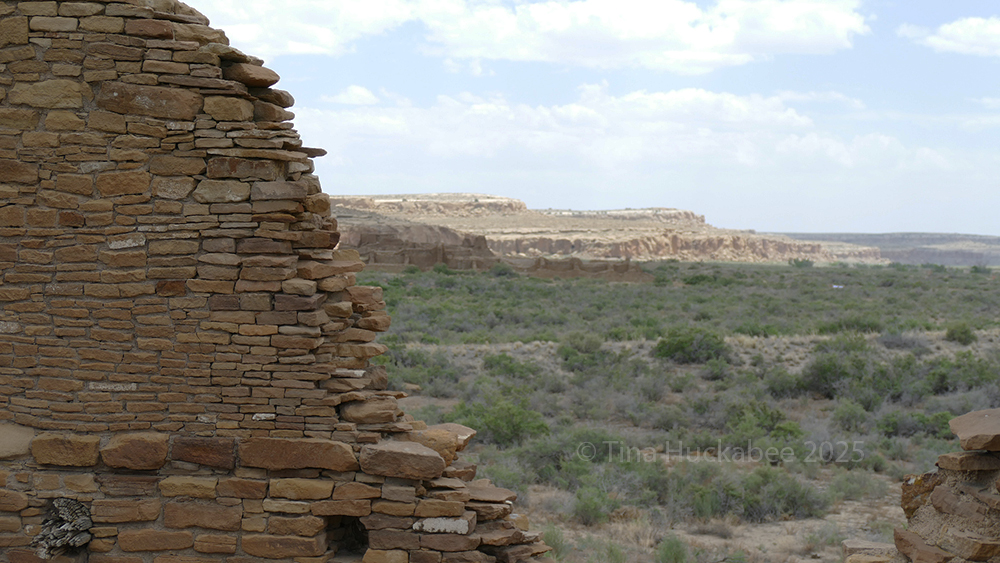
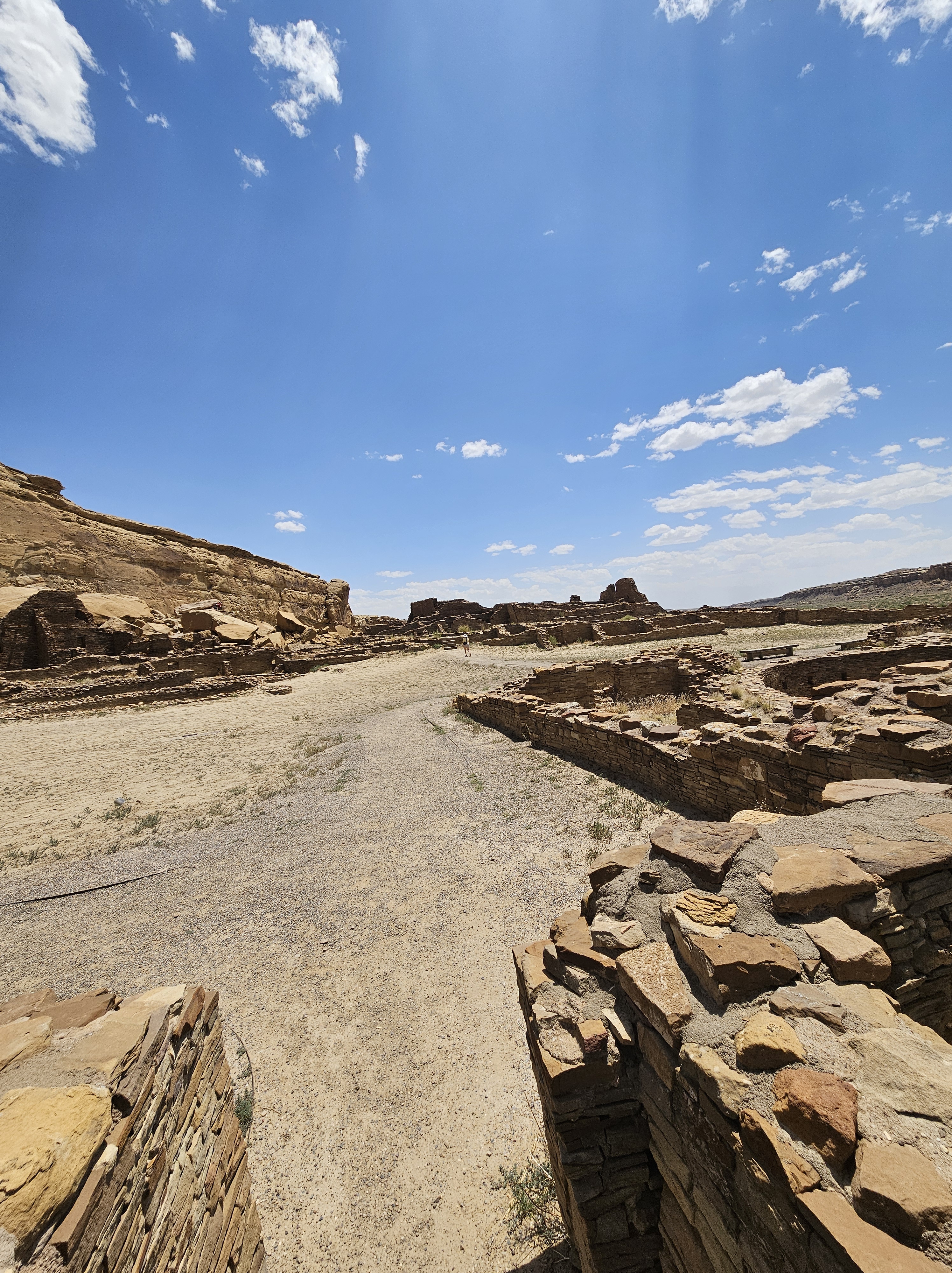
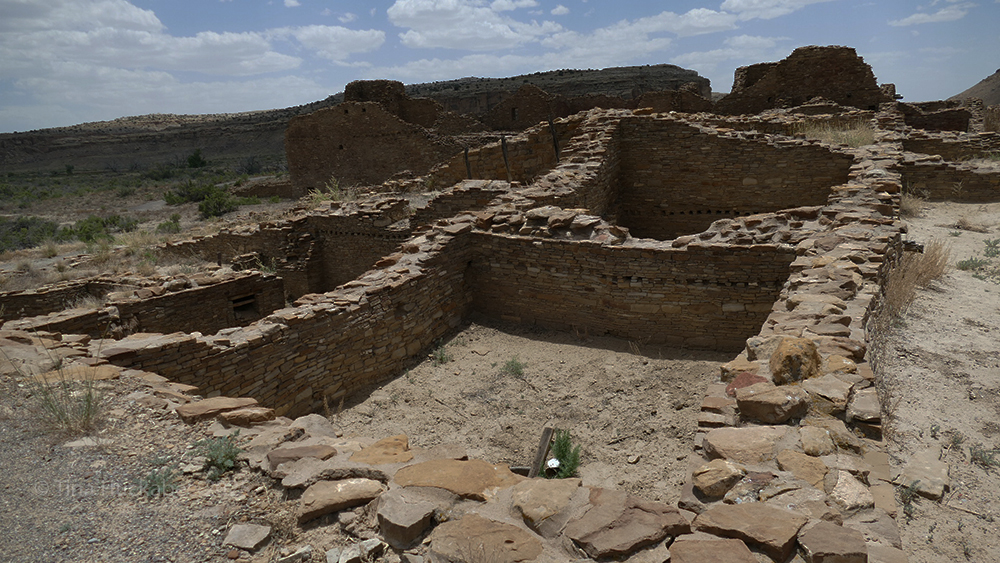
Appointed a UNESCO World Heritage site in 1987, Chaco is located within a high desert landscape, vast and varied, beautiful even in the mid-day heat. We’d planned to be there at 8am, but events conspired and we rolled into the headquarter parking lot late morning. After checking in at headquarters for information and maps, and a bonus chat with the excellent National Park rangers, there was a short drive to the main pre-Columbian ruins. The remains of these structures are a testament to the thriving community and unique architecture that the ancient Puebloans created. There are outlying ruins and back country trails, but I’ll leave that for more adventuresome travelers (ahem, younger…) and those who visit for more than one day.

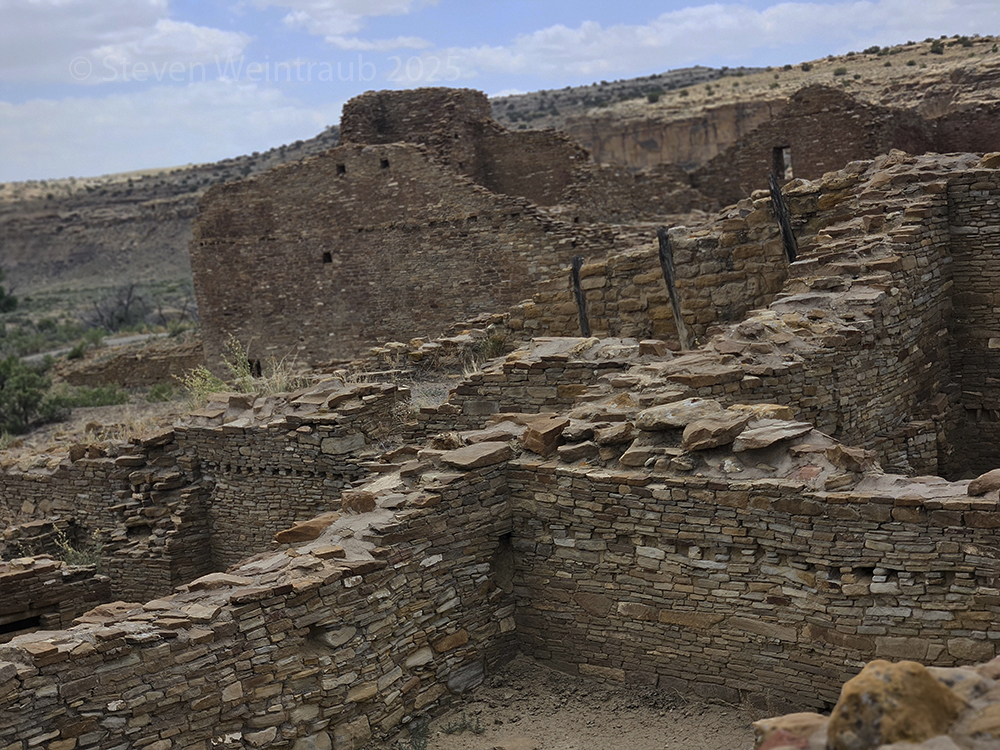
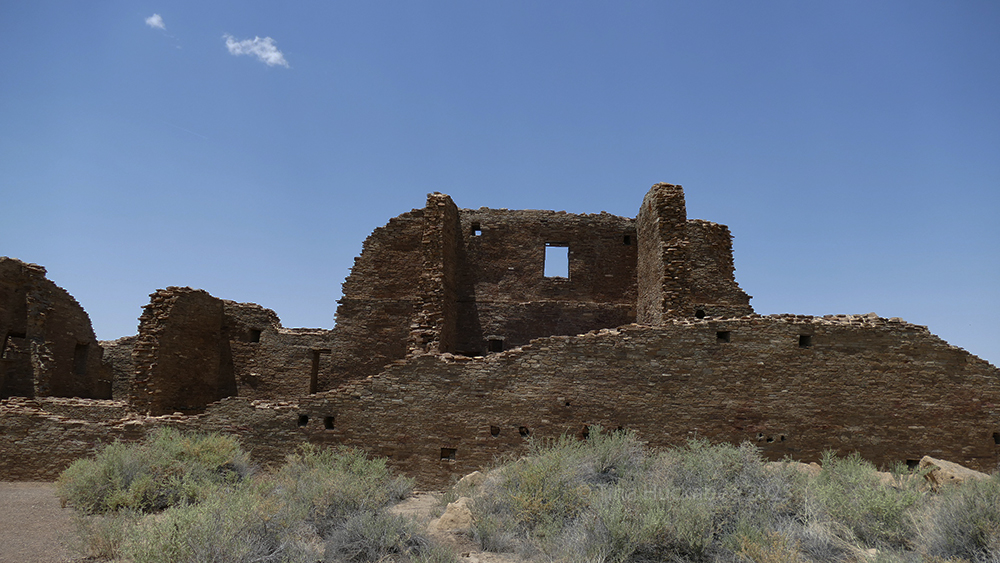
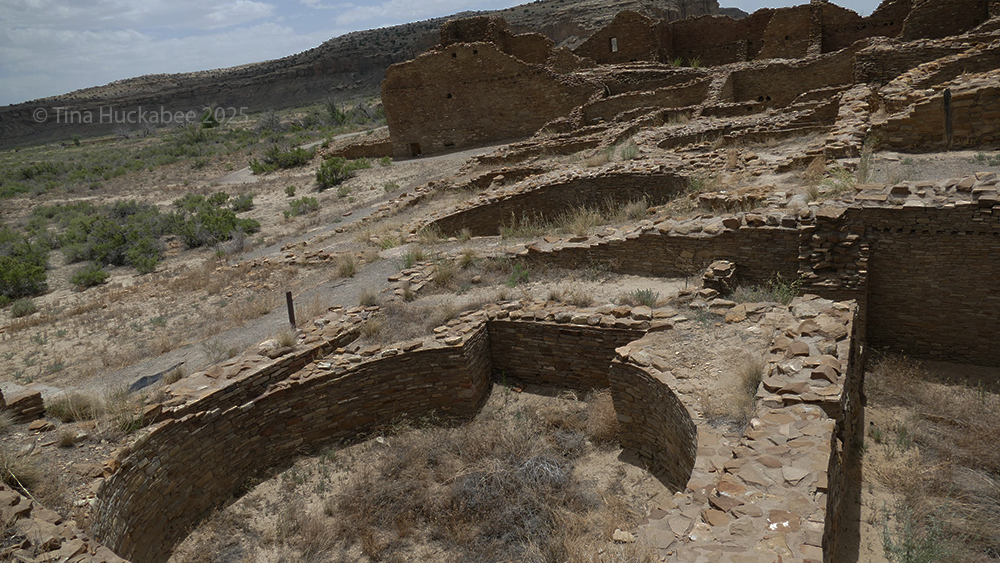
Chaco culture existed between about 800 and 1200 CE, eventually declining for unknown reasons. For a time, it was the major trading center in North America and a gathering place for regional ceremonies. The larger great houses, like Pueblo Bonito with its 650 rooms, are thought to have served as public buildings, utilized for a variety of things: food storage, administrative offices, and religious ceremonies. The architecture is particular to this culture, dissimilar to any other ancient sites, especially given the public nature of the monumental buildings.

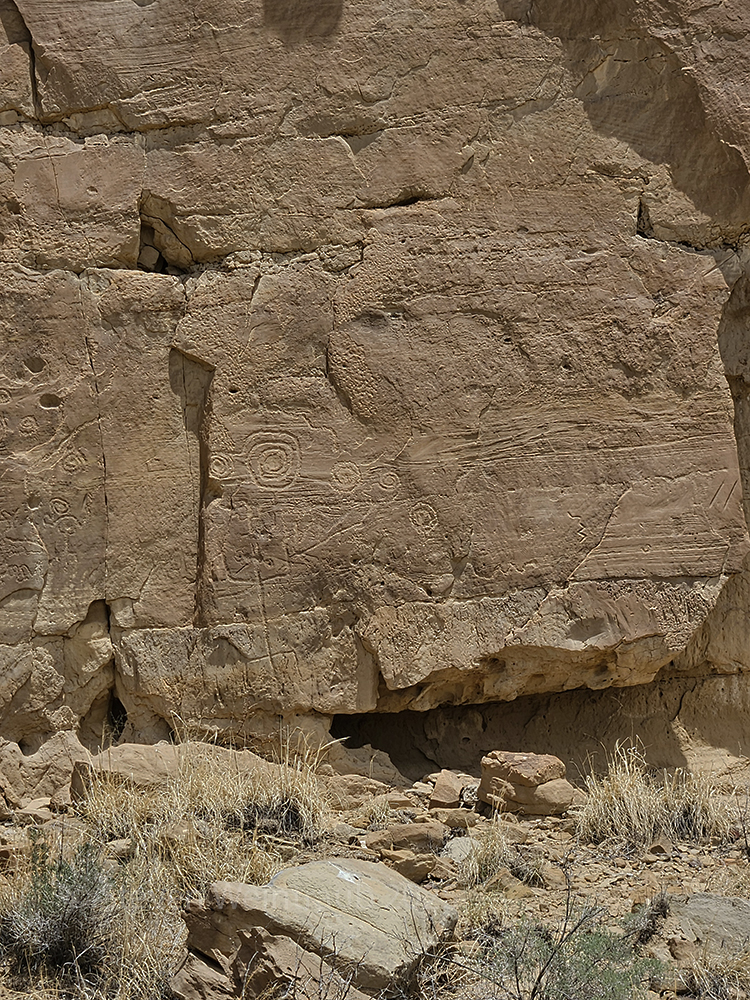
Like many ancient cultures, Chaco’s architecture reflects knowledge of Earth’s connection to the sky and seasonal changes. We visited the day before the summer solstice and learned that there was an event at 5:15 the next morning, the sun rising at a particular point, aligning with two spiral petroglyphs at the Sun Dagger on Fajada Butte. It’s believed that petroglyph acts as a seasonal calendar. The National Park Service allows a maximum of 100 people for this kind of event and they don’t take reservations. We would have loved to participate, but with no guarantee of admission after a 75 mile drive beginning before 4am, it was a no-go for this vacation. Maybe next time…
The main area of the park includes a drive linking to each of the named sites, including the larger great houses, several smaller ruins, plus a trail and information to view petroglyphs.
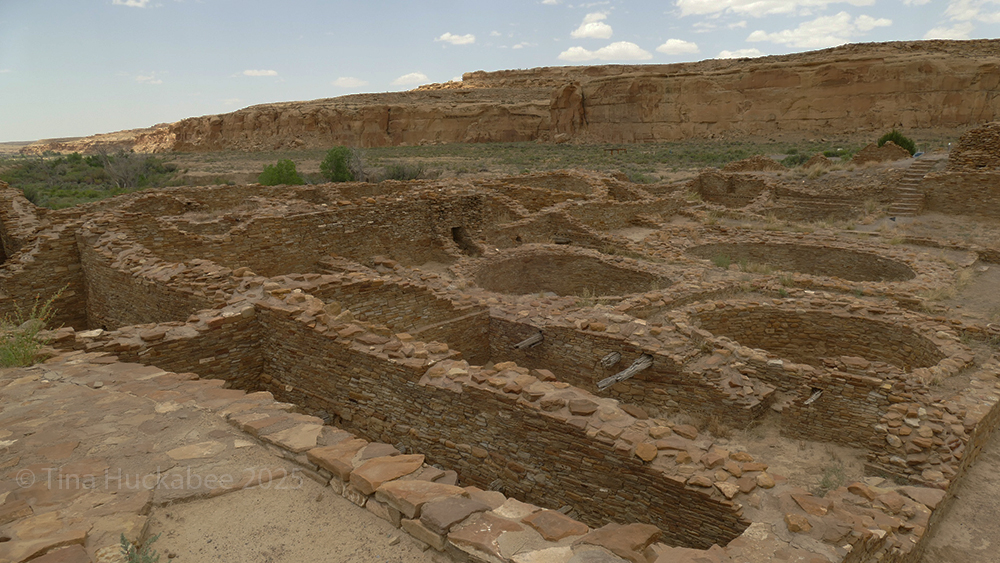
Along this main road, drivers park, then hike short distances to the structures for easy, casual exploration, spending as much time at each structure as desired. At the sites themselves, visitors descend stairs and walk through rooms while meandering along ancient pathways. Climbing up other stairs to reach different sections, it’s easy to stop and admire the ingenuity and determination of the ancient Puebloans.
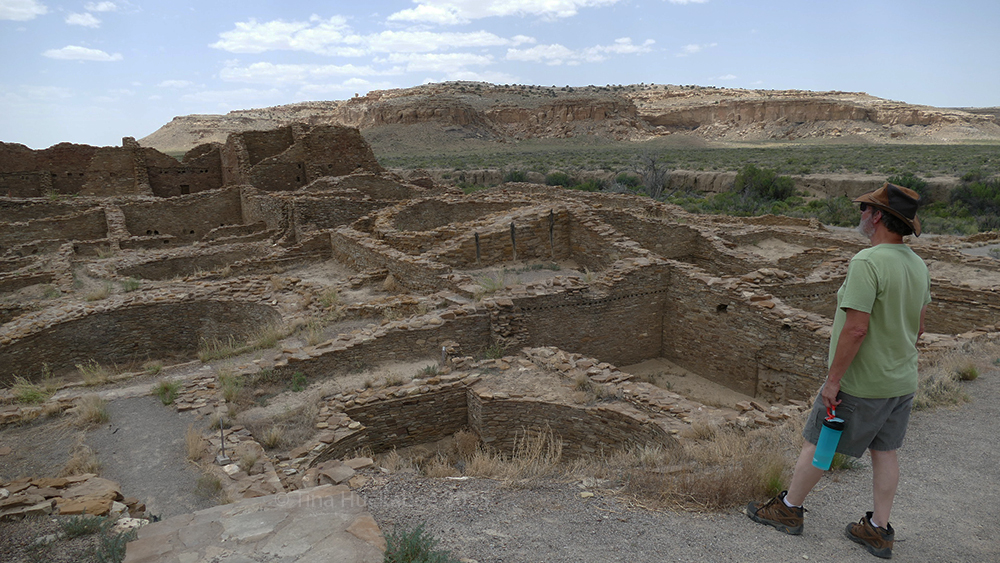
Some areas are blocked off for safety and to protect from damage and erosion, but most rooms and pathways are accessible and fascinating to traverse, solidly built within this wider canyon. I found myself awed by the skill of the builders.
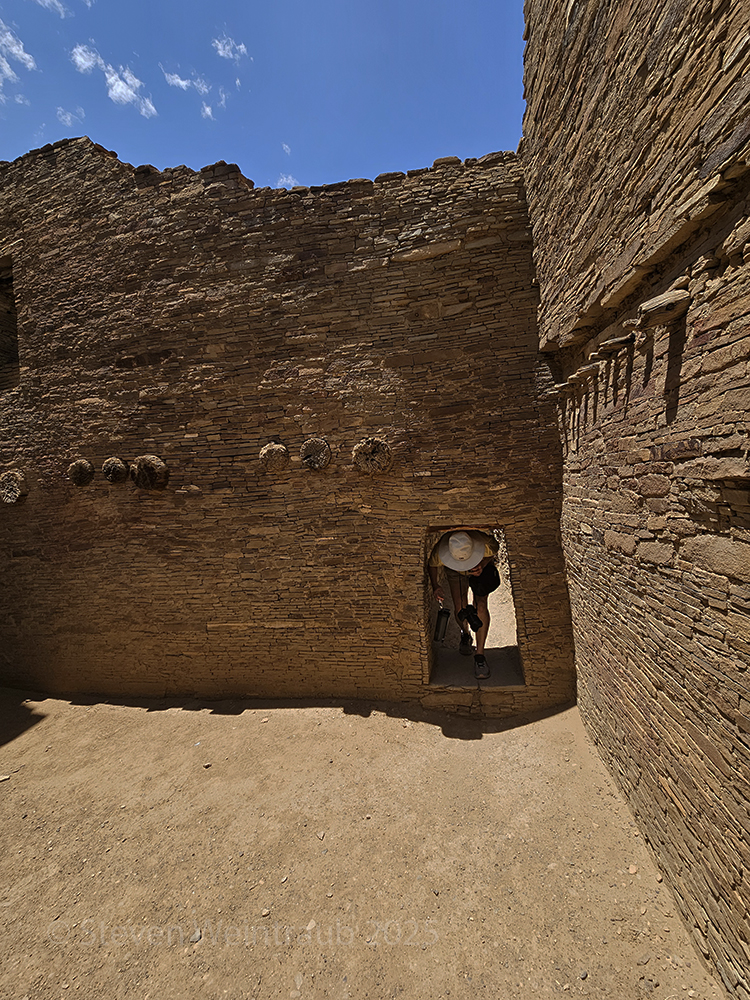
As hot as it was that day, I enjoyed the moments I found myself in the shadow of a wall, the sun’s blasting rays just out of reach. I imagine when these buildings were intact, with roof over head, windows and doors allowing breezes, that inside was reasonably comfortable.
For those who are staying in the campground for an extended visit, there are many trails which lead to other sites in the canyon and up along the mesa which borders the canyon. This is really the best way to visit Chaco: camp in the park, explore in the cool of the mornings and evenings, rest in the heat, and enjoy the stunning sunrises and sunsets in this extraordinary place.
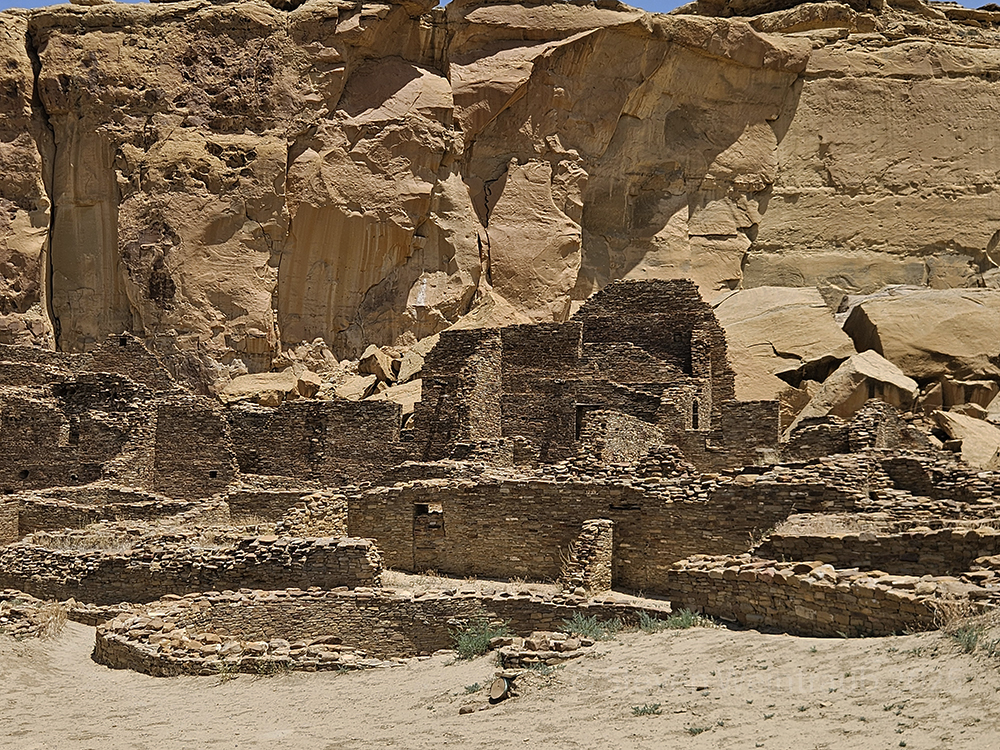
One could easily spend more time in this special place, but even with only one hot day in June, we were impressed with the primary sites we visited. Standing in the midst of the main architectural ruins, the surrounding area beautifully quiet, except for the whispering of the gentle breeze, it wasn’t difficult to imagine the bustle of a vibrant community, the mass of individuals over many generations who designed and created this remarkable site, and who lived their lives here–real men, women, and children–offering their gift to this important chapter in the history of North America.
The Chaco culture exists today, with stories passed down from generation to generation, included in this list of modern indigenous communities of the Southwest.
For further reading about Chaco, check out the National Park Service information and Chaco’s wiki page.

 My Gardener Says...
Excellent photos from a wonderful excursion. The craftsmanship evident in those stone walls and curved lines is impressive. Have you seen the Puebloan roads found using aerial surveys and LIDAR? Here’s a link to a story with photos: http://read.upcolorado.com/read/the-greater-chaco-landscape-f2cad13b-68f1-4d50-bc01-9f755e62eed4/section/b7beb24a-7a55-4b52-952d-b14fe343585a
LikeLike
Thanks, Sam. It’s a very easy place to choose great shots. And thanks for this link–fascinating! I’d read that there were multitudes of roads in the area and there’s still lots of archeological work done int hat whole area, but as technology improves, it opens up new ways of looking at the sites and offers new information.
LikeLiked by 1 person
Great pictures!
LikeLike
Thanks, Screech!
LikeLike
Great post about this ancient settlement, Tina. Amazing stonework, telling of an industrious people, glad it is preserved for future generations to explore. I imagine the nights were cold and the days very hot!
LikeLike
It really is a remarkable place, Eliza. I think next time we might stay in Farmington. It’s about the same distance and I’ve wanted to see that town and never have. But Chaco is still a place I want to visit again.
LikeLiked by 1 person
Good for you for going there. I’ve wanted to for decades but the remote location makes it hard, and I’ve read that the roads become impassible at certain times. I’ve wondered why New Mexico hasn’t ever improved the roads. There could also be a hotel and restaurant discreetly removed from the site but a lot closer than the 75 miles you mentioned. Those amenities could bring in revenue for the local people, as would a market selling native art and crafts.
Have you seen the documentary “The Mystery of Chaco Canyon“? I caught it on PBS years ago, and it gets re-aired every now and then.
LikeLike
It is remote, that’s for sure. I know what you mean about making it more accessible for more people, but I have mixed feelings about that. It’s a special place, more than just an outdoor space in which to hike. Most national parks are good about the paved areas so that all folks can experience the outdoors, but I think Chaco wouldn’t benefit from a great population visiting. It would be nice to have a simple paved road, rather than that bumpy business, but NM most likely has other priorities.
LikeLike
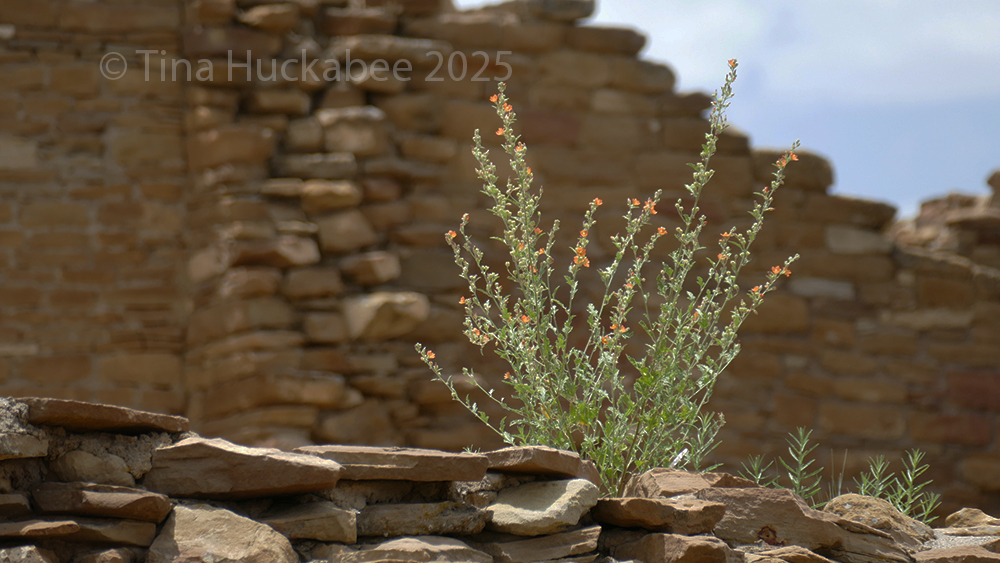
New Mexico is a lovely state, and I have family there. Next time I visit, I’ll have to make a special point to check out Chaco. Your photos are stunning–all of them–but I oooed and ahhhed over the Desert Mallow, Sphaeralcea ambigua. Thanks for sharing. ❤
LikeLike
I love NM! We visit almost every year and there’s still so much to experience!
That Desert Mallow is a beauty!
LikeLike
Who doesn’t love a new word? I’d never come across ‘kip,’ and had to look it up. I smiled at your description of Chaco Canyon being “kind of in the middle of nowhere.” On a list of favorites on my About page, I noted that my favorite place to be is “a hundred miles from anywhere.” Chaco Canyon comes close! (Just for grins, I just looked up the milage from my place to my favorite spots in east Texas. They’re all more than a hundred miles away.)
It’s fascinating to ponder the creativity that gave rise to communities like this, and the skills that allowed the visions to take form. As for the roads, I can believe that the lack of improvement is a plus, no matter the reason. Hordes of visitors taking selfies already have destroyed the pleasure of innumerable sites, and sometimes damage the sites themselves.
Your last photo’s my favorite, although it was great to see so many details of the entire site, and fun to see that you found a mallow there!
LikeLike
I like those “British-isms”! Though, tbt, it was really more than a kip, as we spent two nights near Cuba, NM!
I agree with you that I’m glad it’s not more accessible. I’ve been to national parks where the bulk of tourists can visit and I would be heartbroken to see someone’s empty candy wrapper or soda can dumped in one of the Chaco ruins–and you know that would happen. I’m sorry that relatively few people can visit, but that allows this sacred place to maintain its dignity.
Thanks! Actually, that was my husband’s shot; he has a pretty good eye and a great cell phone camera.
LikeLiked by 1 person
Fantastic photography! Such an interesting looking place, and so large.
LikeLike
Thanks–and it is a remarkable place to visit!
LikeLike