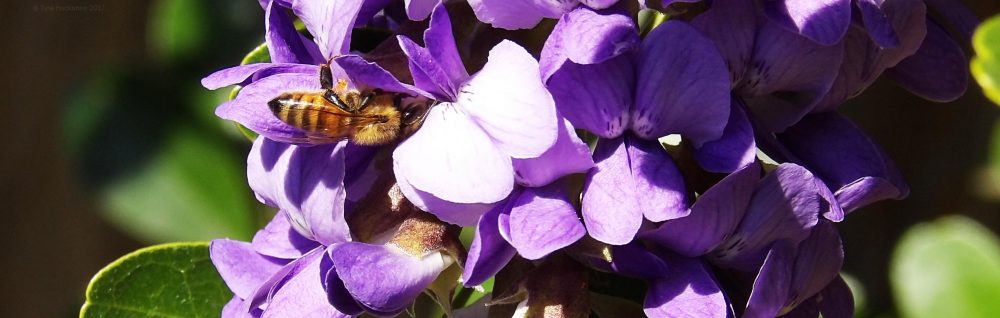
My husband and I have long wanted to visit Costa Rica. Recently, we were privileged to spend some enchanted time in this stunning Central American country. I know quite a few people who’ve traveled to, or lived in, Costa Rica, and every one has absolutely loved the country and the nice folks who call it home.
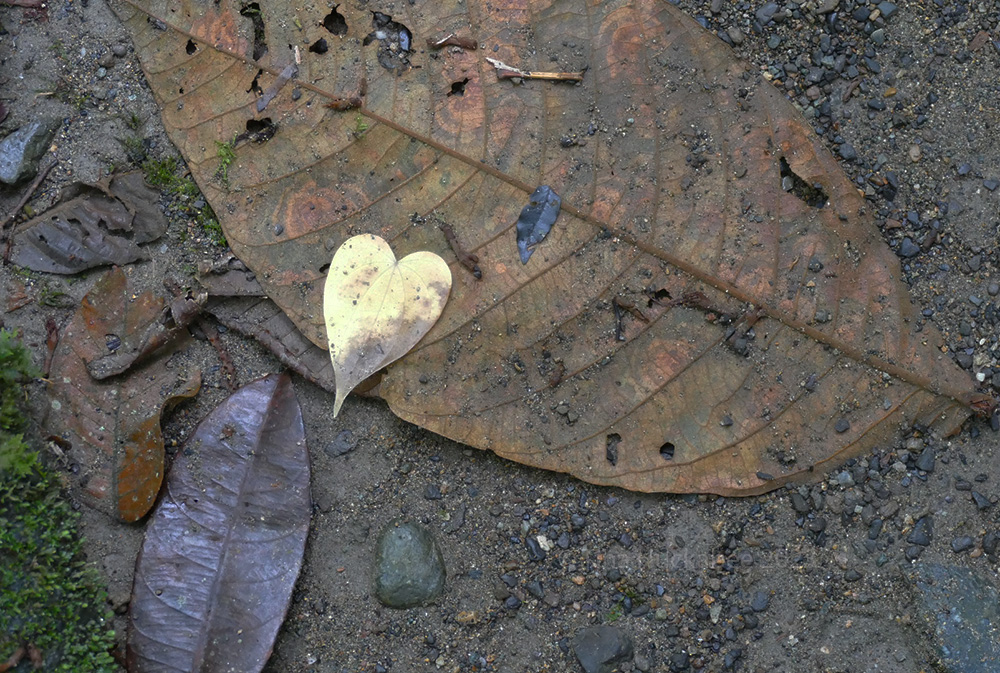
Costa Ricans are known for their warmth. Each day of our visit, friendly waves and bright smiles greeted us, usually with a polite buenas días, or buenas noches as an added bonus. No transaction or conversation was complete without a gracias and responding mucho gusto!

Yes, we’re obviously tourists and locals in most places are usually friendly with tourists, but when strolling through small communities or dining at local (and fabulous!) restaurants, Costa Ricans were always gracious. We were welcomed and charmed throughout the trip.

Because we’re interested in the flora and fauna of the region, we didn’t spend much time in larger cities and opted to hire an expert in Costa Rica’s environment as a guide. Our focus was visiting gardens and national parks, along with enjoying scenic drives through lush landscapes.
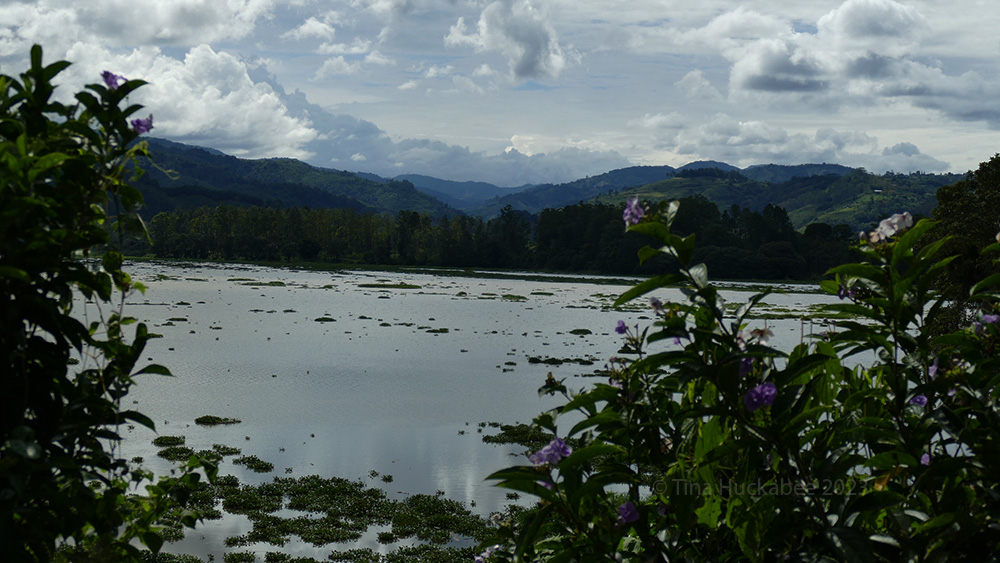
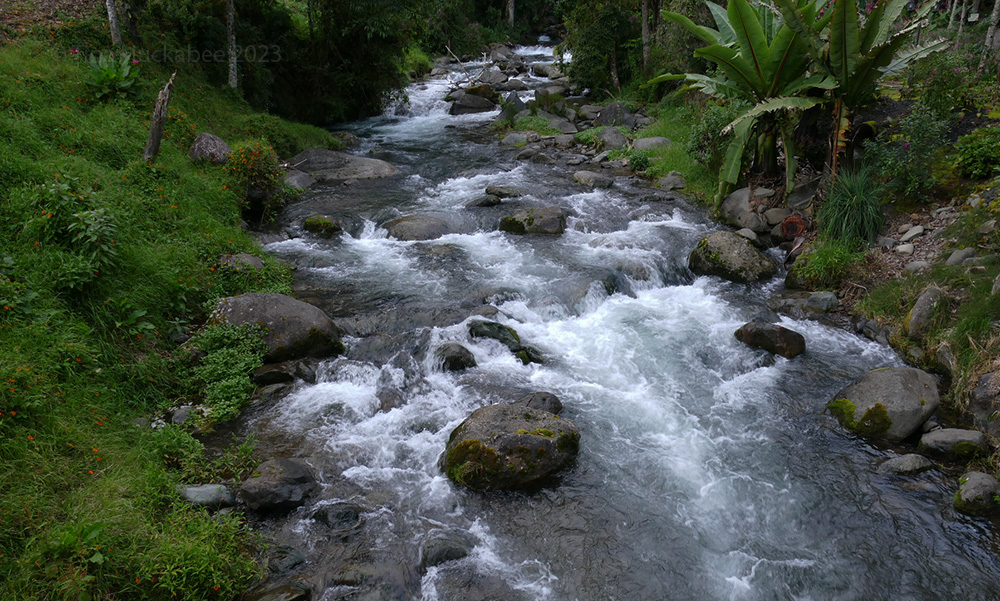
Through a recommendation from a Facebook ‘Birds of Texas’ contact, we connected with Johan Weintz Aguilar to guide and host our time in Costa Rica. Johan is Costa Rican and was an excellent choice. Incredibly knowledgeable (and patient!), he’s also a great driver, and an all-around sweet-heart of a guy. We had nine-plus wonderful days together: Johan teaching, Tina and Steven learning–the three of us sharing a slice of Costa Rican pura vida.
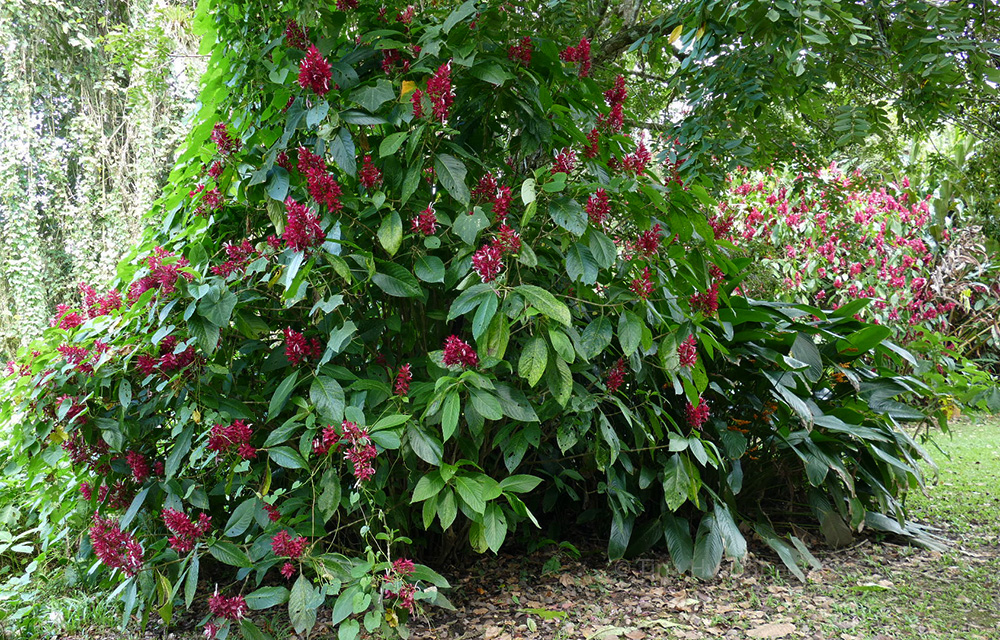
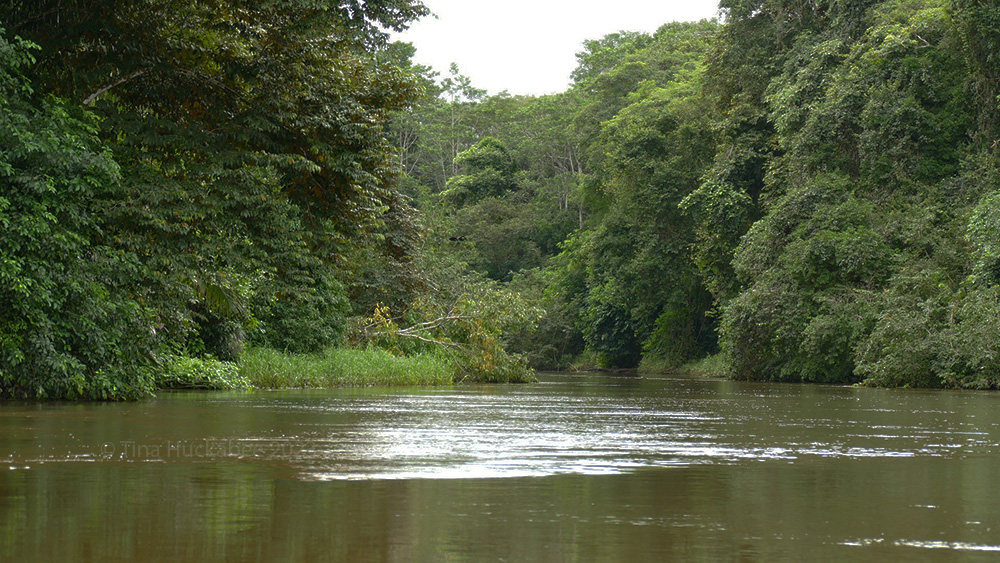
Pura vida is a phrase which defines lovely Costa Rica. What is it? Pura vida is a greeting, a farewell, a slogan–a way of life. Pura vida is about living and enjoying each moment and appreciating the beauty that life offers. Costa Rica is the definition of beauty and it’s no wonder that this special place consistently ranks as one of the world’s happiest countries.


Costa Rica disbanded their army in 1948 and instead of funding a military, have wisely invested in education, culture, and protection of the environment. An educated population, the literacy rate tops 97%, with both public and private schools and universities creating a workforce for thriving ecotourism, art, agriculture, and related fields.

The United States could learn a thing or two from that example…
Costa Rica is a small country: in American-speak, it’s roughly the size of West Virginia; in Euro-speak, it’s the size of Denmark. That being said, about 6% of the world’s species live in Costa Rica, even though its landmass is only 0.03% of the planet. That’s a lot of flora and fauna and other cool stuff packed into a small package!


Costa Rica’s leaders have wisely protected upwards of 25% of their land, with incentives awarded to private landowners for protection of even more of the natural landscapes and ecosystems. So while there are cattle and produce farms, fruit and coffee plantations galore, as well as bustling population centers, relatively unscathed swaths of intact ecosystems are scattered throughout the country, allowing for corridors for bird/animal migration and protection of healthy, bio-diverse green space throughout the country.


Costa Rica resides in the narrow strip of land connecting North and South America, bordered on the west by the Pacific Ocean and on the east by the Caribbean Sea. The Central Valley of Costa Rica holds most of Costa Rica’s population, including the capital city, San Jose. Various mountain ranges thread the length of the country; the highest peak, Mount Chirripó, is 12,536 feet/3821 meters. Mountainous terrain allows for rapid changes in humidity, rainfall, and temperatures; varied biological systems range from tropical rain forests to alpine tundra. Mountains also act as blocks to humidity and rainfall: the Caribbean side receive great amounts of rainfall, while parts of Costa Rica’s western side experience dry periods.
Costa Rica boasts four distinct biological environments, defined by rainfall amounts and temperature variations: tropical rain forests, tropical dry forests, tropical cloud forests and páramo (dry, alpine).
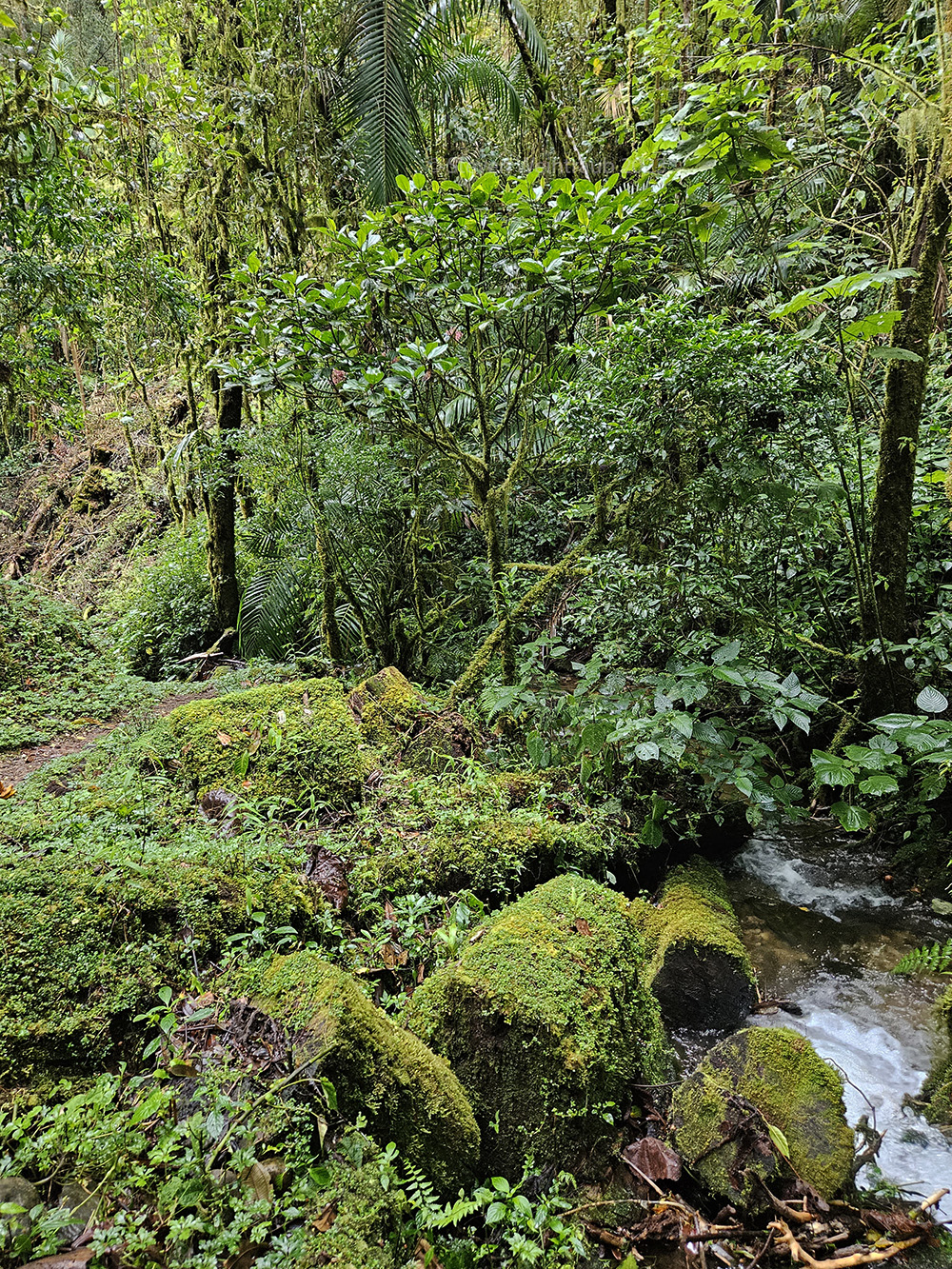
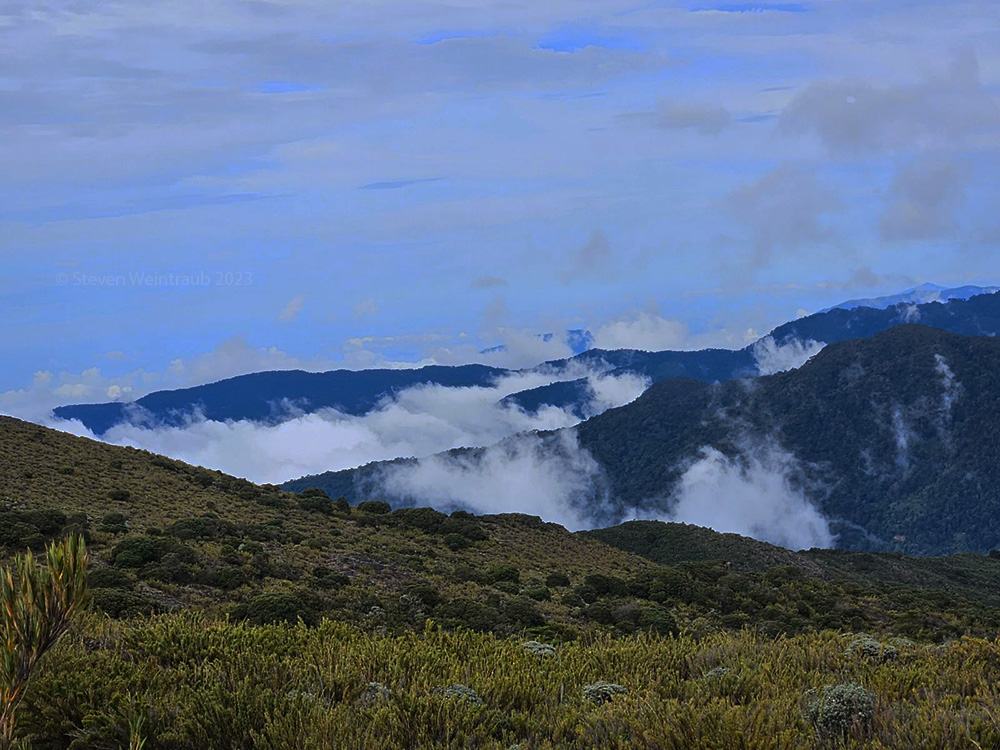

Our trip started in the capital city, San Jose. We then drove southeast to the Orosi Valley and visited Tapanti National Park and Rio Macho Reserve. Moving southward and following the Pan-American Highway, we traversed the mountainous terrain of the Cerra de la Muerte. This highland area where we spent a couple of days is a particular favorite of mine. Traveling west and north, the Central Pacific Coast followed on the itinerary. This region combines the tropical dry forest which overlaps with the tropical rainforest, creating the opportunity for great bird watching and stunning landscapes. Carara National Park is located here and boasts dense, lush hiking trails. Heading north, we ended at Arenal Volcano National Park–another fascinating place with beautiful gardens and remarkable wildlife.
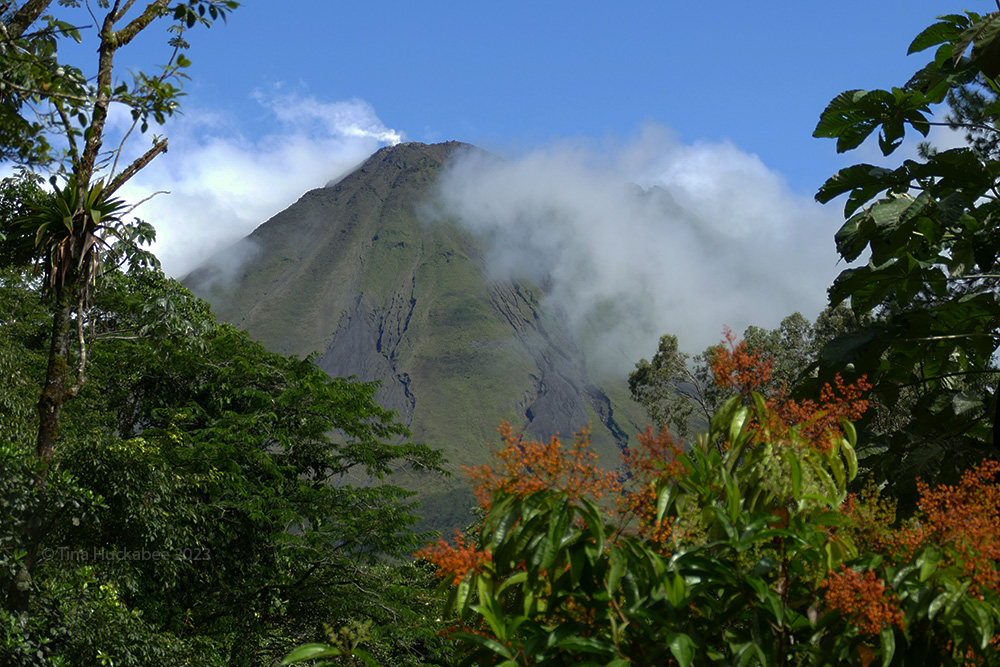
Our last full day included a trip northward near to the Nicaraguan border, where the Caño Negro Wildlife Refuge, a fresh water wetland full of wildlife, is located. That day also included a drive back to San Jose, with more birding and beautiful scenery as we drove along twisty mountain roads, ending in the Central Valley.
The trip was well organized and allowed us to experience a wide variety of land forms, plant species, and diverse wildlife. We logged a bit over 500 miles/1100 kilometers in this small country, observed both gentle and raging rivers, dramatic waterfalls, calm lakes, huge trees, all varieties of limb and rock-hugging epiphytes, deep, dark skies sparkling with stars that I’d forgotten exist, and masses of gorgeous flowering plants.
Oh, and the birds, mammals, reptiles, and insects were pretty great too!
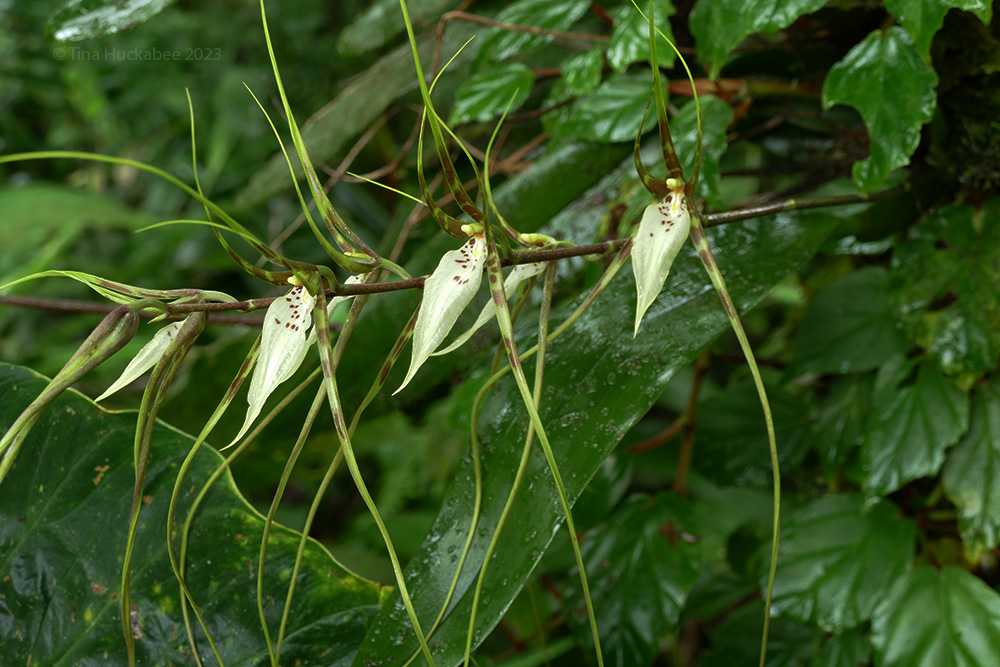
We saw so much during our Costa Rica stay; my head is still full of sights, sounds, experiences. I took gobs of photos, many of which are less than sharp (ahem, really crummy…), but even those shots (especially of the birds) are clear enough for me to recall the event and to elicit sweet memories of those moments.
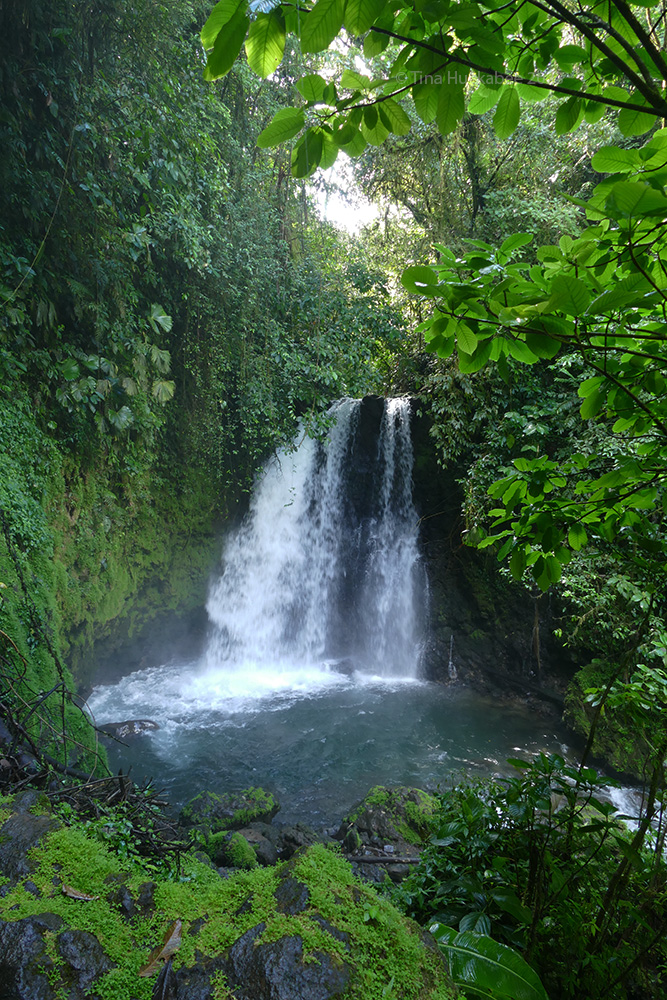
I plan another post or two about our too-brief time in Costa Rica, focusing on the incredible birds and other wildlife that we observed. In Costa Rica, biodiversity rocks!
 My Gardener Says...
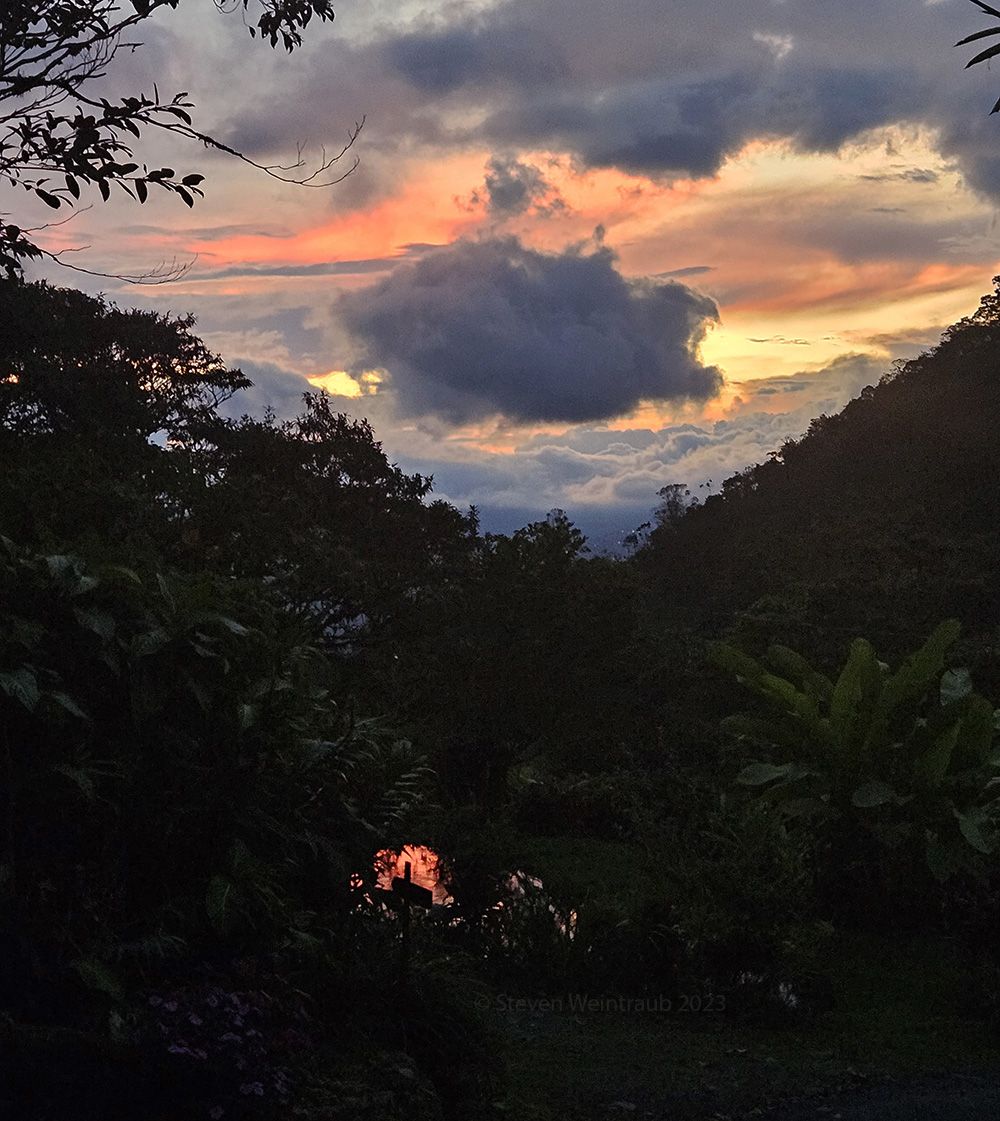
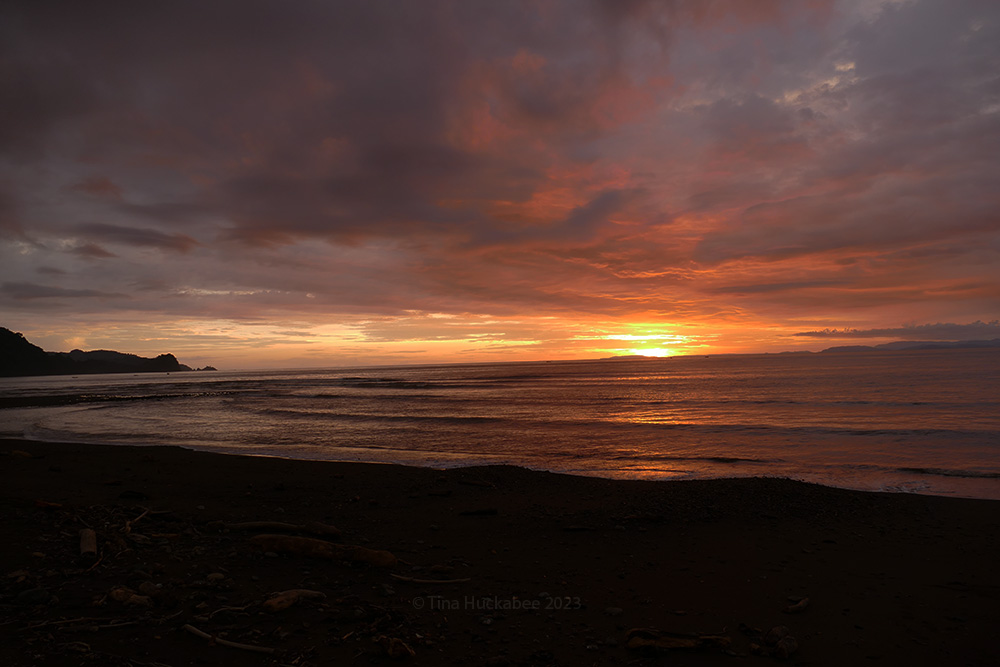
Glad to hear and see you had such a rich time in the country of “Rich Coast.” Your sunset pictures of Orosí and the Pacific coast are dramatic, and the succulent crocodile is unique.
LikeLike
I can’t take credit for the Orosi sunset. I recall seeing it on our first evening there, but didn’t have my camera with me. Fortunately, Steven had his cell phone, which takes an excellent photo.
That croc was one I felt quite safe to be near. 🙂
LikeLike
What a wonderful trip! Thanks for sharing with us.
LikeLike
It was a glorious trip!
LikeLiked by 1 person
Definitely a trip from the ‘bucket list!’ A treasure trove of biodiversity. Very cool orchid, I read that CR is a haven for orchid lovers. 💕
LikeLike
Bucket list, indeed! So glad we finally made it there and ready to go again!
LikeLiked by 1 person
Wow, not at all jealous, honest.
LikeLiked by 1 person
Lol. It’s a fabulous place to visit! Plenty of Europeans make their way to CR!
LikeLiked by 1 person
If only. I couldn’t see it happening as much as I would love to. Still so much in Europe to see!
LikeLiked by 1 person
Well that’s for sure!
LikeLike
Looking forward to more posts about your trip to this beautiful land!
LikeLike
Started working on the bird photos today, but didn’t have much time! 🙂
LikeLiked by 1 person
Most of what I’ve learned of Costa Rica has come from cruisers or fishermen. Needless to say, those folks chatter primarily about anchorages, tackle, bait, and their biggest catch, so nearly all of this was new to me. I was especially interested in some of the details about the country: its literacy rate, for example, and the disbanding of the military. Now I’m curious to read a bit about the history of the country, and whether they’ve managed to escape some of the turmoil that’s marked Nicaragua, El Salvador, and Panama.
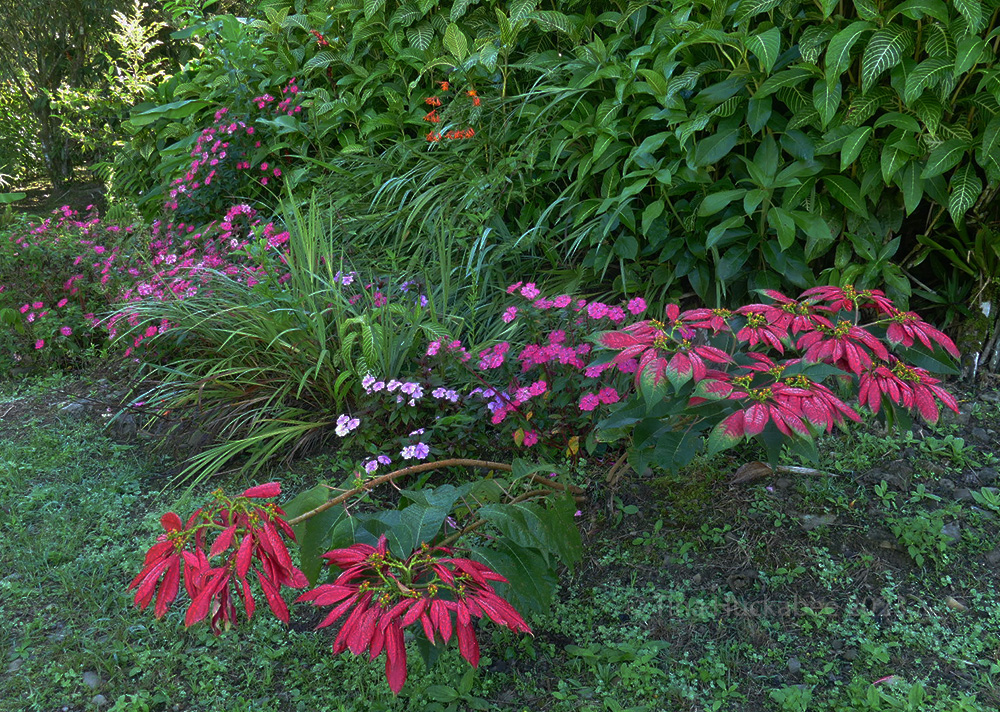
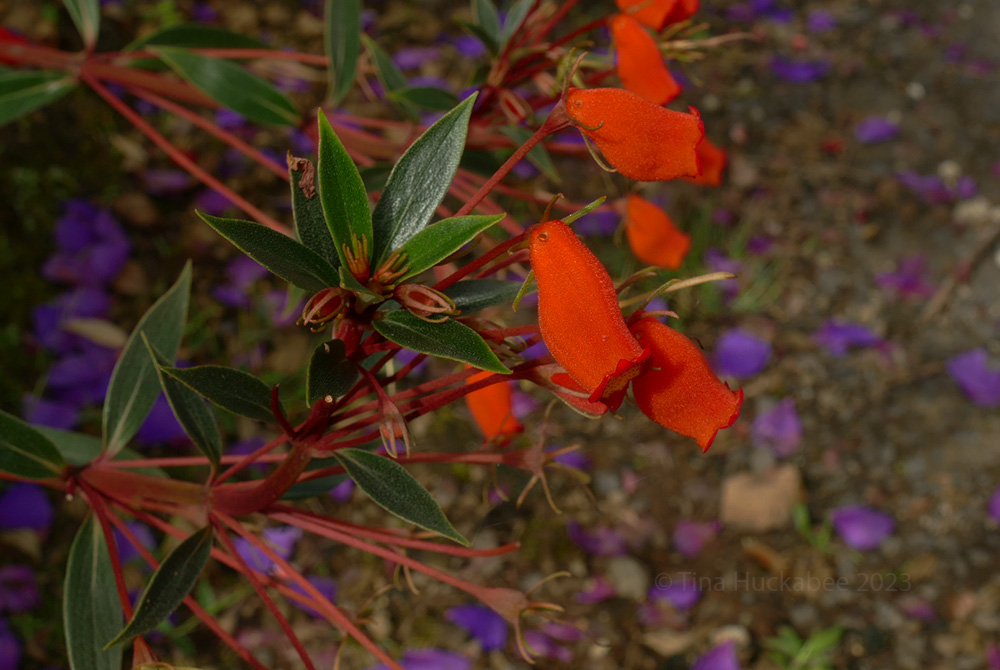
Color-wise, my favorite photo is the one of the unknown red flowers mixed with the purple. Gorgeous! I laughed to see the Costa Rican Rio Frio — not quite the same as ours! The hiking trail and cloud rain forest photos evoked Liberia for me, and I especially like the first photo with the heart-shaped leaf. I think it’s probably a perfect representation of the love-ly time you had!
LikeLike
It’s a fascinating little country and just gorgeous. I think it’s escaped some of the issues that plague parts of the region, but of course, isn’t immune to drug trafficking and related crime. It has a large middle class and I think relatively low unemployment.
I love that photo too and I wish I knew what the orange bloom is. It reminded me of a penstemon, with its tubular form. The purple in the background are impatiens and they grew with abandon at the lodge we stay at in the Orosi Valley.
I saw the leaf on a hike (I don’t remember which one) and knew I would use it somehow in a post and as I wrote about all who’ve told me how much they like Costa Rica, well, it seemed like the right spot!
LikeLiked by 1 person
Wow, these are stunning photos! I was in Costa Rica briefly in 1998 but always wanted to venture further inland and explore more. We’re going to Ecuador next summer and I cannot wait to see some tropical plants once again!
LikeLike
Thanks, Misti! We loved Costa Rica. I’m also interested in Ecuador as well. I hope you’ll write about it!
LikeLike
Your photos and descriptions are lovely, Tina. I have heard only good things about Costa Rica but didn’t know any of the interesting details you provided. It sounds as though I would enjoy a visit there as much as you did. 🙂
LikeLike
It’s a wonderful place to visit! Like you, I have only heard good things about Costa Rica and am pleased to join the chorus of admirers!
LikeLiked by 1 person
Maybe one of these days I will also be able to join that joyous chorus!
LikeLike
Southwest flies to San Jose…:)
LikeLike