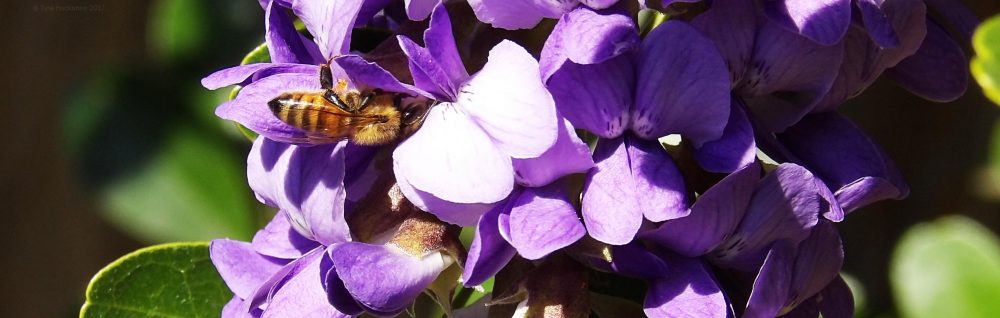
Autumn in Central Texas brings an appreciated dramatic flush of blooms (after the heat and drought of a long summer) but also a generous offering of fruits and seeds from many spring-blooming plants.
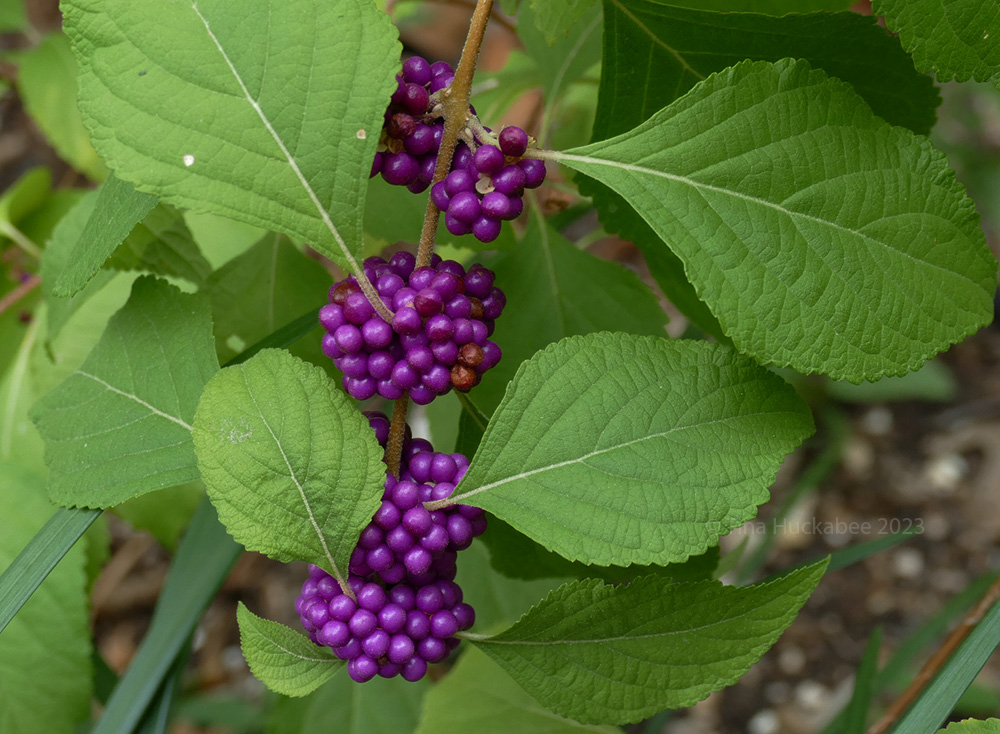
American Beautyberry, Callicarpa americana, is a hardy shade-to-sun deciduous shrub which provides yummy meals for Blue Jays, Mockingbirds and various mammals.
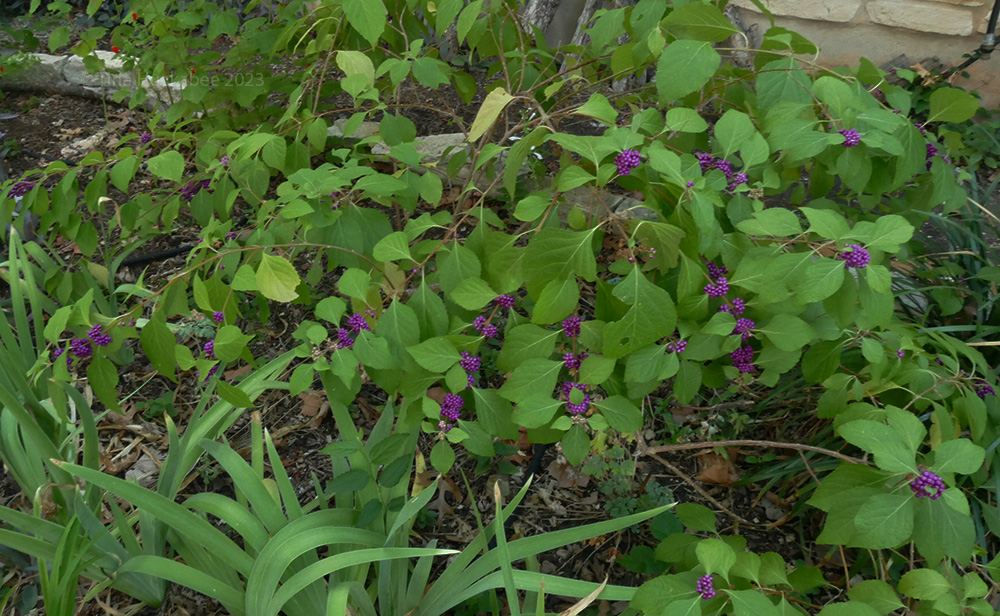
Dainty pink June blooms segue to light green berry clusters in July, which then color-up in August. By mid-September, the berries arrive at their disco-metallic, ready-to-eat form. Critters show up and critters eat. I haven’t snagged a decent shot of anyone nibbling on the berries, as foliage provides good cover. But nibble they have.
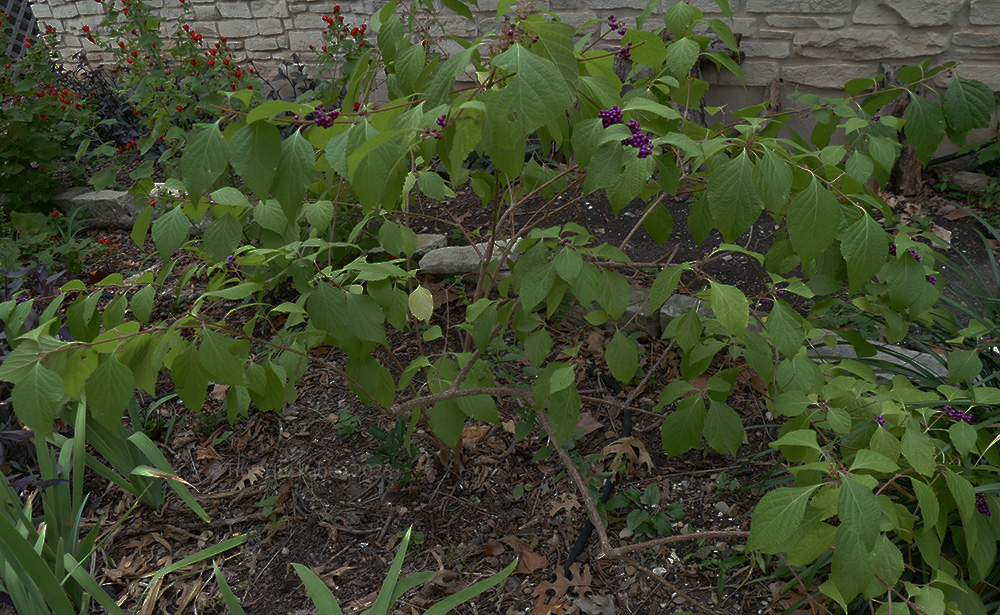
The first photos were taken weeks ago, but with wildlife noshing, most of the purple goodness that decorated the shrub, are gone with those bird and mammal meals. The Beautyberry still holds a few clusters of berries, which I expect will be eaten in the next few weeks. After that, with shorter and cooler days, the foliage will turn butter yellow and eventually drop to the ground, a mosaic of autumn which, in time, will add nutrients to the soil for future growing seasons.
Another plant that resident and migratory birds enjoy is Roughleaf Dogwood tree,Cornus drummondii. This particular tree is situated behind my pond and provides good refuge for bathing birds to escape to when startled, or a restful spot to perch when fluffing wet feathers is required.
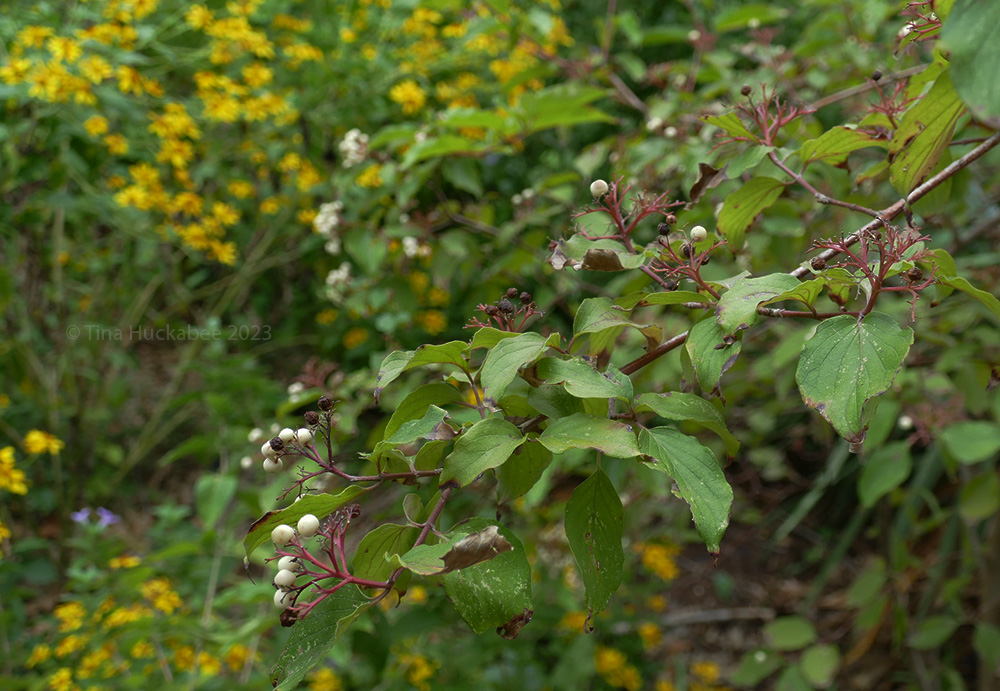
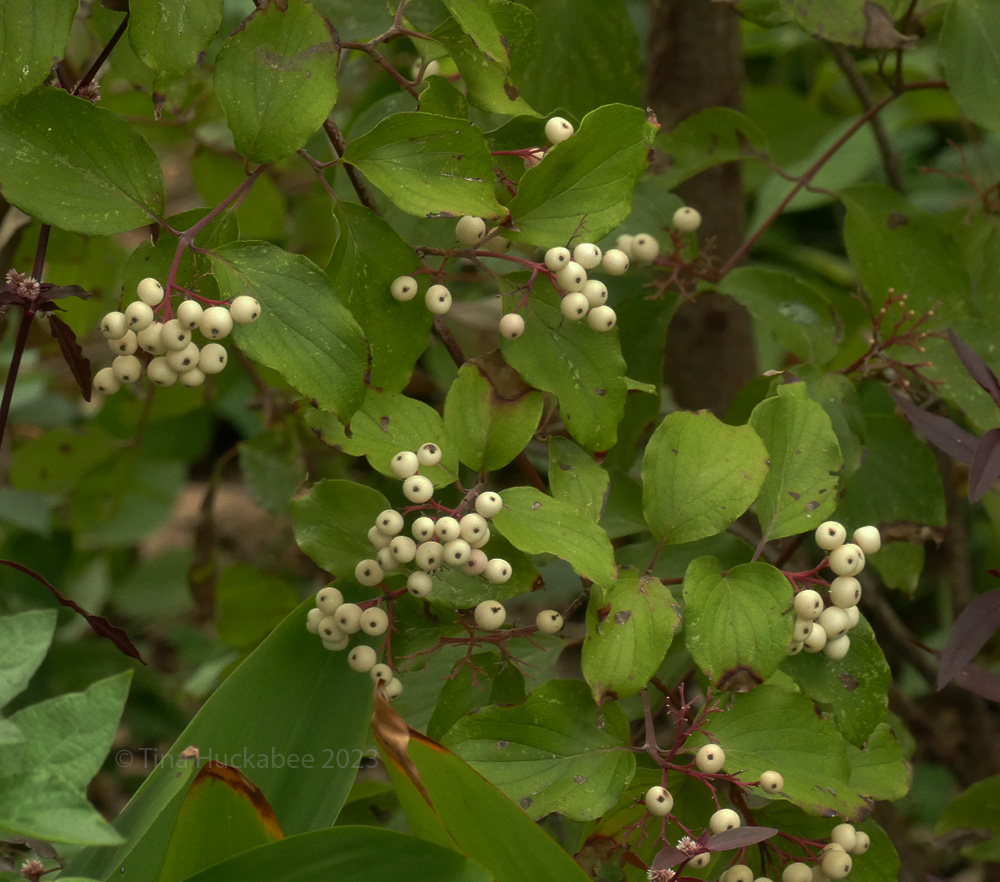
Birds nosh on the creamy white fruits which sit aloft wine-colored stems. Ignored berries have fermented, crinkled, and turned a deep black-blue.

The blast of yellow in the background comes from a couple of Plateau Goldeneye, Viguiera dentata, shrubs. Pollinators are all over these blooms right now and when the blooms end, birds will go ga-ga for the seeds. Once a freeze renders the shrub dormant, finches reportedly use dried leaves for their nesting material.
Before fall fruit development, Rough-leaf Dogwood flower creamy white blooms in April and May, attracting a variety of pollinators, especially fly and native bee species.
Wildlife friendly gardens require plants that are food sources, as well as havens from danger and for rest. These three plants are native to Texas and are excellent seasonal wildlife plants. All are tough plants and easy to grow, add form and structure for human admiration and important sustenance for wildlife. Autumn is a good time to plant perennials and trees here in Texas, so give native plants a whirl in your garden. You’ll appreciate their beauty and practice good stewardship on your plot of the Earth.
 My Gardener Says...
Now is high season for beautyberry fruit, as your pictures confirm. The magenta~green combination is a delight to see. It’s good to see goldeneye coming into its own as well.
You regularly use “nosh” (as a former New Yorker can’t help noticing). The term “disco-metallic” is new to me.
LikeLike
It’s pretty this fall, despite the hellish summer. I always have mixed feelings about the birds showing up to eat, as I selfishly want to enjoy seeing the berries for as long as possible!
Yiddish/Hebrew words are fun to say (and write, I suppose!)
LikeLike
I have a beautyberry which dies to the ground every winter, but it persists and the berries feed bluebirds in the cold months. I see the Cornus is hardy to my zone, I must look for it!
LikeLike
Wow, I hadn’t noticed just how widespread these two plants are, though I do recall seeing cultivars of beautyberry in Canadian gardens (gorgeous, btw!). I wish you lived nearby, as I have several dogwood babies that I wish I could dig up for you!
LikeLiked by 1 person
On behalf of your wildlife: “Thank you” for planting such beautiful, nutritious, and protective plants in your garden, Tina. If I were a bird (or bunny or squirrel), I would visit gladly and gratefully.
I love your detailed description of the beautyberries, especially their “disco-color.” That’s so descriptive! I have always thought they looked artificial because of that unusual hue and it’s good to know that they are real and are providing sustenance to our beloved critters.
LikeLike
I’m glad to have plants that the wild things like–it brings the garden to life!
Like you, I always thought the beautyberries look fake, like surely nature wouldn’t make something that color! 🙂 They’re edible for human folk too, apparently one can make jelly from them. I haven’t tried, I’d rather the mockingbirds partake.
LikeLiked by 1 person
I also think that the best thing about having a garden is to provide habitat for our fellow creatures.
A version of beautyberry also grows in Germany, where a common name is “love pearls,” which makes one wonder about their ingredients.
LikeLike
‘Love pearls”–that’s just great!
LikeLike
Yes, you do have plenty to offer the birds. And the berries are beautiful, too! I love Beautyberries. I have a couple of hybrid small shrubs here in my garden, but I think I need to move them to more sun (which is in small supply on this property). They’re so unique. Lovely post.
LikeLike
Beautyberries are always touted as shade plants, but I think they’re best in half day sun. They just are more of everything: blooms, berries, fall color–the works!
LikeLike
I’ve been seeing the Beautyberry popping up here too (North Carolina), but never knew the name! It is a stunning purple for sure.
LikeLike
The purple really is something, isn’t it? I’m glad it grows where you are. Everyone should enjoy beautyberry!
LikeLiked by 1 person
When I moved to Texas, I found Beautyberries to be the most amazing color. One has planted itself into my garden bed from the greenbelts.
LikeLike
It’s a crazy purple, that’s for sure. I’ve never had a beautyberry seed out. Unless the birds are carrying off all the viable seeds when they eat. 🙂
LikeLiked by 1 person
It somehow got dropped and grow quite well.
LikeLike
I found a beautyberry bush at the Watson preserve in east Texas that had somewhat more magenta berries. Given that they make serious efforts to keep everything there native, I suppose it was just a slight variation; they certainly were recognizable as beauty berries. They also were growing in a relatively shady spot. Perhaps that explains it, since the ones I’ve seen in full sun have this glorious purple.
I’d say the roughleaf dogwood isn’t familiar to me, but on the other hand, I do remember seeing some white berries ‘somewhere.’ Perhaps I should look more closely!
I have had beautyberry jelly. There’s a member of the Florida native plant society that makes and sells it; I bought some for a Christmas gift exchange for our NPS chapter. I tried it, but like the agarita jelly I’ve had, it was the sugary taste that predominated. It was good, but something I’d never put my hand to, like strawberries or peaches.
LikeLike
So nice to learn that Callicarpa is actually a food source for some. I guess it’s something about those crazy purple berries that somehow makes that seem far-fetched – LOL! So glad it’s not!
LikeLike