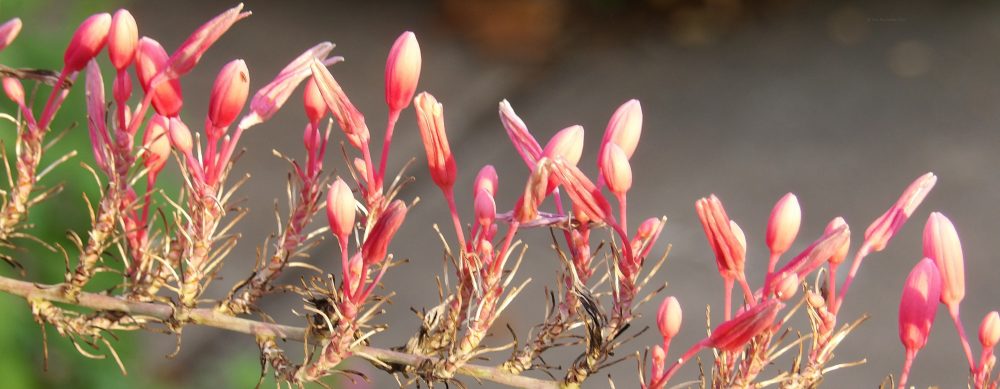
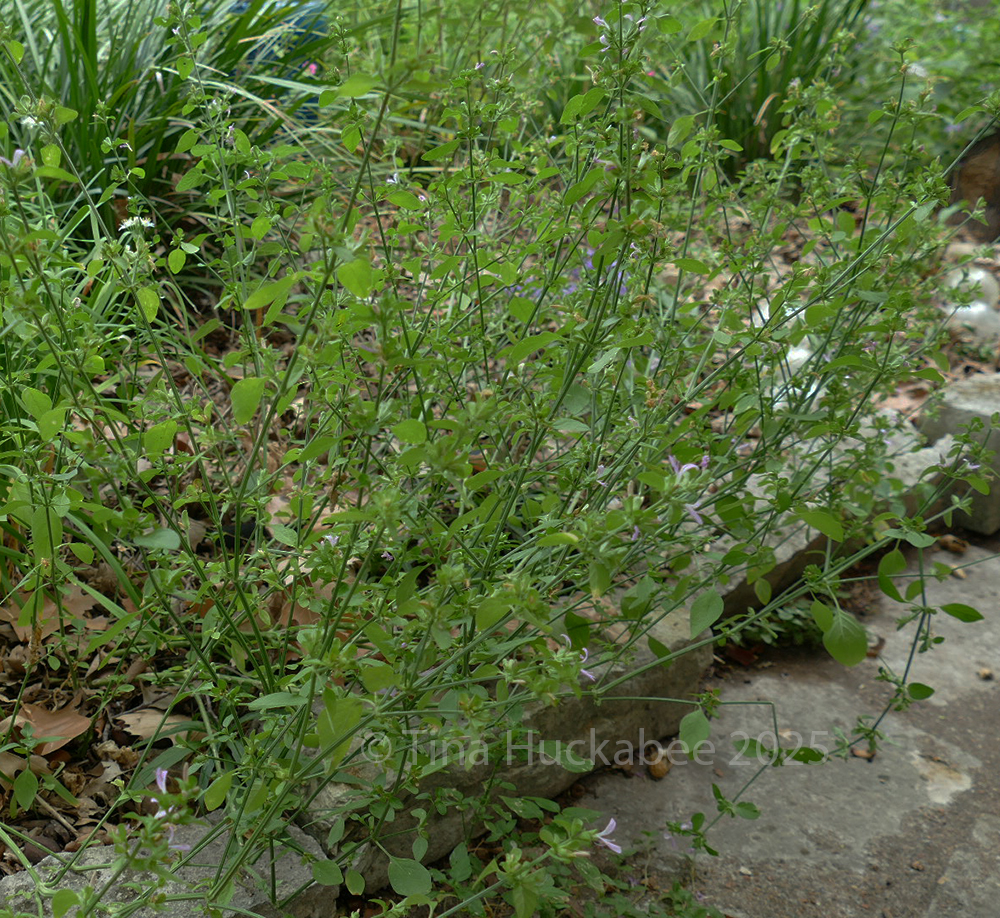
A small perennial graced with tiny flowers appeared some years ago in my garden. The plant is airy in form, only about 18 inches tall and 12 to 18 inches wide.
It took me a while to discover the identity of this petite pretty, but as I researched, the form of the bloom familiar to me, that recognition niggled deep in the recesses of my brain: I knew I’d seen a plant with a similar flower. I finally realized that the lavender lovely was structured like the flowers of a Mexican plant I grew at the time, the Mexican Hummingbird Bush, Dicliptera suberecta. The form of that flower pointed me to its genus and after some sleuthing, I identified the sweet native plant, Branched Foldwing, Dicliptera brachiata.

Branched Foldwing flowers in late summer during the hottest time of year, continuing into October as things cool off. I’ve only seen honeybees nectaring at the blooms, but I wouldn’t be surprised to see skippers or small native bees visit. The Texan crescent butterfly relies on this plant as its host and it’s a butterfly that I routinely see in my garden, especially in spring and early summer.
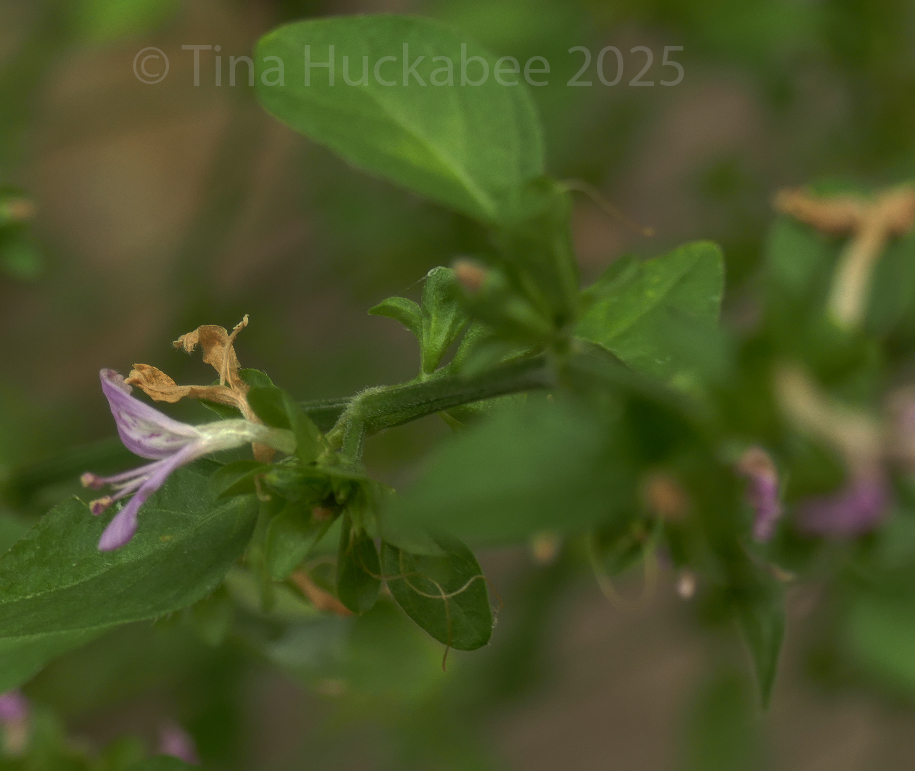
Clearly, little spiders set up their nets in the structure of the foldwing too, no doubt to ensnare critters smaller than themselves.

There are several individual plants currently in bloom in my back garden. Each are in a shade/part shade area; the foldwing doesn’t want to fry in the Texas sun.
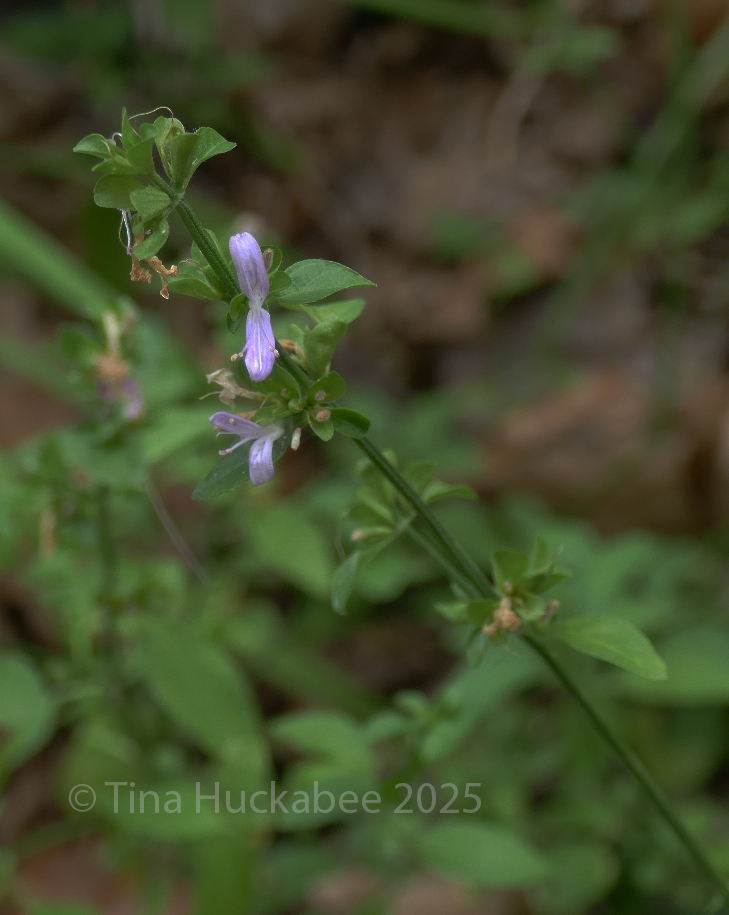
Branched Foldwing has been a welcomed, though not planned, gift in my garden. Perhaps the original plant was given by a nice bird or small mammal after having munched a wee seed, then winged or ambled their way through the garden–the rest a history of the critter’s digestive system. Branched Foldwing is not a plant that nurseries carry as it’s small and unobtrusive, with only tiny, not-too-showy flowers. I appreciate its contribution to my shady space–a simple, but lovely little addition.
 My Gardener Says...
This plant was unfamiliar to you (as it had been to me until one came my way in Palmetto State Park four years ago and someone identified it), yet botanist Bill Carr describes it as “frequent, sometimes locally abundant, in and along margins of mostly deciduous woodlands on creek and river terraces and floodplains.” He mentions documentations of it along Shoal Creek in 1922 and 1940, so perhaps that’s where the seed for yours came from.
You entered the land of alliteration with “petite pretty” and “lavender lovely.”
LikeLike
It’s apparently a common thing and I’m glad I have it! It does have the bad habit of germinating in inconvenient places, but mostly, I’ve left it alone unless it’s smack-dab in the middle of a walkway or at the base of another plant.
LikeLike
An unusual and pretty bloom. Always worth growing a larval host plant!
LikeLike
I’m excited that it provides for that little butterfly. I only see them in spring, so I’m thinking they like to munch the tender, new foliage.
LikeLiked by 1 person
That’s a beauty! I can see how it would be graceful, but tough. It’s a great plant to have around. 🙂
LikeLike
Thanks, Beth–it’s a sweet lil thing!
LikeLike
I’ve never heard of this one, but its appearance seemed familiar. I kept looking and looking and finally figured out it was reminding me of a plant I’ve seen only once: the loose-leaf water willow. That’s in a completely different genus (Justicia), but it has that same light and airy appearance. It’s always fun to see how small flowers and small insects match up so nicely!
LikeLike
Oh, that water willow is pretty and a very similar hue as my foldwing. I really like these small understory plants, the ones that you have to look for. They deserve a special place in gardens and green spaces.
LikeLiked by 1 person