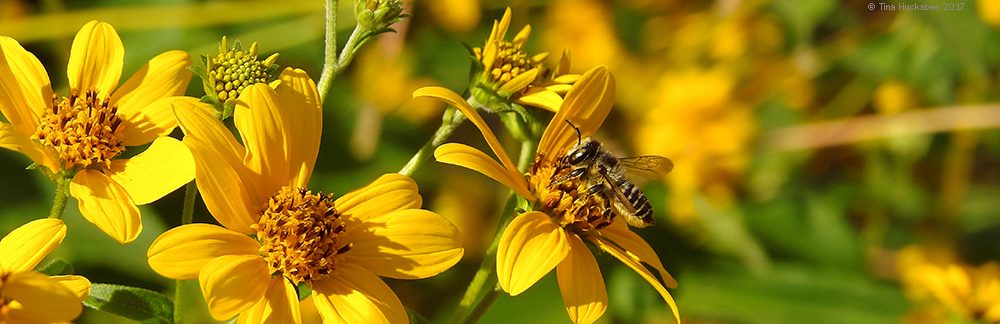
With the cold of the polar vortex well on its way to Central Texas, I’ve said a sad farewell to the flowers still blooming. A freeze is forecast for Saturday night into Sunday morning, the temperatures becoming colder over the following 48 hours. The coldest night will be Monday, when the National Weather Service predicts a nippy 15F/-9C. Tuesday night warms a bit to 17F/-8C. I don’t mind the cold and winter is important, my whining about the end of blooming season notwithstanding.
I’ll dress in layers and wear a coat and hat, but the garden is at the mercy of nature’s elements. I don’t think this group of cheery Forsythia Sage, Salvia madrensis, will remain happy in the freezing temperatures.
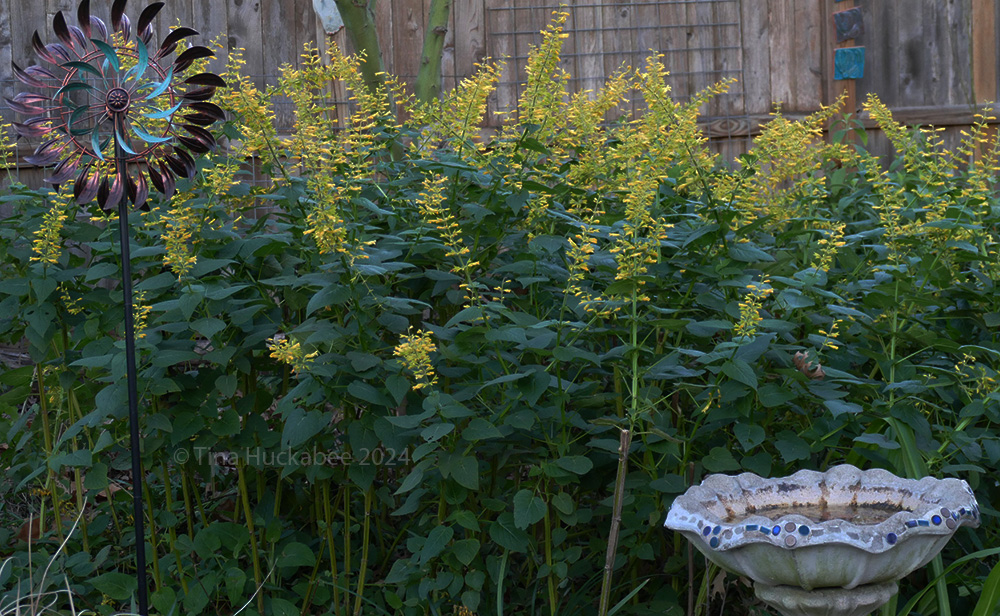
Native to the Sierra Madre mountains in Northern Mexico, this plant is the last in my garden to perform.
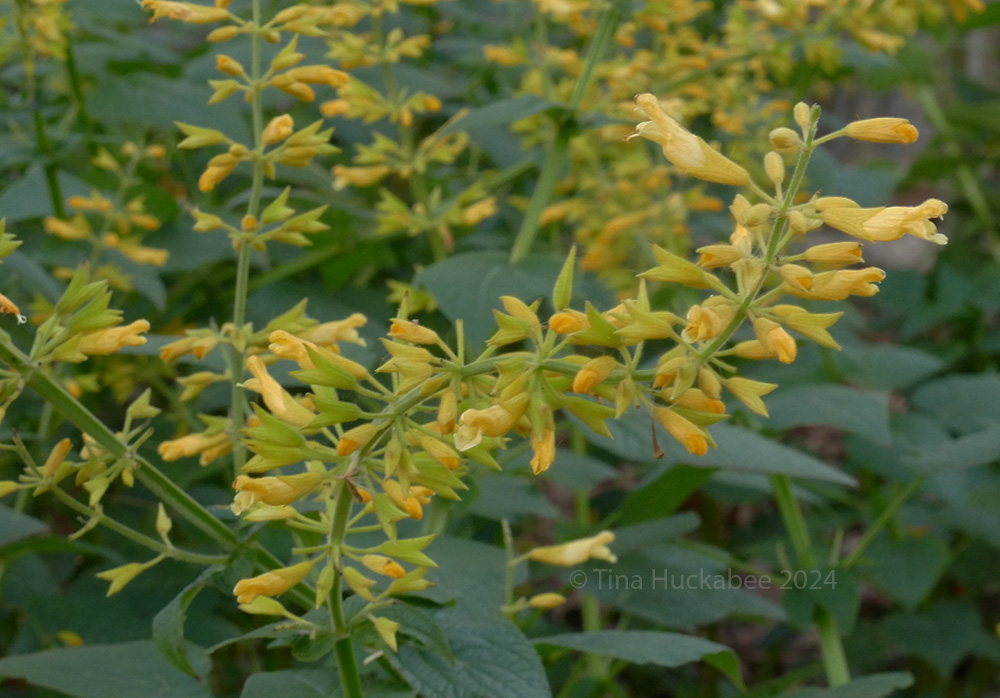
Blooming begins in late October, adding golden glory to the garden in both in beauty to observe and nectar for pollinators. The flowering lasts until a freeze zaps the entire plant to a frozen crisp. Forsythia Sage foliage is attractive throughout spring, summer and early fall, then explodes in sunny yellow at end of the long growing season. As its flowering is so late, honeybees and some butterflies are appreciative visitors.

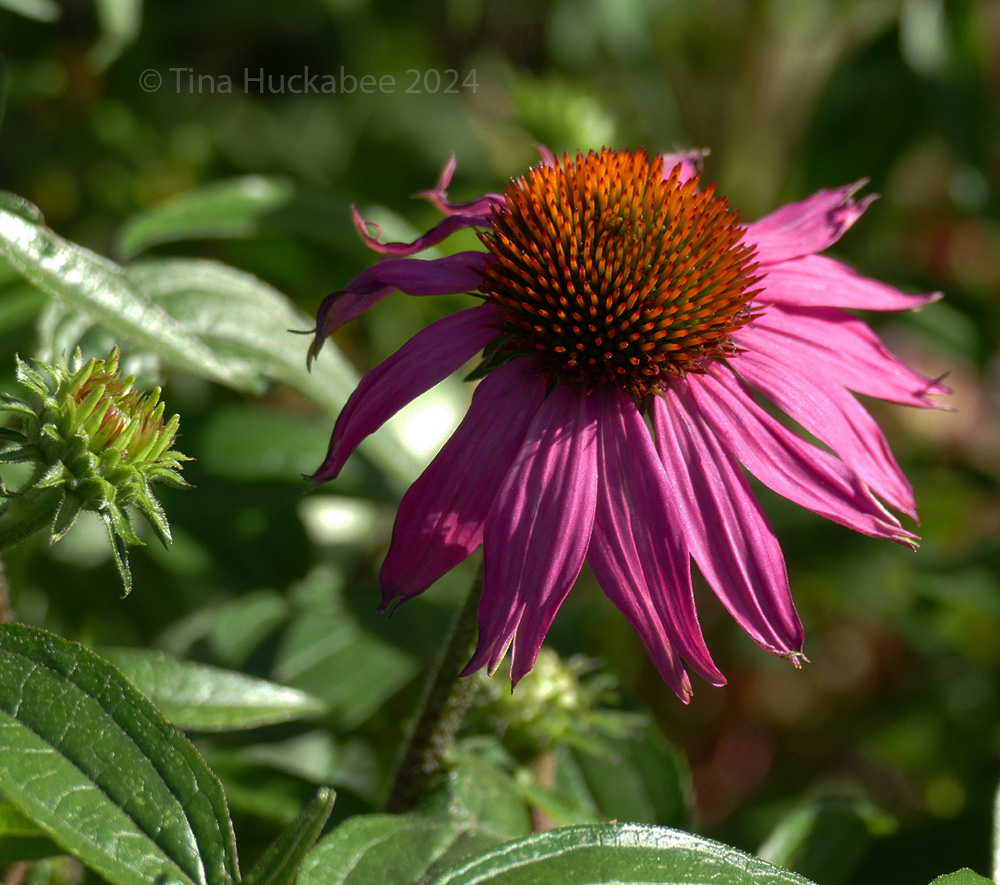
The biggest surprise in recent weeks are the clumps of Purple Coneflower, Echinacea purpurea. They seem think it’s April and not mid-January.

There are always a few Coneflowers which bloom in autumn months, even into December, but usually they’re rogue blooms, short in stature and only one or two per rosette. This January, these crazy things are rocking the spring look of tall, multiple, crowded stalks with numerous blooms-n-buds on each.
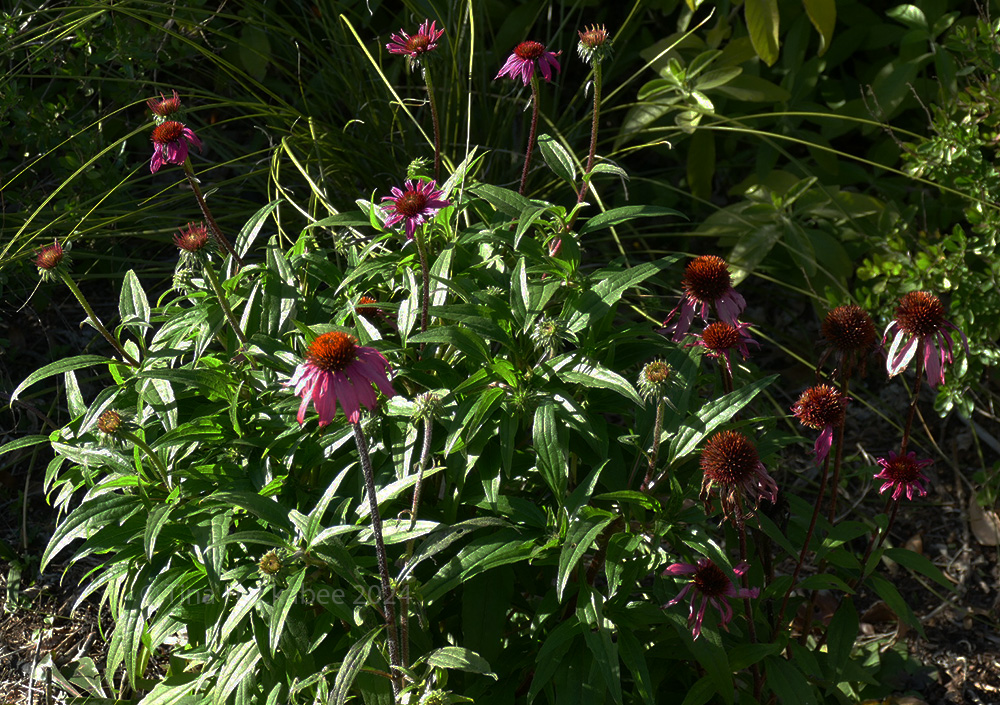
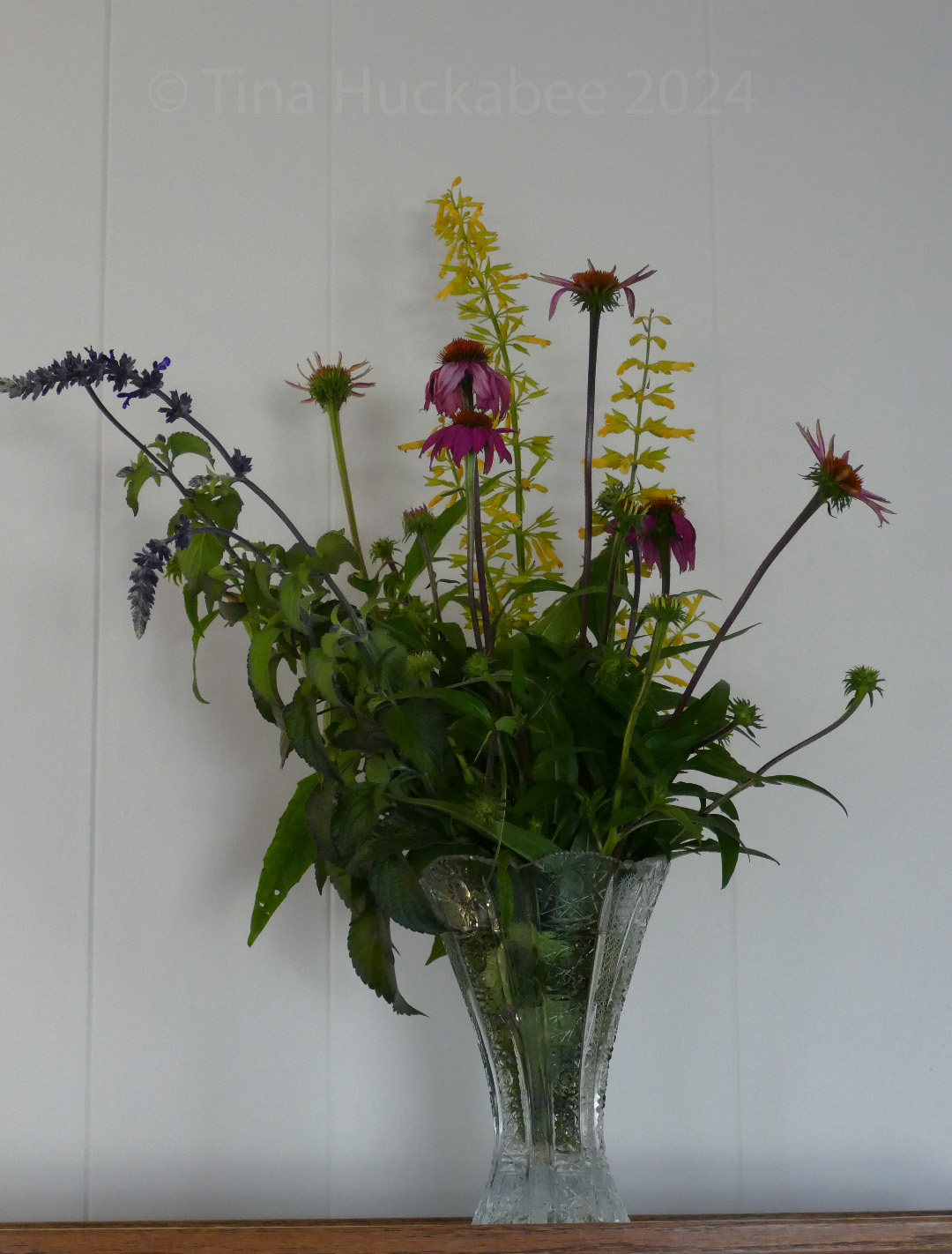
The flower stalks will not survive the coming hard freeze, though their rosettes (the clump of foliage at the base of the plant) will thwart the freeze and remain evergreen. I’ve pruned the stalks with open flowers, brought the bouquets indoors and popped them into several vases, hoping that the buds might follow the flowers’ lead and open.
Finally–the saddest for me–are the flowers and hundreds of buds on my various Desert Globemallow, Spaeralcea ambigua, shrubs.
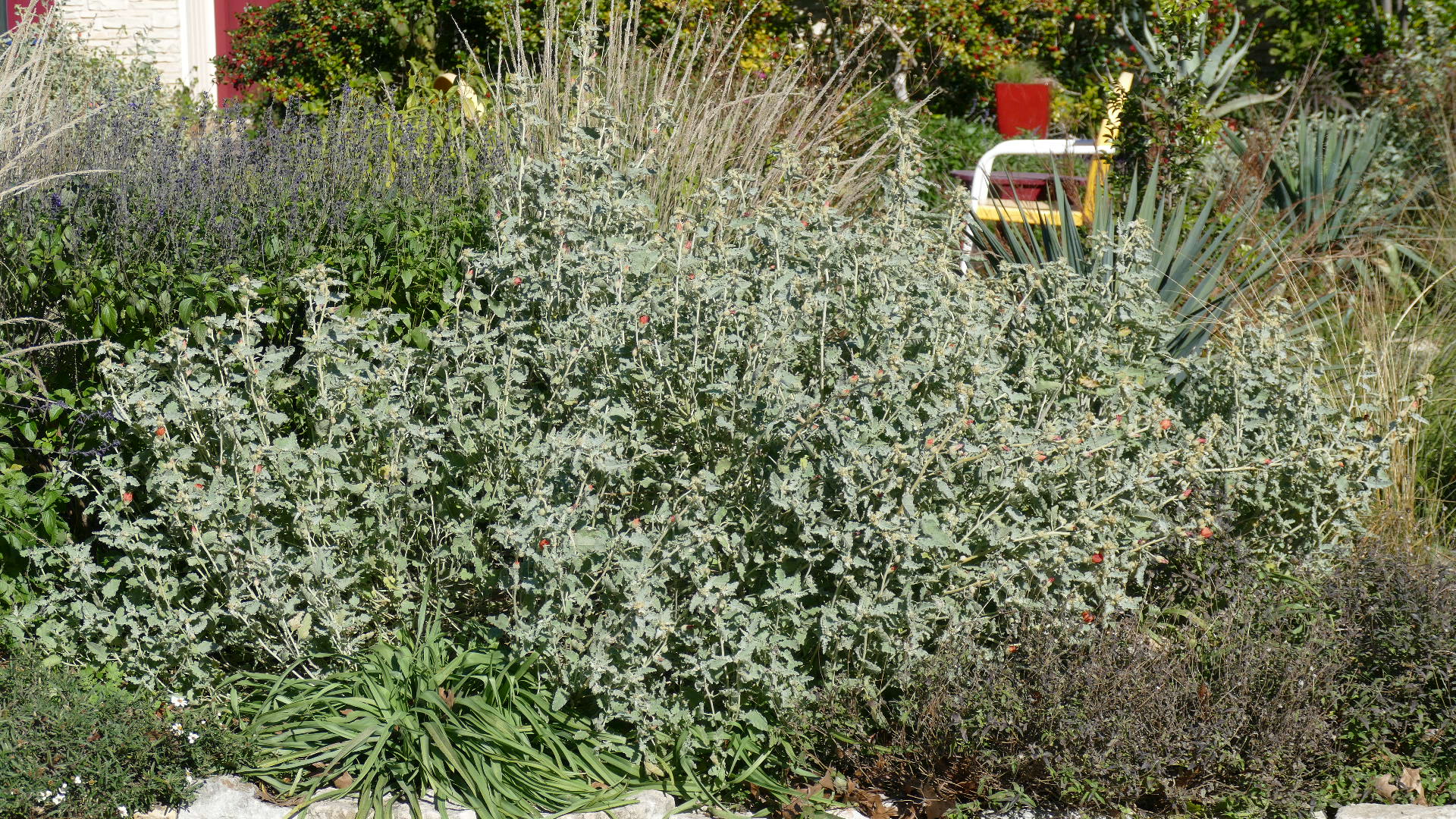
With the loss of my Arizona Ash tree two years ago (also due to a record-breaking hard freeze), I FINALLY have the right conditions to grow these lovely, heat-hardy shrubs. Stunning silvery-green, ruffly leaves combine with dreamsicle-orange mallow flowers to five rise to a beautiful accent shrub. I grow five of these now in the front garden and in recent years, a hard freeze has nipped the flowers and developing buds. Grrrr!

A cool season bloomer, the Globemallow flowers even with moderate freezes. But when temperatures dip into the teens, all bets are off. Each of my shrubs have some open flowers and countless buds awaiting their turn to develop. Honeybees, Syrphid flies, and other pollinators are continually snuggling into the depths of the flowers.

After Tuesday, the flowers and buds will be mush. The shrubs will survive, even if there’s some foliage freeze damage. I’ll prune off damaged parts and, fingers-crossed, flowers will bloom again before summer’s heat sets in.

The cold snap is not the end of things, nor will it permanently damage my garden. I garden with tough plants and they will rally in the near future. When this kind of cold is at my garden’s gate prepared to end the growing season, I walk through the garden, thanking the plants for providing me with joy and wildlife with life. I also take time to bring some of that joy indoors.
 My Gardener Says...
I saw on television last night that although a million more people live in Texas now than during the power outage three years ago, the electric grid hasn’t increased its capacity. The prognosis given for the deep freeze coming is a few days was about a one-in-five chance of rolling brownouts.
Your “Forsythia Sage” leapt off the page and into my head as “Forsyte Saga” (https://en.wikipedia.org/wiki/The_Forsyte_Saga).
At the Wildflower Center yesterday Echinacea flowers were also in evidence, though not as numerous as you’ve shown from your garden.
Few mid-January Austin homes—much less most of the rest of the country—have a bouquet of fresh wildflowers in them.
LikeLike
Yeah, ERCOT says there’s enough capacity, but we’ll see.
As for your “Forsyte Saga”–it’s weird when that happens; I’ve experienced that too.
I’ve never seen the coneflowers so large and lush in winter. Maybe it’s the rain? I dunno.
I’m not much of a cut flowers in the house person, but I’m really enjoying them on the tables, bookcases, etc.
LikeLike
I know the song you are singing very well, Tina… the ‘End of the Garden Season Blues!’ 😉 It is a sad one, for sure. It takes me a few days to get over the demise, but we do rally, don’t we? At least you won’t have to wait too long before things spring back.
I noted that we both will be having roughly the same temps on Tues. However, our temps will be frigid all week in the teens at night and 20s/day, the coldest night is 8º on Sat. That is still about 10º above average for this time of year. Tomorrow is said to get to 51º with wind and rain. Our plants must be very confused!
LikeLike
Lol–the sad lament of gardeners everywhere! And yes, our winters are blessedly short. Interesting that we’ll be as cold as you are, though I’m not surprised you’ll stay colder. I don’t envy you. Last year, in mid-December Austin saw about 3 days at roughly 15F. We happen to be in Paris, then Vienna at that time and both were significantly warmer. That is confusing!
LikeLiked by 1 person
What a lovely mass of Forsythia Sage! The fall/early winter has been a lovely respite after last summer, hasn’t it? But I’m not sad about the freeze, either, and appreciate the full cycle, too.
LikeLike
Thanks, Maggie. It’s a very nice Forsythia Sage. Someone gave me a start years ago and I’ve really enjoyed it. Wish it bloomed all year! 🙂 This fall and winter (so far) have been very nice: rain, crisp temperatures–nearly perfect!
LikeLike
Thank you for the tour of your still-lovely January garden, Tina. I’m amazed at what it still has to offer. I hope you won’t be too shocked by the sudden change this cold front will bring, it’s nicer when plants wilt slowly rather than overnight.
We will have similarly frigid temperatures here and I worry about all the animals with only one set of feathers or fur.
Stay safe and warm.
LikeLike
You’re welcome, Tanja! We have a long growing season here and in mild years, some things bloom throughout winter. Even with this cold snap and any that follow, our spring is not all that far away, though right now, it feels like forever. 🙂
LikeLiked by 1 person
January CAN seem very long.
LikeLike
Thankfully we don’t suffer extreme cold like that but just a slight frost plays havoc with some plants even when supposedly hardy.
LikeLike
Our winters are generally mild, but punctuated by bout of truly fridge temperatures. Not fun, but that’s why I like the native plants, they know how to deal with the capriciousness of Texas weather patterns.
LikeLiked by 1 person
I feel your pain and I’m going through the same thing and I have prepared almost the same post. I also noticed more plants blooming late in the season. Could it be because of the drought and then getting rain? Your salvia are much more robust than mine, but I was happy for three blooming stems. Bundle up!
LikeLike
Yeah, I think we finally have had some decent rain (though Central Texas is still considered in severe drought) and the plants have responded by going nuts.
I hope this blast isn’t too hard on you or your garden, stay warm!!
LikeLiked by 1 person
Oh, the Globemallows are lovely; and the arrangement, too! I’m so sorry to hear about so many gardeners across the U.S. getting walloped by this week’s polar vortex. Here in S. Wisconsin, we will be cold, too (highs in single digits, lows in negative teens). But this is not uncommon for us for at least a few days during the winter. I hope most of your plants will come back in future months and future years.
LikeLike
Lots of the US is very, very cold right now! I’ve seen photos of various places and the snow and ice. Brrrr!
My plants will be just fine. Every thing I grow is native or adapted and though I’ll need to prune, prune, prune in the next 6-8 weeks, I don’t really expect to lose anything.
Yes, the globemallows are a lovely plants. I am sad about losing this crop of blooms.
LikeLike
It was interesting to read your chronology at the top of your post. We’ll have nearly the same conditions, but a day later. Our coldest nights will be Monday but especially Tuesday; while you’ve begun the slight warming, we’ll be sitting at 22F, give or take.
Since I had my preps done, I used yesterday to make a trip to the Brazoria refuge; it was a lovely, warmish day. In their butterfly garden, a very few red sage of some sort were blooming, and the shrimp plants still had bees visiting. And, yes — the Indian paintbrush had increased their numbers. At least a half dozen were in bloom, and some Texas dandelions. I hope they enjoyed the day as much as I did, because the end is nigh!
LikeLike
It’s definitely cold, no doubt about that! But it’s been colder, and for now, we’re not icy, though that might change tonight.
Many of my plants are rocking that wilted lettuce look. Others look pretty good, so I have some hope they’ll come through somewhat unscathed since it’s not going to be single digit.
I’ve put out my feeders and have several Orange-crowned warblers and at least one Yellow-rumped warbler feeding alongside all the resident birds. I’m keeping the bird baths from freezing, by breaking up the ice, but I won’t be doing that over night. No way! I drip my outdoor faucets plus the pond has a waterfall, so there’s plenty of liquid water available for them.
LikeLiked by 1 person
I felt like my S. madrensis bloomed a little earlier than usual this year. I too am sad they were bit back by the freeze. I’m hoping they will recover. They did last year but sometimes you never know.
LikeLike